


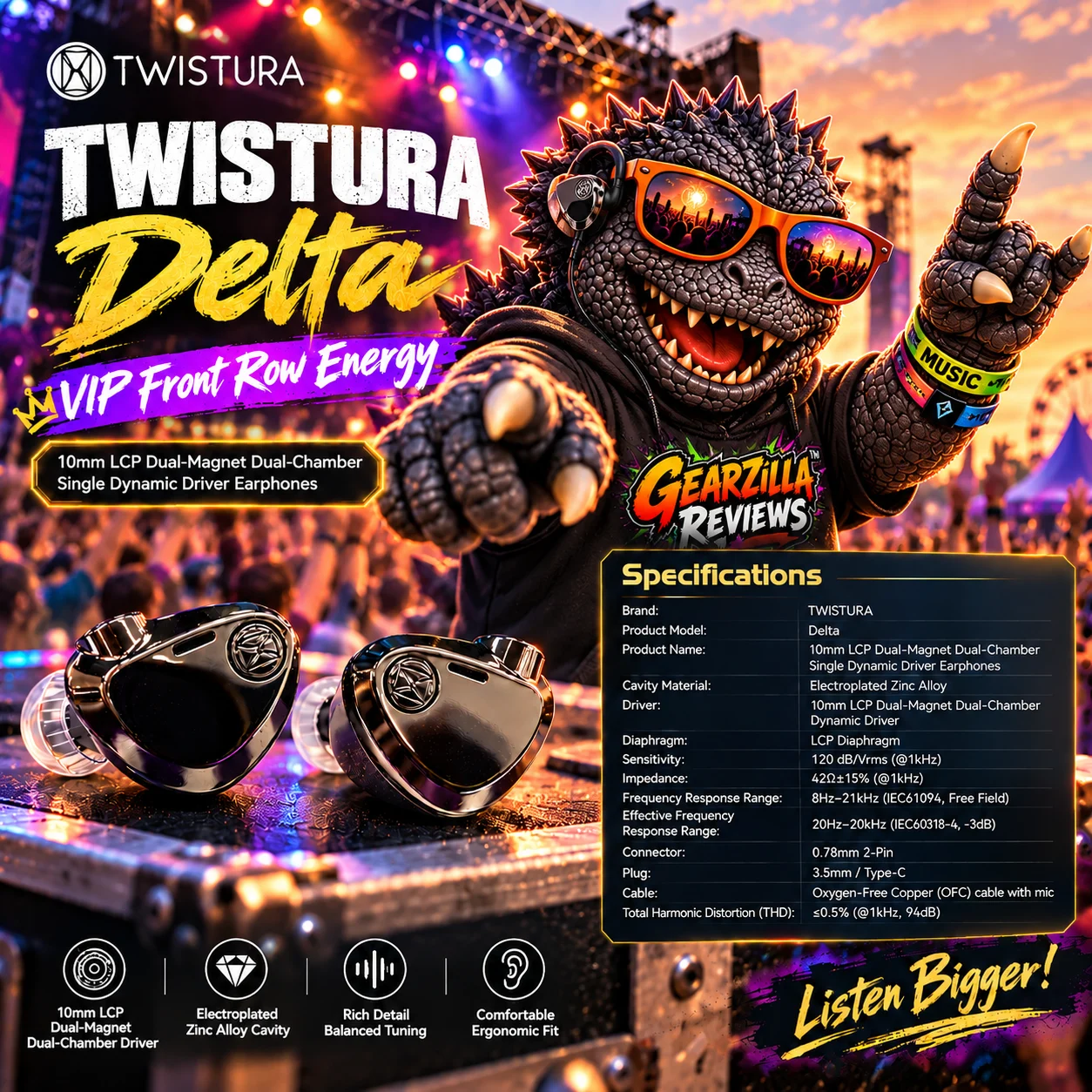
✅ Pros: Ridiculous value, gorgeous metal shells, punchy and satisfying bass, wonderfully present vocals, clean separation, convincing placement, natural single-DD cohesion, comfortable fit, easy drivability, and an engaging forward presentation that makes music immediately fun.
⛔ Cons: Honestly? There really isn’t much here I actively dislike. The polished metal shells are absolute fingerprint magnets, and the accessory package is understandably basic, but neither feels like a meaningful strike against an IEM at this price.
💰 Wait. This Costs What?
Every once in a while, an IEM shows up that makes reviewing affordable audio a little weird, because you start listening, look at the build, run through familiar tracks, and instinctively begin waiting for the compromises that are supposed to explain why it costs so little.
With the TWISTURA Delta, they never really arrive.
This is genuinely budget-IEM territory, yet very little about the actual experience constantly reminds me that I’m listening to something inexpensive. The polished metal shells feel substantial, the single dynamic driver sounds cohesive, the bass has satisfying punch, the vocals carry excellent presence, the separation is surprisingly strong, and the overall tuning is engaging enough that I stop thinking about what TWISTURA must’ve sacrificed to hit the price.
Of course, more expensive IEMs can do things better. As you move up the ladder, you’ll find greater resolution, deeper layering, more dimensional imaging, and a more sophisticated spatial presentation. But that’s very different from saying there’s something fundamentally wrong with the Delta.
That’s where this review gets interesting.
I kept waiting for the catch, and instead I kept finding myself playing another song.
There really isn’t much here to dislike.
The Delta doesn’t need me to grade it on a curve or repeatedly add “for the price” after every compliment. It simply delivers a genuinely enjoyable listening experience, wrapped in a build that looks and feels like it should cost considerably more.
At this price, I’m comfortable saying it:
The TWISTURA Delta is blind-buy territory.
🦖 Disclosure
Huge thanks to Lucie and the TWISTURA team for providing the Delta for this review and trusting GearZilla Reviews with the chance to spend serious time with it.
I received the DSP version, which matters because that’s where my evaluation began. I wanted to hear the Delta as supplied before I started changing cables, sources, or anything else around it.
As always, providing gear doesn’t buy a positive review, guarantee a particular score, protect a product from criticism, or change what I hear.
Every GearZilla review eventually comes back to one question:
Does this thing help me enjoy the music I already love in a new way?
With the Delta, that answer came pretty quickly.
Yep.
⚙️ What’s Inside the Little Monster?
Before we dig deeper into the listening, here’s what TWISTURA packed into the Delta.
At the center is a 10mm LCP dual-magnet, dual-chamber dynamic driver using a Liquid Crystal Polymer diaphragm. TWISTURA says the LCP material is meant to improve rigidity and damping, while the dual-magnet, dual-chamber design aims to improve dynamics and overall control.
That’s the engineering pitch.
What matters to me is whether any of it translates once the music starts.
It does.
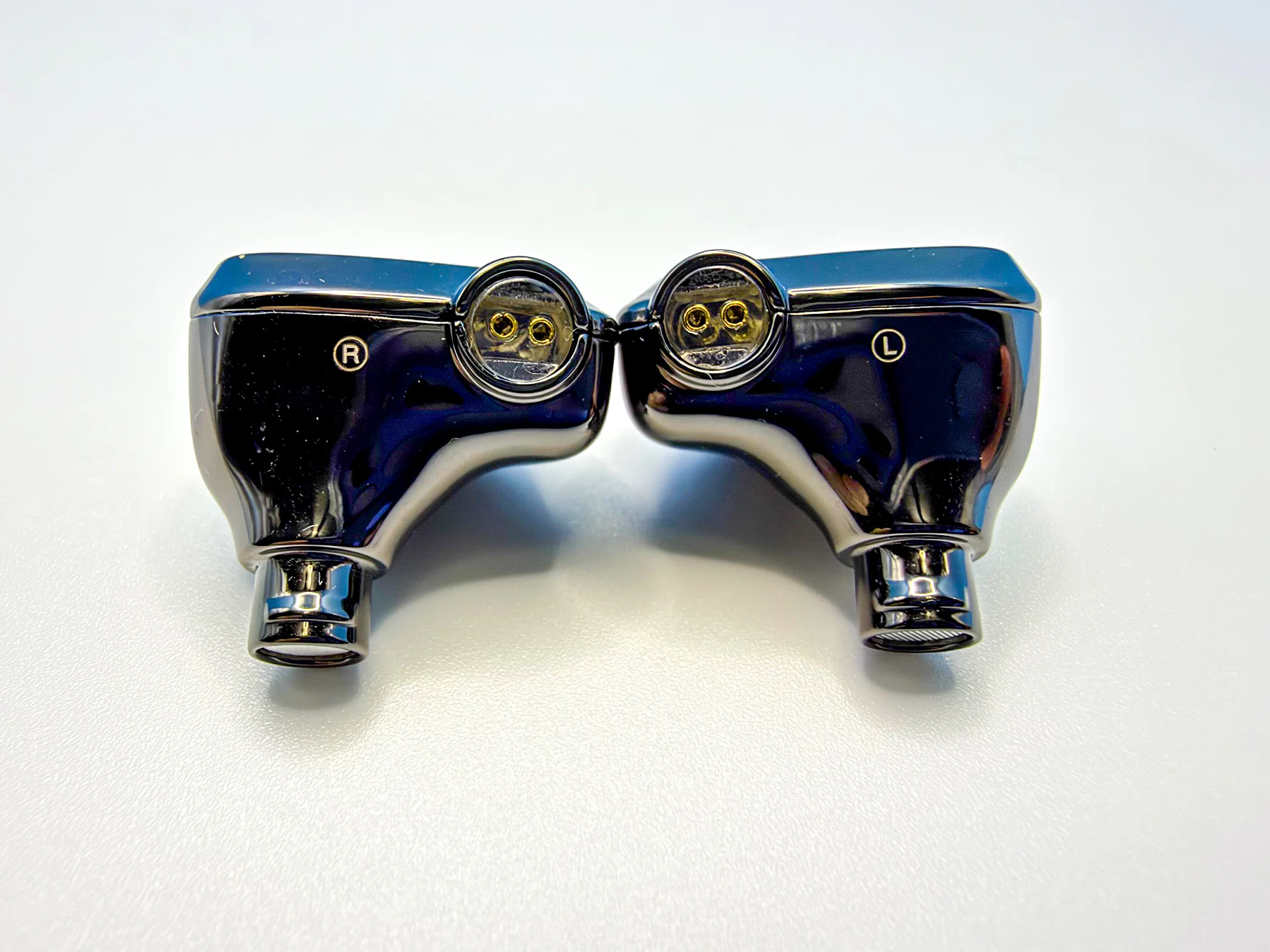
The Delta uses an electroplated zinc-alloy shell, a standard 0.78mm 2-pin connection, and comes in either 3.5mm or Type-C configurations. Sensitivity is rated at 120 dB/Vrms at 1kHz, impedance at 42Ω ±15% at 1kHz, and TWISTURA lists a frequency response of 8Hz-21kHz, with an effective response of 20Hz-20kHz.
Total harmonic distortion is rated at ≤0.5% at 1kHz and 94dB.
The supplied cable is oxygen-free copper, and the Type-C version includes the digital audio section built into the cable, which matters because that’s the version I was sent and judged first.
TWISTURA also describes the Delta as using what it calls “Reference Grade Tuning”, with controlled bass, richer mids, and enhanced treble.
That’s their language, not mine.
But it lines up pretty well with what I heard.
The bass is controlled.
The mids are absolutely one of the strongest parts of the tuning.
And the treble stays lively without turning the Delta into a brightness-first IEM.
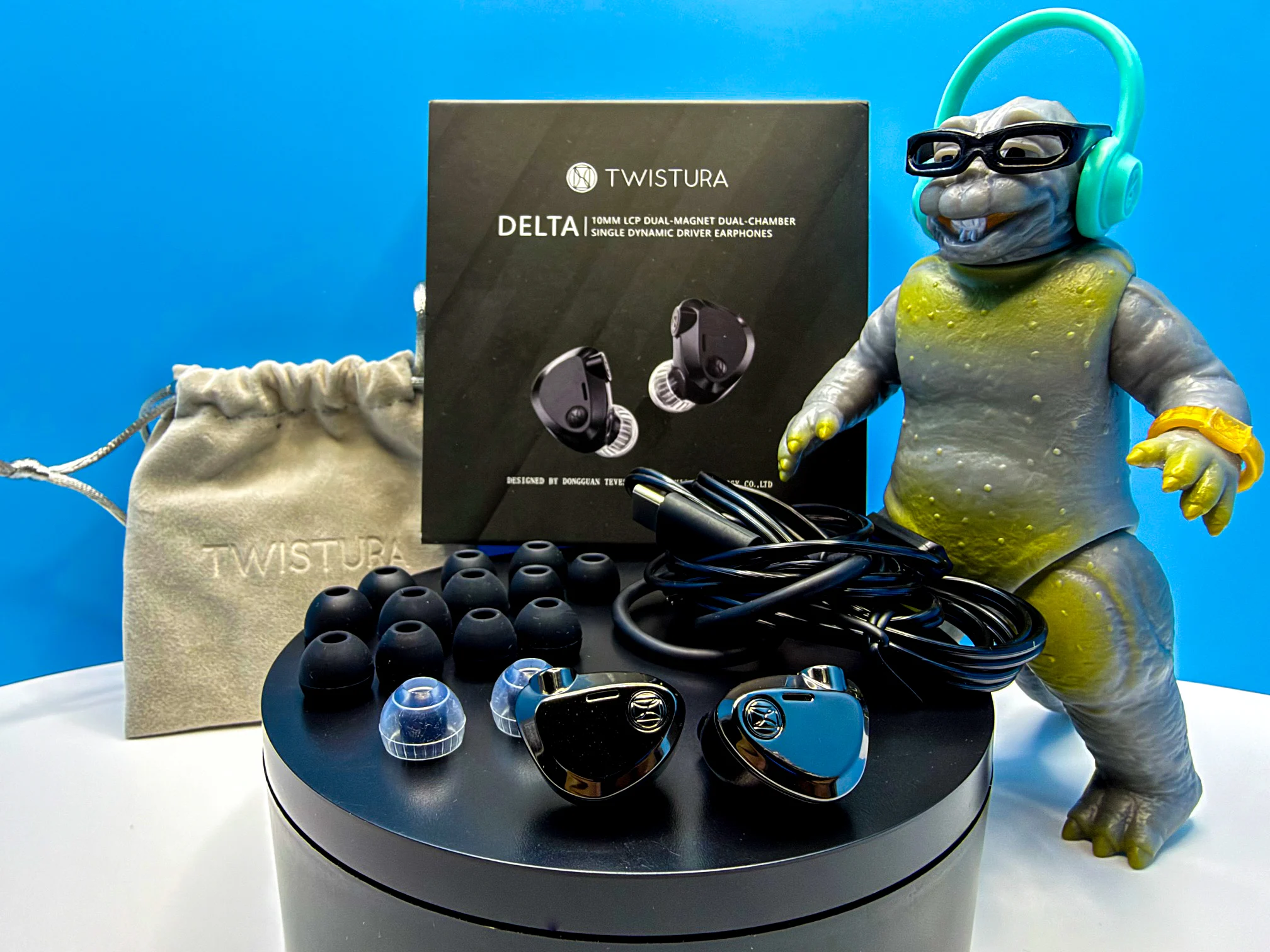
You also get seven pairs of silicone ear tips, plus the small storage pouch and supplied cable.
At this price, that’s plenty.
I’d rather the money go into the driver, shell, and tuning anyway.
And based on how the Delta performs, that seems to be exactly what happened.
📦 First Impressions: Somebody Polished the Kaiju
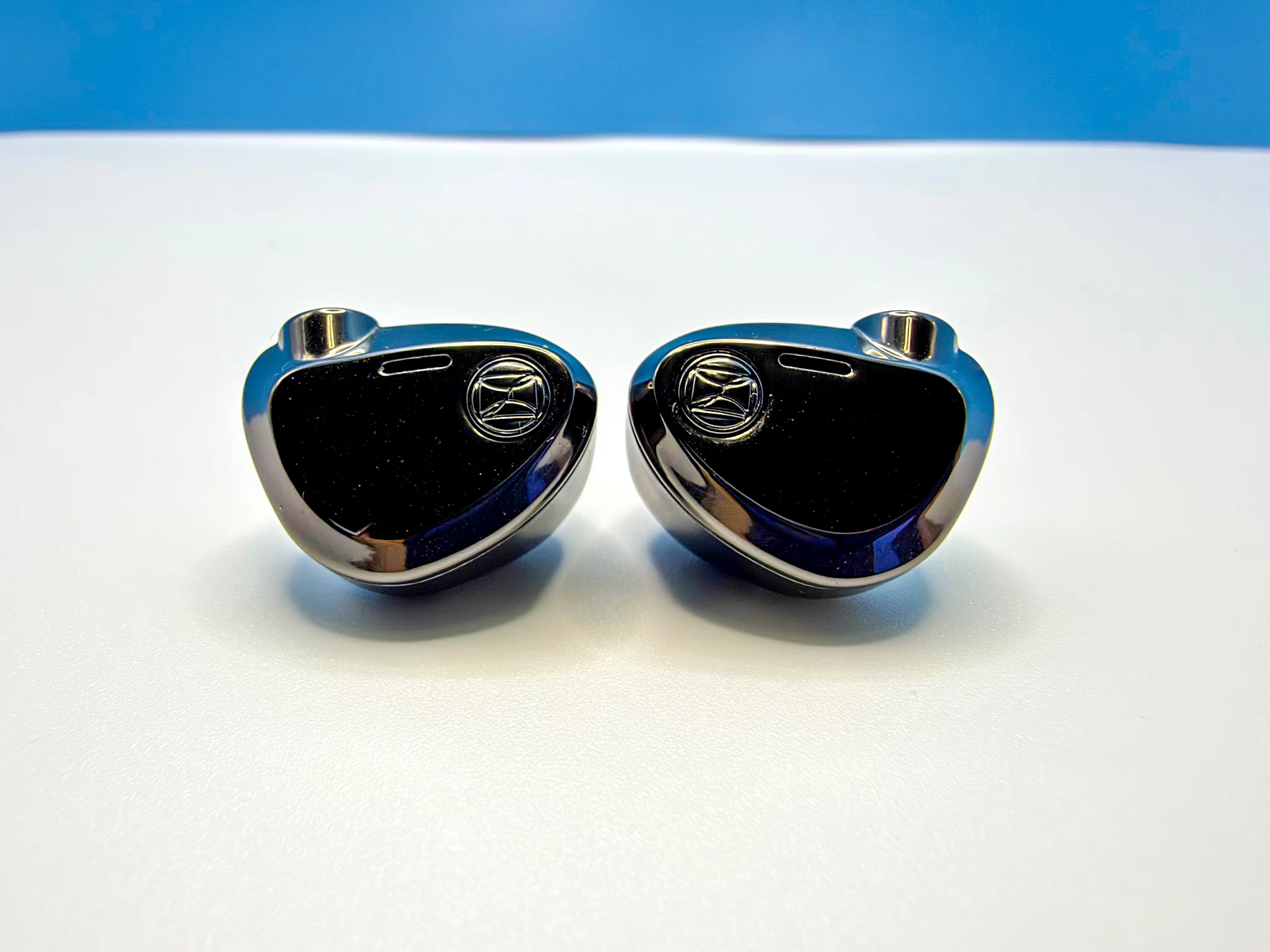
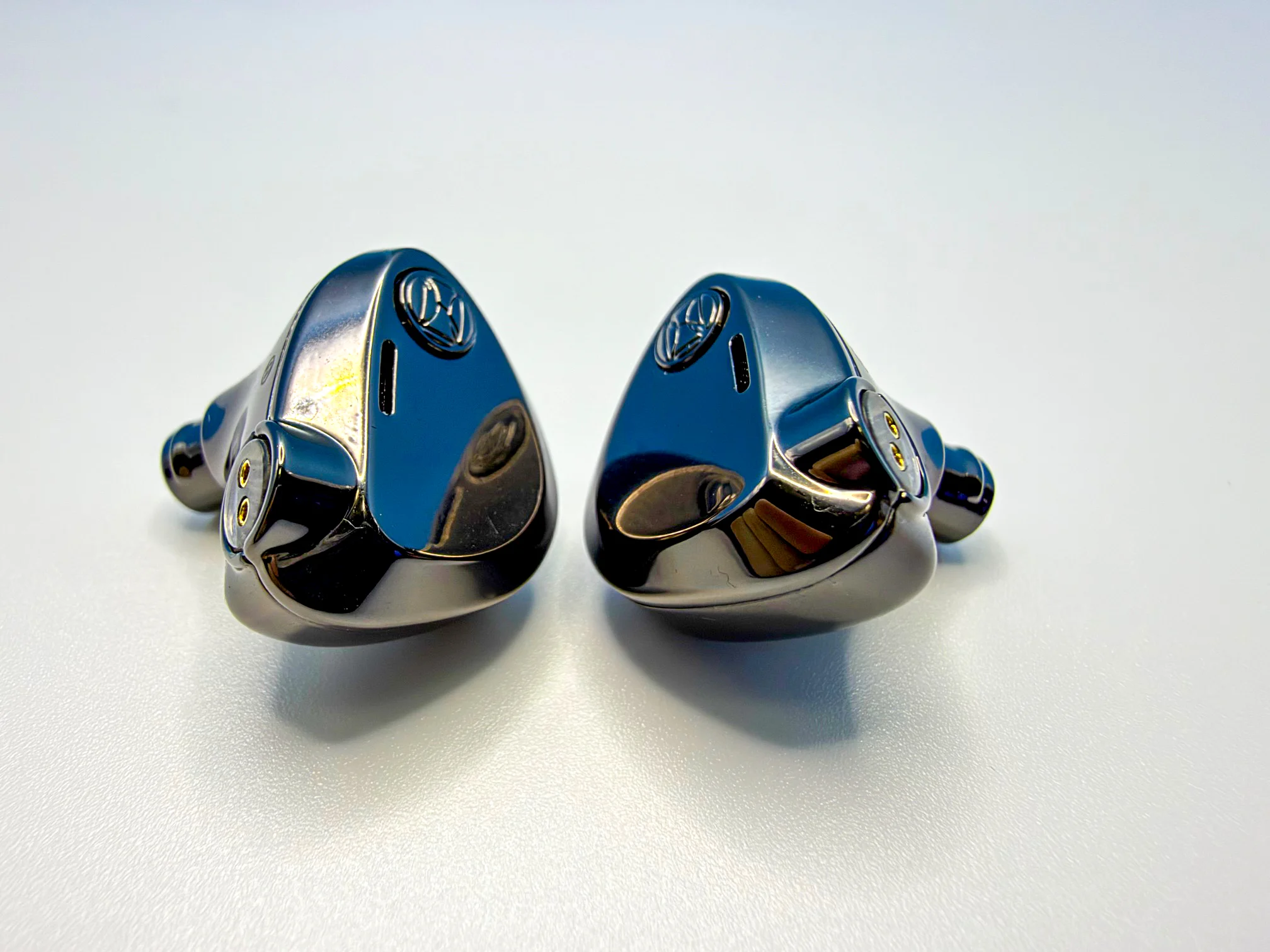
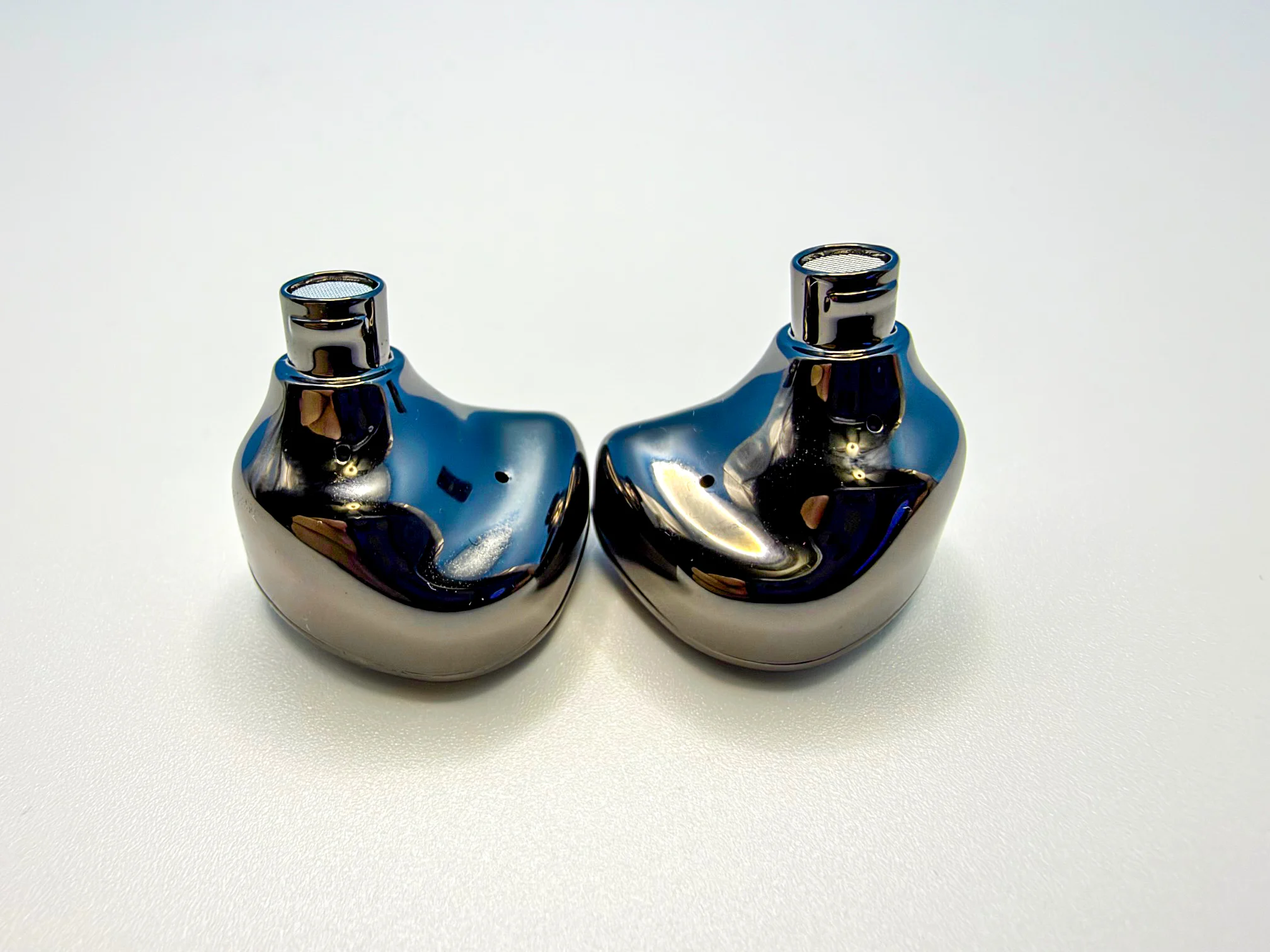
Before getting into the sound, we’ve got to talk about these shells because they immediately make the Delta feel more expensive than it is.
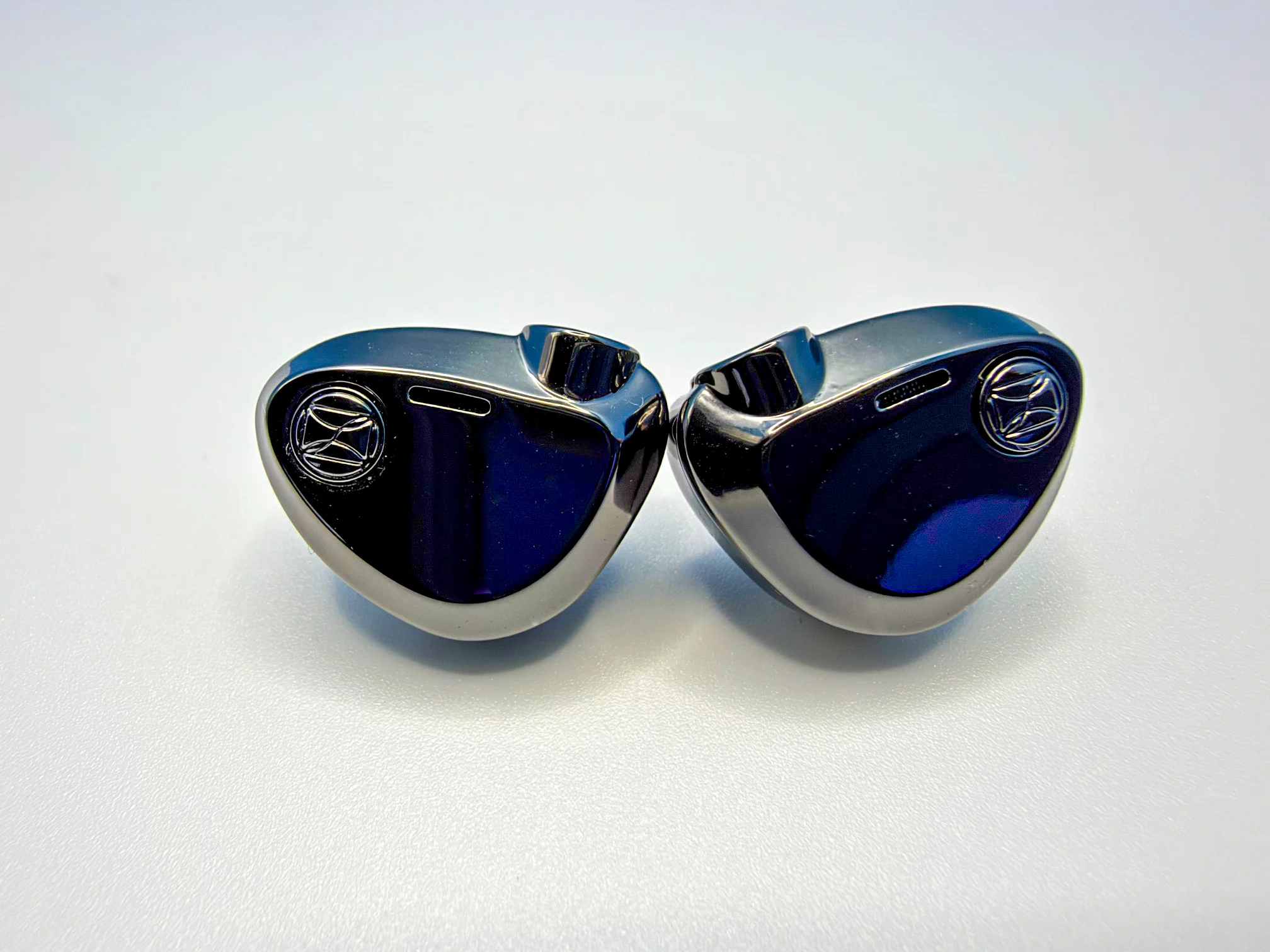
The polished metal construction gives the IEM a real sense of substance in the hand. The shells feel solid, the finish catches the light beautifully, and nothing about them looks or feels disposable. TWISTURA could’ve chased the lowest possible build cost and ended up with something that simply looked acceptable for the price, but the Delta has much more presence than that.
Unfortunately, so do my fingerprints.
Yikes.
The finish is an absolute magnet for oils and smudges, and it doesn’t take much handling before the shells start looking like crime-scene evidence.
Would I trade that polished finish for dull plastic just so I didn’t have to wipe them down?
Not a chance.
Give me a microfiber cloth, and I’ll enjoy the nice metal shells.
Problem solved.
📦 Accessories: Manage Your Expectations
This is one area where the Delta’s price shows up, and that’s completely fine.
You won’t open the box to find an oversized luxury presentation, an elaborate organizer, or a mountain of accessories designed to make the unboxing feel more expensive than the IEM itself. What you get is straightforward: a small drawstring-style pouch and a good selection of silicone ear tips.
Honestly, that’s enough.
At this price, I’d much rather TWISTURA spend the budget on the parts that actually matter once the box is closed. Give me enough tips to find a proper seal, give me something simple to keep the cable and IEM together, and put the rest into the shell, driver, and tuning.
That’s exactly what happened here.
The accessory package is basic, but the IEM doesn’t feel basic.
That’s the trade I want.
🎧 Review Setup
Every GearZilla review starts from the same place:
Listen first. Figure out the story later.
I don’t use EQ during my core evaluation, and because TWISTURA provided the DSP version, I started there. I wanted to hear the Delta as supplied before swapping anything out or introducing my own variables, because there’s no point reviewing a product after immediately replacing half the chain and pretending that’s still the stock experience.
So the first phase was simple: Delta, supplied DSP cable, stock experience.
Once I had a solid handle on the Delta’s character in that configuration, I moved over to my own house cables and started experimenting with copper-, silver-, and gold-based pairings, along with different sources. I wasn’t trying to fix anything because nothing needed fixing. I already liked the Delta. I just wanted to understand what changed and, even more importantly, what stayed consistent.
The tonal flavor shifted around the edges depending on the pairing. Some combinations added a little more body, while others leaned slightly cleaner or more open, but the Delta’s core personality remained remarkably stable. The bass stayed punchy, vocals stayed present, separation remained strong, and the overall presentation stayed distinctly forward.
That last part became one of the review’s defining traits.
This isn’t one of those IEMs where the singer seems to float several feet above the rest of the arrangement. It isn’t lofty or distant, and it isn’t trying to manufacture some enormous artificial ceiling over your head.
The Delta comes toward you.
Vocals move closer, guitars feel more immediate, and the beat lands with greater proximity. The whole presentation feels direct, connected, and alive.
And I really like that.
🧬 KAIJU DNA SCAN
Every monster leaves behind a genetic signature.
The Delta’s DNA is built around immediacy, punch, vocal presence, cohesion, and absolutely stupid value.
K • Kill Shot
Value is the weapon.
There are plenty of inexpensive IEMs that sound good.
That’s not particularly shocking anymore.
This market has become way too competitive for “it produces decent audio for thirty-something bucks” to be enough.
What makes the Delta different is how few times it makes me consciously accommodate the price.
I’m not constantly saying:
“Well, for the money…”
The bass isn’t good for the money.
I like the bass.
The vocals aren’t good for the money.
I like the vocals.
The shells don’t look nice for the money.
They’re just nice.
That’s a very different value proposition.
The Delta doesn’t spend the entire review asking meto forgive its.
It just delivers.
A • Anatomy
At the heart of the Delta is a single dynamic driver.
And I love a good single dynamic driver.
There’s something wonderfully coherent about getting the whole frequency range from one well-behaved driver.
Bass flows naturally into the mids.
The mids transition cleanly upward.
Nothing feels like three different driver technologies arguing over whose shift started at 2 kHz.
The Delta feels connected.
That’s one of its biggest strengths.
It doesn’t sound complicated.
It sounds whole.
And at this price, I’d much rather have one driver doing its job properly than an ambitious driver count being used as a marketing bullet point.
I • Impact
The Delta has punch.
Not absurd bass-cannon punch.
Not “somebody loosened my fillings” punch.
Just good, satisfying rhythmic impact.
Kick drums have weight.
Bass guitar has body.
Electronic tracks have enough low-end authority to keep things fun.
The important part is that the bass doesn’t hang around too long.
There’s enough control to keep the midrange from getting buried under warmth.
That helps vocals remain present and allows the Delta to stay energetic without becoming thick.
There’s some stomp here.
Enough to remind you there’s a little kaiju in the shell.
J • Joy
This might actually be my favorite thing about the Delta.
Eventually, I stopped reviewing it.
I just started playing music.
That’s always telling.
There are products where I’m constantly moving around the playlist trying to find another technical challenge.
Another congestion test.
Another bass texture test.
Another track where I can interrogate the treble.
Then there are products where I suddenly realize I’ve listened to six songs in a row because I wanted to hear the songs.
The Delta did that.
I wasn’t working anymore.
I was listening.
That’s the whole damn point.
U • Unleashed
Once I stopped asking the Delta to prove something and simply let it play, its personality made complete sense.
This isn’t some ultra-airy technical exhibition.
It’s not trying to convince me I’m sitting inside an enormous concert hall.
It’s a forward, punchy, cohesive, incredibly enjoyable single-DD IEM that puts the music right in front of me.
That’s what it does.
And it does it really well.
🎼 Sound: Front Row, Not Balcony
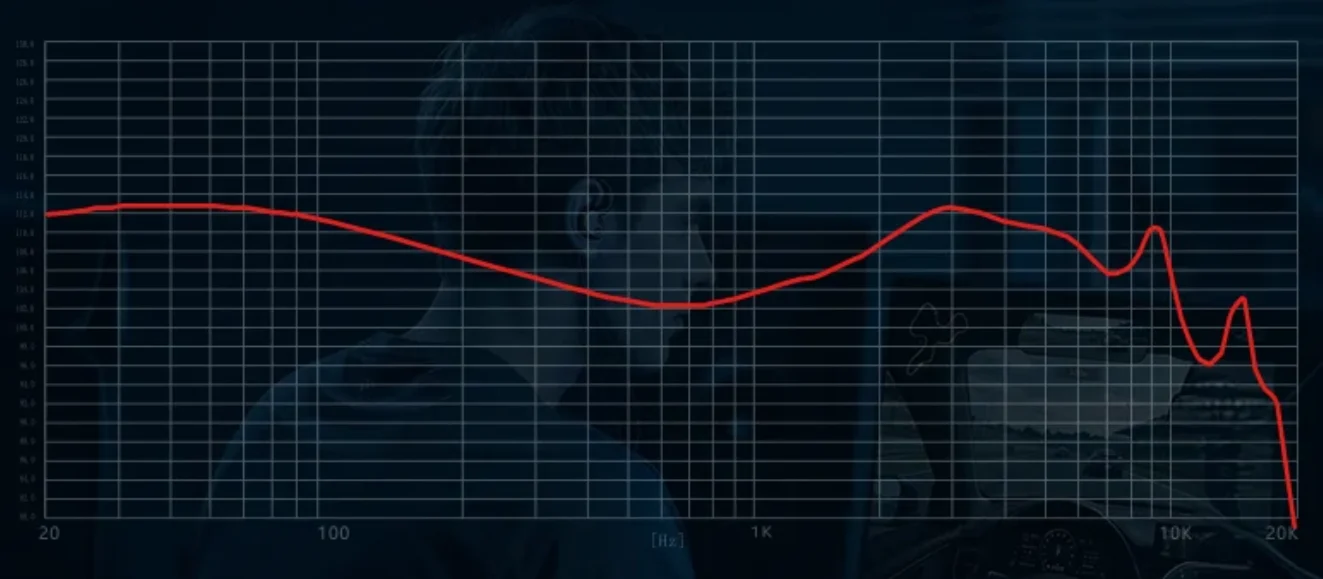
If I had to describe the Delta in four words, they’d be forward, punchy, cohesive, and fun.
I keep coming back to forward because that’s the clearest way to explain how the Delta differs from the kind of presentation I often gravitate toward. I love airy IEMs, lifted vocals, and that strange little trick where a singer seems to float independently in space while the instruments stretch outward around them.
The Delta doesn’t really do that.
Instead, it pulls you toward the performance. Think front row rather than balcony, or a smaller venue where you feel physically closer to the band instead of standing back and admiring the size of the room.
There’s still useful width, solid positional information, and enough breathing room around the musicians to keep things from feeling cramped. But the Delta’s emotional center is proximity. The music feels immediate, connected, and close.
And sometimes that’s exactly what I want.
🥁 Bass: Little Monster Has Some Stomp
The bass works because TWISTURA doesn’t get greedy.
There’s enough quantity to keep the Delta fun, enough punch to give kick drums satisfying physicality, and enough low-end weight to keep bass guitar and electronic tracks properly grounded. What TWISTURA avoids is piling on so much warmth that the rest of the tuning starts leaning backward under it.
The Delta’s bass understands its role. It hits with authority, supports the rhythm, then gets out of the way.
That balance matters because vocals are one of the strongest parts of the presentation. Too much mid-bass warmth could’ve easily pushed them back or softened the Delta’s immediacy, but that never becomes a real problem here. Instead, the low end gives the music body while the midrange stays open enough for vocals to keep their presence.
The bass brings the weight. The vocals keep the spotlight.
Everybody wins.
🎤 Midrange & Vocals: Come a Little Closer
This is where the Delta really clicked for me because the vocals are forward without feeling artificially shoved into your forehead. They sit confidently in front of the arrangement, close enough to feel immediate and expressive, but still connected to everything happening around them.
That presentation is different from the floating, elevated vocal style I often love, where the singer seems to hover above the rest of the mix. The Delta doesn’t do that. Instead, it brings the vocalist toward you, and that intimacy works especially well with singer-songwriter material, rock, pop, and anything where the voice carries much of the emotional weight.
Female vocals have good clarity and energy, while male vocals retain enough body to avoid sounding thin or papery. Because the bass stays controlled and doesn’t smear heavily into the lower mids, the voices have room to establish themselves without excess warmth pushing them back.
I don’t feel like I’m watching the singer from the back of the venue.
I’m closer to the microphone.
That’s the Delta’s vocal trick. It gives voices presence and immediacy without separating them unnaturally from the band.
They’re not floating 10 feet above everybody else.
They’ve simply stepped closer.
🎯 Separation & Placement: Everybody Knows Where to Stand
The Delta does an impressive job organizing the music, especially for something this inexpensive.
I’m not going to pretend this is flagship imaging, because it isn’t. More expensive IEMs can give individual sounds more dimensionality, sharper boundaries, and a stronger sense that each performer occupies a fully developed space of their own.
The Delta does a good job of keeping everything understandable.
Guitars stay distinct from percussion, vocals hold a stable center, effects moving across the stereo image are easy to follow, and busier arrangements don’t collapse into one indistinct blob. There’s enough separation and positional clarity that I can follow individual performers without having to work for it.
That’s really what matters here.
The Delta may not build every instrument into a perfectly sculpted 3D object, but it keeps the arrangement organized and gives each element room to do its job.
At this price, that’s more than good enough.
Everybody knows where they’re supposed to stand.
🌌 Space, Depth & Placement: Forward Doesn’t Mean Small
This is probably the easiest part of the Delta to misunderstand because forward doesn’t automatically mean congested.
The Delta brings the performance closer, but it still gives the music enough lateral spread and front-to-back information to establish real layers. Instruments have breathing room, vocals hold a clear position, and the presentation never feels like everything has been shoved into one narrow space just because the center image sits closer to you.
What you don’t get is exaggerated scale. The stage doesn’t seem to stretch upward forever, vocals don’t hover above the mix, and the Delta isn’t constantly trying to manufacture some oversized sense of space just to sound impressive.
Instead, the whole performance feels more immediate and connected.
That’s why front row keeps working for me.
You’re not standing back admiring the venue.
You’re watching the band.
There’s a difference.
🔬 Detail & Resolution: Keep It Real
This is where some perspective helps.
The Delta is inexpensive, and higher-end IEMs will still give you more texture, finer decay, deeper layering, and more dimensional information in instruments and voices. They’ll uncover smaller details buried deeper in dense recordings, and none of that suddenly stops being true just because the Delta is an excellent value.
What matters is that the Delta gives me enough resolution that I never feel like the music is being blurred together or covered in haze. Subtle elements don’t constantly disappear, and there’s enough clarity and information to keep familiar recordings engaging without making me feel like I’m missing the point of the performance.
That’s really the win here.
The Delta isn’t pretending to be a microscopic detail monster. It simply retrieves enough information, with enough control, that I can hear what’s happening, follow the arrangement, and stay focused on the music instead of the limitations.
And once again, the price only enters the conversation after I’ve already decided I’m enjoying myself.
That’s a very good sign.
✨ Treble & Air: Just Enough Light
The Delta’s treble stays lively without ever taking over the presentation, and that balance matters because the rest of the tuning already brings the music closer.
There’s enough sparkle to keep cymbals crisp, enough upper-frequency energy to define vocals and instruments, and enough air to keep the forward presentation from feeling closed in. TWISTURA could’ve pushed the upper mids and treble harder to create more apparent detail, but that would’ve risked turning the Delta’s immediacy into fatigue.
Instead, the top end feels well judged. It adds energy, openness, and a little extra light around the music without becoming the thing I’m constantly noticing.
The treble supports the Delta’s personality instead of trying to become its personality.
Exactly as it should.
🎵 Tonality & Timbre: Single-DD Goodness
This is another reason I think the Delta works so well.
There’s a natural cohesiveness to the tone.
Instruments generally sound believable.
Vocals don’t have that plasticky artificial edge some inexpensive sets can introduce.
Drums have appropriate weight.
Strings retain enough texture to sound like strings rather than frequency-response events.
The Delta doesn’t constantly remind me that I’m listening to a driver trying to reproduce a recording.
It lets the music happen.
There’s something to be said for that.
Especially when it costs this little.
👂 Tip Rolling: Solve the Seal First
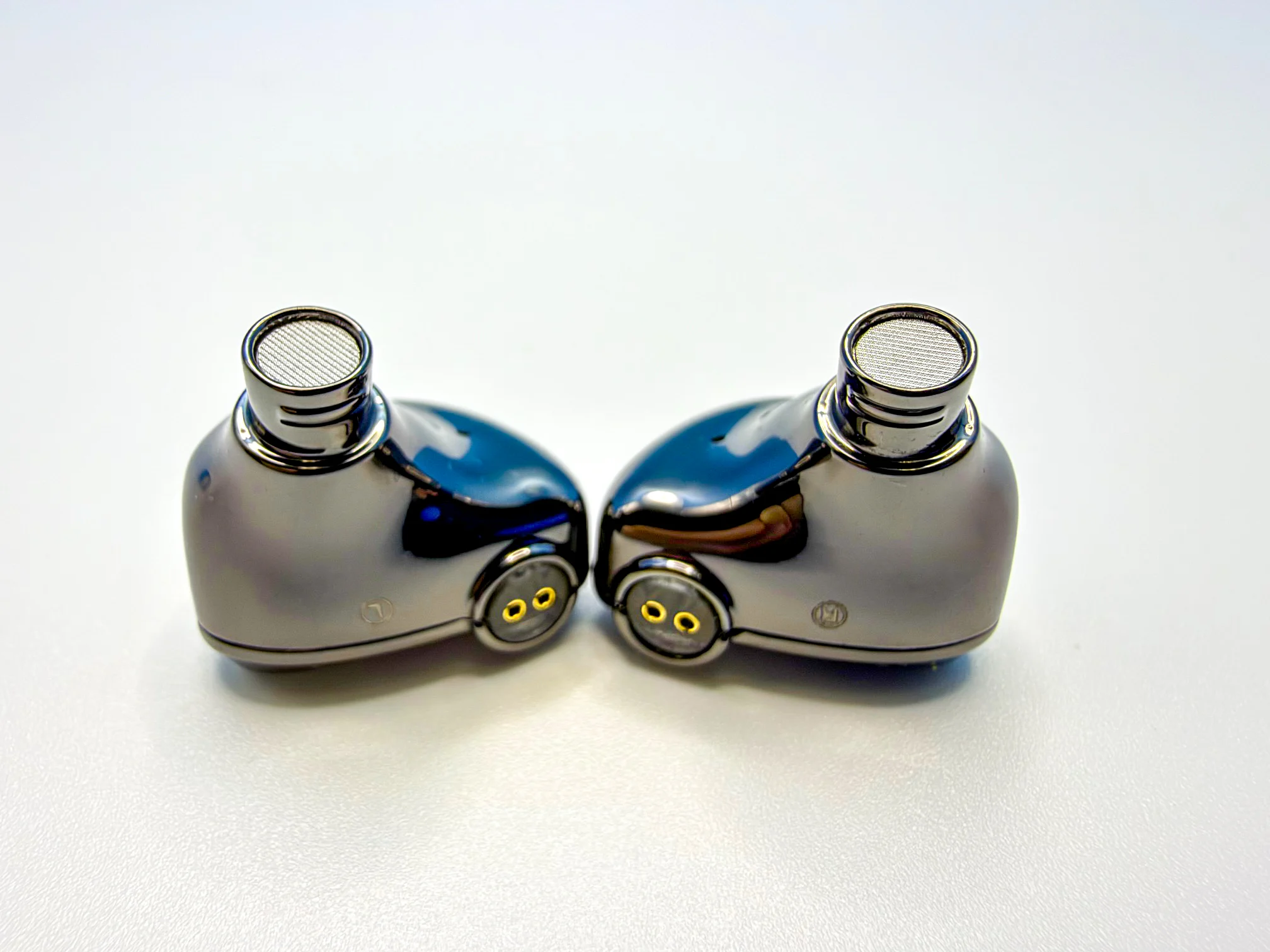
TWISTURA includes a good selection of silicone tips, and I’d start there before doing anything more complicated.
The Delta doesn’t need an elaborate tip-rolling experiment to sound right. Find the size that gives you a proper seal, make sure both sides are sitting consistently, and listen. If the bass sounds unusually thin, the presentation feels uneven, or one side sounds different from the other, fit is probably the issue.
We love turning ear tips into graduate-level research projects in this hobby, but sometimes the answer really is that simple.
Fit first.
Once I had a proper seal, the Delta’s tonal balance fell into place, and I could focus on tuning instead of chasing fit-related problems.
🔌 Cable Testing: DSP First, Then the House Came Out
Because I received the DSP version, I wanted to hear it through the supplied cable first. That’s the product TWISTURA sent me, and that’s the experience I needed before I started changing anything.
Once I felt confident I understood the Delta in that configuration, I pulled out my house cables and started experimenting with copper-, silver-, and gold-based pairings, along with different sources. The tonal flavor shifted around the edges depending on the combination. Some pairings leaned a little richer, while others sounded slightly cleaner or more open.
Beyond those smaller changes, the Delta’s core personality stayed intact.
The Delta remained the Delta.
The bass stayed punchy, the vocals stayed present, and the presentation stayed forward. That gave me much more confidence in my final impression because it showed me the character I was enjoying wasn’t simply being manufactured by the supplied DSP cable.
You’re hearing the personality of the IEM itself, with the cable and source adding flavor around the edges rather than rewriting the recipe.
🔥 Source Pairing: Don’t Turn This Into Homework
One of the best things about the Delta is that it doesn’t demand an elaborate chain to sound good.
You don’t need to attach it to a desktop stack heavier than your laptop, spend three evenings arguing with yourself about amplification, or turn ownership into a side project just to hear what this IEM can do. The Delta is already enjoyable with a straightforward setup, and that’s a big part of its appeal.
That doesn’t mean it won’t respond to experimentation. I swapped sources and cables, and I had fun hearing how the presentation shifted around the edges. Some pairings added a little more body, others leaned slightly cleaner or more open, and that kind of tinkering can absolutely be enjoyable if that’s your thing.
But here’s the important distinction:
The Delta doesn’t need help being good.
Better gear around it can give you room to experiment, but that’s very different from needing better gear to make the IEM enjoyable in the first place.
Plug it in, play music, and you’re already most of the way there.
☁️ Comfort: Metal Without the Punishment
Metal shells can look gorgeous right up until your ears remind you why lightweight resin became so popular, but the Delta never gave me that problem.
There’s enough substance here to make the shells feel premium, yet the shape distributes that weight well enough that I never found myself fighting obvious pressure points. Once I had the right tips and a proper seal, the Delta settled naturally and stayed comfortable through longer listening sessions without the metal construction becoming part of the experience.
That’s exactly what I want from an IEM like this.
I want to notice the shell when I take the Delta out of the pouch. I want to appreciate the finish, the weight, and the build quality in my hand.
But 20 minutes after I put it in my ears?
I don’t want to think about the shell at all.
The Delta mostly disappears, letting the music take over.
Mission accomplished.
🎨 Design & Build: CSI – GearZilla
These shells look dramatically more expensive than the IEM actually is, and that’s probably the first thing I’d show someone who hadn’t seen the Delta before.
Look at this thing.
Polished metal has a richness that inexpensive plastic simply doesn’t replicate. The Delta feels substantial in the hand, catches light beautifully, and photographs like something that belongs in a much higher price bracket. The finish gives the whole design a premium presence that immediately makes the asking price feel a little absurd.
Of course, that polish comes with one very predictable side effect.
Fingerprints. Everywhere.
The finish is a magnet for oils and smudges, and it takes little handling before the shells start looking like crime-scene evidence. That’s easily the biggest design complaint I can come up with, but it’s also hard to treat it like a meaningful strike against the Delta.
I won’t dislike a beautifully finished metal IEM because I occasionally need to wipe it down.
That’s not a flaw.
That’s a reason to own a cloth.
I’ve survived greater hardships.
📦 Accessories & Presentation: Exactly Enough
At this price, expectations need to stay realistic.
The Delta doesn’t arrive in some oversized presentation box with a premium leather case, elaborate cable organizer, and a mountain of accessories designed to make the unboxing feel more expensive than the IEM itself.
You get what you need: a small drawstring-style pouch for storing the IEM and cable, plus a good selection of silicone tips to help you find the right seal.
And honestly, that’s enough.
TWISTURA could’ve added a hard case, more packaging, or extra accessories, but all of that would’ve added cost somewhere. I’d much rather see that money go into the metal shells, the driver, the tuning, and the actual listening experience.
That’s why the sparse accessory package doesn’t really bother me. If anything, it reinforces the Delta’s value story.
TWISTURA seems to have spent the money where it matters most: on the IEM itself.
Correct decision.
💰 Value: This Is Where Things Get Stupid
There are good, inexpensive IEMs; there are very good, inexpensive IEMs; and then there are products that make you wonder how much longer price will remain a reliable indicator of what you’re actually getting.
The Delta lives much closer to that third category.
Sure, the little pouch isn’t fancy. The polished metal shells collect fingerprints, and the accessory package won’t fill an entire desk drawer. But none of those things are why I’m buying an IEM in the first place, especially at this price.
I want it to sound good, and the Delta does. I want enough bass to make music fun without overwhelming everything above it, vocals with real presence, and enough separation and placement that a busy arrangement doesn’t collapse into one indistinct wall of sound. I want something comfortable, well-made, and easy enough to drive that I don’t have to rebuild my entire audio chain just to hear what it’s capable of.
The Delta checks every box.
That’s where the value proposition starts getting ridiculous. TWISTURA didn’t spend the budget trying to make the box feel expensive. It spent it on the part that actually goes in your ears. The metal shells feel substantially more premium than the price suggests, the tuning has a real personality, and the overall performance doesn’t constantly ask me to lower my expectations because this is an inexpensive IEM.
That’s a huge distinction.
At some point, value stops being about how many accessories are included or how many features can be squeezed onto the product page. For me, it becomes a much simpler question:
How many meaningful reasons can I find not to recommend this thing?
With the Delta, I’m struggling.
That’s why it gets the full score here.
💰 Value: 5/5
Not because the Delta is somehow perfect or because it competes with every IEM at every price.
It doesn’t have to.
It absolutely nails what matters at the price, and that’s what great value looks like.
👹 Who Is This For?
Honestly?
A lot of people.
If you’re brand new to wired IEMs and want to understand why this hobby has become so ridiculous, the Delta is a fantastic starting point.
You get an engaging sound without being asked to spend serious money right away.
If you’re already neck-deep in this hobby, the Delta still makes sense.
Keep it at work.
Throw it in the travel bag.
Use it as a knock-around set.
Keep it around for comparisons.
Hand it to somebody who asks why you own seventeen pairs of earphones.
This isn’t a beginner product that experienced listeners somehow graduate beyond.
It’s just a really good inexpensive IEM.
If you love a more immediate presentation, punchy bass, present vocals, natural cohesion, and a shell that looks like it costs way more than it does, you’ll understand this thing very quickly.
If your absolute priority is giant scale, extreme microdetail, or huge elevated vocals floating miles above your forehead, that’s not the Delta’s personality.
It isn’t trying to be that.
And I’m glad it isn’t.
I don’t need every monster to have the same powers.
🦖 GearZilla Scorecard
✨ Clarity: 4.7/5 – Clean, organized, and surprisingly unobstructed. The Delta lets you follow the music easily without relying on exaggerated brightness to create fake clarity.
🎤 Midrange & Vocals: 4.8/5 – One of the Delta’s strongest areas. Vocals are present, expressive, and confidently forward without feeling unnaturally detached from the rest of the arrangement.
🥁 Bass: 4.7/5 – Punchy, controlled, and satisfying. It has enough authority to make the music fun without turning the Delta into a bass-dominated set.
🎯 Separation & Placement: 4.7/5 – Excellent organization for the price. Instruments keep their own space, vocals stay centered, and busier tracks remain remarkably clear.
🌌 Space, Depth & Placement: 4.5/5 – There’s good width and useful depth, but the Delta isn’t lofty or exaggeratedly spacious. Its personality is intentionally more immediate and forward.
🔬 Detail & Resolution: 4.5/5 – More than enough information retrieval to stay engaging, although higher-end sets will expose additional texture, decay, layering, and dimensional nuance.
✨ Treble & Air: 4.6/5 – Lively enough to keep the Delta open and energetic without making the upper frequencies the whole story.
🦴 Slam & Dynamics: 4.7/5 – Strong rhythmic punch and satisfying macrodynamic energy. Drums land with authority and the Delta rarely feels sleepy.
🎤 Vocal Lift: 4.7/5 – Vocals don’t float high above the arrangement, but they push confidently forward and remain one of the first elements your attention locks onto.
⚡ Speed & Transients: 4.6/5 – Quick enough to keep complex material organized while retaining the natural flow and body of a good single dynamic driver.
🎵 Tonality & Timbre: 4.8/5 – Natural, cohesive, and easy to trust. Instruments and vocals generally retain believable weight and texture without obvious artificial coloration.
🎛️ Tuning & Pairing Flexibility: 4.7/5 – I started with the supplied DSP cable, then moved through copper, silver, and gold-based house cables across different sources. The finer tonal flavor shifted, but the Delta’s core personality remained intact.
☁️ Comfort & Fit: 4.7/5 – Solid metal construction without becoming cumbersome. Once properly sealed, the Delta settled comfortably for extended listening.
🎨 Design & Build: 4.9/5 – Beautiful metal shells with a genuinely premium feel. The only real complaint is that you’ll discover fingerprints you didn’t know you had.
📦 Accessories & Presentation: 4.2/5 – Basic, but appropriate for the price. You get a small drawstring-style pouch and a useful variety of silicone tips. I’d rather TWISTURA spend the money on the IEM, and apparently they did.
💰 Value: 5/5 – This one’s easy. The Delta gives me almost nothing meaningful to complain about while delivering sound and construction that feel dramatically beyond its price.
🦖 Overall GearZilla Score: 4.8/5 • S-Class Kaiju
🦖 Final Roar
I’ve been trying to come up with the big dramatic flaw, the thing I’m supposed to warn you about that somehow balances out all this praise, and I keep coming back to the same conclusion:
I don’t really have one.
Sure, those gorgeous polished metal shells collect fingerprints like they’re gathering evidence, and the accessory package is pretty basic. You get a small pouch, a healthy selection of silicone tips, and the essentials. But this is an inexpensive IEM. I don’t need TWISTURA to give me a luxury briefcase or fill the box with accessories I’ll never use. I need the thing inside that box to deliver.
It does.
That’s really the story of the Delta. The bass has satisfying punch, the vocals come forward beautifully, the tuning feels cohesive, and there’s enough separation and convincing placement to keep everything organized without losing the natural flow I love from a good single dynamic driver. The metal shells feel dramatically more expensive than they are, comfort has been excellent for me, and this isn’t an IEM that needs some elaborate chain before it starts showing you what it can do.
I was provided the DSP version, so I started there, judging the Delta exactly as TWISTURA sent it. Later, I moved away from the supplied DSP cable and started rotating through my own copper, silver, and gold-based house cables across different sources. The finer tonal flavor could shift with the pairing, but the Delta’s fundamental personality never disappeared.
That matters, because I didn’t fall for some DSP trick.
I like the IEM.
And I especially like the way it presents music. The Delta isn’t lofty or distant, and it doesn’t try to manufacture some enormous artificial venue around every recording. Instead, it pulls the performance closer. Vocals step toward you, drums hit with immediacy, guitars have presence, and the whole presentation feels more like you’ve moved toward the stage rather than watched the stage get artificially bigger.
I love a huge view. I love airy presentations and vocals that seem to float above everything else. Sometimes I want the balcony. Sometimes I want to stand on the mountain and watch the horizon disappear.
But sometimes?
I want to be close enough to see the band sweat.
That’s the Delta.
And considering what this thing costs, I’m running out of meaningful reasons to tell somebody not to buy it. It’s affordable without constantly reminding me it is. It looks good, sounds good, feels good, and, most importantly, it keeps me wanting to play another song.
So I’m not going to complicate this.
Blind buy.
There, I said it.
At some point, the analysis has to stop, and the music has to start. The TWISTURA Delta makes that transition ridiculously easy.
This little monster simply delivers.
🏆 GearZilla Budget Beast Award
Keep the microfiber cloth nearby.
You’re gonna need it.
Hear the GearZilla Roar. 🦖🎧
Listen Bigger!
🔥 Thirty-something bucks. 4.8/5. Almost nothing to dislike. Unleash the TWISTURA Delta:
https://twistura.com/products/delta-all-scenario-single-dynamic-driver-detachable-cable-earphone
Share This Story, Choose Your Platform!