



🧪 Into the Kaiju Lab
Ear tips might be the smallest part of your audio chain, but I’ve never been a skeptic about what they can do. I’ve heard and experienced firsthand how much the right tip can change both the sound of an IEM or TWS set and the experience of actually wearing it. 🎧
So I had an idea.
What if, instead of testing one or two ear tips in isolation, I ran an entire portfolio through the GearZilla Kaiju Lab? 🦖
I wanted to better understand the how, why, and what behind tip rolling. How much does material matter? Why does one tip work beautifully on one IEM and fall flat on another? What changes when you move from sticky to smooth silicone, from a standard design to something more specialized, or from a desktop chain to a portable rig?
I reached out to AZLA with that idea, and Eleanor and the AZLA team were incredibly kind and generous enough to indulge my Kaiju Lab manifestation, sending over a broad selection of their ear tips so I could put the concept to work.
That meant six AZLA models went into immediate rotation:
- SednaEarfit ORIGIN
- SednaEarfit Mithryl
- SednaEarfit Crystal Standard
- SednaEarfit Crystal for TWS
- SednaEarfit MAX for TWS
- SednaEarfit MAX ASMR
And this wasn’t a quick listen. I spent more than a month swapping, comparing, and retesting them across a frankly ridiculous collection of IEMs and TWS sets, then changing cables, sources, and amplification around them to see how each tip behaved as the rest of the chain cs well.
I also rotated through different cables, dongles, portable players, wireless receivers, solid-state amps, R2R gear, and tube amplification to see how the tips behaved as the rest of the chain changed around them. ⚡
The goal wasn’t to crown one winner. It was to understand the lineup and figure out where each one fit into the bigger picture.
What does each one bring to the experience? How does it feel? What changes when you put it on an IEM you already know? Why would you choose one over another, and who is each model really for?
That matters because there really isn’t one universal “best” ear tip. Your ears, the IEM, its nozzle, the source, the music you’re listening to, and even how long you plan to wear it can all change what works best.
And that’s where tip rolling gets interesting.
It isn’t just an audiophile ritual involving tiny silicone objects multiplying across your desk like kaiju eggs. 🥚🦖 Done thoughtfully, it’s a legitimate and surprisingly accessible way to experiment with comfort, seal, stability, and presentation without replacing the gear you already own.
The goal isn’t necessarily to make an IEM sound completely different. In many cases, you’re refining what’s already there, strengthening the seal, changing the fit, altering how deeply the nozzle sits, or simply finding a combination that lets you hear the IEM the way you always hoped you would.
Sometimes the best upgrade isn’t another IEM.
Sometimes it’s the tiny piece of silicone sitting at the very end of the one you already love. 🎶
📢 Disclosure
Many thanks to Eleanor and the AZLA team for their support and generous assistance. AZLA provided the ear tips featured in this guide for testing and evaluation, and they were kind enough to indulge the full GearZilla Kaiju Lab experiment.
Now, a very important disclaimer: this was not exact science. In fact, no actual science was harmed, performed, or even particularly consulted during the making of this article. 🧪
There may have been some sorcery, a little audio alchemy, and possibly a touch of kaiju magic, but nothing even remotely resembling controlled laboratory testing. ✨🦖
This was really just one kaiju, a pile of gear, and a lot of curiosity going on an adventure together.
The impressions here are based entirely on my own listening, fit testing, and hands-on experience across the IEMs, TWS sets, cables, sources, and amplification described below. Your ears, fit, anatomy, and preferences can absolutely produce different results.
AZLA had no editorial control over the article and did not review or approve my conclusions before publication.
🎧 Tip Rolling Isn’t Magic, But It Absolutely Matters
Ear tips can change what you hear because they change the physical connection between the IEM and your ear. Seal, insertion depth, stability, bore shape, and nozzle position all affect how sound reaches your ear canal, which means a tip swap can change the way you perceive bass weight, vocal presence, treble energy, openness, depth, and placement.
Sometimes the difference is subtle. Other times, you swap tips, hit play, and immediately wonder where that version of your IEM has been hiding. 🦖
That doesn’t mean a different piece of silicone can completely rescue an IEM whose fundamental tuning just doesn’t work for you. If you dislike the core sound, an ear tip isn’t going to rebuild the crossover, replace the drivers, and summon an entirely different IEM through some audiophile ritual.
Think of tipping as seasoning a dish. 🍽️ You’re not turning chicken into steak, but the right seasoning can bring out flavors that were already there, tame something that was overpowering, or simply make the whole experience more enjoyable.
And comfort belongs in this conversation too. A tip that sounds fantastic but constantly works itself loose, creates pressure or starts hurting after twenty minutes isn’t really an improvement. The sweet spot is where sound, seal, stability and comfort all come together.
That’s also why tip rolling gets much more interesting once you start combining different tips with different IEMs, cables and sources. A combination that works beautifully with one setup may behave completely differently with another, and suddenly that tiny piece of silicone becomes another useful tool for shaping the experience.
No magic wand required.
Although after a month in the Kaiju Lab, I’m not completely ruling out a little sorcery. 🧪✨🦖
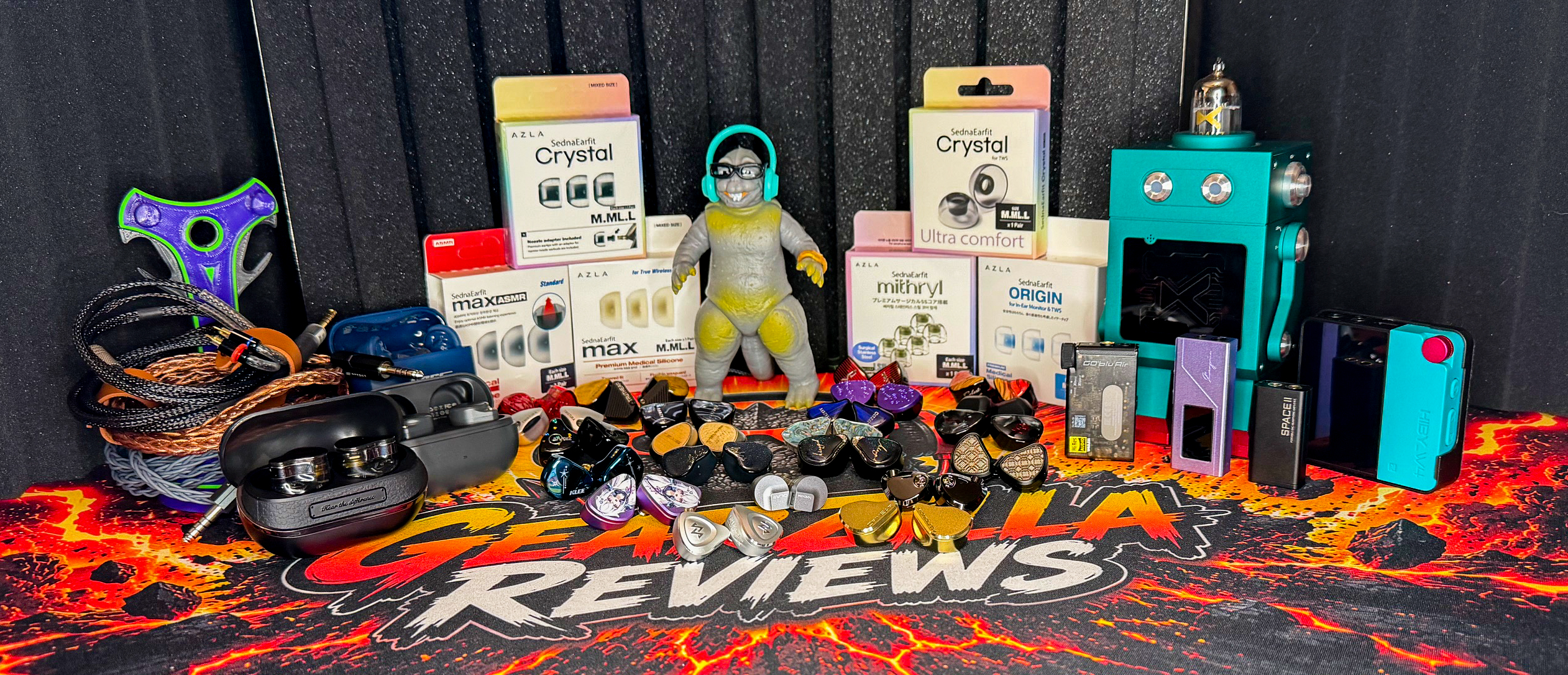
🦖 Welcome to the GearZilla Testing Lair
I didn’t want to try these tips on one or two IEMs, jot down a few notes, and call it a day. If we were going to do this, we were going full Kaiju Lab. 🧪🎧
That meant putting the AZLA lineup through a pretty absurd rotation of gear and listening conditions to see how each tip behaved across different shells, nozzle shapes, tuning styles, and use cases.
The IEM roster included:
-
TANGZU Zetian Wu
For TWS testing, I rotated the tips through:
Then I started changing everything upstream. ⚡
I used portable dongles, wireless receivers, desktop DAC/amps, solid-state amplification, R2R gear, and tube amplification. Cable rolling was part of the experiment too, including pure copper, copper-silver blends, and mixed-material designs, including cables that incorporate gold into the construction.
The point wasn’t to make the experiment more complicated just for the sake of it. I wanted to hear whether a tip that worked beautifully with one IEM-source combination still made sense when the rest of the chain changed.
And through all of it, my trusty HiBy R4 Evangelion spent a ridiculous amount of time in the rotation. At this point, that little purple-and-green monster has basically become my secret weapon. 💜💚
Different IEMs. Different sources. Different amplification. Different cables.
Same question every time:
What does the ear tip change, and does that change actually make the experience better?
🎚️ Why Most of the Testing Stayed Flat
I love EQ. I use it all the time, and I’m a big believer in tailoring a setup to your ears and preferences. But for this experiment, I kept most of the serious comparisons on a flat EQ profile so the ear tip had a fair chance to show me what it was doing on its own.
Once you start boosting bass, lifting vocals, smoothing treble, or tweaking multiple bands at once, the waters get muddy fast. At that point, are you hearing the tip, the EQ, the source, or some combination of all three? For the baseline testing, I wanted the tip to be the main variable.
So I listened flat first, then started swapping.
That gave me a much cleaner sense of what changed when the tip changed, whether that was seal, perceived bass weight, vocal presence, treble energy, openness, or simply comfort and stability.
Later, I did bring EQ back into the mix to see how far certain combinations could be pushed. And that’s where things got fun, because once you start stacking tip choice + source + cable + EQ, you can create some pretty different experiences from the same IEM. 🎧⚡
But the more aggressive the EQ became, the harder it was to isolate what the tip itself was contributing.
That was useful to learn too.
Ear tips are one tuning tool. EQ is another. They can absolutely work together, but they don’t do the same job; sometimes the best move is to let the tip handle fit and seal, while EQ handles the bigger tonal changes.
In the Kaiju Lab, flat was the control. Everything else was where the mischief started. 🧪🦖
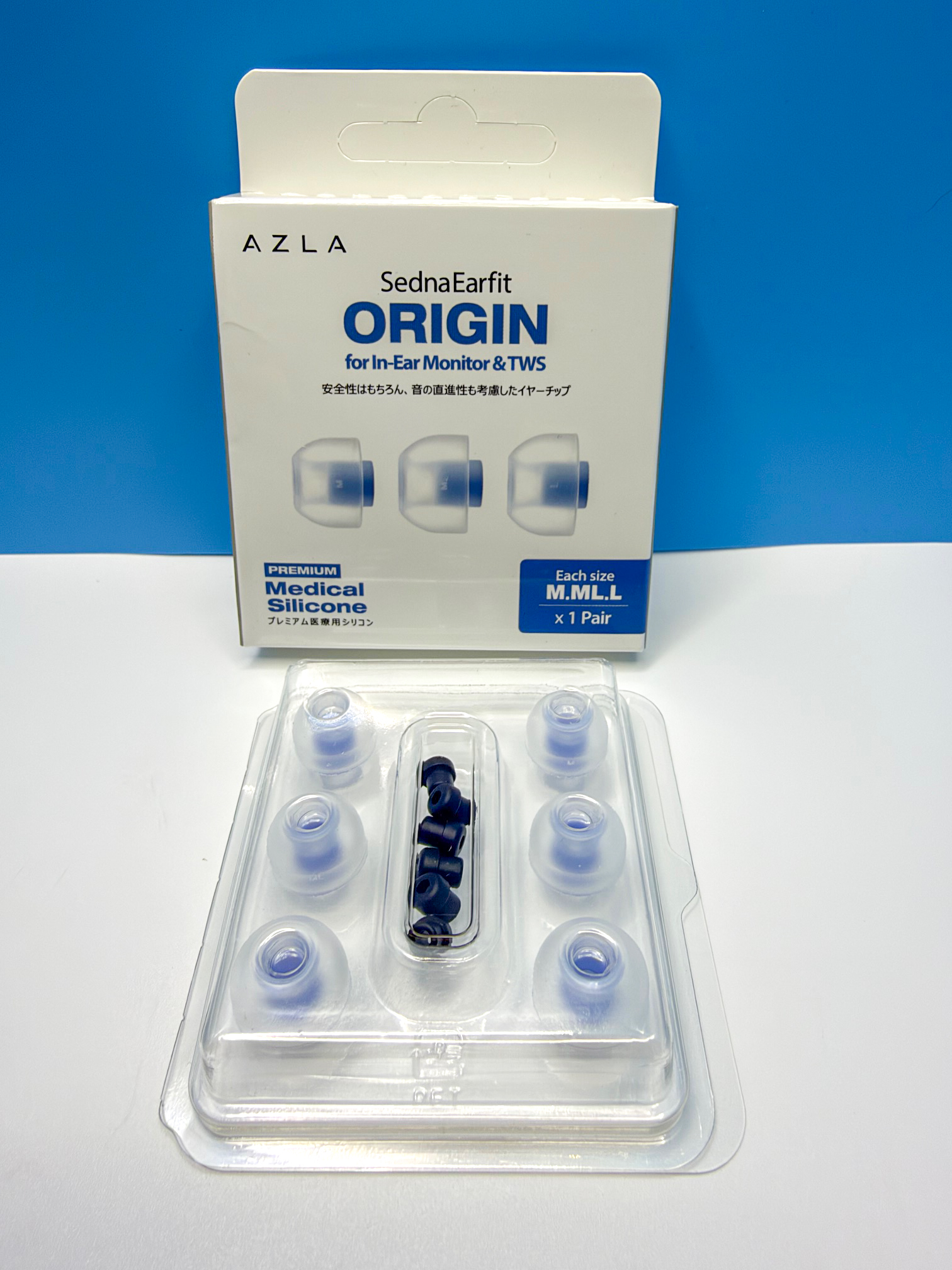
🎧 AZLA SednaEarfit ORIGIN: The All-Rounder
ORIGIN became one of the easiest tips in the lineup to understand because it rarely felt like it was trying to dramatically steer the IEM in one direction. Instead, it gave me a dependable fit and seal while largely preserving the personality of the IEM underneath it.
On sets like the TANCHJIM OLA II, Kefine Arnar, ZiiGaat RUMBA, COZOY D1 and COZOY D2, bass stayed controlled, vocals remained natural, and treble didn’t suddenly become the star of the show. During a month of constant swapping, that predictability made ORIGIN surprisingly useful.
It also became something of a reset button in the Kaiju Lab. 🦖 If another tip seemed to shift the presentation, I could swap ORIGIN back in and quickly remind myself what the IEM sounded like with a more balanced, less attention-seeking interface.
Sometimes you don’t want the tip to become another tuning device. You just want it to seal properly, feel comfortable, and get out of the way so the IEM can do its thing.
👂 Who are they for? Anyone looking for an easy all-rounder, especially listeners getting into aftermarket tips for the first time or those who want a reliable baseline for comparing other options.
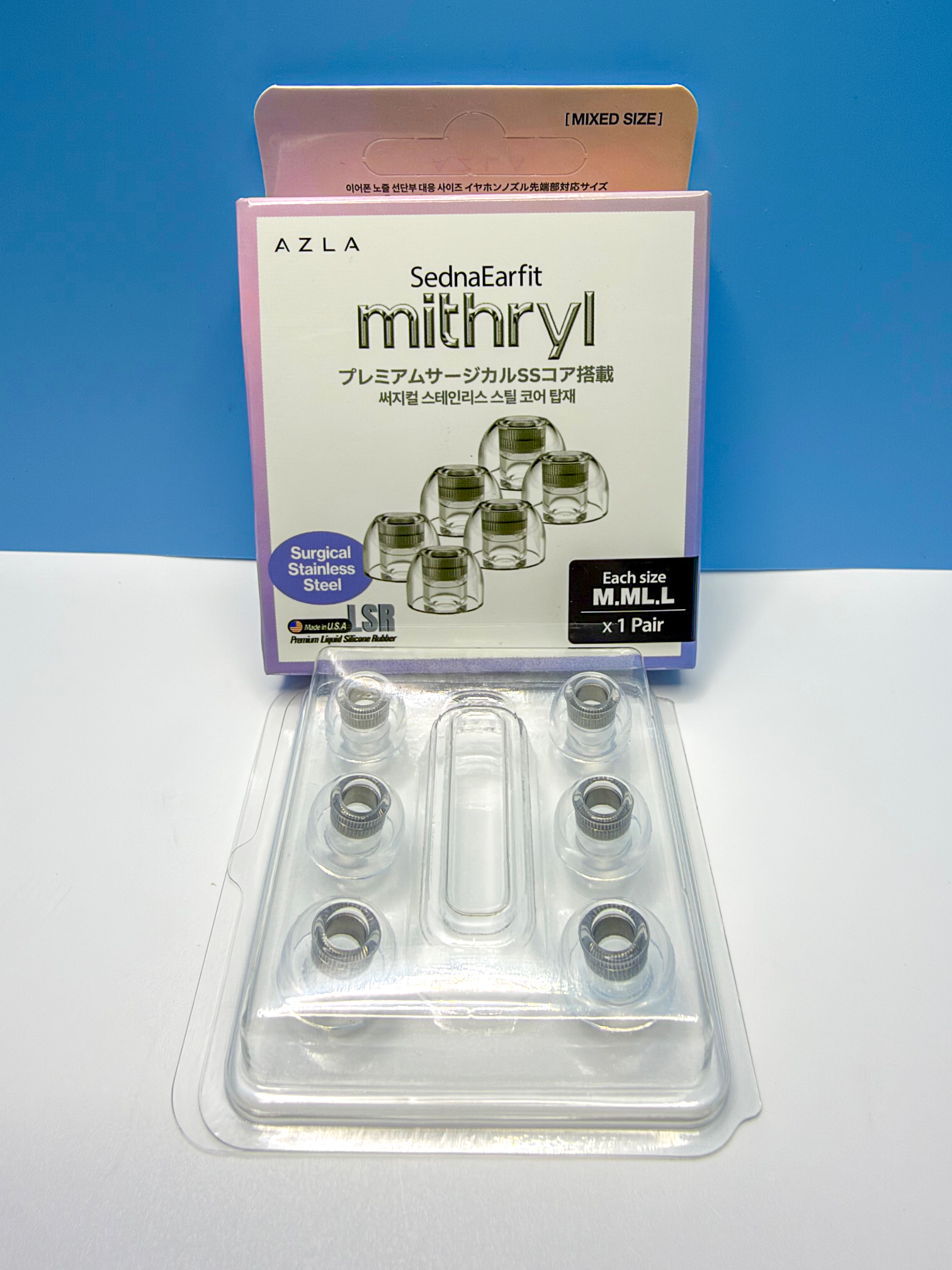
🧪 AZLA SednaEarfit Mithryl: The Mad Scientist Option
Mithryl was the model that had me doing the most back-and-forth comparisons.
It felt like the wild card of the group, and that meant I had to keep reminding myself not to listen for what I expected to hear. That’s one of the dangers of testing anything unusual in audio. Expectation can become its own piece of equipment.
So I went back to familiar IEMs and familiar tracks again and again. Listen, swap, listen again, take a break, repeat. 🔁🎶
On some IEMs, the differences were subtle. In others, particularly in more resolving sets, I perceived a clearer sense of definition and a little more openness around individual elements. The presentation could feel a touch more structured, especially when the IEM was already capable of revealing smaller spatial and textural cues.
The effect wasn’t universal, and that’s important.
On the CrinEar Project Monolith, XENNS Mangird Tea Pro, ZiiGaat Doscinco, and TANGZU Zetian Wu, I found Mithryl especially interesting because it gave me another way to fine-tune how open and organized the presentation felt.
But this isn’t a tip I’d blindly throw on every IEM and declare victory. This is where tip rolling becomes system matching.
A warmer or denser set might benefit from a presentation that feels a little more defined, while an already energetic or aggressive IEM may not need any extra help in that direction.
👂 Who are they for? Experienced tip rollers who already know their gear and enjoy chasing smaller changes in definition, openness, and presentation.
And anyone who looked at ordinary silicone and thought, “You know what this hobby needs? More experimentation.”
You’re my people. 🦖🔬
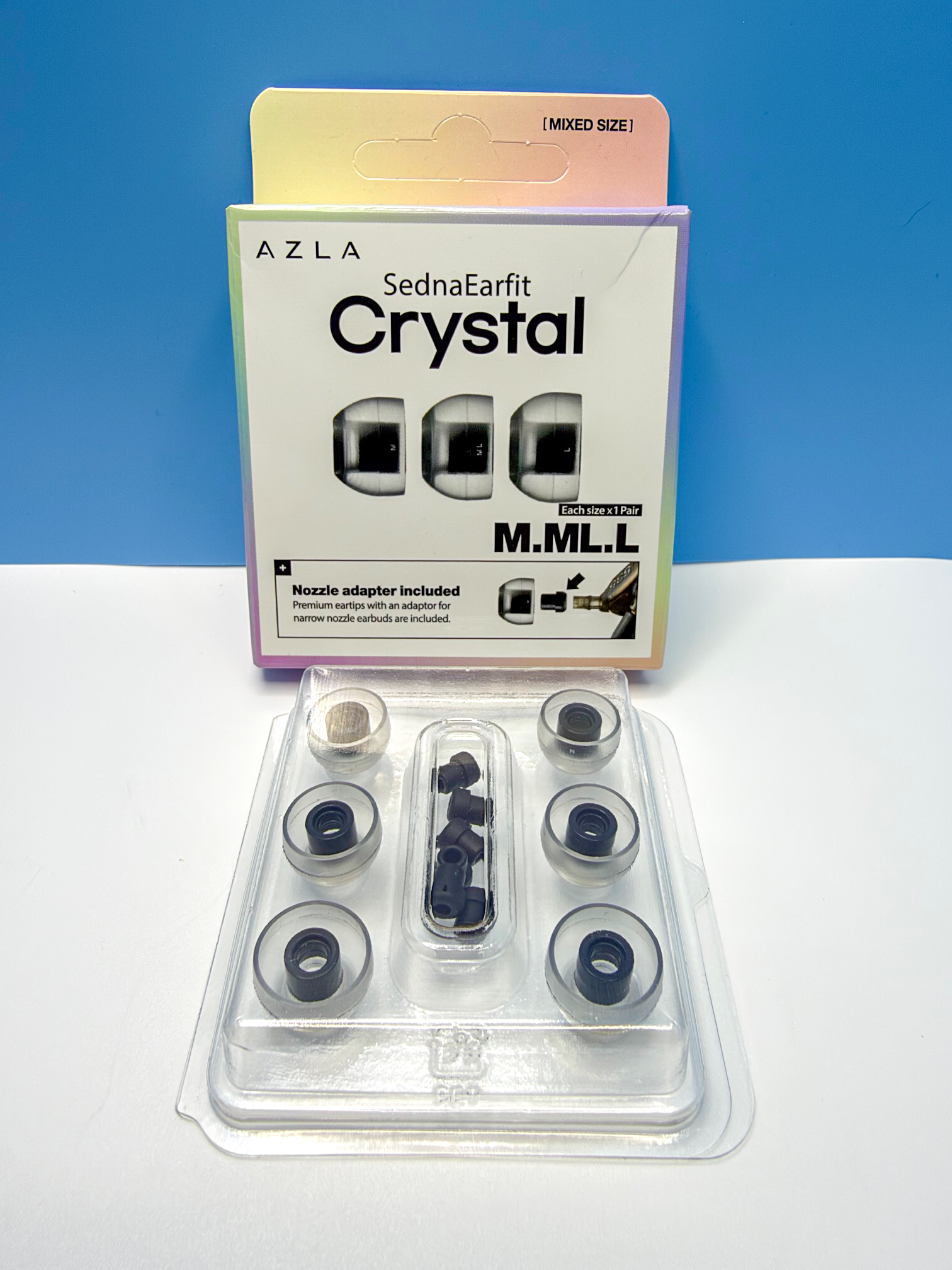
🔒 AZLA SednaEarfit Crystal Standard: Grip, Seal and Stability
The first thing I noticed about Crystal Standard wasn’t the sound. It was the way the material feels.
These have noticeably more grip than many conventional silicone tips, and that extra tackiness helps the IEM stay planted once you find the right fit. That became especially useful with larger or heavier shells that tend to shift slightly over time.
On sets like the ZiiGaat Doscinco, XENNS Mangird Tea Pro, and Project Monolith, I appreciated how Crystal helped maintain a more stable position. When the IEM isn’t moving, the seal stays more consistent, bass remains predictable, and the presentation doesn’t subtly shift because the shell moved while you were listening.
That consistency became the biggest benefit for me. Crystal Standard didn’t strike me as a tip that dramatically rewrote an IEM’s personality. It was more about locking the entire experience into place.
The tradeoff is that texture. Because the material is grippier, it can also pick up dust, lint, and assorted Kaiju Lab debris more readily than smoother silicone. 🧹🦖 These are definitely tips you’ll want to keep clean.
👂 Who are they for? Listeners who want a secure fit, strong seal, and better positional stability, especially with heavier IEMs or shells that tend to slowly work themselves loose.
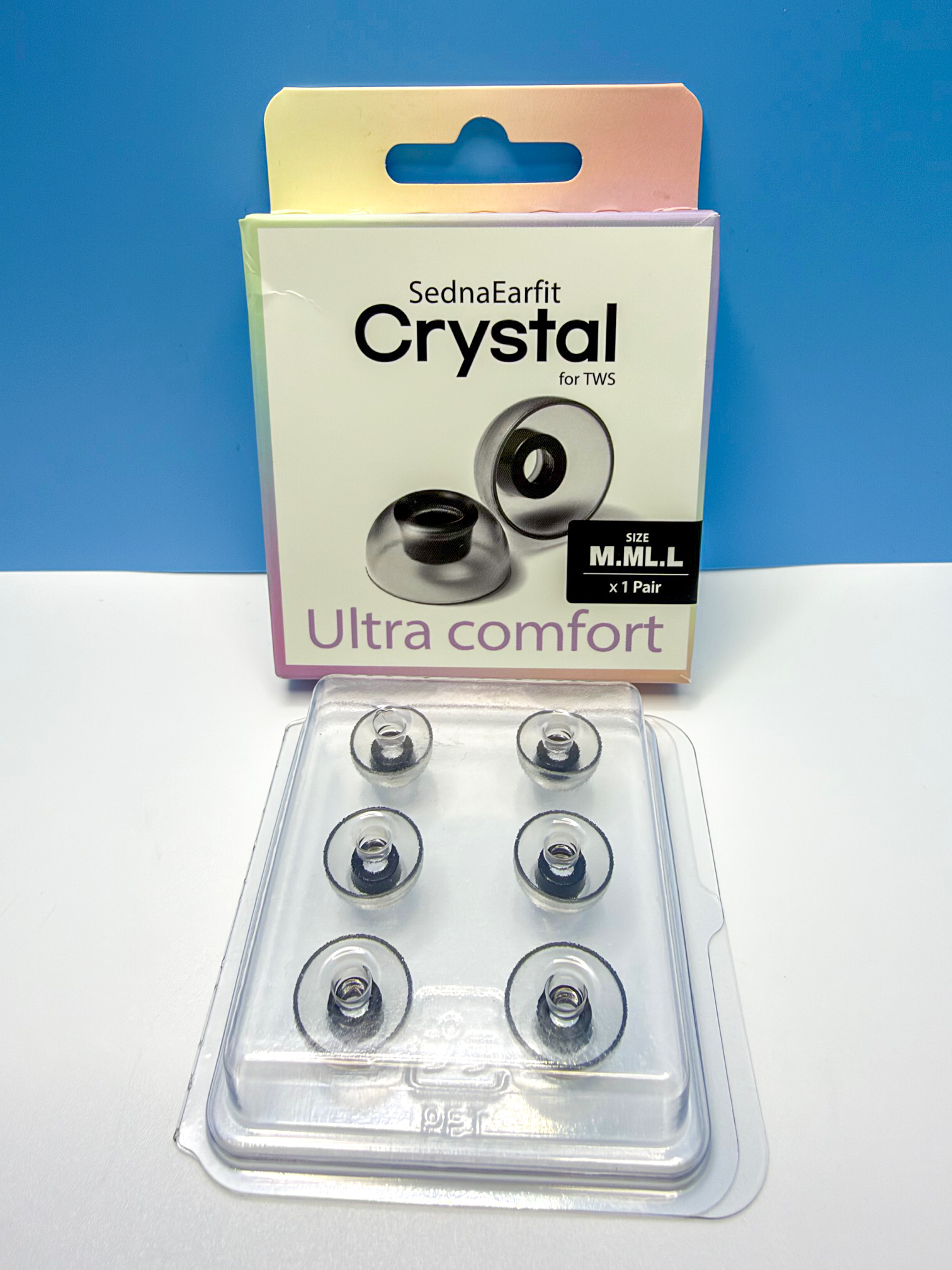
📡 AZLA SednaEarfit Crystal for TWS: The Same Idea, Built for Wireless
Crystal for TWS takes much of what I liked about Crystal Standard and adapts it to the different demands of true wireless earbuds.
TWS tips have to solve two problems at once. They need to fit your ears properly, but they also have to fit inside the charging case. That sounds obvious until you find a fantastic aftermarket tip and discover your earbuds are suddenly hovering above the charging contacts like they’re refusing to land. ✈️
Across the SOUNDPEATS H3 and ROSESELSA CERAMICS ULTRA, Crystal for TWS helped keep the shells more securely seated. That became especially useful with larger earbuds that can slowly shift during longer sessions.
The other factor is ANC.
A poor seal doesn’t just reduce bass response. It can also undermine passive isolation and affect the overall noise-canceling experience, so getting the tip right can improve much more than the sound signature.
That makes tip rolling with TWS more than an audiophile experiment. Sometimes it’s simply about getting the product to work better.
👂 Who are they for? Listeners who like the grip and stability of Crystal Standard but need a shorter profile that works with TWS shells and charging cases.
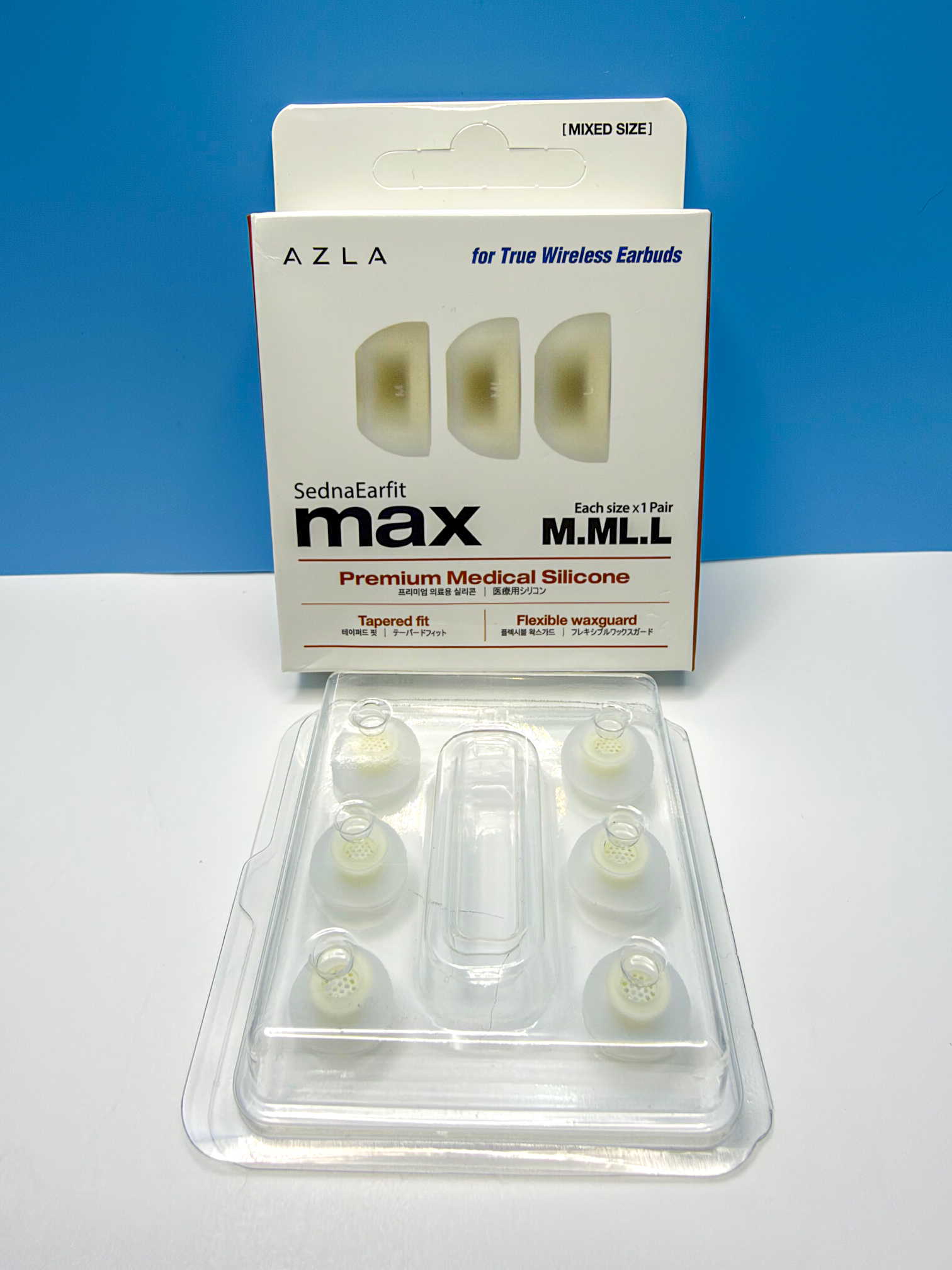
😌 AZLA SednaEarfit MAX for TWS: Comfort First
If Crystal feels like it’s grabbing hold of your ear canal and declaring ownership, MAX for TWS is the more relaxed member of the family.
The surface feels smoother, insertion is easier, and the overall experience is less grabby. That became increasingly important during longer sessions, especially when I was using TWS for several hours rather than sitting down for a short critical listen.
With the Bose QuietComfort Ultra Earbuds II, that philosophy made a lot of sense. A product built around comfort, ANC, and extended use doesn’t need an ear tip constantly reminding you that it’s there every time you move your jaw.
MAX for TWS mostly disappeared once it was seated.
And that’s praise.
The sonic differences mattered less to me here than the combination of comfort, seal consistency, and ease of use. Sometimes the best ear tip is the one you simply stop thinking about. 🎧
👂 Who are they for? Listeners who prioritize long sessions, easy insertion, and comfort over maximum grip.
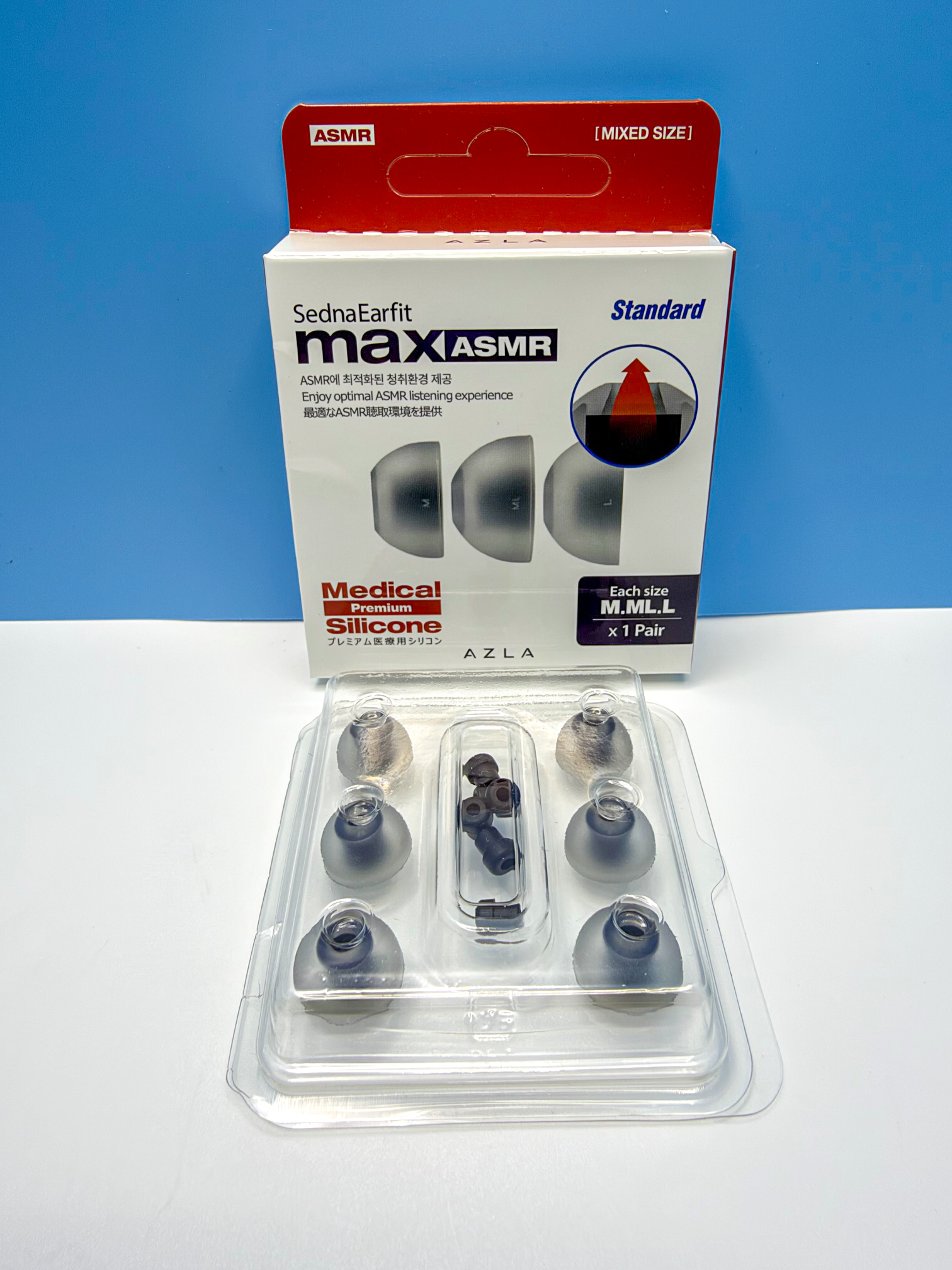
🔍 AZLA SednaEarfit MAX ASMR: Bring the Microscope
The name MAX ASMR obviously points toward a pretty specific use case, but I found these much more interesting than that.
What stood out most was how they handled music, where the smaller details mattered. Vocal texture, acoustic strings, percussion decay, room ambiance, breathing, and tiny spatial cues became easier for me to focus on.
On sets like the XENNS Mangird Tea Pro, TANGZU Zetian Wu, TANCHJIM OLA II and NF ACOUS NM25, those smaller elements seemed easier to pick apart, not because the tips somehow manufactured detail, but because the presentation made certain information easier to notice.
That distinction matters.
The detail must still be present in the recording, and the IEM must still be capable of reproducing it. The tip simply changes how that information reaches your ear and how easily your brain locks onto it.
MAX ASMR also became particularly interesting with R2R and tube sources, because those setups already encourage me to listen for texture, layering, and dimensionality. Combine that with MAX ASMR, and you can build some seriously addictive late-night listening combinations. 🌙🎶
👂 Who are they for? Vocal lovers, detail chasers, acoustic listeners, and anyone who enjoys hearing the tiny things that make everyone else ask:
“You can actually hear that?”
Yes.
Yes, we can. 🦖🎧
Sticky vs. Smooth Matters More Than It Sounds
One of the biggest lessons from this experiment had nothing to do with frequency response.
Surface texture matters.
Some listeners love tackier tips because they stay planted. Other people can’t stand that sensation and would rather have something smooth that slips into place easily.
Neither approach is automatically better.
A grippy tip may be perfect if your IEMs constantly move, but that same grip can become annoying if you remove and reinsert them all day. A smoother tip may feel more comfortable and convenient, even if it doesn’t anchor quite as aggressively.
That’s why universal “best ear tip” recommendations have never made much sense to me.
Human ears are bizarre little caves.
No two kaiju lairs are exactly alike.
Seal Comes Before Sound
Before you start worrying about bass texture, vocal placement, or microscopic treble detail, get the seal right.
Seriously.
Seal first. Everything else after.
You can have an incredible IEM attached to an expensive cable, connected to a gorgeous R2R DAC and glowing tube amplifier, but if the tip doesn’t seal properly, congratulations, you’ve built the world’s most complicated machine for losing bass.
A bad seal also destroys consistency. You can listen to the same track twice and hear two different presentations simply because the IEM moved slightly.
That’s why sizing matters so much.
And yes, you may need different sizes in your left and right ears.
That’s completely normal. Your ear canals weren’t CNC-machined to matching tolerances.
Nature didn’t read the spec sheet.
Ear Tips Are Part of the Tuning Chain
This month also reinforced something I’ve been learning as the GearZilla collection continues threatening to consume an entire room.
You can’t really think about ear tips in isolation.
The IEM matters. The tip matters. The source matters. The amp matters. The cable can matter to ergonomics and system interaction. Then EQ sits on top of all of it.
Each tool affects the experience differently.
Maybe an IEM is slightly warmer than you want, so you try a combination that gives you a cleaner or more open presentation. Maybe your source is already energetic, so you choose a more neutral tip rather than pushing things further.
Or maybe your stock tips sound perfectly good, but the IEM keeps falling out.
That isn’t a tuning problem at all.
It’s a fit problem.
Once you start to understand the problem you’re actually trying to solve, tip rolling becomes much more useful.
Cables, Sources and Tips: Build the Combination
I also spent a lot of time pairing the AZLA lineup with different cables and sources to hear how the combinations interacted.
Pure copper, silver-copper blends, and mixed-material cables were all tested across solid-state, R2R, and tube setups, along with portable DACs, dongles, and wireless receivers.
And, naturally, the HiBy R4 Evangelion kept sneaking back into the rotation.
It became obvious that no single part of the chain tells the whole story.
You might love an IEM with one tip and one source, then find the same setup feels a little too warm or energetic after changing another component. Or you might discover that an IEM you assumed was bass-light simply wasn’t sealing correctly.
That’s what makes this hobby fun.
You’re not always looking for one correct configuration.
Sometimes you’re building different experiences with the same music.
Comfort Still Wins
Audiophiles can get so obsessed with sound that we occasionally forget these things are supposed to go inside our ears.
Comfort matters.
A lot.
If one tip gives you slightly better bass but makes your ears hurt after twenty minutes, it isn’t better. It’s just an uncomfortable tip with better bass.
The same goes for grip, isolation, and insertion depth.
More isn’t automatically better.
The goal is to find a balance between comfort, seal, stability, and sound.
And that balance can change depending on what you’re doing. I might use one tip for focused listening at my desk and another for several hours of casual listening.
There’s nothing wrong with that.
So Which AZLA Tip Should You Start With?
After more than a month of experimenting, I stopped thinking of these as competitors and started thinking of them as tools.
Crystal became my choice when I wanted grip, seal stability, and a firmly anchored IEM.
Crystal for TWS brought that same philosophy to wireless earbuds where shell stability and charging-case compatibility both matter.
MAX for TWS leaned more toward comfort and long-term wear.
ORIGIN became the easy all-rounder when I wanted the IEM’s own personality to stay front and center.
MAX ASMR worked well when I wanted to focus on vocals, texture, and smaller details.
And Mithryl became the experimenter’s choice when I wanted to see how far I could fine-tune a familiar IEM.
That doesn’t make one universally better than another.
It means the better question is:
What am I trying to change?
Once you know that, choosing the tip becomes a lot easier.
🦖 Final Roar
I started this experiment thinking I might figure out which AZLA ear tip was the best.
After more than a month of swapping six different models across more than twenty IEMs, several TWS sets, different cables, dongles, wireless receivers, solid-state gear, R2R DACs, tube amps, and basically anything else I could connect without tripping a breaker, I realized that was the wrong question.
Ear tips are part of the system.
They’re not just little pieces of silicone preventing a metal nozzle from trying to invade your skull. They help determine comfort, seal, stability and the way the music reaches your ears.
And sometimes the difference between an IEM you merely like and one you suddenly love isn’t another DAC, another cable, or another $500 upgrade.
Sometimes it’s a tiny ear tip sitting in a plastic box on your desk.
That’s tip rolling.
And once you start?
Good luck.
There’s always another pair to try.
Listen Bigger!🦖🎧
Ready to Fine-Tune Your Fit? Explore the Full AZLA Ear Tip Lineup: https://store.azla.co.kr/