



✅ Pros: Absolutely gorgeous CNC aluminum shells, one of the most impressive unboxing experiences I’ve seen anywhere near this price, a stunning purple colorway and cable, magnetic interchangeable faceplates, three tuning nozzles, excellent clarity, wonderfully lifted vocals, strong separation and placement, impressive width and depth, modular 3.5mm/4.4mm cable termination, and a bright, energetic personality that rewards tip, nozzle, and source experimentation.
⛔ Cons: These are bright, and they can become very bright if you don’t spend some time dialing them in. The shells also run a little tall vertically, and while they aren’t particularly thick, that shape didn’t cooperate perfectly with my concha. That’s very much an anatomy issue rather than a universal comfort problem, but smaller ears should take note.
💜 She’s a Beaut, Clark!
I’m not a waifu guy. There, I said it.
I realize that admission may immediately disqualify me from properly appreciating approximately 37% of the modern IEM market, but I’ve somehow survived this long.
Then CVJ sent me the Nozomi.
Oh, great. They found the cheat code…
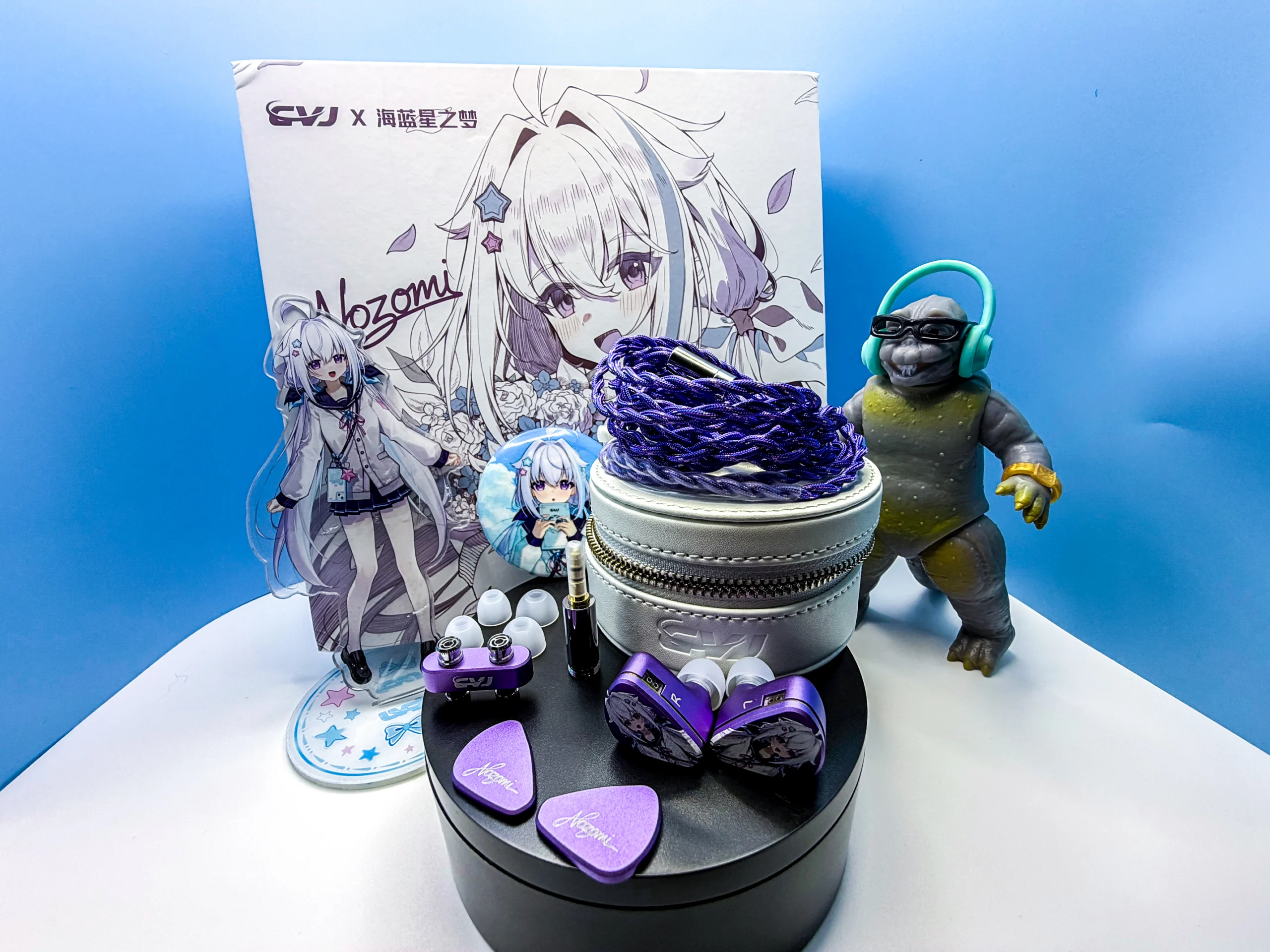
The CVJ Nozomi might be one of the most visually impressive IEM packages I’ve opened, full stop. Not “for around a hundred bucks” or “for an inexpensive IEM.” I mean period.
The CNC aluminum shells are gorgeous, the magnetic faceplates are interchangeable, and the cable looks and feels substantially more expensive than what I expected at this price. You get three tuning nozzles, interchangeable 3.5mm and 4.4mm terminations, a proper case, and, apparently, because CVJ looked at all of that and thought, “Nah, we’re not done yet,” Nozomi character swag, including an acrylic desk stand and button.
I opened an IEM and somehow acquired a new coworker.
CVJ currently lists the Nozomi at $99 for silver and $109 for purple, and I’m telling you right now: get the purple. I absolutely adore it.
Somewhere between swapping magnetic faceplates, screwing tiny nozzles into purple metal shells, and placing an anime character on my desk, I realized something uncomfortable.
Maybe I am the demographic now.
What the hell happened?
🦖 Disclosure
Huge thanks to CVJ for providing the Nozomi for this review and trusting GearZilla Reviews with the chance to spend serious time with it.
That support is genuinely appreciated, but as always, providing gear doesn’t buy a positive review, guarantee a particular score, protect a product from criticism, or influence my conclusions.
Every GearZilla review eventually comes back to one question:
Does this thing help me enjoy the music I already love in a new way?
With the Nozomi, the answer is absolutely yes, but it took a little work to get there. Honestly, that became half the fun.

💰 Wait. This is $109?
Before we talk about sound, I need to stay with the physical product for another minute because CVJ has gone slightly bananas here.
The Nozomi uses a 2DD + 1 planar-driver hybrid configuration, packed into beautifully machined CNC-machined aluminum alloy shells, with a standard 0.78mm 2-pin connector. That’s already an ambitious starting point for $99 in silver or $109 in purple, but everything around the IEM is what makes the value proposition start to feel a little ridiculous.
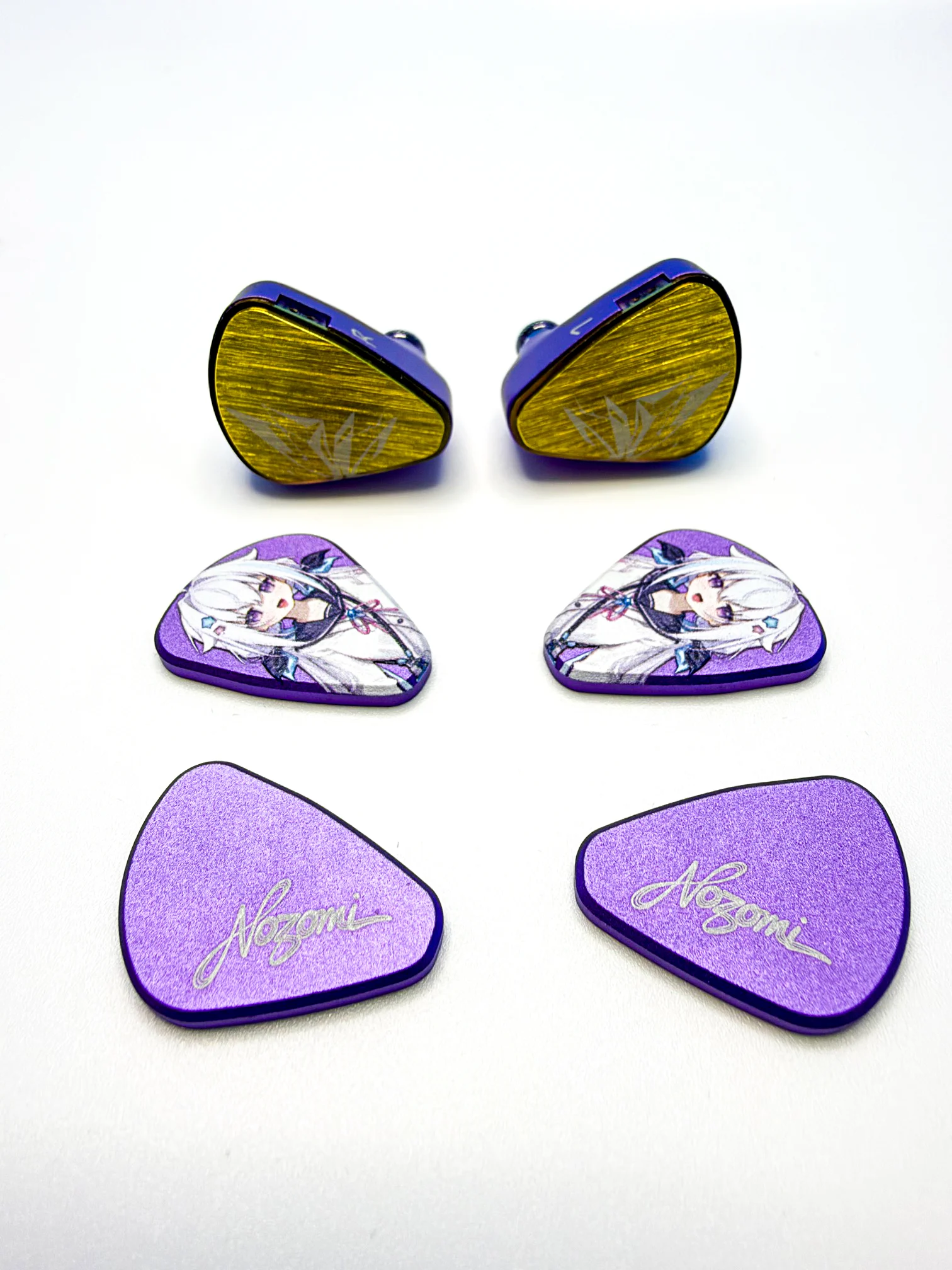
You aren’t getting a basic cable that immediately makes you want an upgrade. The Nozomi comes with a gorgeous modular cable with 3.5mm and 4.4mm interchangeable terminations. You aren’t locked into one tuning either, because CVJ includes three interchangeable tuning nozzles that meaningfully let you shape the sound around your ears. You aren’t even locked into a single look, thanks to magnetic, interchangeable faceplates.
Then there’s a seriously nice case, multiple tip sets, character artwork, an acrylic Nozomi desk figure, a button, and packaging that feels like someone actually wanted the unboxing to be part of the ownership experience.
That’s why I keep coming back to the price.
Plenty of good IEMs are around $100, but the Nozomi doesn’t feel like a $100 IEM, given the compromises required to hit that price point. It feels like CVJ kept asking how many features normally reserved for more expensive sets they could squeeze into the box without making the IEM feel like the thing they saved money on.
Metal shells instead of something that feels disposable. A genuinely nice cable, not an obligatory one. Balanced and single-ended connectivity without buying another cable. Three ways to tune it without touching EQ. Faceplates you can actually change. A real case. A full accessory package. And underneath it all is still an ambitious hybrid driver setup, not just a pretty shell designed to distract you from what’s inside.
That’s what makes the Nozomi feel like you’re getting more for your money, not just more stuff.
At some point, I started looking under the packaging to see if a gift card was taped to the bottom.
For $99-$109, the Nozomi doesn’t feel like CVJ built an IEM and then figured out what accessories it could afford to throw into the box.
It feels like somebody at CVJ was given a $100 target and responded:
“Hold My Beer!”
📦 First Impressions: Purple Reign
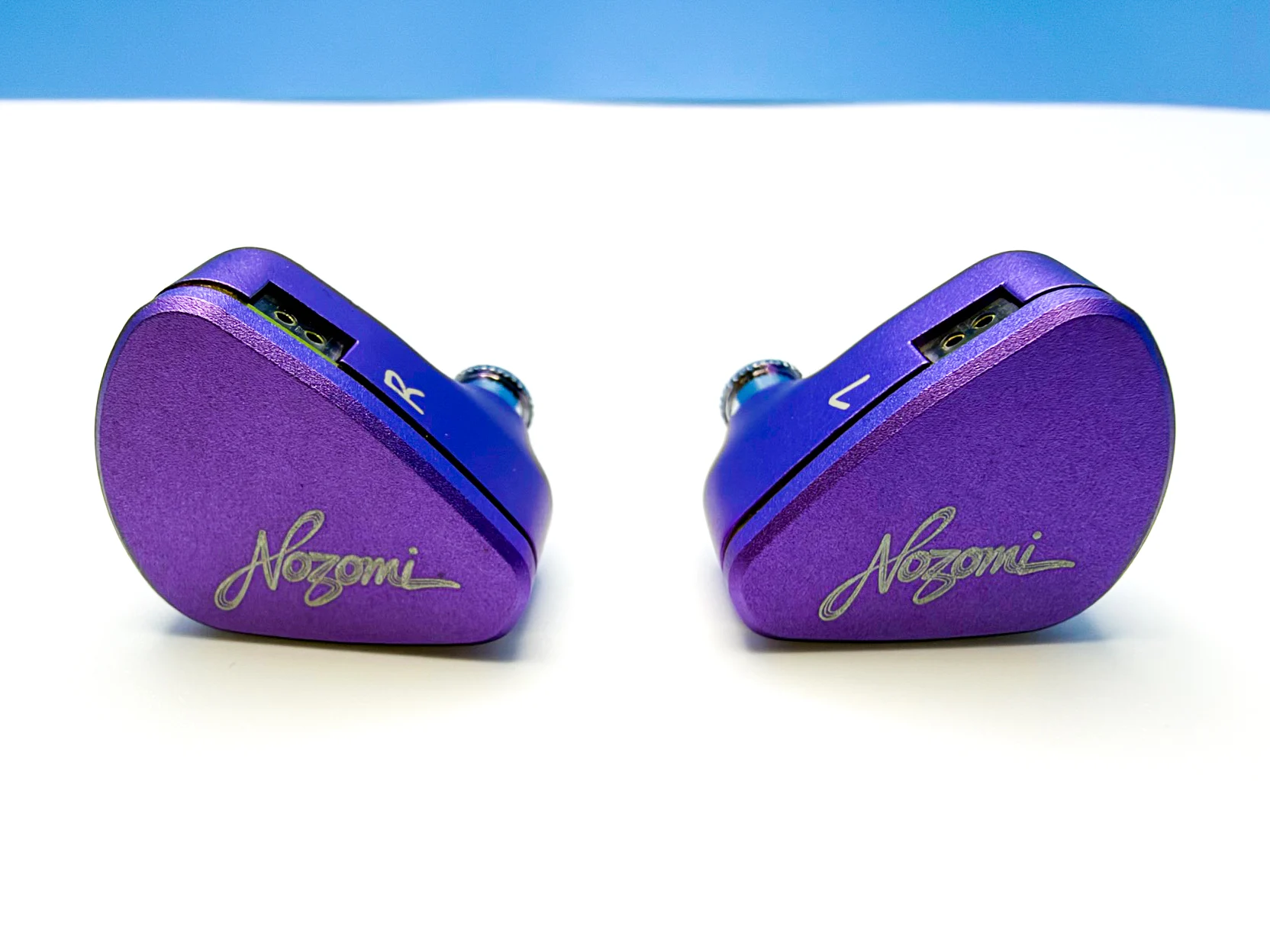
Pictures don’t quite prepare you for this thing. The purple version isn’t just “cute,” “fun,” or impressive for an anime-themed collaboration. It’s genuinely stunning.
The color felt strangely familiar the moment I pulled them out of the box, and then it hit me. That metallic lavender-purple reminds me of those wonderfully over-the-top colors you used to see on custom vans, roller skates, bikes, and just about anything else that could be painted metallic purple in the ’70s and early ’80s.
You know the color. Deep purple in normal light; turn it slightly, and suddenly the metallic finish comes alive.
And yes, I just dated myself spectacularly.
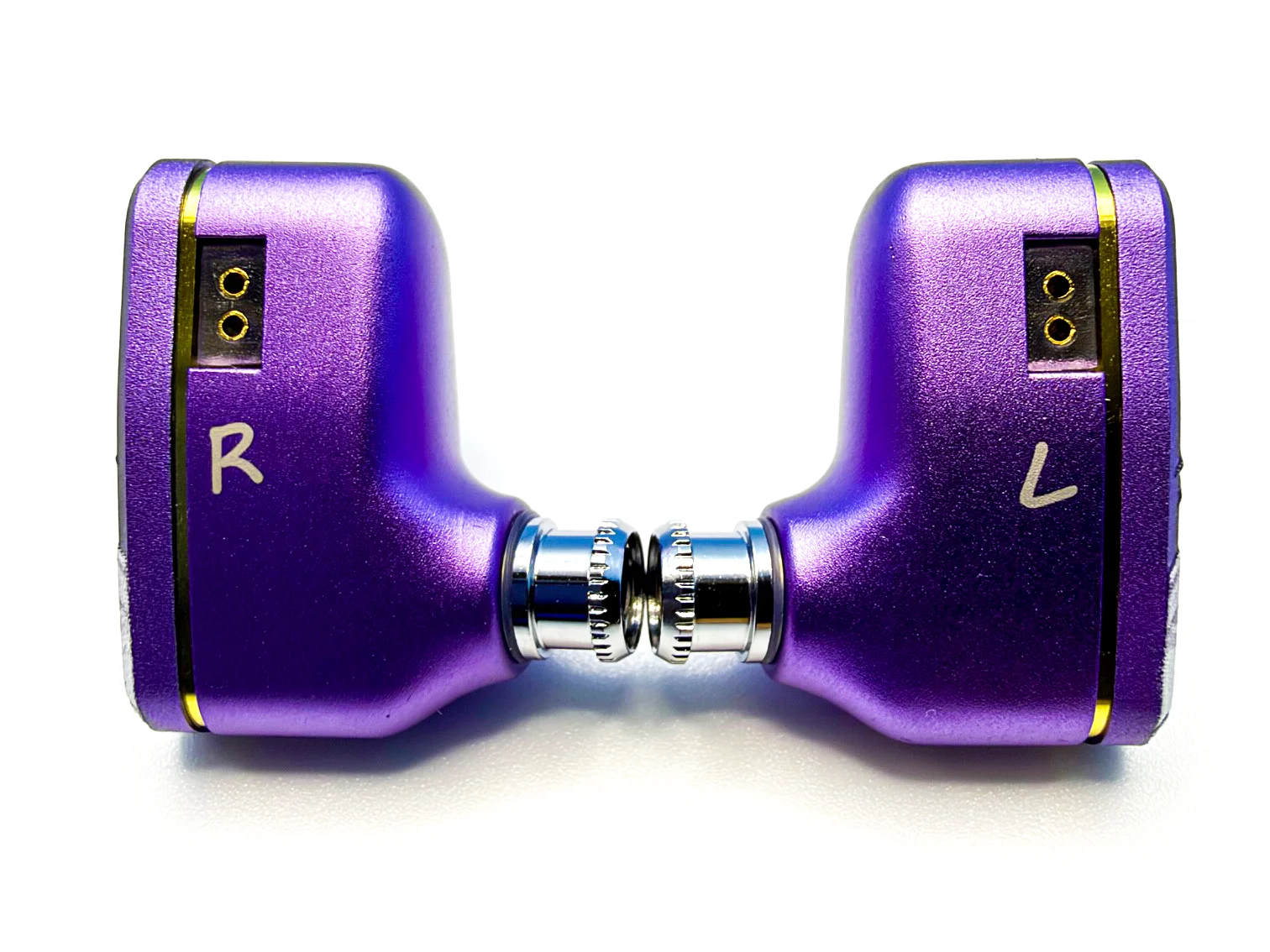
The matching purple cable makes the entire package feel cohesive, rather than as if CVJ simply chose an unusual shell color and called it a day. The finish has richness, and the CNC-machined aluminum construction gives the Nozomi a physical presence that immediately sets it apart from the seemingly endless parade of resin shells passing through the GearZilla lair.
Maybe that’s part of why I like the purple version so much. It feels simultaneously retro and completely modern. The color evokes a touch of nostalgia, while the machining, magnetic faceplates, modular cable, and overall presentation feel thoroughly contemporary.
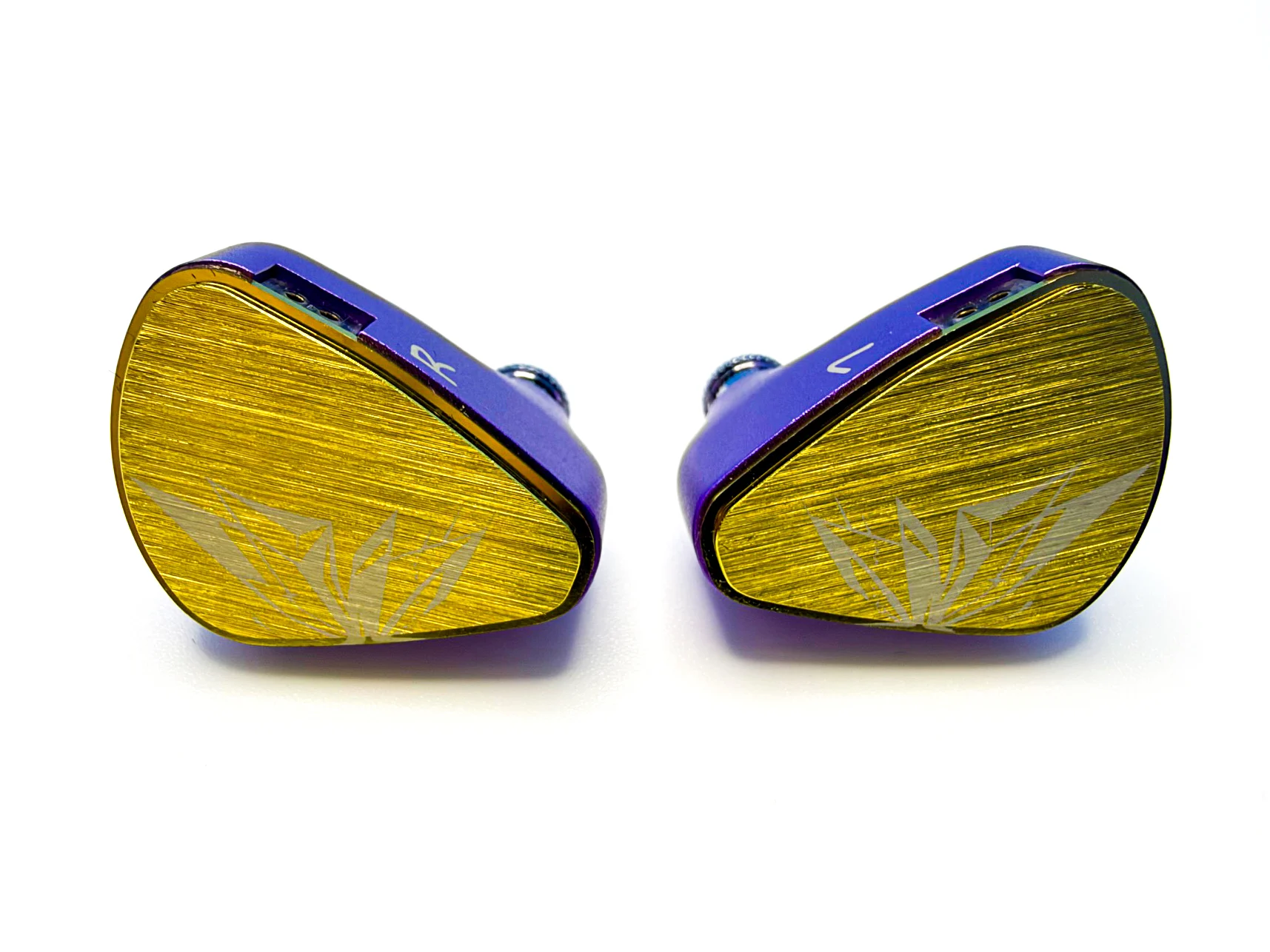
Then there are those interchangeable magnetic faceplates, which might be my favorite completely unnecessary feature of the whole package. They pop on and off in seconds, letting you change the IEM’s personality without changing how it performs.
Does that improve the sound? Nope.
Do I care? Also nope.
I freaking love them.
The Nozomi understands something I wish more audio companies remembered: part of enjoying gear is enjoying the gear itself. We’re not buying laboratory equipment. We’re buying something we’ll handle, wear, photograph, show people, obsess over, and hopefully smile at every time we pull it out of the case.
Audio is supposed to be fun.
Somewhere along the way, parts of this hobby decided serious audio equipment also had to look serious, as though anything colorful, playful, or unapologetically weird somehow diminished its credibility.
CVJ apparently missed that meeting.
Instead, they gave me a metallic-purple IEM that makes me think of custom vans and roller rinks, then added interchangeable artwork, a matching cable, three tuning nozzles, anime swag, and a tiny acrylic woman who now apparently lives on my desk.
Apparently the Nozomi isn’t just tuned bright. It’s tuned to my childhood.
Yikes, I’m old. 😂

🎧 Review Setup
Every GearZilla review starts from the same place:
Listen first. Figure out the story later.
That means I don’t immediately reach for EQ when something sounds too bright, too warm, too bassy, or simply different from what I normally prefer. I want to hear the product as the manufacturer intended before I start changing the recipe. No EQ during my core evaluation. If I eventually experiment with EQ, that’s separate and doesn’t become the basis for how I judge or score the IEM.
The Nozomi made that discipline particularly interesting because it offers tuning options right out of the box. I spent time with all three included nozzles, rolled through multiple ear tips, experimented with narrower bores, listened through both 3.5mm and balanced 4.4mm connections, and moved through several sources, including warmer R2R pairings.
I also threw a broad mix of music at it, including vocal-heavy recordings, rock, alternative, electronic, acoustic material, and denser arrangements, while paying particular attention to longer sessions and listening fatigue.
And I did all of that without EQ changing the Nozomi into something it isn’t.
That’s an important distinction because my first reaction to the Nozomi’s sound was basically:
Good Lord, somebody opened the blinds.
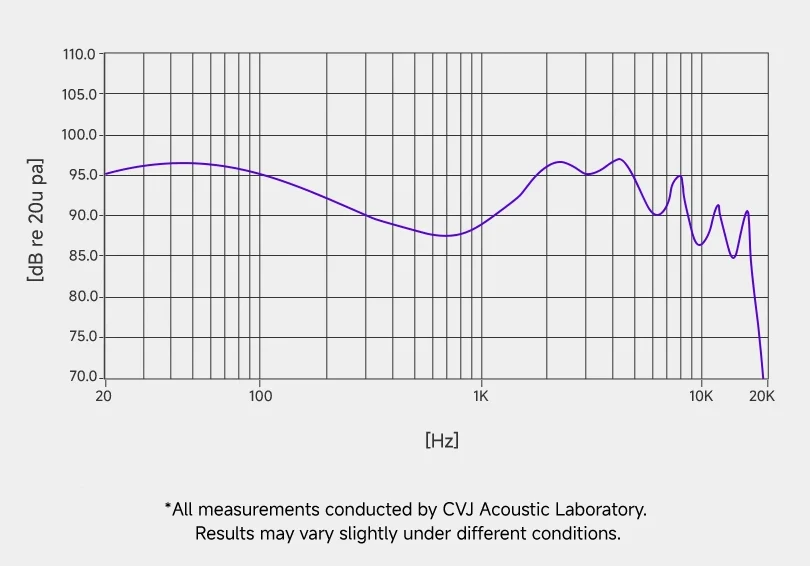
This is a bright IEM. There’s air, sparkle, high-frequency energy, and a sense of elevation to the whole presentation, almost as if the music climbed a mountain and decided to perform at altitude. My instinct wasn’t to grab an EQ and immediately pull those frequencies down because I wanted to understand whether that brightness was a problem or part of what makes the Nozomi special.
Turns out, it’s mostly the latter.
The trick was learning how to channel that energy rather than erase it. The included tuning nozzles, ear tips, and source pairing gave me plenty of room to find my sweet spot without electronically rewriting CVJ’s tuning.
For me, that eventually meant the black nozzle, a narrower-bore tip, and a warmer source.
No EQ required.
And once everything clicked, the Nozomi’s story became pretty obvious:
Don’t tame the monster until it stops being a monster. Just teach it where to breathe fire.
🧬 KAIJU DNA SCAN
Every monster leaves behind a genetic signature, and this purple beast has a particularly interesting one. The Nozomi isn’t trying to overwhelm you with bass or impress you with one giant party trick. Its DNA centers on clarity, speed, customization, and a willingness to sound different.
K • Kill Shot
Clarity is the weapon.
The Nozomi can illuminate a recording in a way very few IEMs around this price have managed for me. Vocals emerge cleanly, percussion snaps into focus, smaller elements aren’t buried beneath excessive warmth, and instruments have clearly defined edges that make complex arrangements surprisingly easy to follow.
What makes that interesting is that this isn’t simply treble masquerading as technical ability. Yes, the elevated upper frequencies absolutely contribute to the sense of openness and visibility, but real information lies beneath that brightness. Placement is precise, separation is strong, and subtle elements within familiar recordings are remarkably easy to locate.
I wouldn’t confuse that with flagship-level resolution, and I think that distinction matters. The Nozomi’s greatest trick isn’t necessarily digging deeper into the recording than everything else around $100. It’s making what it retrieves exceptionally easy to see.
The window isn’t necessarily bigger.
It’s just really, really clean.
A • Anatomy
There’s a lot happening underneath all that purple aluminum. The Nozomi combines two dynamic drivers with a planar driver, giving CVJ different tools to cover the frequency range instead of asking a single driver to do everything.
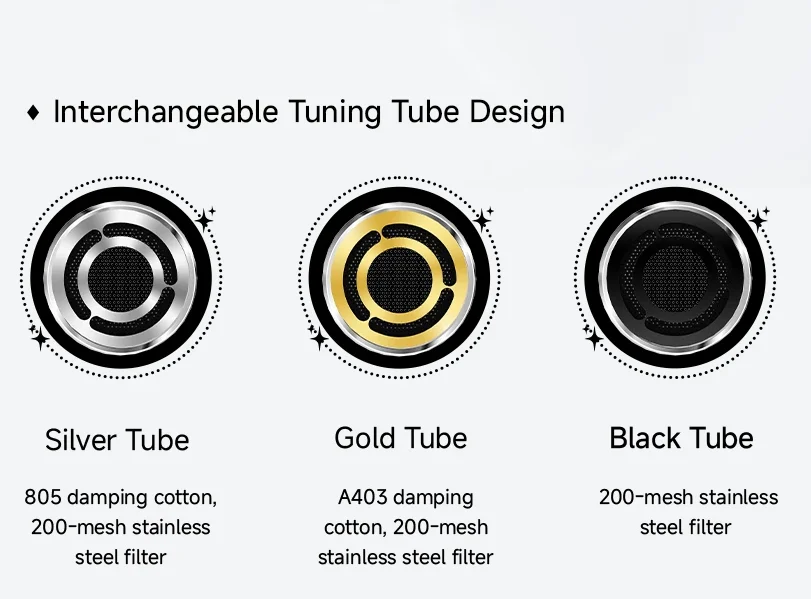
Then CVJ gives you some control over the final result with three interchangeable acoustic nozzles: silver, gold, and black. These aren’t decorative pieces tossed into the box to lengthen the accessory list. Changing them produces meaningful differences, so I consider nozzle selection part of setting up the Nozomi rather than an optional experiment for later.
For my ears, black became the clear choice, but that’s exactly why I appreciate having all three. CVJ isn’t pretending everyone’s ears, anatomy, music, and treble tolerance are identical.
The rest of the hardware follows that same philosophy of flexibility. You get standard 0.78mm 2-pin connectors, a stock cable with interchangeable 3.5mm and 4.4mm plugs, multiple tip options, and even magnetic faceplates that let you change the appearance in seconds.
So you can tune the sound, termination, fit, and even the way the damn thing looks.
Apparently, CVJ reviewed the customization options and chose all of the above.
I • Impact
The Nozomi doesn’t create impact by clubbing you over the head with sub-bass. Bass is present, quick, controlled, and appropriately punchy, but this isn’t the monster you unleash when your primary objective is rearranging internal organs.
Its impact comes instead from speed, contrast, attack, and immediacy. Drums arrive with clean leading edges, percussion has satisfying snap, and notes generally get in and out without leaving excess warmth hanging over the next part of the recording.
That speed also contributes to Nozomi’s clarity. Less sonic residue muddies the spaces between notes, so individual elements stay easier to identify even when a track gets busier.
The presentation has an almost athletic quality.
This monster isn’t stomping through Tokyo. It’s parkouring across the rooftops.
J • Joy
For me, the joy came from figuring out the Nozomi.
I’d change a nozzle, swap a tip, switch sources, and listen again. Not because I thought something was fundamentally broken, but because every change taught me a little more about what the Nozomi could do and what my ears wanted from it.
That’s a very different experience from buying an IEM that sounds good out of the box but gives you nowhere else to go. The Nozomi invites experimentation without requiring EQ to rescue it. The tuning nozzles actually matter, tip choice matters, and pairing it with a warmer source showed me just how much of that brightness I wanted to preserve.
Turns out, quite a lot.
The Nozomi is the kind of IEM that makes me want to screw around with my audio chain just to hear what happens.
That’s catnip for GearZilla.
U • Unleashed
This is where the Nozomi finally clicked for me.
Get the combination right, and the brightness doesn’t disappear. Good. I don’t want it to. That upper-frequency energy is what makes this IEM special: the air, the clarity, the lifted vocals, the clean edges, and that wonderful high-altitude sensation of seeing deep into the presentation.
What changes is how that energy reaches you.
With the black nozzle, a narrower-bore tip, and a warmer source, the sharper edges settled enough that the Nozomi stopped fighting my ears and started using that brightness to its advantage. I didn’t need EQ, and I didn’t need to fundamentally rewrite CVJ’s tuning. I just needed to find the combination that let the Nozomi be itself without overwhelming me.
That’s an important distinction because I could’ve easily taken this IEM, rolled off the upper frequencies, added bass, and pushed it closer to my usual preferences.
But then what’s the point?
I already own those IEMs.
I don’t want to domesticate every monster in the GearZilla lair until they all sound the same.
The Nozomi is supposed to be bright, fast, airy, clear, and a little wild. Once I stopped trying to tame that personality and started figuring out how to channel it, everything made sense.
That’s when the Nozomi went from interesting to a keeper.
🎼 Sound: High-Altitude HiFi
If I had to describe the Nozomi in four words, they’d be bright, clear, airy, and precise.
This isn’t a warm blanket. It’s not candlelight, bourbon, and a leather chair. The Nozomi is standing outside at 8,000 feet on one of those ridiculously clear mornings when the horizon seems to go on forever. The air feels thinner, the sky looks bigger, and everything in the distance suddenly has sharper edges.
That’s essentially what the Nozomi does to music.
There’s very little warmth or haze filling the spaces between instruments, so recordings can feel unusually exposed. Vocals rise cleanly out of the mix, percussion stays crisp, and individual instruments occupy positions that are remarkably easy to identify. When arrangements get more complex, the Nozomi does a particularly good job keeping everything organized, rather than letting the sounds collapse into one another.
And that’s where its brightness becomes both its greatest strength and the thing you’ll need to understand before deciding whether this monster belongs in your collection.
The elevated energy up top contributes heavily to that sensation of clarity. It puts more light into the room, so to speak, making edges easier to see and smaller elements easier to notice. But turn on enough lights and eventually somebody is going to start squinting.
Depending on your preferences, your first few songs might have you thinking:
“Holy crap, listen to that clarity.”
Or:
“MY EYES.”
Except, you know, ears.
What surprised me was how quickly I stopped thinking of the Nozomi as something I needed to dim and started thinking about how to get the most from the brightness it was giving me.
Because underneath all that sunlight is a genuinely engaging presentation. It’s fast without feeling sterile, precise without making the music feel dissected, and open enough for vocals and instruments to exist independently. It isn’t the deepest or most holographic presentation I’ve heard, but it’s exceptionally easy to see into, and that distinction became increasingly important the longer I listened.
That’s why High-Altitude HiFi feels like the right description. You’re trading some of the density, warmth, and weight you might get closer to sea level for air, visibility, openness, and an enormous amount of light.
For my ears, the trick wasn’t figuring out how to bring the Nozomi back down the mountain.
It was figuring out exactly how much sunlight I wanted once I got up there.
🥁 Bass: Quality Over Kaiju Stomp
Bass isn’t the star of the Nozomi show, and after spending more time with it, I don’t think it should be.
The low end is disciplined, quick, and remarkably clean, with enough punch to establish rhythm and enough sub-bass presence to give the music a solid foundation without changing the IEM’s overall character. It adds weight when a recording calls for it, but the Nozomi doesn’t constantly remind you of its dynamic drivers by shoving bass into every available corner.
That’s actually one of the reasons everything above it sounds so clear.
Very little excess warmth bleeds upward to coat the midrange. Bass notes arrive, do their job, and get out of the way. Kick drums have a satisfying initial hit, bass guitars remain easy to follow, and electronic low frequencies have enough extension to keep tracks grounded, but speed and control take priority over sheer quantity.
The tradeoff is pretty straightforward. If you want thick, chewy bass with huge physical slam and enough sub-bass pressure to rearrange your dental work, the Nozomi probably isn’t your monster. It doesn’t deliver the visceral low-end authority that makes you stop analyzing the bass and just feel it in your skull.
But adding a ton more bass would also fundamentally change what I enjoy about this IEM.
That restraint lets Nozomi’s vocals, separation, air, and upper-frequency energy shine. Instead of the bass being the foundation, the furniture, and the guy standing in the doorway blocking your view, it’s simply the foundation.
I also found the low end particularly enjoyable with a warmer source. The added tonal richness gave the bass a little more body and texture without sacrificing the speed that makes the Nozomi work. It didn’t suddenly become a basshead set, but it added just enough meat on the bones to create a more satisfying balance for my ears.
And that’s really the story here. The Nozomi isn’t lacking bass because CVJ forgot about it. The bass feels deliberately restrained because clarity is the priority.
If your idea of a good time is having your eyeballs vibrate, you’ve wandered into the wrong kaiju enclosure.
But if you want fast, clean bass that supports the music without throwing a tarp over everything the Nozomi does so well above it, now we’re talking.
🎤 Midrange & Vocals: Float Mode Activated
This is one of my favorite parts of the Nozomi, and probably one of the biggest reasons I was willing to work with its brighter personality rather than against it.
Vocals just sit beautifully.
They land centered, lifted, and wonderfully easy to follow, with enough presence that singers don’t feel trapped inside the instrumentation. Instead, the vocalist feels like they’re floating slightly forward, occupying their own space while the rest of the arrangement develops around them.
That’s very much my kind of presentation.
Female vocals are particularly compelling because the Nozomi gives them so much room to breathe. The voice has room to breathe, with plenty of air extending above it, and a sense of immediacy that can make expressive performances feel almost illuminated. Breath, articulation, and the edges of words come through cleanly without having to hunt for them inside the mix.
Male vocals are a little different. You don’t get the same chesty weight, warmth, or physical density a richer IEM can provide, so deeper voices may sound leaner than listeners used to a warmer presentation might prefer. But you trade body for articulation and intelligibility. Lyrics remain incredibly easy to follow, and vocal textures aren’t obscured by excess warmth from below.
This is also where Nozomi’s brighter tuning becomes a genuine asset rather than something I’m simply learning to tolerate. The midrange isn’t sleepy or veiled. Voices have energy, presence, and light around them, and that sense of elevation contributes heavily to the high-altitude presentation I’ve been describing throughout this review.
More importantly, the Nozomi doesn’t just make vocals louder. It makes them feel separated from the surrounding music. That’s a distinction I care about. I don’t necessarily want a singer shoved directly into my forehead just to create the illusion of vocal emphasis. I want the voice to occupy a clearly defined position where I can lock onto it while still hearing everything happening around it.
The Nozomi does that beautifully.
It’s one of those presentations where I can stop listening to the entire arrangement for a moment, follow the vocalist almost exclusively, then shift my attention back outward and immediately find the rest of the band again.
The singer walked into the room, found the spotlight, floated about six inches off the floor, and apparently isn’t giving any of it back.
And I’m perfectly fine with that.
🎯 Separation & Placement: Everybody Gets a Chair
This is another area where the Nozomi’s clarity-first tuning really pays off. It does an excellent job keeping instruments organized and giving each element its own space.
Even when arrangements get busy, I rarely feel like I’m listening to a congested blob of sound. Guitars remain identifiable, percussion stays anchored behind or around the main performance, vocals hold their position at the center, and effects that move across the recording are surprisingly easy to track.
Basically, everybody gets a chair, and nobody sits on anybody else’s lap.
Placement is one of Nozomi’s stronger technical qualities. Close your eyes, and it’s relatively easy to point toward what’s happening: guitar over there, percussion farther back, vocals centered in front of me, another instrument entering from the opposite side. That makes complicated arrangements particularly fun because instead of everything arriving as one wall of information, you can mentally pull the recording apart and follow individual pieces.
That precision also contributes to Nozomi’s sensation of clarity. It’s one thing to hear a lot of information. It’s another thing to understand where all that information belongs. The Nozomi is remarkably good at the latter.
But there’s an important limitation here, and it’s one I don’t want to gloss over just because I’m impressed by what this thing does around $100.
Precise placement isn’t the same thing as holographic dimensionality.
The Nozomi can tell me where an instrument is with impressive confidence, but it doesn’t always fully develop the instrument’s physical shape in space. On more sophisticated sets, an instrument can seem to have width, height, depth, and even a little air wrapping around it. It becomes less like a point on a map and more like an actual object occupying space.
The Nozomi isn’t consistently doing that.
Its images are cleanly drawn and confidently positioned, but they can occasionally feel flatter, more two-dimensional than the presentation’s overall openness initially suggests. I can locate the guitar beautifully, but I don’t always feel like I can walk around it.
That’s the distinction.
Think of it as excellent stage blocking rather than fully holographic performers. Everyone knows their mark, nobody wanders into somebody else’s spotlight, and you can follow what’s happening across the entire stage with little effort. You just don’t always get that uncanny illusion that the performers themselves have materialized as three-dimensional objects around you.
And frankly, at $99-$109, that’s a pretty good limitation to be discussing.
The Nozomi may not completely build the musicians in three dimensions, but it sure as hell knows where to put their chairs.
🌌 Space, Depth & Placement: Plenty of Oxygen Up Here
The Nozomi creates a convincing amount of lateral room, but what impresses me more is that it doesn’t achieve that by simply stretching everything left and right. It has enough front-to-back information to keep the presentation from collapsing into a straight line between your ears, and that combination gives the music a wonderfully open character.
I wouldn’t describe it as some enormous artificial amphitheater where every recording suddenly sounds as if it were performed inside an aircraft hangar. The Nozomi feels open rather than artificially huge, and I think that’s an important distinction.
A lot of that sensation comes from the tuning itself. The bass doesn’t fill every available crack with warmth; the midrange stays remarkably clean, and that upper-frequency air creates breathing room between sounds. There’s simply less sonic clutter occupying the empty spaces.
Vocals usually establish a strong center point, often sitting slightly forward, while supporting instruments spread outward around them. Percussion can settle farther back, guitars and other instruments establish positions to either side, and smaller details occasionally appear outside that central structure. When a recording actually contains meaningful spatial information, the Nozomi gives it room to show itself rather than trying to manufacture something that isn’t there.
Depth is good, although I wouldn’t put it on the same level as the Nozomi’s width and overall openness. There’s enough layering to distinguish foreground from background, but this connects directly to what I mentioned in the previous section: placement is more convincing than full three-dimensionality. I can hear that something is farther away without always getting the complete illusion of a rounded object physically existing at that distance.
And I’m okay with that, particularly at this price.
What I really enjoy is the amount of oxygen in the presentation. Acoustic recordings give strings and vocals room to breathe. Live recordings can develop a believable sense of the venue around the performers. Orchestral material benefits tremendously from the Nozomi’s ability to keep sections organized without smearing them together when things get busy.
It’s another reason that high-altitude analogy keeps working for me. The Nozomi doesn’t necessarily build the biggest mountain I’ve ever stood on.
It just clears away so much haze that the view feels enormous.
✨ Treble & Air: Here Be Dragons
Okay, let’s talk about the thing you’re probably going to notice within the first few minutes.
The Nozomi is bright.
There’s no point dancing around it. If you’re particularly sensitive to upper-frequency energy, I wouldn’t buy this IEM expecting to plug it into whatever source is nearby, use whichever tips happen to be attached, and immediately disappear into six hours of relaxed listening.
This dragon breathes treble.
Cymbals have serious presence, upper harmonics are exposed, and vocals and instruments have plenty of air around them. That energy gives the Nozomi much of its wonderfully open character, but it also means poorly recorded or aggressively mastered tracks don’t get much mercy. If something sharp hides in a recording, the Nozomi won’t politely cover it with a warm blanket.
But here’s where I think the conversation gets more interesting than simply labeling this IEM “too bright.”
Because I initially approached the brightness like something I needed to tame. The more I listened, though, the more I realized that the treble isn’t a problem sitting on top of the Nozomi’s tuning. It’s part of the Nozomi’s identity.
Take too much away, and you start sacrificing what makes this IEM so damn compelling. That wonderful clarity begins to retreat. The sense of air gets smaller. Vocals lose some of their lift. Percussion becomes less immediate, and that high-altitude openness I’ve been describing starts drifting back toward sea level.
I didn’t want that.
I didn’t want less Nozomi. I wanted the best version of Nozomi.
That’s why the black nozzle, narrower-bore tips, and warmer source pairing became so important for me. They didn’t turn this into a warm IEM, nor should they. They simply took enough bite off the sharpest edges that I could enjoy all that energy without feeling like the treble was occasionally trying to climb out of the IEM and fight me personally.
And I never needed EQ to get there.
That’s probably the biggest lesson I took away from experimenting with this set. There’s a difference between correcting a tuning and learning how to work with it. The Nozomi doesn’t need me to drag its personality toward my usual preferences. I’ve already got plenty of IEMs that live there.
I want this one to be different.
I want the sparkle. I want the air. I want that ridiculous clarity. I want cymbals to have life and vocals to float. I want the sensation that somebody opened every damn window in the recording and let the sunlight pour through.
You just need to figure out how much sunlight your ears can handle.
Because if you completely tame this treble, you’ll tame the very thing that makes the Nozomi special.
Kill the brightness, and you kill the monster.
So don’t kill it.
Train the dragon. 🐉🔥
🔩 Three Nozzles Enter. One Nozzle Leaves.
Okay, technically they all leave. They’re threaded.
You know what I mean.
The Nozomi includes silver, gold, and black tuning nozzles, and I wouldn’t leave this accessory sitting untouched in the box. If you buy the Nozomi, try all three. Don’t assume whichever nozzle happens to be installed when you open it represents what this IEM is supposed to sound like.
That’s especially important with a set this energetic up top. Small changes in how that upper-frequency energy reaches your ears can make the difference between “Holy crap, this clarity is incredible” and “Okay, dragon, that’s enough fire for today.”
For my ears, black won.
It gave me the best balance between everything I love about the Nozomi and the parts that could occasionally become too much. I still got the clarity, air, lifted vocals, crisp percussion, and wonderfully illuminated presentation, but the overall balance was easier for me to settle into for longer sessions.
And that’s the key: black didn’t turn the Nozomi into a warm IEM.
I wouldn’t want it to.
It simply brought me closer to the point where I could enjoy the Nozomi’s brightness rather than constantly being reminded of it. Silver and gold pushed aspects of the presentation in directions that eventually became a little too aggressive for my ears, while black let the dragon keep breathing fire without setting my eyebrows on fire.
Your answer might be completely different.
That’s not a cop-out. That’s why these nozzles exist. Your anatomy, ear tips, source, music, volume, and sensitivity to upper frequencies can all affect which combination clicks. I’ve seen enough disagreement over tuning accessories to know there’s little value in declaring one nozzle the universally “correct” choice.
CVJ isn’t giving you three differently colored pieces of metal just to make the accessory tray look more impressive. They’re legitimate tools for finding your Nozomi.
My ears said black. Yours might say silver. Someone else’s might say gold.
Don’t pick one because a reviewer told you it’s the best.
Trust your ears. That’s why CVJ gave you options.

👂 Tip Rolling: Don’t Skip This
Once I settled on the black nozzle, ear tips became the next piece of the puzzle, and with the Nozomi, I don’t consider tip rolling optional audiophile tinkering. It can meaningfully change how all that upper-frequency energy reaches your ears.
One warning before you start experimenting, though: these nozzles are wide.
Getting some tips over them takes a little persuasion, especially if the tip has a tighter inner stem. If you remember wrestling tips onto the Truthear x Crinacle Zero:RED, you already know the drill. Stretch, angle, push, question your life choices, and eventually celebrate when the damn thing slips over the lip.
It’s not a dealbreaker, but it’s worth knowing before you start digging through the tip drawer.
I eventually landed on a narrower-bore tip, which gave me exactly what I was looking for. It took just enough edge off the brightest moments to make longer listening sessions more comfortable while preserving the clarity, air, vocal lift, and openness that make the Nozomi worth owning in the first place.
And that’s an important distinction.
I wasn’t trying to warm the Nozomi.
I already own warm IEMs. I love warm IEMs. If I want rich, bassy comfort food for my ears, plenty of monsters in the GearZilla lair are waiting for their turn.
So why would I buy something with this much personality and then spend my time trying to make it sound like everything else?
Tip rolling wasn’t about changing Nozomi’s identity. It was about finding the version of that identity that worked best with my anatomy, my preferences, and my ears. I still wanted the sparkle. I still wanted the air. I still wanted those wonderfully lifted vocals and that almost ridiculous clarity.
I just didn’t need the dragon breathing directly into my ear canal.
For me, the recipe became pretty simple:
Black nozzle. Narrower bore. No EQ.
Once I got the tips over those big-ass nozzles, anyway.
Now we’re cooking. 🧑🍳
🔥 Source Pairing: Give the Monster Some Velvet
Then I connected the Nozomi to a warmer R2R DAC/amp.
Oh.
There you are.
This pairing really brought the whole Nozomi experiment together for me. The slightly warmer, more organic R2R character didn’t fundamentally change the IEM, and that’s exactly why it worked. The Nozomi was still bright, airy, fast, and exceptionally clear. It just sounded a little less sharp around the edges.
Vocals gained some welcome body, bass felt a touch more substantial, and instruments developed a little more tonal richness. Most importantly, the treble retained its sparkle and extension without constantly drawing attention to itself. Light still poured through the windows. It just wasn’t reflecting off every shiny surface in the room anymore.
That’s the kind of source pairing I love because I’m not trying to use the DAC/amp as an elaborate tone control. I’m looking for synergy. Give me two pieces of gear whose personalities complement each other rather than one piece trying to correct the other.
The Nozomi’s strengths are clarity, air, speed, vocal presence, and precision. A warmer source doesn’t need to erase any of that. It can simply add a little density and smoothness underneath it.
And again, no EQ required.
Could I plug the Nozomi into a very clean, neutral source and enjoy it? Absolutely. But stack an already energetic IEM on top of an equally energetic source and, for my ears, we’re starting to collect a lot of sunlight in one place.
The warmer R2R pairing gave me balance without homogenizing the Nozomi into something it isn’t.
That’s the magic combination.
I didn’t need to dull the blade. I just needed a little velvet wrapped around it.
And man, did that work.
🔬 Clarity vs. Resolution: They’re Not the Same Thing
This distinction matters with the Nozomi because it sounds extremely clear, and it’s easy to hear that exposed information and immediately conclude you’re listening to an exceptionally high-resolution IEM.
Those aren’t quite the same thing.
Clarity is about visibility. Resolution is about information.
Clarity tells me how unobstructed the presentation feels. Can I easily separate the vocal from the instruments around it? Can I follow the guitar line without searching for it? Is percussion clearly defined? Does the recording feel free from haze, excess warmth, or congestion?
The Nozomi absolutely crushes that part.
Resolution goes deeper. It’s the ability to retrieve increasingly subtle information within those sounds: the texture of a bow moving across a string, the tiny variations in a singer’s breath, the decay extending behind a cymbal strike, or the increasingly fine layers buried inside a complicated recording.
That’s where the distinction becomes apparent.
The Nozomi’s bright, clean tuning puts a lot of light on the recording, so everything it retrieves is easy to see. Compare it with genuinely higher-resolution sets, though, and those IEMs start revealing additional texture, layering, decay, and dimensional information within what you’re already hearing.
That’s not a criticism of the Nozomi. Hell, this thing costs $99-$109.
If anything, I think CVJ made a smart tradeoff. Rather than chasing an illusion of extreme technical resolution at this price, the Nozomi delivers something arguably more useful right away: it makes music incredibly easy to inspect.
Think of it like driving through a dirty windshield. Clean the glass, and suddenly road signs are easier to read, lane markings become obvious, and distant objects are easier to distinguish from one another. It feels like you’re seeing more because there’s less getting in the way of the view.
But cleaning the windshield didn’t suddenly turn your eyes into an 8K camera.
The road didn’t gain more information.
You can just see the damn thing now.
That’s the Nozomi. And for roughly a hundred bucks, that is one hell of a clean windshield.
☁️ Comfort: My Concha Filed a Complaint
Here’s my only meaningful physical complaint with the Nozomi, and I want to be careful with this one because fit is incredibly personal.
The shells aren’t particularly thick or excessively bulky. In fact, they’re well-shaped in several respects, and the smooth CNC-machined aluminum doesn’t introduce any obvious sharp edges or pressure points. My issue is much more specific:
They’re tall.
That extra vertical dimension didn’t play particularly nicely with the shape of my concha. Instead of settling naturally into the outer ear and almost disappearing, as some of my favorite IEMs do, the Nozomi wanted a little more vertical real estate than my ears were willing to give.
My concha and the Nozomi apparently entered lease negotiations.
My concha declined the application.
To be clear, that’s a me problem, not a declaration that the Nozomi is uncomfortable. Ear anatomy is ridiculously individual, and a shell that fits one person like it was custom-molded can leave another person wondering which species the designer used for testing.
Once I found the right position and got a good seal, the weight itself wasn’t an issue. These don’t feel excessively heavy hanging from my ears, and the metal construction wasn’t the culprit. It was simply the relationship between the shell’s height and the particular shape of my outer ear.
That also meant I occasionally adjusted them, rather than completely forgetting they were there. It’s not enough to keep me from enjoying the Nozomi, and certainly not enough to keep this set out of my collection, but comfort is one of those things I’m never going to pretend didn’t happen just because I love everything else about an IEM.
GearZilla reviews report what happened to GearZilla’s ears.
And GearZilla’s concha apparently had notes.
If you’ve got smaller outer ears, a tighter concha, or have struggled with taller IEM shells before, keep that in mind. Your ears may absolutely love them.
Mine just wanted to speak to management.

🎨 Design: Good Grief, Look at This Thing
The sound earned a 4.6.
The design department wants a recount.
The purple Nozomi is easily one of the most beautiful IEMs I’ve handled at this price, and much of that is because CVJ didn’t play it safe. Purple can go wrong quickly. It can look cheap, plasticky, or like somebody clicked the saturation slider a few too many times.
Not here.
That metallic lavender-purple finish has depth, changing character as light moves across the aluminum. It still reminds me of those metallic purples you’d see on custom vans, bikes, and roller skates in the ’70s and early ’80s, which probably explains why the color immediately hit some deeply buried nostalgic part of my brain.
Yes, I’ve now dated myself twice in the same review.
Whatever. The color is freaking gorgeous.
More importantly, the rest of the design supports it. The matching purple cable doesn’t feel like an afterthought. The CNC aluminum gives the shells a substantial, premium feel in the hand, and the clean machining makes the Nozomi look like a much more expensive piece of gear.
Then CVJ added the magnetic faceplates.
Do they make the Nozomi sound better? Absolutely not.
Do I swap them anyway?
Of course I do.
There’s something wonderfully unnecessary about changing your IEM’s outfit, and I’m tired of pretending unnecessary things can’t add value. We customize watch bands, phone cases, keyboards, cars, sneakers, and practically everything else we own. Why shouldn’t our audio gear have a little personality?
That’s really what I love about Nozomi’s design. It has personality everywhere you look.
Even the packaging feels like somebody cared about creating an experience rather than simply protecting the product during shipping. Open the box, and there’s artwork, accessories, customization, color, and this unmistakable sense that CVJ wanted buying the Nozomi to feel like getting something special.
And yes.
There’s the waifu.
Again, I’m not a waifu guy. I’m old. I was just reminiscing about metallic-purple custom vans and roller skates. I’m probably several zip codes outside the intended demographic for an acrylic anime character.
Yet somehow Nozomi lives on my desk now.
She watches me write reviews.
We haven’t discussed rent.

📦 The Unboxing: CVJ Chose Violence
I’ve opened IEMs costing considerably more that basically give you the IEM, a cable, some tips, a case, and a polite pat on the back.
CVJ apparently saw that and took it personally.
Opening the Nozomi feels like discovering additional compartments in a video-game inventory. You pull out the IEMs, then realize there are three tuning nozzles, interchangeable magnetic faceplates, modular 3.5mm and 4.4mm terminations, multiple tips, a proper carrying case, character artwork, a button, and an acrylic Nozomi figure.
Every time I thought I’d reached the end of the box, CVJ had one more thing waiting.
But here’s what makes the package more impressive than simply having a high accessory count: most of it actually serves a purpose.
The tuning nozzles meaningfully change how you experience the Nozomi. The tips give you another way to dial in fit and sound. The modular terminations allow the same cable to connect to both 3.5mm and balanced 4.4mm sources without an adapter or replacement cable. The magnetic faceplates let you personalize the shells in seconds. And the case is something you’ll actually want to use.
Even the fun stuff has a purpose, just a different one.
The artwork, button, and acrylic figure don’t change a single note of music, but they make the Nozomi feel like a product with an identity rather than another IEM in another box. There’s personality here, and at a time when dozens of very competent IEMs start to blend together, I think that matters more than we sometimes admit.
For around a hundred bucks, the package is kind of bonkers. More expensive products don’t automatically owe you a mountain of accessories, but the Nozomi certainly makes some of those sparse boxes feel a little harder to defend.
CVJ didn’t just throw more stuff into the package.
They made opening a $100-ish IEM feel like an event.
And when the unboxing is finally over, Nozomi takes her place on your desk and watches you answer email.
Everybody has a job.
💰 Value: This Is Where Things Get Silly
$99 for silver. $109 for purple.
Purple. Obviously.
At this price, I don’t think it’s enough to evaluate the Nozomi strictly by asking, How does it sound compared with other $100 IEMs? That’s absolutely part of the equation, but CVJ is giving you an entire ownership experience for roughly a hundred bucks.
Start with the IEM itself. You get an ambitious 2DD + planar hybrid configuration housed inside beautifully machined CNC aluminum shells. Then add three tuning nozzles that let you shape the presentation, magnetic faceplates that change the look, a modular cable with both 3.5mm and 4.4mm terminations, multiple tips, a proper case, and one of the most entertaining accessory packages I’ve seen at this price.
Underneath all the pretty purple metal and anime fun is an IEM that delivers some of the best clarity I’ve heard at this price.
That’s where the value equation gets interesting.
CVJ didn’t simply give you more stuff. They gave you things that could save you from buying more. You don’t immediately need another cable because you want 4.4mm. You don’t need an adapter when you move back to 3.5mm. You have three acoustic tuning options before you ever consider EQ. You have multiple tips to work with. You get a case you’ll actually use.
Hell, you can even change the faceplates when your IEM needs a wardrobe refresh.
For $99-$109, there just aren’t many obvious corners where I look at the Nozomi and think, “Yep, that’s where they cheaped out.”
Is it perfect? Absolutely not!
The tuning won’t work for everyone. Treble-sensitive listeners should approach this dragon carefully. The taller shells didn’t quite suit my anatomy, and anyone looking for an enormous bass or a thick, warm, romantic presentation should probably wander into a different part of the kaiju enclosure.
But those aren’t necessarily failures.
They’re choices.
And I’d much rather have an affordable IEM with a strong personality than another $100 set carefully tuned to offend absolutely nobody and excite me about equally as much.
I don’t want every IEM to be everything.
I want it to be something.
The Nozomi knows exactly what it is: bright, beautiful, ridiculously clear, customizable, unapologetically fun, and almost absurdly complete for the money.
The purple one costs only ten bucks more?
Come on.
Purple. Obviously. 💜
👹 Who Is This For?
The Nozomi makes the most sense for listeners who love clarity, air, lifted vocals, precise placement, and an energetic presentation. If your ears naturally gravitate toward darker, warmer, bass-heavy tuning, this probably isn’t the monster I’d introduce you to first.
But if you’ve ever listened to an IEM and wished somebody would wipe a little more haze off the window, the Nozomi deserves your attention.
It’s especially compelling for listeners who enjoy interacting with their gear rather than treating an IEM as a completely fixed experience. You get three tuning nozzles, tip options, 3.5mm and 4.4mm connectivity, and sound that responds noticeably to source pairing. There’s enough flexibility to spend some time discovering which Nozomi version works best for your ears.
That’s half the fun.
For me, it became the black nozzle, narrower-bore tips, and a warmer source, with no EQ. Somebody else’s combination might be completely different, and I think that’s one of the Nozomi’s biggest strengths. CVJ gives you the tools and then gets out of the way.
The Nozomi also makes a lot of sense for someone building a collection who already owns the safe all-rounder, the warm set, or the bass cannon and wants something with a completely different personality. This isn’t another flavor of the same thing. It brings enough brightness, speed, openness, and clarity to give familiar music a genuinely different perspective.
If you’re treble-sensitive, want huge bass, or prefer a thick, relaxed presentation, I’d approach with care. Likewise, if you want to open the box, attach whatever tips are closest, plug into the nearest source, and never think about the hardware again, you can absolutely do that.
I just think you’d be leaving some of the best parts of the experience sitting in the box.
Because the Nozomi isn’t merely an IEM you listen to.
It’s an IEM you figure out.
And for the tinkerers among us, that’s part of the joy.
This monster wants interaction.🦖🔥
🦖 GearZilla Scorecard
✨ Clarity: 4.9/5 – Absolutely the Nozomi’s kill shot. The presentation is exceptionally clean and unobstructed, particularly for the price.
🎤 Midrange & Vocals: 4.7/5 – Centered, lifted, and wonderfully expressive. Vocals can seemingly float in front of the instrumentation, although listeners sensitive to upper-mid energy may want to tame the presentation.
🥁 Bass: 4.3/5 – Quick, controlled, and articulate rather than huge. It supports the rest of the spectrum instead of dominating it.
🎯 Separation & Placement: 4.7/5 – Excellent organization and convincing positional information. Individual images can lack some three-dimensional body, but it’s wonderfully easy to find performers within the mix.
🌌 Space, Depth & Placement: 4.6/5 – Open, airy, and nicely spread laterally with enough depth to create convincing space without resorting to exaggerated scale.
🔬 Detail & Resolution: 4.5/5 – Strong performance, but clarity remains more impressive than absolute resolution. The Nozomi exposes information extremely well without pretending to be a microscopic detail monster.
✨ Treble & Air: 4.6/5 – Loads of sparkle, lift, and openness. It can get aggressive with the wrong combination, but that energy also drives much of the Nozomi’s magic.
🔩 Tuning Flexibility: 4.9/5 – Three genuinely useful tuning nozzles plus meaningful responsiveness to tips and source pairing make this one of the most tweakable IEMs I’ve encountered around the price.
☁️ Comfort: 4.3/5 – Beautifully made and not overly thick, but the taller shell didn’t fit naturally inside my concha. Your anatomy may have a completely different opinion.
🎨 Design & Build: 5/5 – Yeah. Five. Fight me. The purple Nozomi is gorgeous.
📦 Accessories & Presentation: 5/5 – CVJ understood the assignment and then apparently did the extra-credit project too.
💰 Value: 4.9/5 – At $99-$109, the combination of sound, construction, customization, and presentation is outstanding.
🦖 Overall GearZilla Score: 4.6/5 • S-Class Kaiju
🦖 Final Roar
The CVJ Nozomi surprised me, but not because it’s perfect or because it somehow rewrites what’s technically possible for a hundred bucks.
It surprised me because CVJ committed.
They committed to the design. They committed to the packaging and customization. And, most importantly, they committed to giving this IEM a personality.
The Nozomi is bright. There’s no point pretending otherwise, and I wouldn’t want CVJ to apologize for it. After living with this set, I’ve stopped thinking about that brightness as something that necessarily needs to be “fixed.” The real question is how much of that energy your ears want, because so much of what makes the Nozomi special comes directly from it.
For me, the answer was the black nozzle, a narrower-bore tip, and a warmer R2R source. No EQ. Once I found that combination, my verdict became pretty simple:
Keeper. Absolutely.
The clarity is tremendous. Vocals float beautifully. Placement is precise. Air is everywhere, and the bass understands its job here is to support the presentation rather than dominate it. The Nozomi has a wonderfully energetic, high-altitude character that feels genuinely different from the warmer, thicker IEMs I reach for more often.
And that’s exactly why I want it in my collection.
I don’t need 30 IEMs all chasing slightly different versions of the same target. I don’t want to tip-roll, nozzle-swap, source-pair, and EQ every interesting IEM until they all eventually sound like the one I already like best.
Where’s the fun in that?
I want monsters with personalities.
Give me the bass monster. Give me the vocal monster. Give me the warm, fuzzy monster that wants to sit beside the fireplace. And yes, give me the ridiculously clear purple dragon that climbed 8,000 feet up a mountain, opened every window, and occasionally needs reminders about where it’s allowed to breathe fire.
The Nozomi has a personality.
A big one!
And then there’s the purple.
Good grief, the purple!
Somehow, this metallic lavender finish takes me straight back to the custom vans, bikes, and roller skates of another era, even as everything else about the Nozomi feels thoroughly modern. It’s weirdly nostalgic, unapologetically bold, and easily one of the prettiest IEMs I’ve had come through the GearZilla lair at this price.
I came into this review as an old guy who didn’t understand waifus.
I leave with a metallic-purple anime IEM, a tiny acrylic woman on my desk, and zero regrets.
What else can I say?
🏆 GearZilla Beautifully Bright Monster
Train the dragon. Keep the fire. 🐉🔥
Hear the GearZilla Roar. 🦖🎧
Listen Bigger!
Tame this tri-driver monster yourself: pick up your CVJ Nozomi today and unleash absolute destruction on your playlist: https://www.cvj-audio.com/store/products/nozomi
Share This Story, Choose Your Platform!