


✅ Pros: Exceptionally airy and open presentation for the price, clean and natural mids, vocals that seem to float inside the mix, energetic treble without becoming relentlessly sharp, impressive space around performers, excellent response to tip rolling, beautiful design, and a personality that genuinely separates it from the crowded budget-IEM field.
⛔ Cons: Bass quantity and physical impact may leave bassheads wanting considerably more, listeners looking for thick warmth will probably find the overall presentation too light, narrow-bore tips can suppress some of what makes the Yu Xuan Ji special, and extremely treble-sensitive listeners may still prefer something more relaxed.

🦖 Disclosure
Every GearZilla review ultimately comes back to the same thing.
I want to understand what a product was designed to do, hear it before I start trying to change anything, and spend enough time with it for the specification sheet to stop being the story.
No brand relationship, review sample, discount, or gifted product buys a positive review, guarantees a score, or protects a product from criticism.
Eventually, I want to answer the same question I bring to every review:
Does this thing help me enjoy the music I already love in a new way?
The TANGZU Yu Xuan Ji absolutely does.
Because this little monster doesn’t try to bury me under bass.
It opens the sky.
🤔 Not Built to Stomp… Built to Open the Sky
This set had no business sounding this alive for around $50.
I expected something perfectly enjoyable.
Maybe an interesting budget set.
Maybe something I could throw on while working and eventually forget was playing.
Instead, I kept hitting replay.
The Yu Xuan Ji surprised me because it commits to something that many inexpensive IEMs seem afraid to pursue.
Air.
Not fake detail.
Not treble screaming at me from across the room.
Not a giant bass shelf designed to create excitement by shaking everything underneath it.
Air.
Space.
Lift.
The semi-open design actually feels like it matters.
Music breathes.
Vocals have somewhere to go.
Instruments don’t feel trapped between the sides of my head.
And the whole presentation carries this bright, energetic, windows-open quality that immediately gave the Yu Xuan Ji an identity.
A lot of budget IEMs are trying to become the best all-rounder you can buy for the money.
The Yu Xuan Ji feels more confident than that.
It knows exactly what kind of day it wants you to have.
🎧 Review Setup
Every GearZilla review starts in roughly the same place:
Listen first. Figure out the story later.
I didn’t immediately start changing things.
I wanted to hear what the Yu Xuan Ji was trying to do before deciding I somehow knew better.
That first round of listening made the direction fairly obvious.
This is not a thick, bass-heavy, blanket-around-you kind of tuning.
The Yu Xuan Ji wants the presentation open.
So I leaned into that.
My listening included vocal-heavy material from Rodrigo Amarante, Mari Froes, and Laufey, along with a broader mix of tracks I know well enough to quickly recognize changes in bass weight, vocal placement, treble energy, separation, and spatial presentation.
Then I started tip rolling.
That turned out to matter more than I expected.
I moved among wide-bore, balanced-bore, and narrower tips and listened to how each changed the openness, upper-frequency energy, bass balance, and overall personality of the IEM.
The more I listened, the more obvious the story became.
The Yu Xuan Ji wants room to breathe.
🧬 KAIJU DNA SCAN
Every monster leaves behind a genetic signature.
Here’s what this one looks like.
K • Kill Shot
Air.
That’s the Yu Xuan Ji’s Kill Shot.
There are other things it does well, but none of them explain this IEM as quickly as the sensation of openness it creates.
The presentation feels lifted rather than closed.
Vocals seem to exist inside their own pocket of space.
Instrumentation gets enough breathing room that the music rarely feels trapped or overly dense.
Plenty of inexpensive IEMs can give me bass.
Plenty can give me detail.
The Yu Xuan Ji gives me sky.
And that is why I kept listening.
The magic isn’t simply what I hear. It’s the space around what I hear.
A • Anatomy
The entire personality of the Yu Xuan Ji makes more sense once you look at how TANGZU built it.
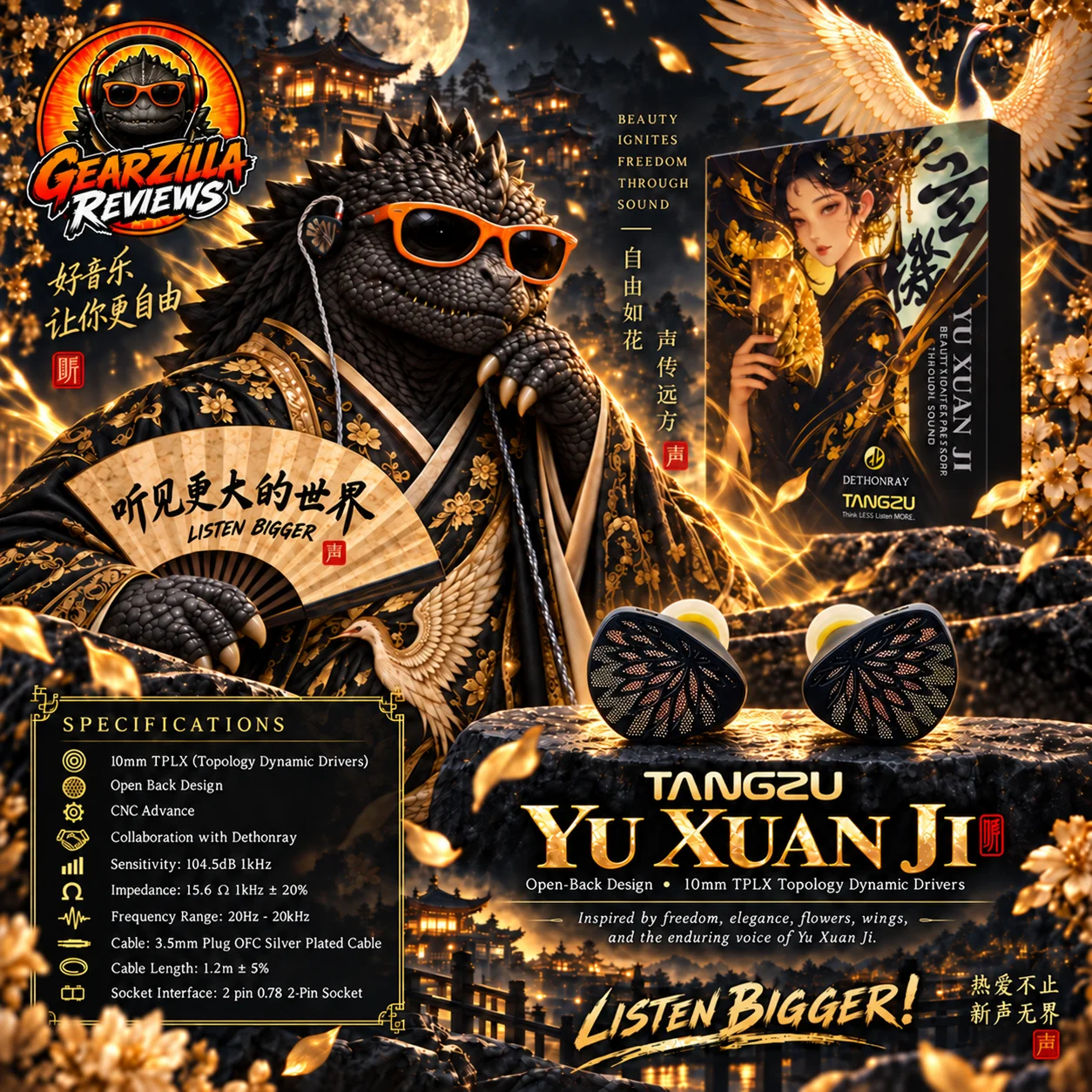
TANGZU lists a 10mm TPLX topology dynamic driver with an open-back design, along with a 15.6-ohm impedance, 104.5dB sensitivity, 20Hz-20kHz frequency range, 0.78mm 2-pin connection, and a silver-plated OFC cable.
That’s interesting on paper.
But the open architecture is what matters most to the story I’m hearing.
This doesn’t feel like TANGZU added vents simply because they looked cool on a product page.
The design supports the tuning.
The stage feels less boxed in.
The upper frequencies seem to have more breathing room.
The bass doesn’t dominate the internal space.
And the entire presentation feels like it was built around that sense of openness rather than merely decorated with it.
The anatomy and the personality actually agree with each other.
I • Impact
The Yu Xuan Ji doesn’t create impact by trying to rearrange your skull.
That’s important.
Because if your definition of impact begins and ends with bass quantity, this probably isn’t your monster.
The low end has enough weight to give music a foundation.
Kick drums still arrive.
Bass lines still have shape.
There is enough substance underneath the music that I don’t feel as though somebody simply removed the bottom octave and called the result “audiophile.”
But the Yu Xuan Ji isn’t interested in leveling the city.
The analogy that immediately came to me was a Kaiju footstep through soft sand.
You know the monster is there.
You can feel the weight.
But the entire neighborhood isn’t collapsing.
That restraint becomes part of the tuning.
Impact supports the music instead of becoming the music.
J • Joy
This is the part that made the Yu Xuan Ji click for me.
It feels like a daytime IEM.
Sunlight coming through the windows.
Energy up.
Coffee nearby.
Music playing.
Maybe I’m working.
Maybe I’m moving around the house.
Maybe I just want something that makes the entire room feel slightly brighter.
I ran through some MPB with Rodrigo Amarante and Mari Froes and then moved into Laufey.
The reaction kept repeating.
Vocals floated.
There was this wonderfully light quality around them that made the presentation feel awake.
The Yu Xuan Ji isn’t the IEM I’d necessarily grab when I want to lie in bed, turn off the lights, and sink into thick velvet warmth.
This is the one I reach for when I want to open the windows and let the day in.
U • Unleashed
Tip rolling.
That’s what really unleashed this one.
And I’m not talking about convincing myself that three slightly different pieces of silicone completely rewrote the laws of acoustics.
The changes were obvious enough in my ears that the tips materially affected what I enjoyed about the Yu Xuan Ji.
Wide bore increased the sense of air and energy.
Balanced bore became my sweet spot.
Narrower tips smoothed the presentation but also began to take away some of the openness that made me care about the IEM in the first place.
That’s when I realized something.
You can absolutely make the Yu Xuan Ji calmer.
I’m just not sure you should.
🎼 Sound
Bright.
Open.
Energetic.
Clean.
Those are the easy words.
But simply calling the Yu Xuan Ji “bright” doesn’t really explain what grabbed me.
Brightness can mean aggressive.
It can mean thin.
It can mean cymbals that feel like they’re trying to drill directly into your skull.
It can mean every “S” sound arriving with a tiny knife.
That wasn’t my experience here.
The Yu Xuan Ji uses its upper-frequency energy to create lift.
The entire presentation feels lighter on its feet.
Vocals don’t sink into the instrumentation.
There is space between individual elements.
The low end remains disciplined enough not to fill every available opening.
And the treble helps illuminate the presentation rather than simply overpowering it.
Is it warm?
No.
Is it thick?
Definitely not.
Does it sound sleepy?
Not even a little.
This thing wants the lights on.
🥁 Bass
Bass isn’t the headline.
And that’s perfectly fine.
The Yu Xuan Ji provides enough low-frequency information to keep the presentation grounded, but the bass never becomes the reason I bought the ticket.
It feels clean.
Intentional.
Relatively quick.
There is enough punch to keep the percussion interesting, but listeners looking for huge sub-bass pressure or chest-thumping mid-bass will want more.
What I appreciate is how the restraint benefits everything above it.
The bass isn’t constantly pushing upward into the mids.
It doesn’t make vocals fight for room.
It doesn’t pull the entire presentation downward.
Instead, it provides the foundation and then gets out of the way.
That’s the right decision for this tuning.
Give the Yu Xuan Ji significantly more bass, and I’m not sure you still have the Yu Xuan Ji.
You’d gain impact.
But you might lose the sky.
🦖 Bass: 3.9/5 – Soft Impact
🎤 Midrange & Vocals
This is where the Yu Xuan Ji really started winning me over.
The mids are clean and natural enough that vocals come through clearly without making the overall presentation feel heavy.
And with the right material?
Vocals float.
That’s the phrase I keep returning to because it describes the experience better than any frequency-response language I can throw at you.
Listening to Rodrigo Amarante and Mari Froes, voices seem to occupy their own area of the mix rather than getting pinned directly against everything surrounding them.
Then I moved over to Laufey.
Same reaction.
The voice had room.
There was light around it.
It didn’t feel swallowed by bass or artificially pushed several feet in front of the rest of the recording.
I could focus on the performance without feeling as though I first needed to dig through the instrumentation to find it.
That’s exactly how I like vocals presented.
Not detached.
Not exaggerated.
Just given enough room to exist.
🦖 Midrange & Vocals: 4.15/5 – Clean Signal
🎯 Instrument Separation
The Yu Xuan Ji’s openness pays dividends here.
When the low frequencies aren’t consuming a giant chunk of the presentation and the upper end is providing plenty of air, individual elements have more room to establish themselves.
That doesn’t mean the Yu Xuan Ji suddenly turns into a surgical analysis machine.
It doesn’t.
This isn’t about putting every instrument under a microscope and congratulating yourself because you heard the third-chair triangle player inhale.
It’s about organization.
Vocals have their space.
Percussion has its space.
Guitars and other midrange instruments don’t immediately smear together.
There is enough breathing room that I can move my attention around a recording without feeling like I’m mentally excavating through layers of congestion.
That’s exactly the kind of technical performance I want at this price.
The Yu Xuan Ji doesn’t force details forward. It gives them somewhere to live.
🏟️ Soundstage & Imaging
Here we go.
This is the magic trick.
The Yu Xuan Ji sounds unusually open for an inexpensive IEM.
I’m not going to tell you it suddenly transforms into a giant open-back headphone.
It doesn’t.
I’m not going to pretend performers are standing twenty feet outside my head.
They’re not.
What I hear is more useful than exaggerating the stage’s absolute dimensions.
I hear space around the music.
That distinction matters.
Vocals don’t feel glued to the instrumentation.
Individual elements have room between them.
The presentation feels less boxed in.
There is an almost vertical sense of openness that contributes to that lifted quality I keep describing.
And because everything isn’t packed tightly together, the stage feels larger and more relaxed even when the actual recording isn’t enormous.
Imaging is perfectly useful, but the bigger story for me is space.
The Yu Xuan Ji doesn’t impress me because I can point at imaginary coordinates.
It impresses me because the presentation can breathe.
I want immersion before I want coordinates.
🦖 Air / Space: 4.5/5 – Skybreaker
✨ Treble & Air
Treble is where this tuning could have gone very wrong for me.
I’m sensitive to sharp “S” sounds.
Once sibilance becomes obvious, I stop listening to the music and start waiting for the next one.
That’s miserable.
The Yu Xuan Ji brings plenty of energy up top, but in my listening it stayed controlled enough that I could enjoy what that energy was doing rather than constantly defending myself from it.
There is sparkle.
There is brightness.
There is air.
There is enough upper-frequency information to keep the presentation lively and illuminated.
But I didn’t find it relentlessly piercing.
And that distinction is important because I don’t think you can separate the Yu Xuan Ji’s treble from its personality.
Take too much of that energy away and the presentation starts losing altitude.
The openness shrinks.
The vocals lose some of that floating quality.
The windows start closing.
This tuning leans more toward the energetic side than the relaxed side, absolutely.
But for my ears, that’s also where the fun is.
🦖 Treble Control: 4.25/5 – Precision Strike
🔁 Tip Rolling: This One Matters
Some IEMs barely react when I change tips.
The Yu Xuan Ji absolutely does.
Wide bore: More openness, more upper-frequency energy, and more of that signature airy presentation.
Balanced bore: My sweet spot. Enough air to preserve what makes the Yu Xuan Ji special while keeping the overall presentation where I wanted it.
Narrow bore: Smoother and calmer.
That sounds good in theory.
For me?
It felt like putting a muzzle on the beast.
The presentation softened, but some of that crystal-clear air also disappeared.
And once that happened, I found myself asking why I was trying to turn the Yu Xuan Ji into something it wasn’t.
If you own this IEM, don’t make your final judgment after one random pair of tips.
Experiment.
The Yu Xuan Ji rewards it.
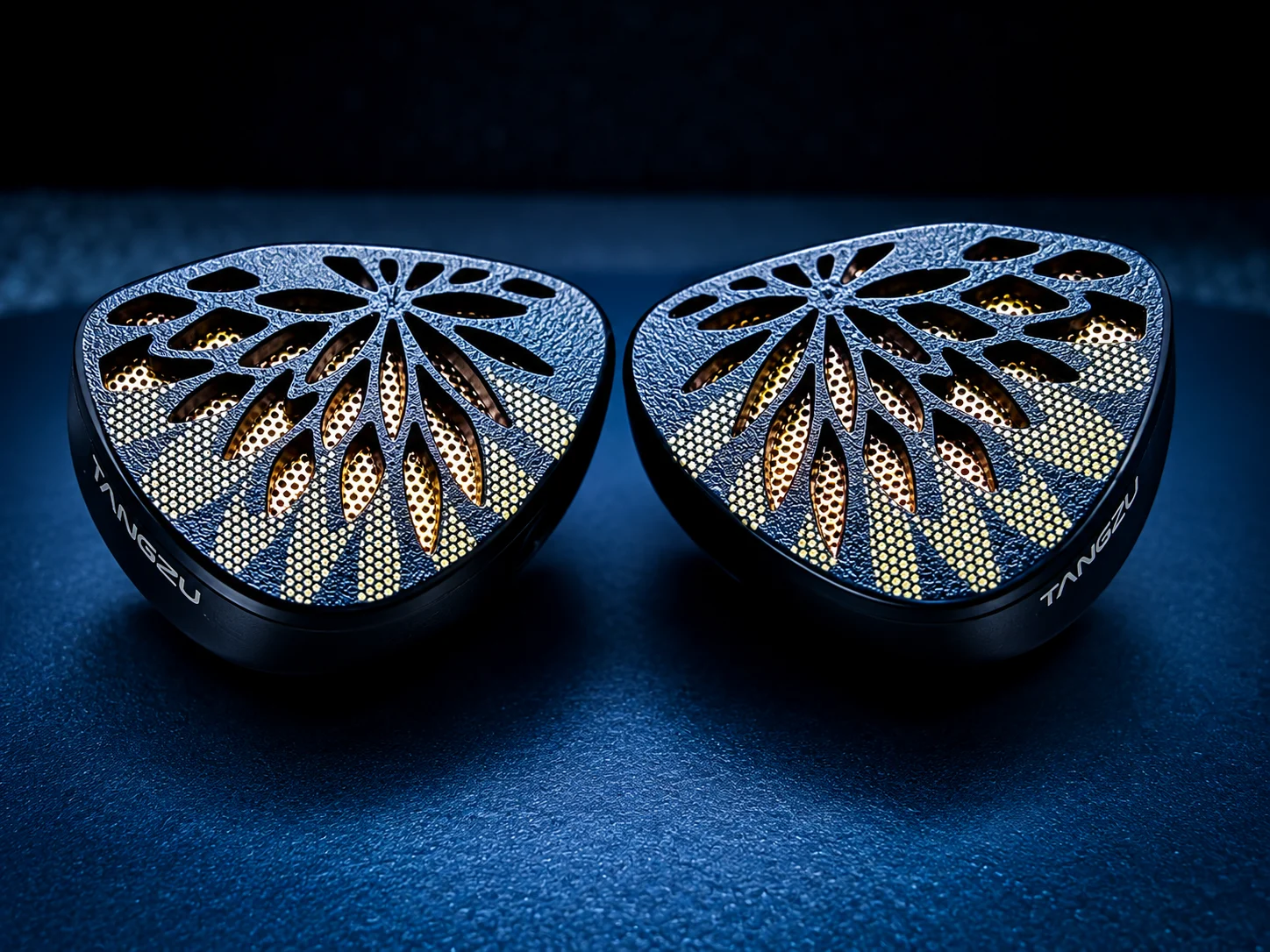
🌬️ The Open-Back Design: Not Just Decoration
This is one of the most important things to understand about the Yu Xuan Ji.
The open design isn’t simply an aesthetic flourish.
It aligns directly with what I hear.
The sound doesn’t feel trapped.
There is less of that sealed-off sensation some IEMs can create.
Music has breathing room.
The stage feels more open.
Vocals get space around them.
And the whole tuning carries an airy personality that makes sense when you look at the hardware.
There are trade-offs whenever you move toward a more open design.
If maximum isolation is your priority, an open-back approach probably isn’t the first architecture you’re shopping for.
But I’m willing to accept that trade-off when the design clearly contributes to the listening experience.
TANGZU wasn’t trying to build an isolation monster here.
It was trying to open the sky.
🎨 Design: Crown Worthy
The Yu Xuan Ji isn’t shy.
And I like that.
There are plenty of affordable IEMs that look completely functional.
Nothing wrong with that.
Put them in your ears, play music, move on.
The Yu Xuan Ji feels like TANGZU wanted the physical object itself to have some personality.
That matters to me more than it probably should.
I like gear.
I like taking it out of the case.
I like looking at it before I put it in my ears.
I like when a product feels as though somebody cared about the visual identity instead of treating the shell as nothing more than somewhere to park a driver.
The Yu Xuan Ji has that kind of presence.
It’s distinctive enough that I remember it.
And in an increasingly crowded budget-IEM market, being memorable is valuable.
🦖 Looks: 4.75/5 – Crown Worthy
☀️ This Is a Daytime IEM
I keep coming back to this because it’s the emotional shorthand that makes the Yu Xuan Ji easiest to explain.
This is daylight audio.
Window-open audio.
Get-moving audio.
There are IEMs that make me want to dim the lights in the room.
There are sets that make me want to sink backward into a chair and let warm bass wrap around me.
There are headphones that seem designed for midnight.
The Yu Xuan Ji doesn’t give me that feeling.
It makes me want to get up.
Put on music.
Open the blinds.
Do something.
The energy isn’t aggressive.
It’s uplifting.
And that’s why those vocals from Rodrigo Amarante, Mari Froes, and Laufey connected so well for me.
They weren’t buried in warmth.
They were suspended inside all that air.
The Yu Xuan Ji doesn’t wrap the music around me. It lifts it up.
💰 Value: It Has an Identity
This is where the Yu Xuan Ji makes an especially strong argument.
TANGZU currently lists the standard Yu Xuan Ji at $41.65, down from its $49 list price.
There is no shortage of competition around this price.
That’s almost the problem.
The budget IEM market has become so crowded that technical competence alone doesn’t guarantee anyone will remember your product six months later.
You need an identity.
The Yu Xuan Ji has one.
That matters more to me than pretending every inexpensive IEM needs to dominate every category simultaneously.
Bass isn’t class-destroying.
The tuning isn’t universally safe.
The brighter personality won’t work for everyone.
Good.
I don’t want every IEM to sound the same.
For this money, I’m getting a product that gives me a genuinely distinct listening experience.
Air.
Openness.
Clean mids.
Floating vocals.
A design with personality.
And enough tip responsiveness that I can move the presentation around my preferences without completely changing what the IEM fundamentally is.
That’s compelling.
🦖 Value: 4.6/5 – Unexpected Rampage
👹 Who Is This For?
The Yu Xuan Ji makes the most sense for somebody who looks at a budget IEM and asks:
Can you show me something different?
If you already own several warm, bass-forward sets and want something that opens up the presentation, the Yu Xuan Ji is worth a look.
If vocals matter to you, there is a lot here to enjoy.
If you like acoustic material, lighter arrangements, singer-songwriter music, MPB, jazzier material, or anything where air and vocal space contribute heavily to the emotional experience, this tuning can be wonderful.
It’s also a good choice for someone who enjoys experimenting with tips and hearing how relatively small changes can alter an IEM’s personality.
But it won’t be for everyone.
If your first question is “How hard does the bass hit?”, there are better monsters for that assignment.
If thick warmth is your comfort food, this probably isn’t your plate.
If upper-frequency energy immediately wears you out, approach accordingly.
The question isn’t whether the Yu Xuan Ji knows what it’s doing.
It does.
The question is whether you want to go where it’s trying to take you.
🦖 GearZilla Scorecard
🌌 Air / Space: 4.5/5 – Skybreaker. This is the Yu Xuan Ji’s defining strength. The presentation feels open, lifted, and considerably less boxed-in than I expect at this price. Vocals and instruments get enough room to breathe that the entire listening experience feels bigger without needing to fake some absurd stadium-sized stage.
✨ Treble Control: 4.25/5 – Precision Strike. There is plenty of high-frequency energy, sparkle, and air, but it remains controlled enough in my listening that I can enjoy the brightness rather than constantly waiting for sharp edges. Extremely treble-sensitive listeners may still want something calmer.
🎤 Midrange & Vocals: 4.15/5 – Clean Signal. Clean, natural, and wonderfully suited to vocal-driven music. The Yu Xuan Ji gives the voices enough breathing room to seem to float within the presentation, rather than being smothered by the low end.
🥁 Bass: 3.9/5 – Soft Impact. Clean and intentional rather than dominant. There is enough weight to keep the music grounded, but listeners chasing substantial sub-bass pressure or enormous slam will want more. The restraint is part of why everything above it has so much room.
🎨 Looks: 4.75/5 – Crown Worthy. Distinctive, memorable, and far more visually interesting than another anonymous budget shell. The Yu Xuan Ji has enough personality that its physical design feels connected to the product’s story.
💰 Value: 4.6/5 – Unexpected Rampage. Around the $50 mark, the Yu Xuan Ji doesn’t win by trying to be everything to everyone. It wins by offering a genuinely distinctive experience built around openness, air, vocals, and energy.
🦖 Overall GearZilla Score: 4.4/5 – Sky Ripper
🦖 Final Roar
The TANGZU Yu Xuan Ji caught me off guard.
Not because it does everything.
It doesn’t.
That’s actually one of the reasons I like it.
There is a temptation in affordable audio to treat every new IEM like it has to become the new universal recommendation.
More bass.
More detail.
More technical performance.
More everything.
The Yu Xuan Ji doesn’t need to play that game.
It commits.
This is an IEM built around openness.
The bass stays disciplined enough to leave space behind.
The mids remain clean.
Vocals get room to float.
The treble contributes energy and illumination.
And the semi-open design helps the whole presentation breathe in a way that feels genuinely connected to the tuning.
Tip rolling matters.
Wide bore lets the monster stretch its wings.
Balanced bore gave me the sweet spot.
Narrow bore can calm things down, but in my ears it also began to suppress the very characteristic that made the Yu Xuan Ji interesting.
And that’s probably the biggest lesson I took from this set.
Don’t buy the Yu Xuan Ji and then immediately try to turn it into something else.
Let it be bright.
Let it breathe.
Let the vocals float.
Let the windows stay open.
Because once I stopped asking what this little IEM wasn’t doing and started paying attention to what it was doing differently, I kept wanting to hear another song.
That’s always the test.
Not whether a graph looks right.
Not whether a driver technology sounds impressive on a box.
Not whether it checks every possible box in a spreadsheet.
Does it make me want to keep listening?
Yes.
For me, absolutely.
The Yu Xuan Ji lands at 4.4 out of 5.
It isn’t the monster that comes stomping through the city.
It doesn’t need to be.
This one flies above it.
🏆 GearZilla Sky Ripper Pick
Doesn’t level the city… but rewrites the skyline.
✅ Buy If
- 🌬️ You want an unusually airy and open presentation at a budget price.
- 🎤 Vocals are one of the most important parts of your listening experience.
- ☀️ You prefer energetic, daylight-style tuning over dark warmth.
- 🏟️ You value breathing room and space around performers.
- ✨ You enjoy sparkle and upper-frequency energy without deliberately chasing harshness.
- 🎯 You want good separation without turning music into a technical exercise.
- 🔁 You enjoy tip rolling and experimenting with how an IEM responds.
- 🎨 You want a budget IEM that actually has some visual personality.
- 🥁 You prefer clean, controlled bass over huge bass quantity.
- 🎶 Singer-songwriter, vocal, acoustic, jazz, MPB, and lighter arrangements make up a meaningful part of your library.
- 💰 You want something around the $50 mark that doesn’t sound like every other budget recommendation.
- 🦖 You’d rather buy an IEM with a strong identity than one desperately trying to please everybody.
⛔ Skip If
- 💣 Huge bass impact is your first priority.
- 🌊 You want substantial sub-bass pressure.
- 🛋️ Thick, lush warmth is your preferred sound.
- 😴 You want a very relaxed or sleepy presentation.
- ✨ You’re extremely sensitive to upper-frequency energy.
- 🎧 Maximum passive isolation is essential to you.
- 🌑 You prefer darker tuning with a softer top end.
- 🥁 You want bass to dominate the personality of the IEM.
- 🔁 You don’t want to experiment with ear tips at all.
- 🎶 You primarily listen to bass-dominant music and want physical slam above everything else.
- ☁️ You want your music to wrap around you rather than open outward.
🧡🦖 The TANGZU Yu Xuan Ji Is Available Now
TANGZU currently lists the standard Yu Xuan Ji at $41.65, featuring a 10mm TPLX topology dynamic driver, an open-back architecture, a 0.78mm 2-pin connection, and a silver-plated OFC cable.
TANGZU Yu Xuan Ji product page:
Not built to stomp. Built to open the sky.
Hear the GearZilla Roar.
Listen Bigger!
Share This Story, Choose Your Platform!