



✅ Pros: Beautifully clear and open tuning for the money, engaging vocals, controlled bass, respectable imaging, enough separation to keep music organized, tiny and exceptionally comfortable resin shells, gorgeous translucent blue faceplates, a distinctive purple cable, excellent responsiveness to tip rolling and EQ, standard 0.78mm 2-pin connectivity, and rock-solid price-to-performance from a company that clearly has a point of view about how its products should sound.
⛔ Cons: Instrument separation is solid rather than substantial, and the D1 prioritizes clarity more than outright resolution. Its brighter tuning can occasionally sound a little shouty to listeners who are sensitive to upper-mid and treble frequencies, especially compared with warmer, bassier alternatives in this price bracket. A simple carrying case would’ve rounded out the package nicely.

A huge thank you to Tony and the entire Eurotech team for supporting GearZilla Reviews and providing the COZOY D1 for this review.
This is our first partnership, and I genuinely appreciate the opportunity to spend time not only with the product but also with the philosophy behind it.
That support means a lot to me, but it doesn’t buy a positive review. Gear provided to GearZilla Reviews doesn’t guarantee favorable coverage, a particular score, protection from criticism, or any influence over my conclusions.
I want to understand what a product was designed to do. I want to hear it before I start changing anything, live with it long enough for the specifications to stop being the story, and eventually answer the question that matters most to me:
Does this thing help me enjoy the music I already love in a new way?
With the D1, the answer is yes.
What made this review especially interesting is that Tony didn’t leave me guessing about COZOY’s intentions.
He explained that COZOY was acquired by Eurotech in the second half of 2025, and that the D1 became the first product produced under this new chapter for the brand.
More importantly, he was wonderfully candid about the sound they wanted to create.
Tony acknowledged that plenty of enthusiasts gravitate toward bigger, boomier bass, especially in this part of the market. COZOY deliberately didn’t want to build another IEM around that formula.
In his words:
“There are far too many IEMs designed for boomy bass. We don’t want to create a market like that.”
He also acknowledged that listeners who are particularly sensitive to higher frequencies may not find the D1 immediately friendly, but pointed to proper eartip selection and sound adjustments as ways to tailor the experience.
Then came the line that really framed this entire review:
“Only by understanding us through the first product can you understand the purpose of creating the upgraded D2.”
That immediately got my attention.
I love any brand or manufacturer that stands for something and is intentional about its sound preferences.
The D1 absolutely has a point of view.

🤯 Around $30 With an Actual Point of View?
There certainly isn’t a shortage of inexpensive single-dynamic-driver IEMs. Scroll through almost any audio retailer, and you’ll find dozens fighting for the same thirty-dollar bill, many following some variation of a familiar formula: elevated bass, warm mids, smooth treble, lightweight shells, detachable cables, and enough technical ability to give newcomers a convincing first step into the hobby.
There’s nothing wrong with that approach, but when so many products are chasing a similar sound, genuinely distinctive IEMs become much harder to find. That’s one of the reasons the COZOY D1 caught my attention. It doesn’t feel like an IEM particularly interested in blending into the crowd.
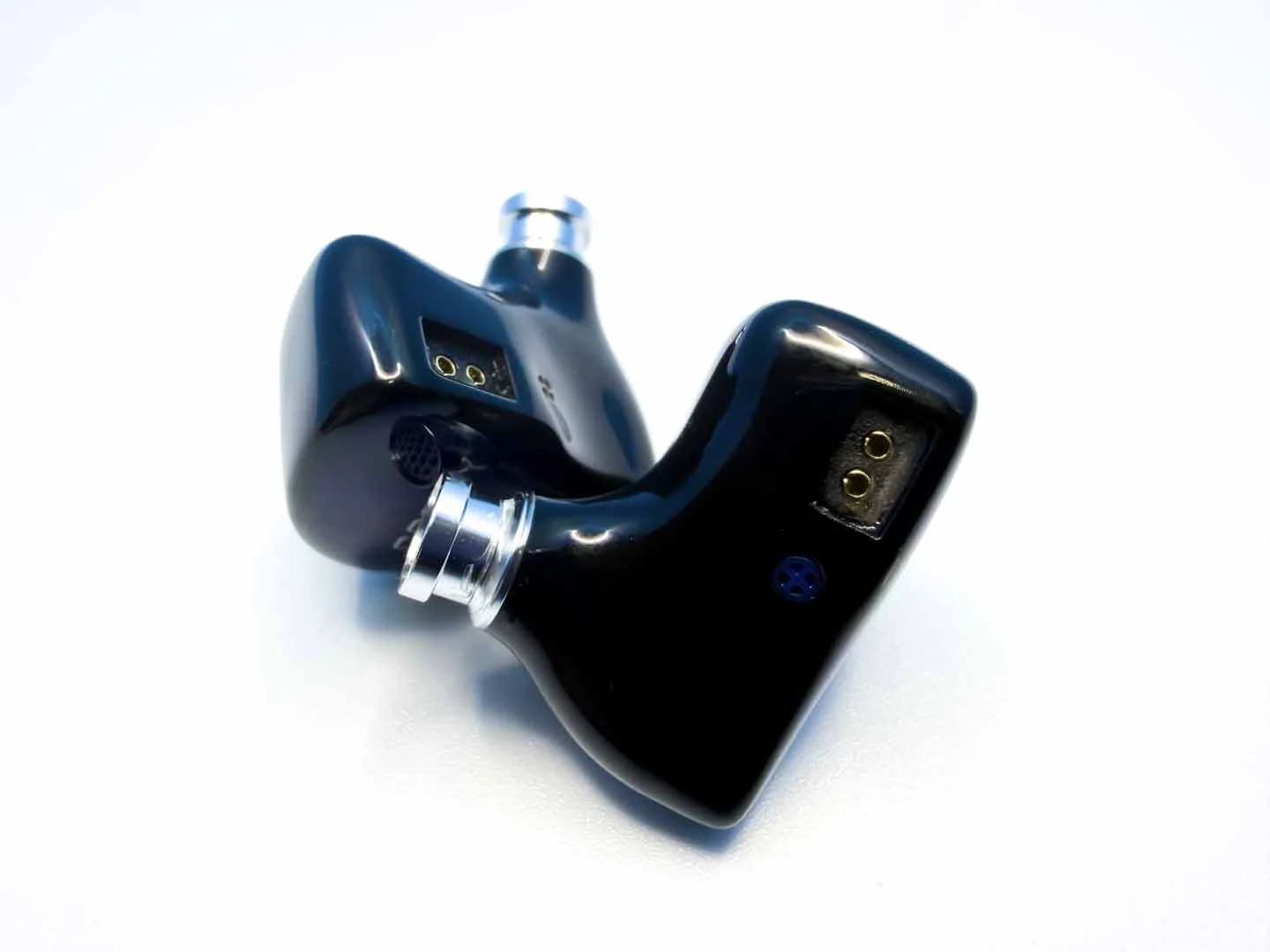
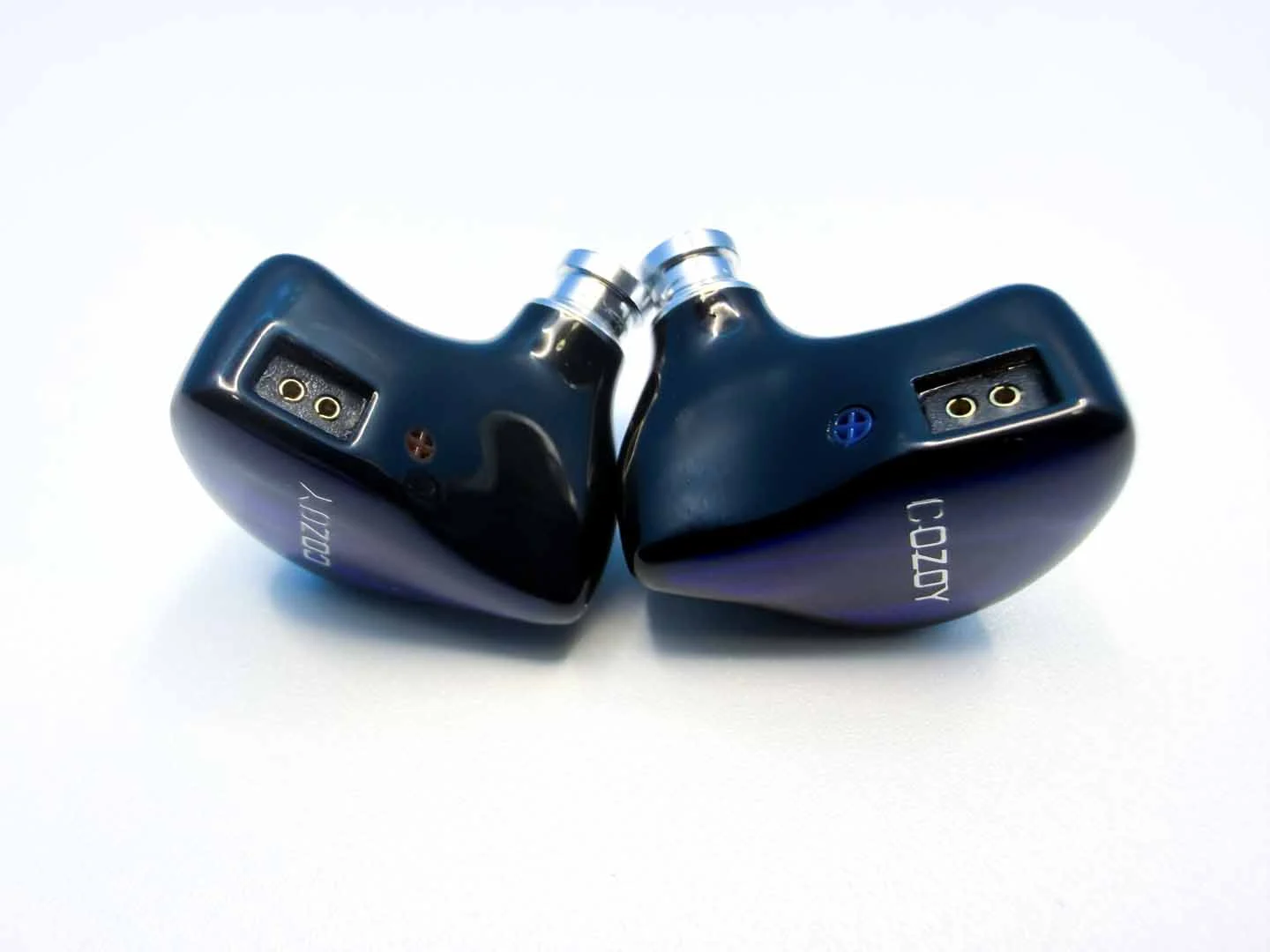
Inside each compact shell is a 10mm dual-magnetic-circuit, dual-cavity dynamic driver with a graphene diaphragm, housed in a beautifully finished 3D-printed medical-grade resin shell. COZOY pairs it with a detachable 0.78mm 2-pin single-crystal copper, silver-plated cable finished in a wonderfully rich shade of purple. Combined with those translucent blue shells, the whole package has far more personality than I expected from an IEM selling for roughly $30.
And whoever decided blue and purple were the move here deserves some credit, because it looks fantastic.
But the D1’s real distinction goes far beyond its appearance. COZOY isn’t trying to win the budget bass wars or follow the familiar formula of adding more low-end weight simply to create instant excitement. Instead, the D1 takes a brighter, cleaner, more open approach, placing greater emphasis on vocal presence and overall clarity while leaving more of the frequency range exposed.
That choice gives the D1 a point of view.
It also comes with trade-offs, and not every listener will prefer them. The brighter tuning can push harder than some warmer competitors, and listeners looking for a thick, bass-heavy presentation may immediately gravitate elsewhere.
But that’s exactly why I find the D1 interesting.
COZOY clearly knows what it wants this little IEM to sound like, and in a market overflowing with products trying to satisfy everyone, that kind of intentionality is becoming increasingly valuable.
I’ll take an IEM with a clear identity over another anonymous crowd-pleaser any day.
📦 First Impression: Look at This Little Thing
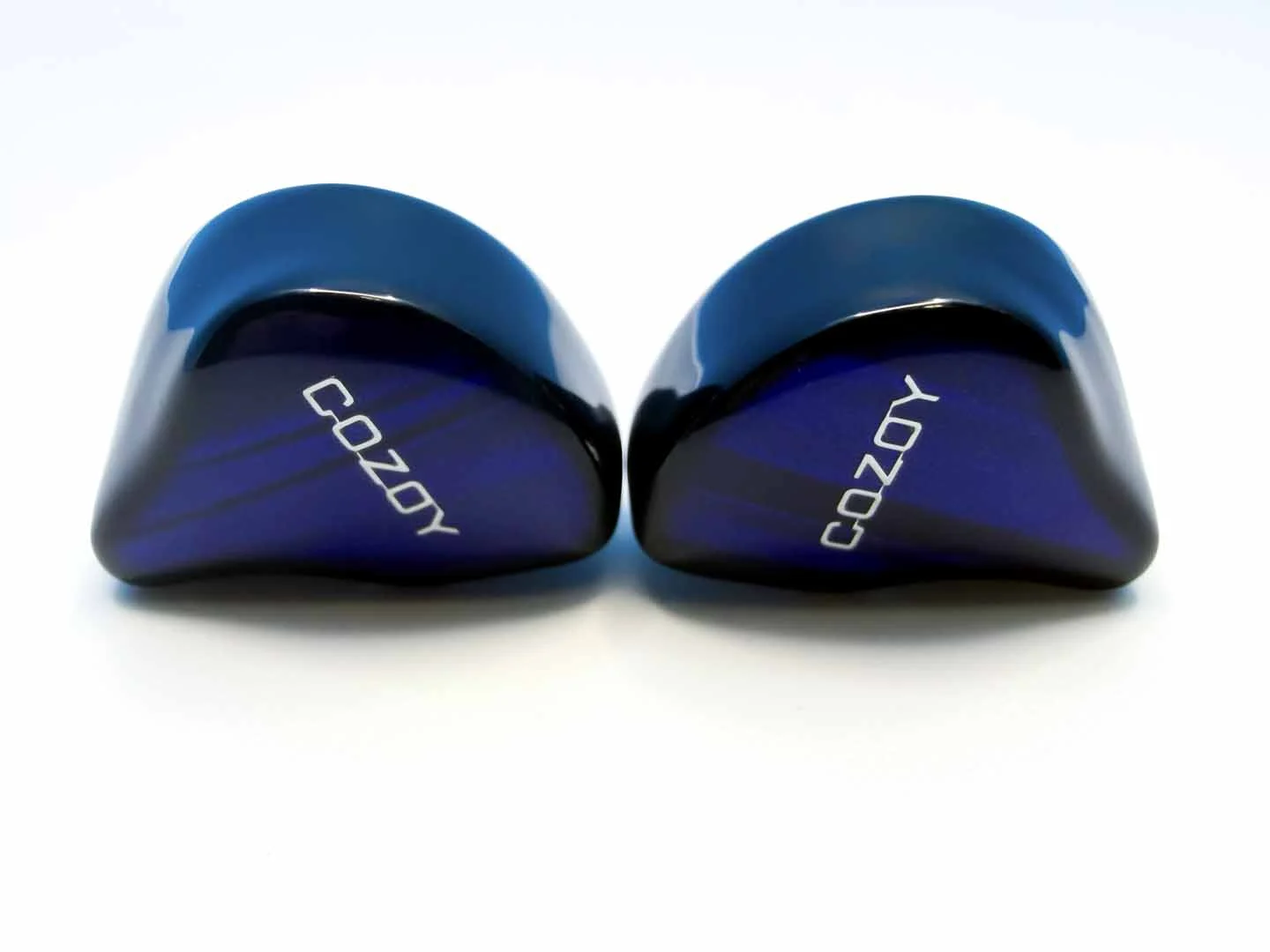
My first reaction to the D1 had almost nothing to do with sound. I was struck by just how tiny these things are. The compact resin shells practically disappear into my ears, and the low-profile shape makes them wonderfully easy to wear without ever feeling bulky or intrusive.
Then there’s the design. The blue faceplates are gorgeous, and paired with the rich purple cable, the D1 feels playful without looking cheap or gimmicky. There’s a surprising amount of personality packed into such a small shell, which already makes it stand out in a crowded budget category.
Then I hit play.
That’s when Tony’s comments about COZOY’s tuning philosophy started to make sense.
The first thing that grabbed me wasn’t bass quantity or some exaggerated burst of artificial detail. It was clarity. Vocals came through cleanly, instruments had enough room to remain intelligible, and the overall presentation felt open and relatively uncluttered. There wasn’t a thick layer of low-end warmth sitting over everything, which allowed the rest of the frequency range to breathe a little more freely.
The D1 is definitely brighter than many budget IEMs I’ve heard, but what impressed me was how intentional that choice felt. It doesn’t sound like COZOY accidentally wandered into this tuning. It sounds like they made a decision and committed to it.
The more I listened, the more I realized the D1 wasn’t trying to win me over with one obvious party trick. It was showing me what COZOY believes an affordable IEM should sound like: clean, open, lively, and willing to trade some bass-heavy comfort for a little more clarity and personality.
That’s a much more interesting story.
🎧 Review Setup
Every GearZilla review starts from the same place:
Listen first. Figure out the story later.
With the D1, I spent time listening in its stock configuration before I began changing anything.
Then the tinkering started.
Because, well, I’m me.
My testing focused on:
- 🎧 Stock listening
- 👂 Extensive ear-tip rolling
- 🔌 Cable swapping
- 🎚️ EQ experimentation
- 🎶 Different genres and recording styles
- 🎤 Vocal-focused material
- 🥁 Bass and percussion-heavy tracks
- 🌌 Spatial and imaging-focused recordings
- ☁️ Longer listening sessions to evaluate comfort
Tip rolling became particularly useful because the D1’s brighter personality makes changes in seal and bore size easy to hear.
The D1 also responds nicely to EQ.
That’s important because you’re not trying to repair an obviously broken tuning. You’re simply reshaping an already coherent presentation around your own preferences.
Want slightly more low-end weight?
You can get there.
Want to take a little edge off the upper mids?
Easy.
Want to leave it exactly as COZOY intended?
That works too.
The more time I spent experimenting, the clearer the story became.
The D1 is a clarity-first budget IEM that’s comfortable having an opinion.
🧬 KAIJU DNA SCAN
Every monster leaves behind a genetic signature.
Here’s what this one looks like.
K • Kill Shot
The D1’s greatest weapon is clarity.
Not fake detail.
Not enormous bass.
Not some ridiculous attempt to convince you that thirty dollars has suddenly purchased flagship resolution.
The D1 simply keeps the presentation clean and exposed enough that vocals remain easy to follow, instruments don’t immediately blur together, and music has a nice sense of openness.
It’s a straightforward strength, but at this price it works remarkably well.
A • Anatomy
The D1 uses a 10mm graphene-diaphragm dynamic driver with a dual-magnetic-circuit and dual-cavity design inside a 3D-printed, medical-grade resin shell.
COZOY pairs that with standard 0.78mm 2-pin connectors and a single-crystal copper silver-plated cable.
The engineering sounds serious.
The presentation doesn’t take itself nearly as seriously.
Those deep blue shells and that gorgeous purple cable give the D1 a visual identity that makes me smile every time I pick it up.
That’s exactly what inexpensive audio should be.
Accessible doesn’t have to mean boring.
I • Impact
The D1 creates impact through clean attacks, vocal presence, and control rather than brute-force bass.
Kick drums still have punch. Basslines still provide a foundation. Percussion still carries enough snap to keep music lively.
What you don’t get is a wall of low-frequency energy designed to impress you in the first thirty seconds.
And that’s intentional.
COZOY clearly wanted the entire frequency range to have room to participate.
J • Joy
The joy here comes from how easy the D1 is to live with.
It’s tiny.
It’s comfortable.
It’s attractive.
It’s inexpensive.
It responds well to tips.
It responds well to EQ.
And it gives newcomers a really approachable platform for learning how seemingly small adjustments can change an IEM’s personality.
For GearZilla, curiosity is catnip.
The D1 gave me plenty to play with.
U • Unleashed
The D1 really comes alive once you begin tailoring it around your own ears.
Tip rolling can gently shift bass weight, upper-mid energy, perceived air, and overall tonal balance.
EQ gives you another layer of control.
And the standard 2-pin connection means you’re free to experiment with cables if you want different ergonomics, termination, or simply a different look.
That’s the important distinction.
The D1 doesn’t need fixing.
It rewards fine-tuning.
🎼 Sound
The easiest way I can describe the COZOY D1 is that it is clear, lively, open, and intentionally brighter than much of its competition. That brighter balance gives the D1 a refreshing sense of immediacy, but before going any further, there’s an important distinction worth making, as it sits at the heart of how this IEM performs.
Clarity isn’t the same thing as resolution.
Those two ideas get lumped together all the time, but they’re not interchangeable. Resolution is about how deeply a driver can reach into a recording and how much subtle information, texture, and layering it can retrieve. Clarity is about how cleanly and directly that information reaches you in the first place.
The D1 is clarity-first, not resolution-first, and I mean that as a compliment.
I’m not suddenly hearing microscopic studio details that would normally require dramatically more expensive gear, and the D1 isn’t performing some kind of technical sorcery. What it does instead is keep the presentation from being buried beneath excessive bass and warmth, which gives vocals more presence, helps percussion retain cleaner edges, and allows instruments to stay organized enough that the music doesn’t immediately become congested.
That cleaner balance creates the impression of more space and more openness without pretending the D1 is doing something it isn’t.
There’s simply more light in the room.
And sometimes, that’s exactly what a recording needs.
🥁 Bass
Bass isn’t the D1’s headline feature, but it’s doing exactly what it needs to do. The low end stays clean and controlled, with enough mid-bass punch to keep drums engaging and enough foundation to stop the overall presentation from feeling thin or weightless.
What you won’t get is huge sub-bass pressure or the kind of low-end emphasis that dominates the rest of the tuning. Tony basically told me, before I ever listened, that COZOY wasn’t trying to build another boomy-budget IEM.
Once you understand that, the bass makes perfect sense.
Basslines remain easy to follow, kick drums have good definition, and the low end stays disciplined enough not to constantly spill upward and soften everything around it. That restraint helps preserve the clarity that defines the D1 and keeps vocals and instruments from getting buried under excess warmth.
Would I recommend the D1 to someone whose primary requirement is a skull-rattling slam?
Probably not.
But that’s not the assignment.
The D1 is more interested in balance and control than brute force, and if you want a little more weight, the driver responds well enough to EQ that you can add some without sacrificing the clarity and openness that make the tuning interesting in the first place.
🎤 Midrange & Vocals
The midrange is where the D1’s tuning philosophy really starts to pay off. Because the bass stays disciplined rather than constantly pushing forward, the vocals have more room to breathe and arrive with a clean, immediate sense of presence.
Female vocals benefit especially from that balance. There’s enough upper-mid energy to give singers life and articulation without making the presentation feel dull or overly relaxed, and acoustic material benefits from the same quality. Guitars retain clean edges, piano notes remain easy to follow, and voices don’t have to fight their way through a thick layer of low-end warmth.
That extra presence does come with a tradeoff.
On some recordings, the D1 can get a little shouty, particularly if you’re already sensitive to upper-mid or higher-frequency energy. Tip choice matters here, and so does your own tolerance for a brighter presentation.
Tony was completely upfront about that possibility before I ever heard the D1, and I appreciated the honesty because my listening experience largely confirmed what he described.
Some listeners are going to love the added energy and vocal immediacy. Others will want to pull it back slightly with tips or EQ.
Neither reaction makes the tuning wrong.
It simply means COZOY made a deliberate choice, and the D1 sounds more interesting because of it.
🎯 Instrument Separation
Instrument separation is there, but I wouldn’t oversell it. The D1 isn’t carving out huge pockets of empty space between every performer, and it certainly isn’t pretending to be some sophisticated multi-driver set costing hundreds of dollars.
What it does well is keep the presentation organized enough that music doesn’t turn muddy or congested. Vocals remain easy to follow, percussion retains its edges, and guitars and supporting instruments generally maintain clear positions within the mix rather than collapsing into a single indistinct wall of sound.
Dense passages can still remind you that this is an inexpensive single dynamic driver, but the brighter, cleaner tuning helps preserve definition when things get busy. That’s why I keep coming back to clarity instead of resolution.
The D1 isn’t constantly uncovering new layers you’ve never heard before. It’s simply doing a very good job of keeping the layers it can reproduce clear and intelligible.
For roughly thirty dollars, that’s a meaningful accomplishment.
🏟️ Soundstage & Imaging
The D1 has a pleasantly open sense of space without exaggerating its scale. I wouldn’t call the stage enormous, because it isn’t, but it never feels cramped or overly intimate either.
Music has enough width to breathe comfortably, and the cleaner tonal balance helps create a little more perceived room around vocals and instruments. That extra openness works especially well with acoustic material and vocal-forward tracks, where the presentation benefits from a bit of space between elements rather than feeling tightly packed.
Imaging follows the same general pattern. It’s solid, believable, and coherent, with enough directional information to give instruments and effects a clear place in the mix without becoming vague or confused.
We’re not talking about holographic, flagship-level placement here, and we don’t need to be.
At this price, what matters is that the stage holds together, the image stays organized, and the music retains a convincing sense of space.
The D1 handles all three nicely.
✨ Treble & Air
The upper frequencies are among D1’s defining characteristics, and there’s real energy here. That extra presence plays a big role in the clarity and openness that make the D1 stand out, giving cymbals crisp edges, keeping vocals lively, and allowing smaller details to come through without getting buried under too much warmth.
The result is a presentation with a nice sense of air and lift. Music feels a little more open, and there’s enough upper-frequency presence to keep the D1 from sounding dull or overly relaxed.
That brighter tuning does come with a tradeoff. Depending on the recording, your tips, and your own sensitivity, the D1 can occasionally push a little too much energy forward, making it sound slightly shouty.
That’s where tip rolling becomes especially useful. A small change can smooth the presentation without stripping away the character that makes the D1 interesting in the first place, and EQ works beautifully for the same reason.
You’re refining the sound, not rebuilding it.
And I appreciate that COZOY acknowledges those tradeoffs instead of pretending the tuning should work perfectly for everyone. The D1 has a clear point of view, and part of its appeal is that COZOY stands behind it.
☁️ Comfort: Tiny Shell, Big Win
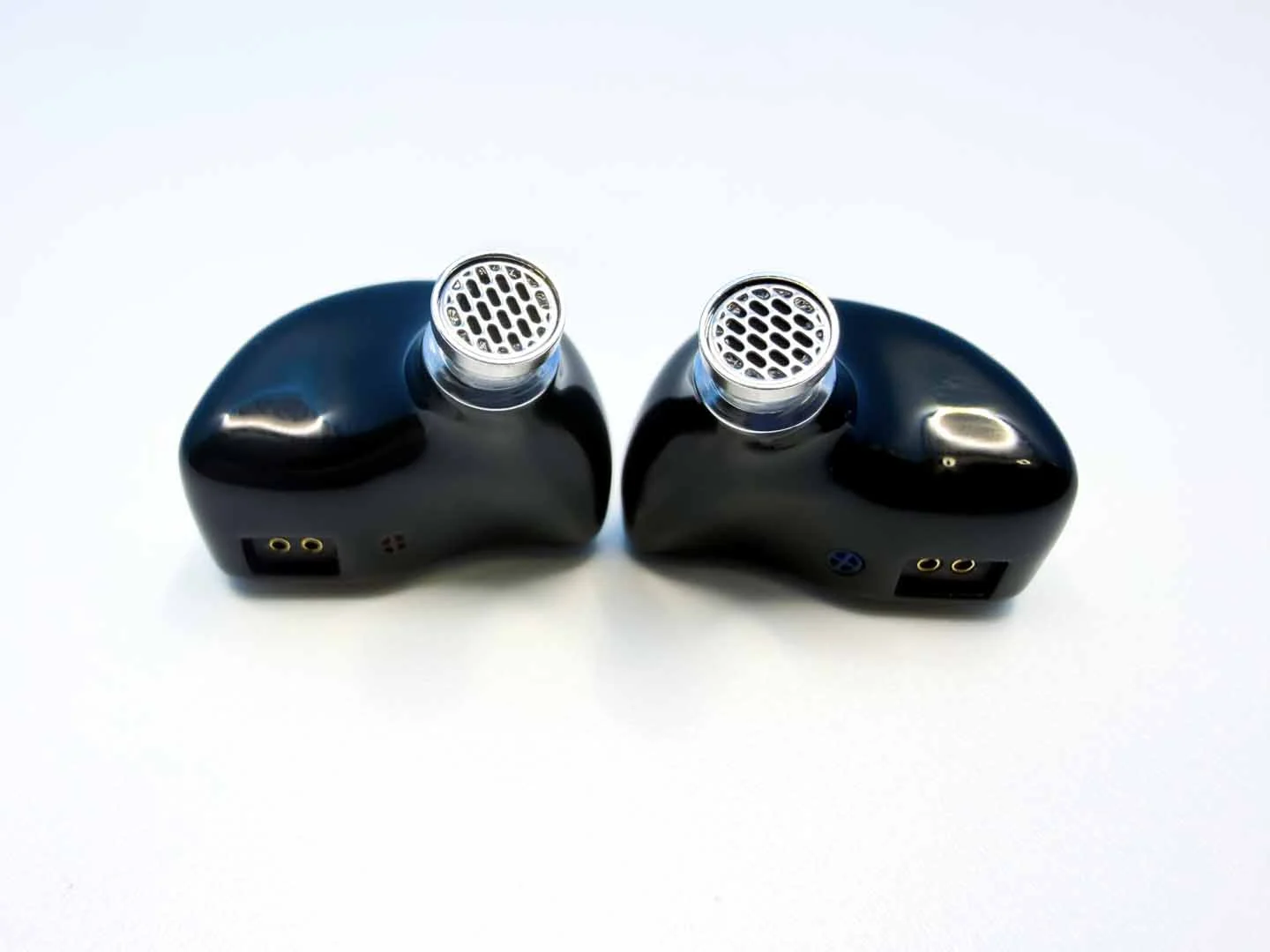
Comfort is one of the easiest wins in this review. The D1’s shells are wonderfully compact, smooth, and light enough that they settle into place quickly and then mostly disappear.
There’s no oversized body competing for space in my ear, no bulky faceplate sticking outward, and no unnecessary sense of weight. The small resin shell simply sits where it should and gets out of the way, which is exactly what I want from an everyday IEM.
That low-profile fit makes the D1 especially easy to live with during longer listening sessions. I could wear these for extended periods without the physical design becoming the reason I needed to stop, and that matters more than people sometimes give it credit for.
For an entry-level product that could easily become someone’s first real introduction to IEMs, that kind of comfort is a genuine strength. The sound may spark curiosity, but fit often determines whether they keep reaching for it day after day.
🔵 Design: Blue Shells, Purple Cable, Zero Apologies
👂 Tip Rolling: Start Here
If the D1’s upper-mid or treble energy feels a little too forward, I’d start with tips before reaching for EQ. Tip rolling can subtly reshape the tonal balance while also helping you dial in the best combination of comfort, seal, and overall presentation.
For me, narrow-bore tips were the answer. They gave the low end just a little more foundation, softened some of the brighter energy, and preserved the openness that makes the D1 interesting in the first place. The new Divinus Velvet Narrow tips turned out to be a perfect match for my ears.
That pairing became even better with the iBasso DC-Tonfa in the chain. I didn’t need more bass from the D1. What I wanted was a little more warmth and smoothness, something that could take the sharper edges off and give the presentation a more analog character without sacrificing clarity.
That combination did exactly that.
The D1 kept its openness and vocal presence, but the presentation became smoother, rounder, and more relaxed. Instead of pushing the tuning toward more impact, I was really just sanding down the digital edge and letting a little more velvet into the sound.
That’s why I like the D1 as a potential entry point into the hobby. It teaches you quickly that the IEM itself is only part of the equation.
Fit matters. Seal matters. Tips matter. Source matters. Your ears matter.
Welcome to the rabbit hole.
🎚️ EQ: Refine, Don’t Rewrite
The D1 responds well to EQ, giving you another useful way to shape its personality without losing what makes it interesting in the first place.
I wouldn’t go crazy with it. The whole point is to preserve the clarity, openness, and vocal presence that define the D1 rather than trying to turn it into something completely different. If you want a little more bass, add a little. If the upper mids occasionally push too hard, trim them gently.
That’s really all it needs.
The D1 doesn’t require a tonal transplant, and pushing EQ too far risks sanding away the very qualities that give it character. This is an IEM with a clear philosophy, and I think the best use of EQ is to meet that philosophy halfway rather than force it into another target.
For me, that meant only subtle adjustments. I wasn’t chasing more bass so much as a slightly smoother, more analog presentation, and once the fit, tips, and source were right, there wasn’t much left to fix.
🔌 Cable Swapping: Because We Can
The standard 0.78mm 2-pin connection makes experimentation easy, but I wouldn’t be in any rush to replace that gorgeous purple stock cable.
Seriously, look at it.
It’s one of the visual highlights of the D1, and it pairs beautifully with those blue resin shells. More importantly, there’s nothing about the stock cable that made me feel like an immediate upgrade was necessary.
What the detachable connection gives you is flexibility. If you want a different termination, prefer another cable ergonomically, or simply feel like changing the look of the D1 down the road, you can do that without being locked into anything proprietary.
For newcomers, that’s another small but meaningful advantage. The D1 gives you room to experiment and grow without making you feel like you need to replace half the package on day one.
📦 Accessories: Just Give Me a Little Case
The overall package makes sense for the price, and at roughly thirty bucks, I’m not expecting a luxury unboxing experience or a box stuffed with extras I’ll never use.
My one real wish?
A case.
Nothing fancy. Even a simple pouch would’ve been enough.
The D1 is small, attractive, and easy to carry, which makes me want a safe place to carry it. That matters even more when the shells look this good and the stock cable is one of the package’s visual highlights.
Is the missing case a deal breaker?
Not even close.
At this price, I’d much rather see COZOY invest the money in the driver, shells, and cable than inflate the package with accessories that don’t improve the listening experience.
Still, Tony, next time give these little blue monsters somewhere to sleep.
💰 Value: Intentional Sound for Thirty Bucks
This is where the D1 becomes more than just another good, inexpensive IEM. Budget audio has become incredibly competent, which is fantastic for listeners, but it also means standing out in this category has become brutally difficult.
COZOY could’ve taken the safest possible route by loading up the low end, smoothing the upper frequencies, and creating something designed to offend as few listeners as possible. Instead, they made a choice. The D1 prioritizes clarity, openness, vocal presence, and a brighter tonal balance that sometimes pushes harder than some listeners will prefer, and COZOY seems perfectly comfortable accepting the tradeoffs that come with that approach.
I respect that.
The D1’s instrument separation is respectable rather than extraordinary; its resolution is good for the price rather than miraculous; and the bass stays controlled instead of trying to overwhelm you. None of those individual traits will rewrite what’s possible at this price point, but together they create a presentation that feels coherent and intentional.
Everything is working toward the same goal.
At roughly $30, the D1’s price-to-performance proposition is rock solid. More importantly, COZOY has achieved something much harder to communicate on a specification sheet.
The D1 has an identity.
And in a market this crowded, that may be one of its greatest strengths.
👹 Who Is This For?
The D1 makes the most sense for listeners who prioritize clarity, vocal presence, openness, and balance over sheer bass quantity. If you enjoy a slightly brighter presentation and don’t want every inexpensive IEM warming the mix with a heavy low-end shelf, the D1 has a lot to offer.
It’s also a great choice for someone who enjoys experimenting. Tip rolling can meaningfully shift the presentation, EQ gives you room to fine-tune the balance, and the standard 0.78mm 2-pin connection makes it easy to swap cables if you want to explore different ergonomics or simply change the look.
That flexibility is part of the appeal. The D1 gives you room to learn what your ears actually prefer without immediately forcing you into more expensive gear, and it responds well enough to those changes that the experimentation feels worthwhile.
If your ideal sound is dark, thick, intimate, and bass-heavy, the D1 probably isn’t your monster.
But if you want something clean, compact, tweakable, distinctive, and intentionally different, this little blue IEM starts making a lot of sense.
Now we’re talking.
🦖 GearZilla Scorecard
✨ Clarity: 4.8/5. This is the D1’s defining strength. Clean, immediate, and open enough to make the whole presentation feel more transparent than its price suggests.
🎤 Midrange & Vocals: 4.6/5. Vocals have excellent presence and articulation, particularly female vocals, although that extra upper-mid energy can occasionally become a little shouty.
🥁 Bass: 4.2/5. Clean, controlled, and appropriately punchy, but intentionally restrained. This isn’t the set for listeners chasing huge sub-bass weight or physical slam.
🎯 Separation: 4.2/5. Instruments remain organized and easy to follow, but the D1 isn’t carving out huge spaces between layers. Clarity does more of the heavy lifting here than outright technical separation.
🏟️ Soundstage & Imaging: 4.4/5. Pleasantly open with believable positioning and enough width to keep the presentation from feeling cramped.
🔬 Detail & Resolution: 4.3/5. Good for the price, but this is where the distinction between clarity and resolution matters. The D1 sounds clean without pretending to retrieve microscopic information.
✨ Treble & Air: 4.4/5. Lively, crisp, and airy, helping give the D1 its open personality. The deduction comes from the occasional shoutiness that some listeners may want to tame with tips or EQ.
☁️ Comfort: 4.9/5. Those tiny resin shells practically disappear once seated. An easy all-day form factor.
👂 Tip Compatibility: 4.8/5. Tip rolling genuinely changes the experience. Narrow-bore tips worked particularly well, and the Divinus Velvet Narrow proved to be an excellent match.
🎚️ EQ Response: 4.8/5. The D1 responds beautifully to subtle adjustments without losing its core personality. It rewards refinement rather than requiring repair.
🎨 Design: 4.9/5. Gorgeous translucent blue shells, that fantastic purple cable, and a compact shape give the D1 far more visual personality than most products around this price.
💰 Value: 4.8/5. Rock-solid price-to-performance. The D1 combines strong clarity, comfort, flexibility, and an actual tuning philosophy in one very affordable package.
🦖 Overall GearZilla Score: 4.5/5 • A-Class Kaiju.
🦖 Final Roar
The COZOY D1 reminded me of something I wish happened more often in affordable audio: a company decided what it believed, then built a product around that belief.
COZOY didn’t look at a crowded market full of bass-heavy IEMs and decide the answer was simply to make another one. Tony and the Eurotech team wanted something clearer, more open, and more balanced across the spectrum, even though they knew a brighter presentation wouldn’t be equally friendly to every listener.
I love that.
I love any brand or manufacturer that stands for something and is intentional about its sound preferences. Not every IEM needs to chase the same target, not every listener wants the same bass shelf, and not every product needs to smooth away every edge until its personality disappears.
The D1 absolutely has personality.
Those tiny blue resin shells are beautiful, the purple cable is gorgeous, and the comfort makes this an easy set to live with for long stretches. Bass stays controlled rather than oversized, vocals have real presence, and the overall presentation has enough openness to keep music feeling lively and uncluttered. Better still, the driver gives you enough flexibility to experiment with tips, source pairing, and EQ without stripping away the character COZOY intended.
There are compromises, and I think acknowledging them makes the D1 more interesting rather than less. Instrument separation is good, but it isn’t substantial. Resolution is respectable for the price, but this is unquestionably a clarity-first IEM. And yes, that brighter tuning can occasionally push into shoutiness depending on your ears, your tips, and the recording.
But those aren’t failures of identity.
They’re the consequences of having one.
That’s ultimately why the D1 works for me. Once I understood what COZOY was trying to accomplish, I stopped asking why it wasn’t tuned like everything else and started appreciating the fact that it wasn’t.
For our first partnership with Tony and the Eurotech team, that’s one hell of an introduction.
Kudos, Tony. You’ve got a winner here.
You told me that understanding the D1 was the key to understanding why COZOY created the upgraded D2.
Mission accomplished.
Now I really want to hear where that philosophy goes next.
🏆 GearZilla Clarity-First Budget Monster
Small shell. Clear convictions.
✅ Buy If
- ✨ You prioritize clarity over enormous bass quantity.
- 🎤 Vocals are an important part of your listening.
- 🌌 You enjoy a clean, relatively open presentation.
- 🥁 You prefer controlled bass over a big boomy low end.
- 👂 You enjoy experimenting with ear tips.
- 🎚️ You want an inexpensive IEM that responds well to EQ.
- ☁️ You value a tiny, extremely comfortable shell.
- 🔵 You love distinctive blue resin faceplates.
- 💜 You agree that purple cables should absolutely be a thing.
- 🔌 You want standard 0.78mm 2-pin connectivity.
- 🎶 You prefer a lively tuning over something dark and sleepy.
- 💰 You want strong price-to-performance without buying another clone of the same budget sound.
- 🧠 You appreciate manufacturers that actually have a tuning philosophy.
⛔ Skip If
- 🥁 You’re a dedicated basshead chasing huge low-end quantity and physical slam.
- 🌑 You prefer dark, warm, thick tuning.
- 👂 You’re particularly sensitive to upper-mid or treble energy and don’t want to experiment with tips or EQ.
- 🎯 You’re expecting enormous instrument separation from a roughly $30 single-DD IEM.
- 🔬 You’re chasing maximum resolution and microscopic detail retrieval above everything else.
- 😴 You want an extremely relaxed, laid-back presentation.
- 📦 A carrying case is mandatory for you out of the box.
💙🦖 Ready to Meet the Little Blue Monster?
The COZOY D1 isn’t trying to out-bass everybody else in the budget arena.
Good.
There are already plenty of IEMs doing that.
This little monster comes armed with beautiful blue resin shells, a ridiculously cool purple cable, excellent comfort, clean bass, engaging vocals, and a clarity-first tuning that gives it an actual personality in one of the most overcrowded categories in audio.
Most importantly, it tells me something about the company that built it.
COZOY has a sound philosophy.
They aren’t afraid to follow it.
And after hearing the D1, I’m genuinely excited to find out what that philosophy becomes in the D2.
Hear the GearZilla Roar. 🦖🎧
Listen Bigger!
Share This Story, Choose Your Platform!