



✅ Pros: Extremely versatile tuning, clean and controlled bass, natural vocals, smooth treble, good separation and placement, cohesive hybrid-driver integration, comfortable shells, easy drivability, and an ability to handle almost any genre without exposing an obvious weakness.
⛔ Cons: The Stardust does so many things well that it struggles to establish a defining personality. Bassheads may want more impact, detail hunters may find greater resolution elsewhere, treble lovers may want more sparkle, and listeners looking for an IEM that grabs them immediately may find the Stardust almost too safe.

🍦 Vanilla Is Good
Vanilla ice cream gets a bad rap. Somewhere along the way, vanilla became shorthand for boring, plain, or safe, even though good vanilla is one of the most useful flavors around. Eat it plain, pair it with pie, cover it in chocolate, top it with strawberries, turn it into a milkshake, or drop a scoop beside a warm brownie. Somehow, vanilla keeps working.
That’s the Kiwi Ears Stardust.
I’ve thrown all kinds of music at this little monster, and what keeps impressing me isn’t one spectacular trick. It’s how rarely the Stardust gets anything noticeably wrong. Rock works. Pop works. Jazz, electronic, acoustic, vocal-heavy tracks, busy arrangements, relaxed listening. I kept changing the assignment, and the Stardust kept turning in solid work.
That’s impressive, but it also creates the central tension of this review. The Stardust rarely gives me the opposite reaction either. The bass doesn’t rearrange my organs, the vocals don’t suddenly levitate above my forehead, the treble doesn’t uncover details I’ve somehow missed for 20 years, and the spatial presentation doesn’t make the room disappear.
It just works.
Really well.
The longer I listened, the more I realized that might actually be its superpower. This isn’t the exotic sports car sitting under a cover in the garage.
It’s the Toyota parked outside that starts every morning.
Maybe that doesn’t sound exciting, but try living without it.
🦖 Disclosure
Our awesome friends at Bloom Audio generously provided the Kiwi Ears Stardust to GearZilla Reviews for review. The goal was simple: spend real time with this new five-driver hybrid, throw as much music at it as possible, and figure out where it fits in an increasingly crowded IEM market.
I’m incredibly thankful for Bloom Audio’s continued support of GearZilla Reviews and our growing community, as well as our partners at Linsoul, who continue to help us get new gear into our ears and in front of fellow audio enthusiasts.
As always, that support doesn’t buy a positive review, guarantee a particular score, or give anyone control over what I hear or write. The Stardust became especially interesting because no giant flaw is waiting around the corner. It’s good. Very good, actually. The harder question became whether being good at nearly everything is enough to make an IEM memorable.
That turned out to be the real story of the Stardust.
⚙️ What’s Inside the Utility Monster?
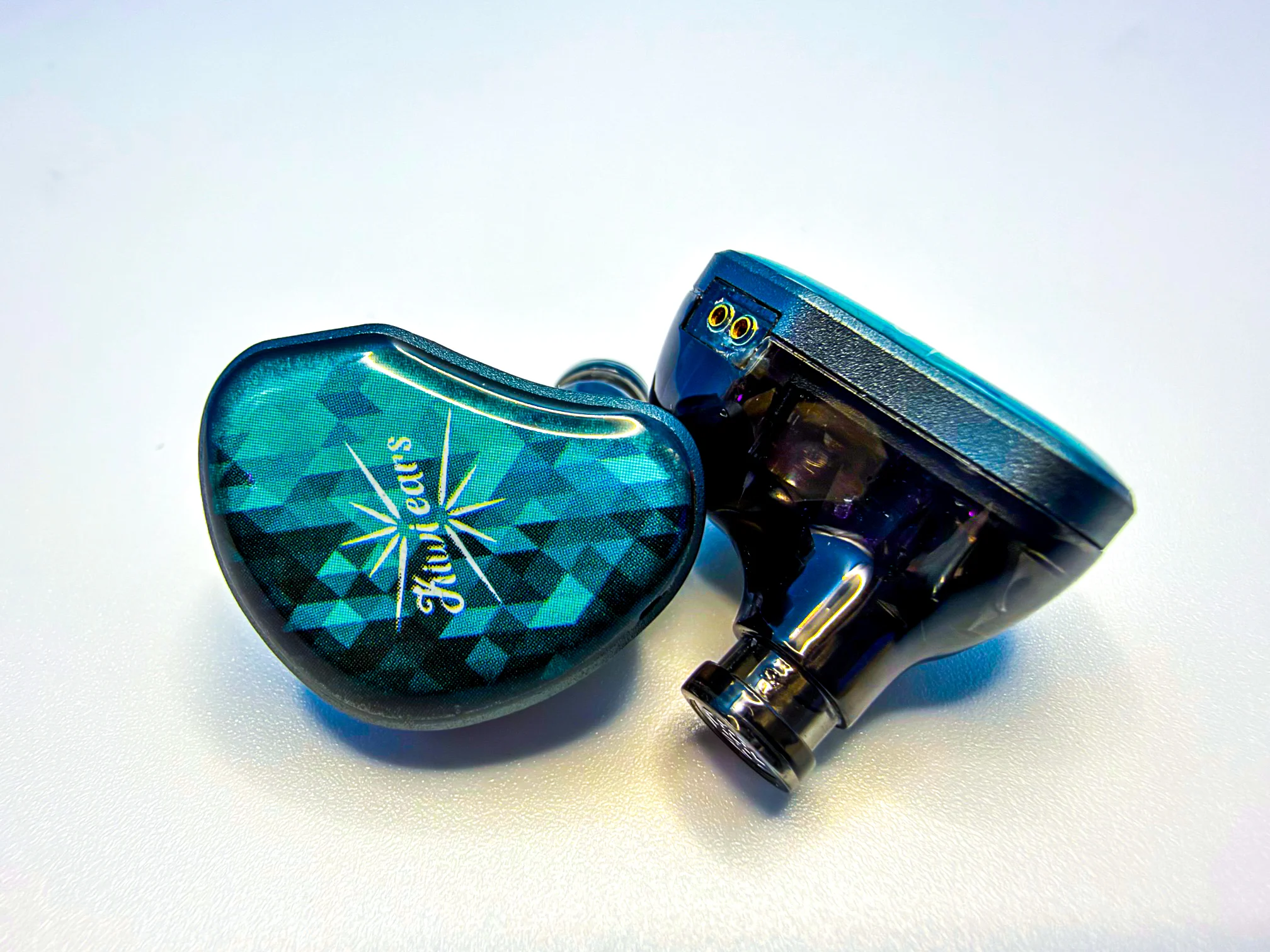
The Stardust uses a five-driver hybrid configuration with a 10mm dynamic driver and four balanced armatures per side. The dynamic driver lays the low-frequency foundation, while the balanced armatures handle the upper ranges, but the driver count isn’t the most important part. It’s how well everything works together.
Kiwi Ears rates the Stardust at 13ω impedance with 107±3dB sensitivity, so it doesn’t need a monster amplifier behind it. It pairs easily with straightforward portable gear, which fits the larger Stardust philosophy perfectly.
Kiwi Ears also offers several cable configurations, including 3.5mm versions with and without a microphone and a USB-C option with a microphone. Pricing falls in the upper-$70 range depending on the configuration, placing the Stardust in one of the most competitive neighborhoods in affordable audio.
That’s important because “pretty good” isn’t enough here anymore. Too many monsters are fighting over the same cave.
📦 First Impressions: Where’s the Catch?
My first reaction to the Stardust wasn’t dramatic, and that started before I even put them in my ears.
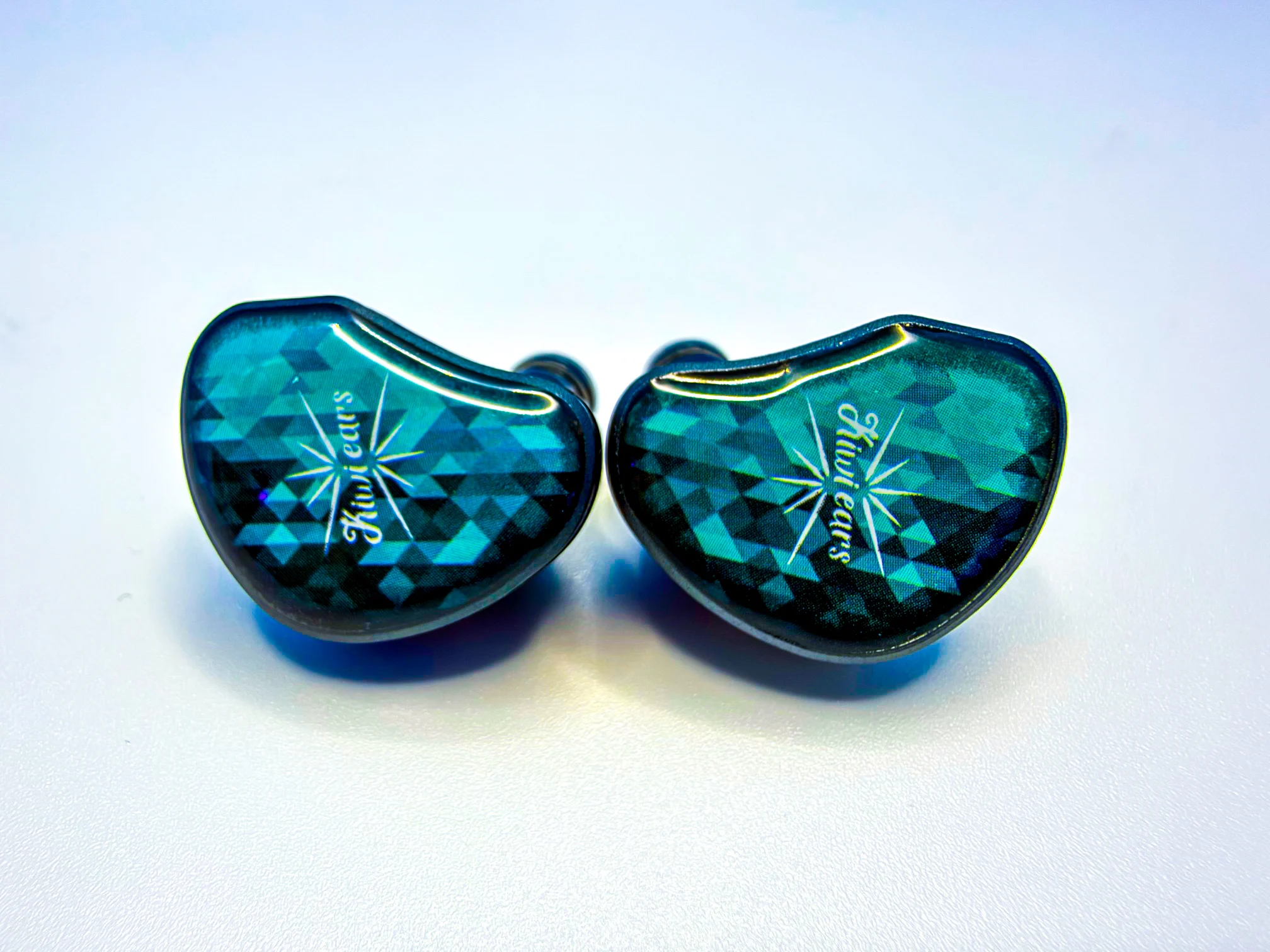
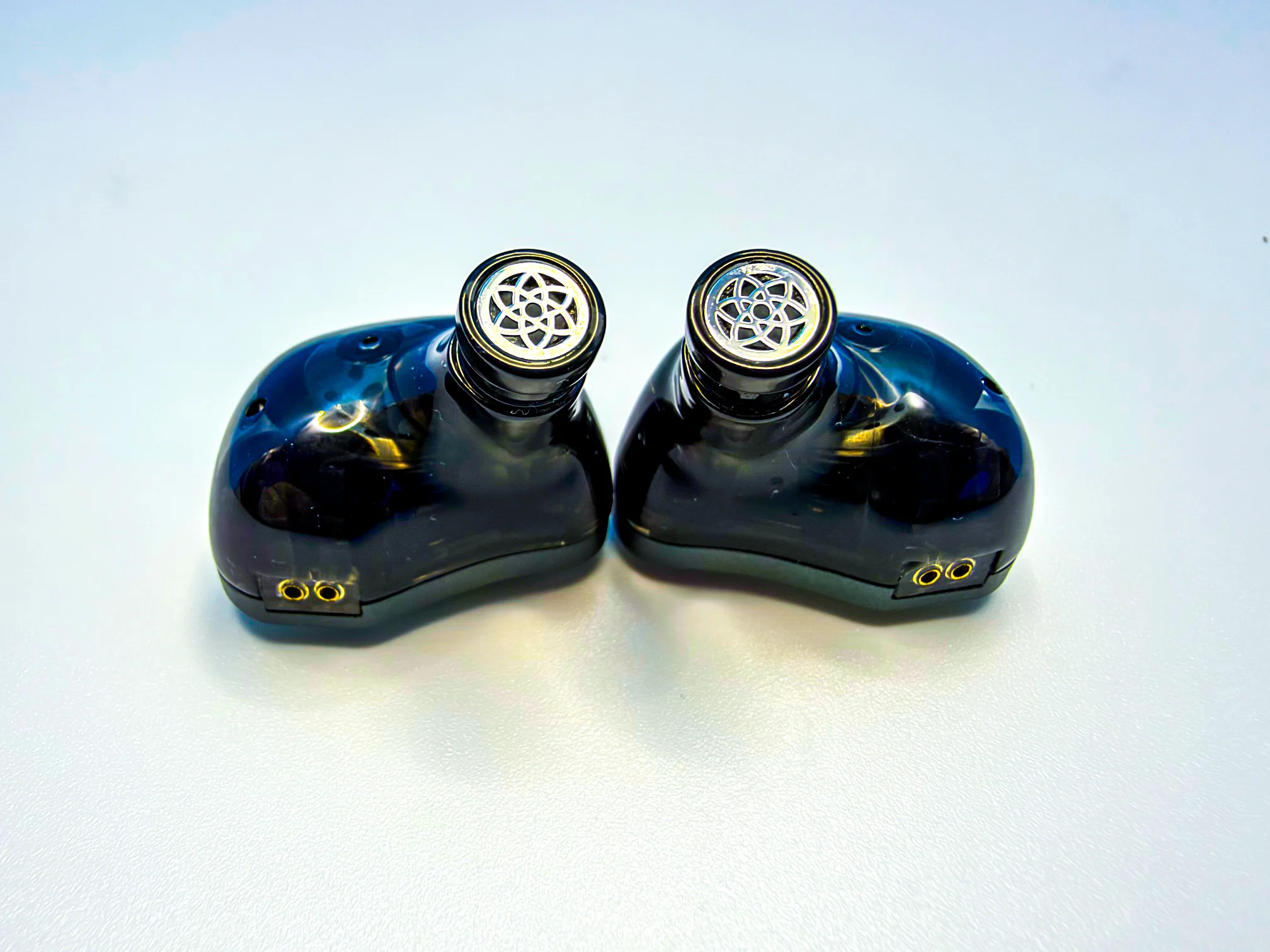
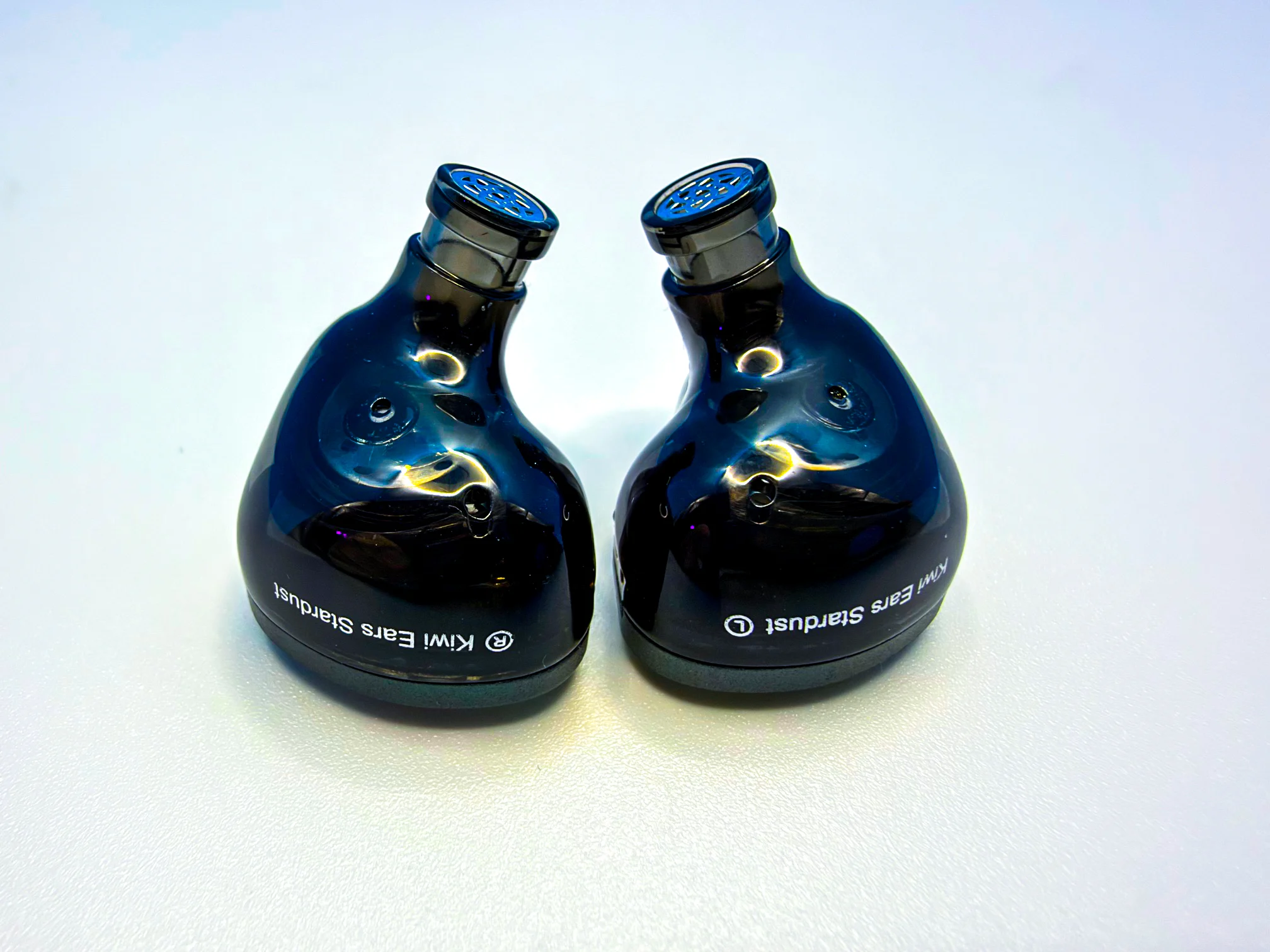
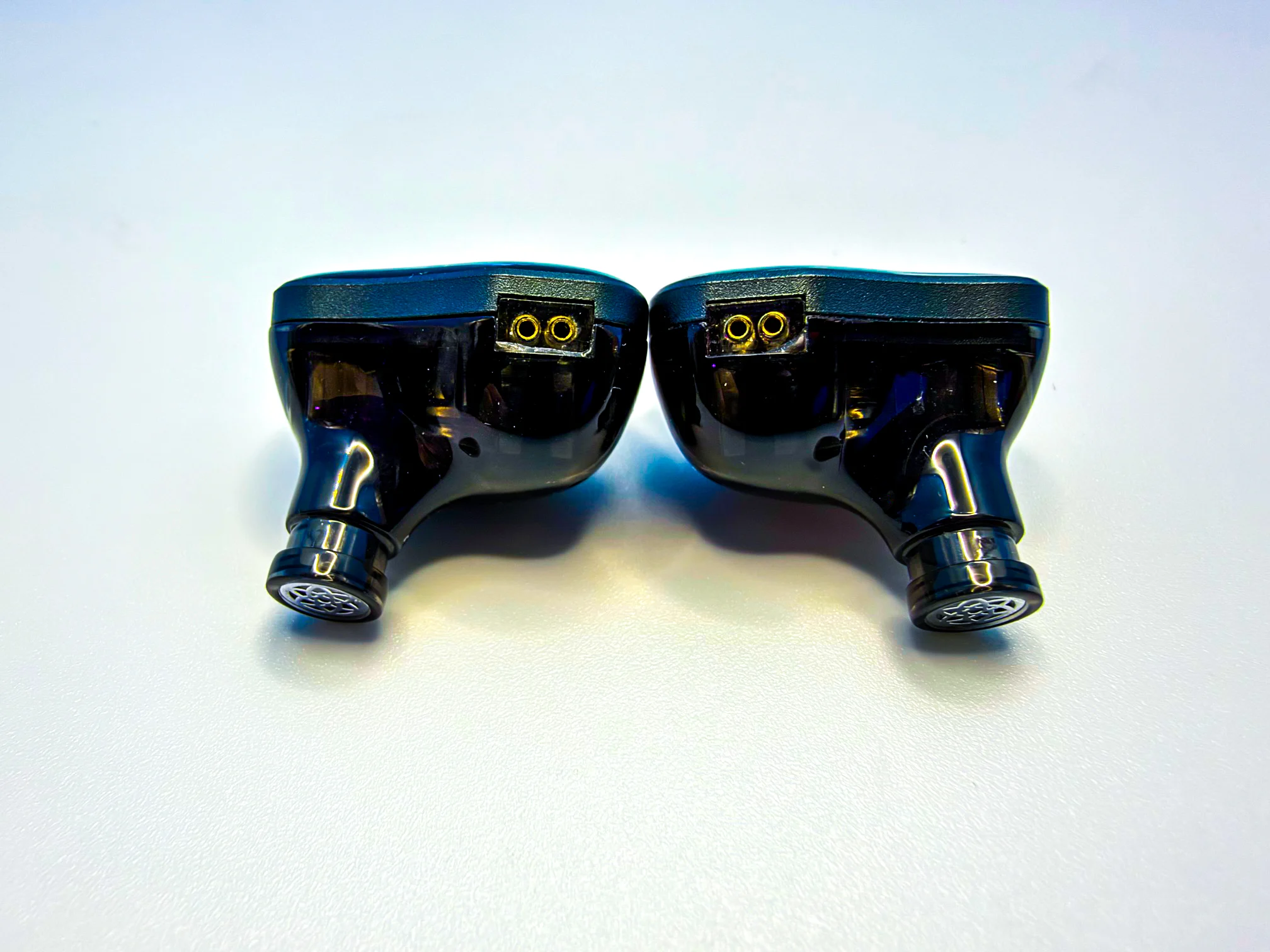
The shells look fine. They’re clean, comfortable, and perfectly serviceable, but the 3D printing and overall finish don’t feel quite as polished as I expected from Kiwi Ears.
That’s probably more noticeable to me because I’ve always loved what this company could do with a sub-$100 budget faceplate.

From the original Cadenza, Dolce, and even the Forteza, Kiwi Ears has produced some genuinely beautiful IEMs, with rich color, sparkle, depth, and faceplates that could make an affordable set feel special before you ever played a note.
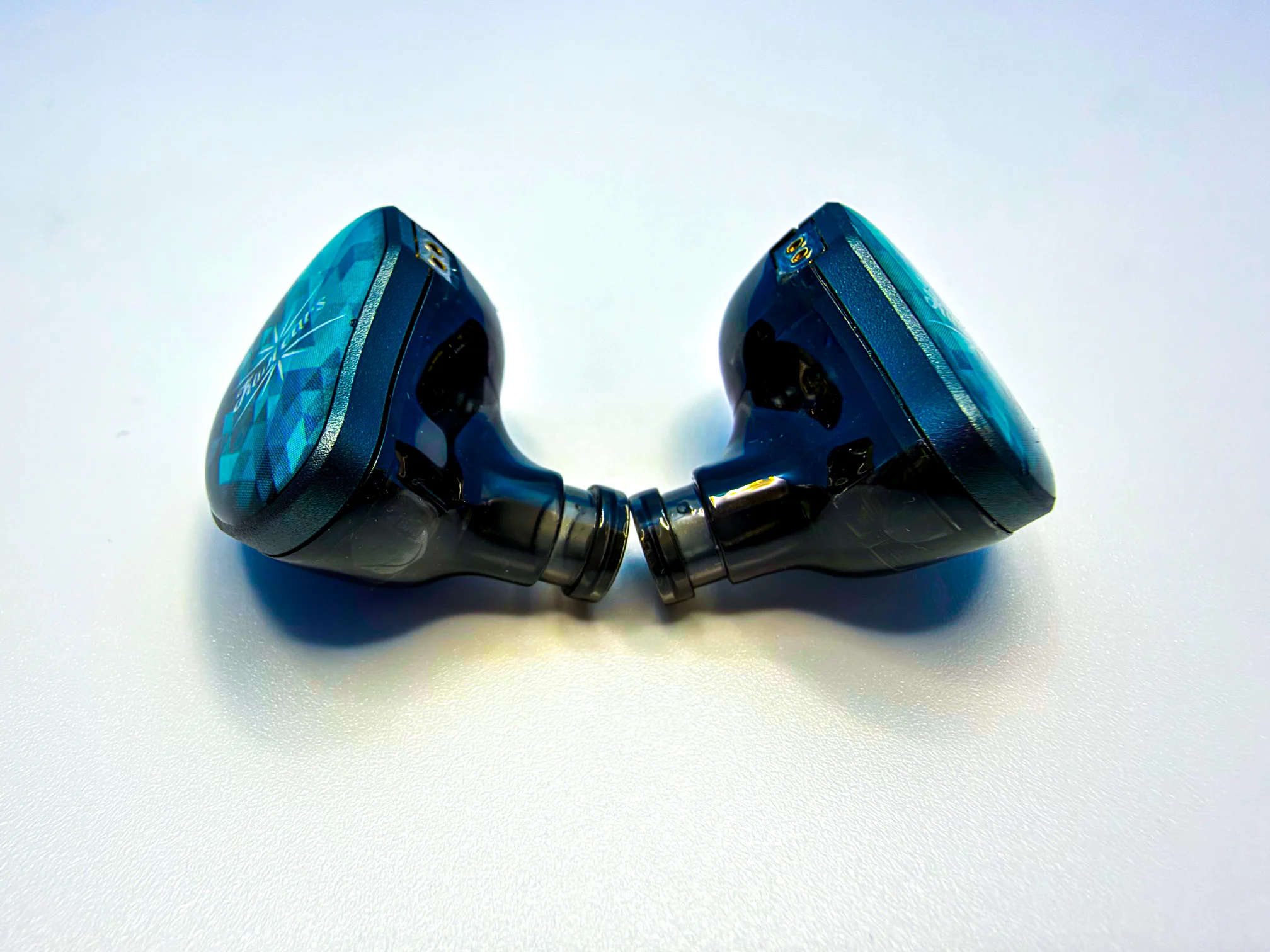
The Stardust doesn’t quite give me that same reaction. Nothing about it is ugly, and I wouldn’t call the build bad, but visually it feels more functional than memorable.
The geometric blue faceplate gets the job done, but I kept imagining what GearZilla would’ve done with the name Stardust: a more transparent shell, layered sparkle suspended inside the resin, a little iridescent shimmer, and more visible depth so the whole design actually feels like you’re looking into a tiny field of stars.

That would’ve made the name feel connected to the object instead of simply printed onto it.
Strangely, that visual restraint prepared me perfectly for the listening experience.
Once I put them in, played some music, switched genres, and kept moving through different tracks, I realized I was almost trying to make the Stardust screw something up.
It wouldn’t cooperate.
No obvious frequency imbalance was waiting to reveal itself, no genre made the tuning suddenly fall apart, and no technical weakness started screaming for attention. I could move from rock to pop, jazz to electronic, acoustic recordings to vocal-heavy tracks, and the Stardust simply kept cruising.
That’s when the mid-sized sedan analogy started creeping into my head.
Nobody gets excited when a Toyota starts in the morning because you expect it to start. You expect it to take you where you’re going, you expect everything to work, and you expect to come back tomorrow and have roughly the same experience.
That’s the Stardust.
The shells may not have the visual magic I’ve loved from some earlier Kiwi Ears designs, and the sound may not immediately announce some wild specialty either.
But the thing just keeps working.
Dependability as a tuning philosophy.
🎧 Review Setup
Every GearZilla review starts in the same place:
Listen first. Figure out the story later.
I kept EQ out of my core evaluation and spent my time moving through different genres, recordings, and sources. Eventually, I come back to the same question:
Does this thing help me enjoy the music I already love in a new way?
With the Stardust, that question became interesting because this review became less a search for what it did best and more a search for what it couldn’t handle. I tried bass-heavy tracks, vocal-focused recordings, dense arrangements, quieter acoustic material, and different sources, looking for the point where the Stardust would finally stumble.
It really didn’t.
Nothing sounded dramatically wrong, no genre exposed a glaring weakness, and I never reached for EQ to rescue the experience. The Stardust just kept handling whatever I threw at it with the same easy confidence.
And that’s where the story finally clicked.
🧬 KAIJU DNA SCAN
Every monster leaves behind a genetic signature, and the Stardust’s DNA is built around balance, versatility, cohesion, comfort, and consistency.
This is the Utility Monster.
K • Kill Shot
Versatility is the weapon.
Most IEMs eventually reveal what they really want to be doing. Some want bass. Some want vocals. Some seem born for acoustic music, while others want to tear complicated recordings into individual pieces and show you exactly what’s hiding inside.
The Stardust seems happy doing almost anything. You could hand this to someone who doesn’t know much about their library and feel reasonably confident they’ll find plenty to enjoy.
No giant bass shelf automatically eliminates people who don’t want a low-frequency monster. No hyperactive treble that makes cymbals sound like somebody dropped silverware down a staircase, and no strange midrange trick that works beautifully with one singer and falls apart with another.
The Stardust’s Kill Shot isn’t specialization.
It’s refusing to have an obvious weakness.
A • Anatomy
Five drivers per side makes it sound like Kiwi Ears should be chasing some huge technical spectacle, but what impresses me more is how little I think about those drivers while listening.
The hybrid arrangement feels cohesive. The bass doesn’t sound like it’s coming from one IEM while the treble comes from the other. The transition through the frequencies feels natural enough that I stop wondering which driver is responsible for what and simply listen to the music.
That’s exactly what I want.
Driver count is trivia.
Cohesion is the experience.
I • Impact
The Stardust has enough impact to keep things interesting without letting low frequencies become the IEM’s entire identity. Kick drums land properly, basslines have body, and electronic music gets enough foundation to keep the presentation grounded.
What I don’t hear is excess. This isn’t a basshead monster dragging a subwoofer behind it. The low end supports the music, gives it weight, and stays out of the way when something else needs attention.
That’s another recurring Stardust trait.
It does the job.
J • Joy
This is where things get complicated because the Stardust is genuinely enjoyable. I can listen to it for hours without wanting to fix anything. I’m not constantly swapping tips, reaching for EQ, or wondering what cable might rescue some obvious problem.
But joy and competence aren’t always the same thing.
Some IEMs have flaws and still make me grin because one ridiculous characteristic keeps pulling me back. Maybe it’s absurd bass. Maybe it’s a vocal presentation that gives me goosebumps. Maybe it’s gigantic space or some weird tuning decision that shouldn’t work but somehow does.
The Stardust doesn’t really give me that.
I enjoy it.
I respect it.
I trust it.
But it doesn’t make me irrational.
If you’ve been in this hobby long enough, you probably know exactly what I mean.
U • Unleashed
The Stardust makes the most sense when I stop asking it to impress me and start asking it to be useful. That’s when everything falls into place.
Throw it in the bag. Keep it at the desk. Use it while working. Take it traveling. Hand it to someone curious about IEMs. Put on a playlist that jumps from rock to jazz to pop to acoustic music and don’t think about whether the next song matches the tuning.
Don’t build an elaborate ritual around it.
Plug it in and play something.
It’ll probably sound good.
That’s the Stardust unleashed.
🎼 Sound: Good at Basically Everything
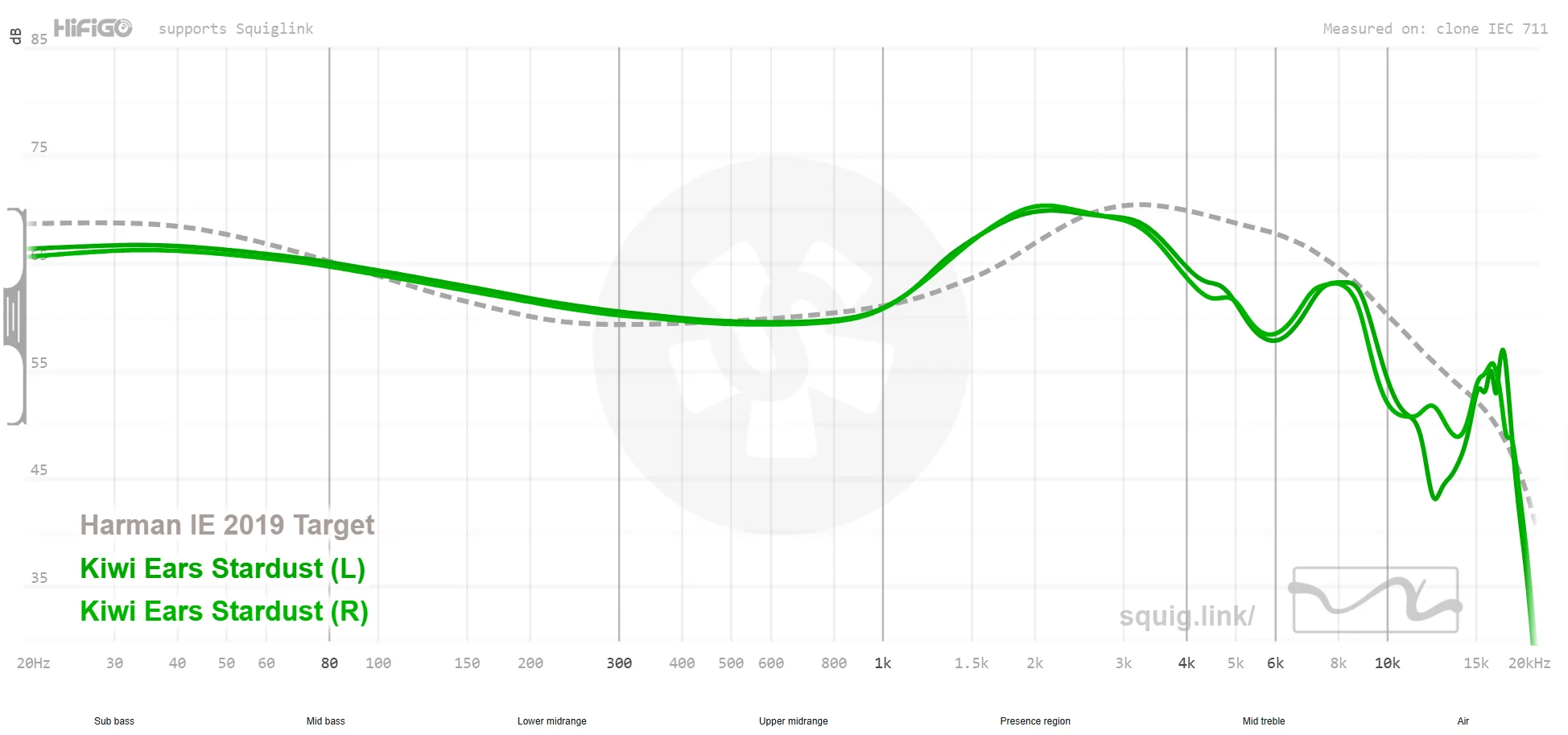
If I had to describe the Stardust in four words, they’d still be balanced, smooth, cohesive, and dependable, and the Super* Review squig helps explain why.
The tuning starts with a modest low-end shelf that gives bass enough weight to keep music grounded without turning the Stardust into a bass-first IEM.
From there, the response settles gently through the lower mids before climbing into a broad presence rise around the upper mids, giving vocals and instruments enough energy to stay clear without becoming aggressively forward.
What’s especially interesting is what happens after that. There’s a noticeable dip through roughly the 4–6 kHz region, followed by a recovery around 8 kHz, which lines up pretty well with what I’ve been hearing: the Stardust keeps enough bite and definition to avoid sounding dull, but it never feels like it’s constantly throwing treble energy at me. Above that, the response becomes more uneven and rolls off, though I’m always cautious about reading too much into the highest treble on a 711-style measurement rig.
That overall shape helps explain why the Stardust works across so much music. The bass isn’t exaggerated, the midrange stays intact, the upper mids add useful presence, and the treble avoids the aggressive peaks that can turn a versatile IEM into a genre-specific one.
Nothing feels abandoned, and nothing feels wildly exaggerated. More importantly, nothing steps forward screaming, “LOOK WHAT I CAN DO!”
That’s both the strength and the limitation.
The Stardust is incredibly easy to live with because the tuning doesn’t constantly demand your attention. It gives each part of the spectrum enough energy to do its job, then gets out of the way.
It’s there to play music.
And it does.
🥁 Bass: Does the Job
The Stardust’s bass is controlled, useful, and appropriately weighted. It goes low enough to lay a solid foundation, while the mid-bass gives drums and bass guitars believable body without spreading warmth everywhere else.
What I like is that Kiwi Ears doesn’t overplay its hand. No giant wall of low-frequency energy pushes everything backward, so the midrange stays clean and vocals retain plenty of room.
Bassheads will probably want more. If you live for enormous slam or subterranean rumble, some sets are built specifically to deliver that experience.
The Stardust’s bass is more practical.
Dependable.
Competent.
Well-behaved.
It isn’t trying to get arrested.
🎤 Midrange & Vocals: Everybody Gets Home Safely
Vocals sound good across the board. Male voices retain enough body to sound believable, female vocals have enough clarity and presence to stay expressive, and instruments like guitar, piano, and strings don’t reveal strange coloration that pulls me out of the recording.
What the Stardust doesn’t give me is the dramatic vocal lift I sometimes love. Singers don’t suddenly float three feet above the rest of the arrangement, and there’s no giant spotlight separating them from everybody else.
Instead, vocals remain part of a cohesive whole.
That’s probably the smarter decision for something this versatile. Nothing gets sacrificed just to make the singer spectacular.
The Stardust gives me good vocals.
It just doesn’t give me a vocal magic trick.
🎯 Separation & Placement: Nobody Gets Lost
The Stardust keeps arrangements organized, and that’s one of the bigger reasons it works across so many genres. Individual instruments stay defined enough that I can follow them without strain, percussion stays distinguishable from guitars and keyboards, and vocals hold their position even when tracks get busier.
This isn’t surgical imaging, and I’m not going to pretend every performer becomes some perfectly outlined 3D object sitting at a laser-measured coordinate around my head.
Instead, everything gets enough room.
Nothing is constantly fighting for survival.
For an all-purpose IEM, that matters more to me than showing off.
🏟️ Width, Depth & Placement: Enough Room for Everybody
The Stardust doesn’t create some ridiculous arena around every recording, but it gives me enough width, reasonable depth, and convincing placement to keep music from feeling crowded.
The presentation feels open enough that I don’t feel boxed in, yet Kiwi Ears isn’t artificially stretching everything just to make the first five minutes sound impressive.
Again, we’re back to the same words.
Balanced.
Competent.
Useful.
I’m starting to sound like a Toyota commercial.
🔬 Detail & Resolution: Nothing Missing, Nothing Screaming
The Stardust gives me enough resolution to hear what’s happening without turning the listening experience into an autopsy. Subtle percussion stays present, background vocals stay intact, and small production choices are easy to follow.
But this isn’t a microscope.
More aggressive technical IEMs push microdetail harder, expose finer textures, and create deeper layers between individual elements. If that’s your entire reason for listening, you’ll find more specialized options.
The Stardust gives me enough information to understand and enjoy the recording without feeling like I’m doing homework.
For this IEM, that feels exactly right.
✨ Treble & Air: Nobody Gets Hurt
The upper frequencies may be one of the safest parts of the Stardust tuning. There’s enough treble energy to preserve clarity, cymbals maintain definition, vocals retain some air, and strings don’t sound like someone dropped a blanket over them.
At the same time, Kiwi Ears doesn’t push things so aggressively that the Stardust becomes tiring during longer sessions.
That’s important because inexpensive IEMs sometimes use extra upper-frequency energy as a shortcut to apparent detail. The Stardust doesn’t need that trick.
Its treble stays smooth and controlled.
Listeners chasing maximum sparkle and bite may want more. Listeners who’d rather keep listening?
They’ll probably appreciate the restraint.
🎵 Tonality & Timbre: Normal Is Underrated
One of the best compliments I can give the Stardust is that instruments generally sound like they’re supposed to. Piano sounds like piano. Guitars sound like guitars. Drums carry appropriate weight, and voices sound human.
The hybrid configuration doesn’t constantly announce itself with strange tonal mismatches or transitions between driver types. Everything hangs together naturally enough that I don’t spend much time thinking about the hardware.
Good timbre usually isn’t what gets somebody smashing the Buy button at midnight.
Bad timbre will absolutely make me stop listening.
The Stardust stays out of its own way.
☁️ Comfort & Fit: Another Box Checked
The Stardust continues its utility-first streak with shells that are easy for me to wear for longer sessions. Once properly seated, they settle naturally enough that comfort doesn’t become part of the listening conversation.
That matters because a utility IEM can’t become something I avoid just because I don’t want to deal with the fit.
The whole idea here is simple.
Grab it. Use it. Forget about it.
The Stardust understands the assignment.
🔥 Source Pairing: Please Don’t Overthink This
You don’t need a ridiculous audio chain to make the Stardust work. Its low impedance and solid sensitivity make it easy enough to use with straightforward portable gear, and I never got the impression that some giant amplifier was hiding the “real” Stardust from me.
Different sources can certainly shift things around the edges. That’s true of practically anything we plug into our growing collection of boxes, dongles, players, and amps.
But the Stardust isn’t a project.
And thank God for that.
Pair it with a decent source, press play, and go enjoy your music.
🍦 The Vanilla Problem
Here’s where I wrestled with this review.
I like the Stardust. I don’t actively dislike much about it. Yet the IEMs that stick with me after the review are usually the weird ones, the ambitious ones, or the monsters with some defining power.
The set with absurd bass.
The one with gorgeous floating vocals.
The technical monster.
The ridiculous value freak.
The Stardust doesn’t really give me that hook.
What it gives me is reliability, and reliability doesn’t always inspire passion.
Vanilla ice cream rarely dominates the conversation. Nobody walks into an ice cream shop, sees 36 flavors on the wall, and starts screaming because they found vanilla.
But vanilla survives because vanilla works.
And when it’s done properly, vanilla is really damn good.
That’s the Stardust.
🚗 The Toyota Effect
The other comparison I couldn’t shake was Toyota, and I don’t mean that as an insult.
Some cars exist to make you stare. Some make your heart rate climb before you even press the start button, while others turn every grocery run into an excuse to take the long way home.
Toyota built its reputation around a different proposition.
What if the damn thing just works?
That’s what the Stardust feels like.
It isn’t trying to make every song an event, transform itself into something exotic, or demand constant tinkering. It doesn’t have some giant weakness I need to explain away before recommending it.
I put music into it.
Music comes out.
And I enjoy it.
Again and again.
That’s not particularly exotic.
But it’s incredibly useful.
💰 Value: Competence Counts
In the upper-$70 range, the Stardust has plenty of competition. This isn’t an empty part of the market where being competent alone earns a trophy anymore. There are excellent IEMs everywhere.
So the Stardust’s argument isn’t that it’s dramatically better than everything else.
It’s that it’s really difficult to dislike.
If someone handed me this much money and said, “I listen to everything. Just give me something good,” the Stardust would immediately make sense.
You aren’t buying specialization.
You’re buying coverage.
And there’s real value in that.
👹 Who Is This For?
The Stardust makes enormous sense for someone who doesn’t want 14 different IEMs for 14 different moods. If your playlist constantly jumps genres and you want enough bass for electronic music, clear vocals, smooth treble, useful detail, and a presentation that doesn’t fall apart every time the musical assignment changes, this is exactly the kind of set that belongs on your list.
It’s also an easy recommendation for someone moving deeper into wired audio who hasn’t developed a hyper-specific preference yet. The Stardust gives that listener room to discover what they value without forcing them into an extreme tuning.
Experienced listeners may appreciate it for exactly the same reason.
Keep it at the office.
Throw it in the travel bag.
Make it the backup.
Hand it to a friend.
The Stardust doesn’t need to be the star of the collection.
It’s the Utility Monster.
🦖 GearZilla Scorecard
✨ Clarity: 4.2/5 – Clean and organized without using aggressive brightness to manufacture fake detail. There’s enough information to follow a recording easily, but it doesn’t push clarity to an extreme.
🎤 Midrange & Vocals: 4.1/5 – Natural, balanced, and consistently enjoyable. The voices stay clear and believable, though listeners who want dramatic vocal lift may want something more specialized.
🥁 Bass: 4.0/5 – Controlled and appropriately weighted with enough punch for most genres. It supports the music well but isn’t built for dedicated bassheads.
🎯 Separation & Placement: 4.1/5 – Good organization across busier material. Instruments stay distinguishable, and the placement is convincing without getting hyper-analytical.
🏟️ Width, Depth & Placement: 4.0/5 – Enough room to keep the presentation open and organized, but the Stardust doesn’t chase exaggerated scale or huge spatial effects.
🔬 Detail & Resolution: 4.0/5 – Solid information retrieval for the price and tuning philosophy. More technical sets can dig deeper, but the Stardust doesn’t leave recordings feeling blurred or incomplete.
✨ Treble & Air: 4.0/5 – Smooth, controlled, and comfortable over long sessions. There’s enough energy to retain clarity, though treble lovers may want more sparkle and bite.
🦴 Slam & Dynamics: 3.9/5 – Capable and enjoyable but rarely explosive. The Stardust prioritizes consistency and balance over brute-force impact.
🎤 Vocal Lift: 3.9/5 – Voices are clear and present but remain integrated with the arrangement rather than dramatically floating above it.
⚡ Speed & Transients: 4.0/5 – Quick enough to keep complex material organized without sacrificing the smooth and cohesive personality of the tuning.
🎵 Tonality & Timbre: 4.3/5 – One of its strongest qualities. Instruments and voices generally sound natural, and the hybrid configuration works together without obvious tonal seams.
🎛️ Tuning & Pairing Flexibility: 4.5/5 – The Stardust’s defining strength. It works across an unusually wide variety of music and doesn’t demand a specialized source chain.
☁️ Comfort & Fit: 4.3/5 – Easy to wear for extended sessions, supporting exactly the kind of everyday listening role the Stardust does best.
🎨 Design & Build: 4.1/5 – Attractive, practical, and well-suited for everyday use without relying on the shell design is the main reason to buy.
📦 Accessories & Presentation: 4.0/5 – Functional and appropriate for the price. Nothing here changes the buying decision in either direction.
💰 Value: 4.2/5 – Strong value for someone prioritizing versatility. Rather than dominating one area, the Stardust gives you competent performance almost everywhere.
🦖 Overall GearZilla Score: 4.0/5 • A-Class Kaiju
🦖 Final Roar
This review was strangely difficult to finish because, usually, by the time I reach the Final Roar, I know exactly what kind of monster I’m dealing with. Maybe it’s a bass monster, a vocal monster, a technical monster, or some ridiculous budget beast that punches way above its weight. Somewhere in those hours of listening, a personality usually emerges and tells me the story.
The Stardust took longer, and not because something was wrong. Quite the opposite. I kept moving through rock, pop, jazz, electronic, acoustic music, male and female vocals, dense arrangements, and sparse recordings, almost waiting for the crack to appear. It never really did.
The bass, vocals, treble, separation, placement, and comfort were good, and the Stardust kept moving from one assignment to the next without giving me much reason to complain.
Eventually I realized good isn’t faint praise when you can say it about practically everything.
That’s why I keep coming back to the Toyota comparison. The Stardust probably isn’t the IEM you’ll pull out of its case just to admire, and it may not be the one you spend all weekend telling your friends about. It doesn’t have the wild personality that makes your heart beat faster every time you put it in your ears. But tomorrow morning, it starts. Next week, it still starts. Need to take a road trip? Get in. Before you know it, you’ve put 200,000 miles on the thing, and you’re wondering exactly when it became part of the family.
Maybe vanilla ice cream is an even better comparison. Vanilla doesn’t need to become the entire dessert. It works by pairing with almost anything, and that’s exactly what Stardust does. It doesn’t demand to become the centerpiece of your collection or force you to build your listening habits around what it does best. You grab it, play whatever you’re in the mood for, and it keeps showing up and doing the job.
More exciting IEMs, more specialized IEMs, and plenty of sets will beat the Stardust in individual categories while leaving a stronger first impression. But finding one that handles this many situations without giving me a major reason to complain has its own value.
The Stardust didn’t make me fall in love.
It earned my trust, and those aren’t the same thing.
Sometimes I want the wild monster. I want ridiculous bass, floating vocals, outrageous resolution, or a presentation so huge that it makes me laugh. Other times, I just need something that works across every genre, every playlist, and practically every day, without making me think too hard.
The Kiwi Ears Stardust is the GearZilla Utility Monster. It probably won’t inspire you, but it almost never lets you down.
🏆 GearZilla Utility Monster
Vanilla? Sure.
I’ll take another scoop.

🎶 A Few Tracks That Really Clicked
This is just our opinion, not gospel, but the Stardust seems to favor modern, well-produced tracks where its smooth balance, controlled bass, natural vocals, and easy layering can all work together. These aren’t the only songs that sound good on it, and they’re not meant to be some definitive test playlist. They’re simply a few tracks that made us stop and think, yeah, this set really gets this.
- 🎤 Celeste – “Strange”
Still one of my favorite vocal tests. The Stardust keeps Celeste’s voice natural, exposed, and emotionally connected without overplaying the upper mids. Listen on Spotify - 🌴 Lost Frequencies & Mari Froes – “Paraiso”
This newer Mari Froes collaboration has the modern, polished production that suits the Stardust beautifully. There’s texture, rhythm, vocal intimacy, and enough layering to let the Stardust show how naturally it keeps everything connected. Listen on Spotify - 🌌 Billie Eilish – “CHIHIRO”
Deep bass, layered vocals, shifting textures, and production that keeps expanding as the song develops give the Stardust plenty to organize. The low end stays controlled while the atmosphere keeps opening around Billie instead of collapsing into a wall of sound. Listen on Spotify - 🌀 Tame Impala – “Borderline”
Dense synths, bass, percussion, and layered vocals make this a great test of whether an IEM can stay organized without losing the groove. The Stardust does. Listen on Spotify - 🌙 Leon Bridges – “Light the Way”
This one feels almost tailor-made for the Stardust. Leon’s warm vocals sit over intricate guitar work, brass, percussion, and a flowing groove, letting the Stardust show off its natural tone and all-around balance. Listen on Spotify
That’s the common thread I kept hearing. Give the Stardust a clean, modern production with strong vocals, good layering, and enough low-end energy to keep things moving, and it tends to settle right into its comfort zone.
These aren’t commandments.
They’re just a few tracks we thought sounded really damn good.
✅ Buy If
🎧 You want one IEM that can comfortably handle a wide variety of genres.
🎼 You value balance and cohesion more than exaggerated bass, treble, or vocal presentation.
🥁 You want controlled bass with enough weight to support the music without dominating it.
🎤 You appreciate natural, easy-to-follow vocals that remain connected to the arrangement.
✨ You prefer smooth treble and want to avoid an unnecessarily aggressive upper end.
🎯 You want good separation and placement without turning every listening session into a technical analysis exercise.
🔌 You want an easy-to-drive IEM that doesn’t demand an elaborate source chain.
🧳 You need a dependable everyday, office, travel, or backup IEM.
🍦 You understand that vanilla can absolutely be a compliment.
⛔ Skip If
💥 You want huge bass impact or a dedicated basshead tuning.
🔬 Maximum microdetail and analytical resolution are your top priorities.
✨ You want aggressive treble sparkle and lots of upper-end bite.
🎤 You specifically chase dramatically lifted or floating vocals.
🏟️ You want an enormous, exaggerated spatial presentation.
🦄 You want every IEM you buy to have an unusual tuning trick or immediately identifiable specialty.
❤️ You’d rather own something flawed but exciting than something consistently competent.
🧡🦖 Kiwi Ears Stardust
The Kiwi Ears Stardust combines a 10mm dynamic driver with four balanced armatures in one of the easiest all-purpose IEMs I’ve spent time with. It doesn’t dominate one category, and that’s really the point.
The bass is controlled, the vocals are natural, the treble is smooth, separation is good, and the presentation stays cohesive as the Stardust moves comfortably across genres without constantly asking me to compromise somewhere else.
Some IEMs excite me more, and others specialize more. But when I want something I can plug in, throw almost anything at, and trust to deliver, that’s exactly where the Stardust makes sense.
The Utility Monster doesn’t need a party trick.
It just needs to show up.
Hear the GearZilla Roar.
Listen Bigger!
Pick up the Kiwi Ears Stardust today at Bloom Audio:
https://bloomaudio.com/products/kiwi-ears-stardust
Share This Story, Choose Your Platform!