



 Disclosure
 Disclosure
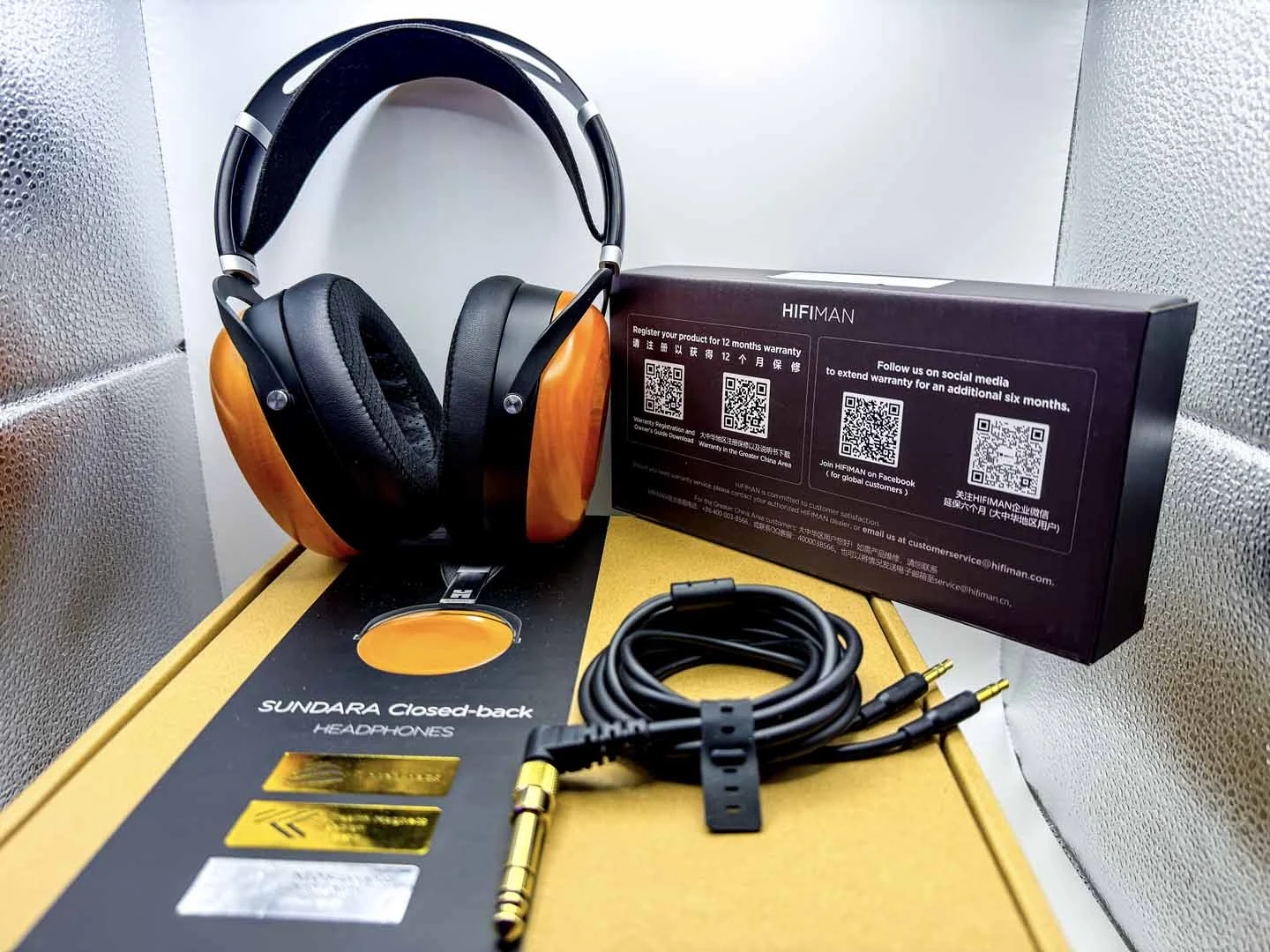
HIFIMAN generously provided the SUNDARA Closed-Back for this review, and I’m genuinely grateful for the opportunity.
There’s something pretty special about a manufacturer handing you a piece of gear and essentially saying, “Go live with it. Tell us what you hear.”
That trust means a lot to me.
It also doesn’t buy a positive review.
GearZilla Reviews exists because I love discovering gear that helps people pull more pleasure from the music they already love. Whether something arrives from a manufacturer, gets purchased with my own money, shows up through a trade, or lands on my desk from a friend, the mission doesn’t change.
I want to understand what it was designed to do. I want to live with it long enough to stop staring at specifications. I want to figure out who it’s actually for.
And eventually, I want to answer the only question that really matters:
Does this thing make me want to keep listening?
HIFIMAN didn’t need any favors from me here.
The SUNDARA Closed-Back earned this review all by itself.
This is simply an outstanding set of cans.
Review Setup
 Review Setup
Every GearZilla review begins the same way.
Stock tuning. Flat EQ. No rescue mission.
Before I touch a PEQ slider, change the tone, or start chasing my personal preferences, I want to hear the product the way the manufacturer intended it to leave the factory.
For the SUNDARA Closed-Back, my listening included the Topping DX5 II, HiBy R4 Evangelion, FiiO K11, HiBy W4, Cayin RU3, Loxjie P20 Hybrid Tube Amp, and Fosi SK01, with Apple Music Lossless serving as my primary music source.
That mix gave me a good look at the SUNDARA from several directions, from clean desktop power to portable listening and a little tube flavor along the way.
And the funny thing is, I didn’t feel an urgent need to change anything.
I liked the stock tuning.
A lot.
But because leaving well enough alone apparently isn’t part of the audiophile genetic code, I eventually started experimenting with EQ.
That’s when the monster grew another head.
The SUNDARA Closed-Back handles EQ exceptionally well.
You can add some low-end weight, shape the vocal presentation, or make smaller tonal adjustments without immediately dismantling the speed, separation, and clarity that make the headphone so much fun in the first place.
That distinction matters.
This isn’t a headphone that needs EQ to become enjoyable.
It’s a headphone that gives you a great stock foundation and then basically hands you the keys to the laboratory.

The Monster That Wasn’t Supposed to Be This Big
 The Monster That Wasn’t Supposed to Be This Big
Some headphones walk politely into a review.
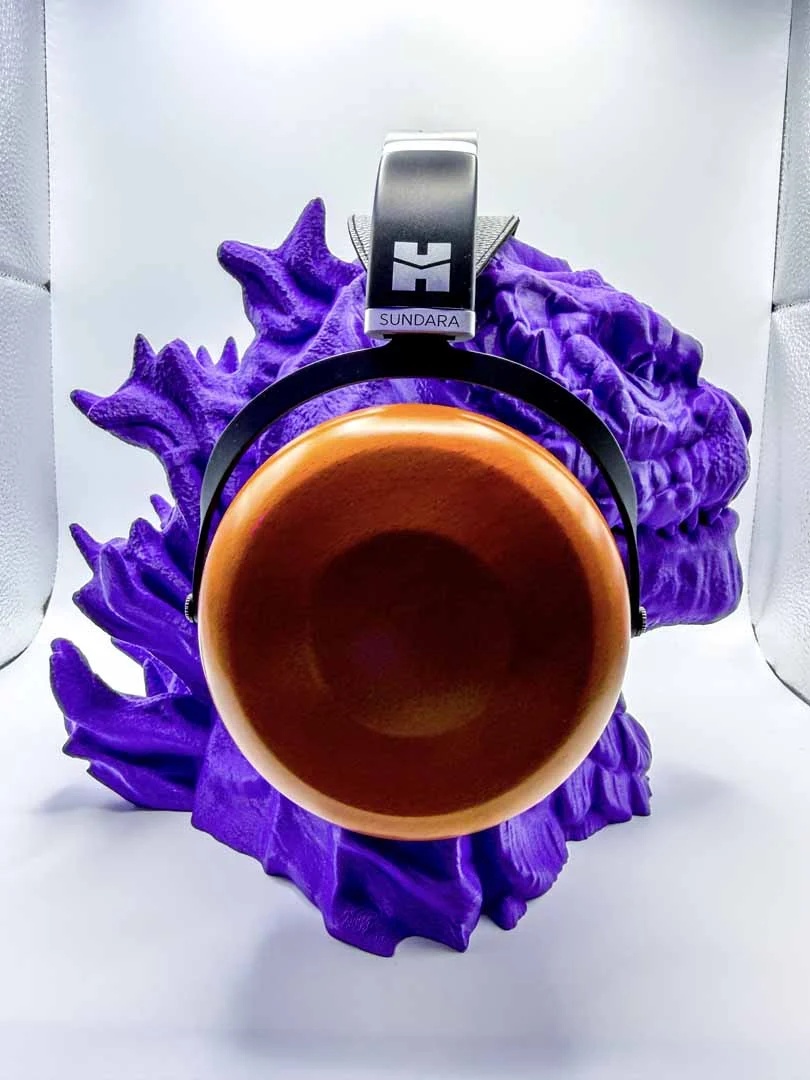
The SUNDARA Closed-Back kicked over the barricade, stomped through downtown, knocked over a few buildings, and somehow still had enough manners to hold the door open for the vocalist.
I wasn’t prepared for it.
At the current $129 special price, my brain immediately started searching for the compromise.
There has to be one, right?
Maybe the wood looks better in photographs.
Nope.
Maybe the closed cups squeeze the stage inward.
Not really.
Maybe the planar driver is fast but sterile.
Definitely not.
Maybe it only works with certain genres.
I tried.
Rock came through beautifully. Pop was energetic. Electronic music had speed and definition. Acoustic recordings retained texture. Large arrangements stayed organized. Vocals floated. Bass hit. Ambient tracks expanded. Latin music kept its rhythmic energy and movement.
Every time I threw another musical building at this monster, it just kept walking.
Eventually, the review changed.
I stopped trying to figure out where the SUNDARA Closed-Back failed.
I started wondering why I kept reaching for it when significantly more expensive headphones were sitting nearby.
That’s when things got interesting.
I have cans that climb into kilobuck territory.
Some resolve more deeply. Some create more air. Some use more exotic materials. Some deliver a more luxurious ownership experience.
But none of that matters when I’m standing in front of my gear deciding what I actually want to put on my head.
And lately?
I keep reaching for these.
That’s not a value statement.
That’s a music statement.
KAIJU DNA SCAN
 KAIJU DNA SCAN
Every monster leaves behind a genetic signature.
Here’s what this one looks like.
K • Kill Shot
The SUNDARA Closed-Back gives me the things I chase most in headphones all at once: elevated vocals, superb separation, planar speed, impact, isolation, and a stage that feels hilariously large for something with wooden walls surrounding the drivers.
It doesn’t make me choose between disappearing from the room and opening up the music.
It does both.
A • Anatomy
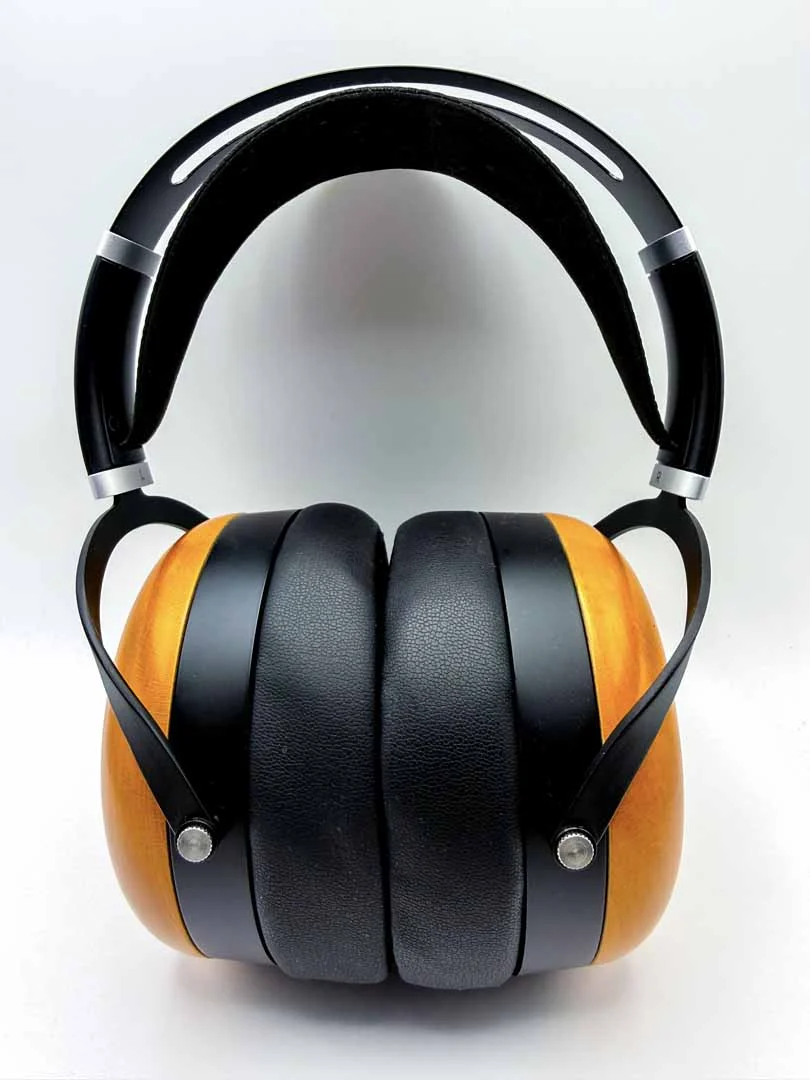
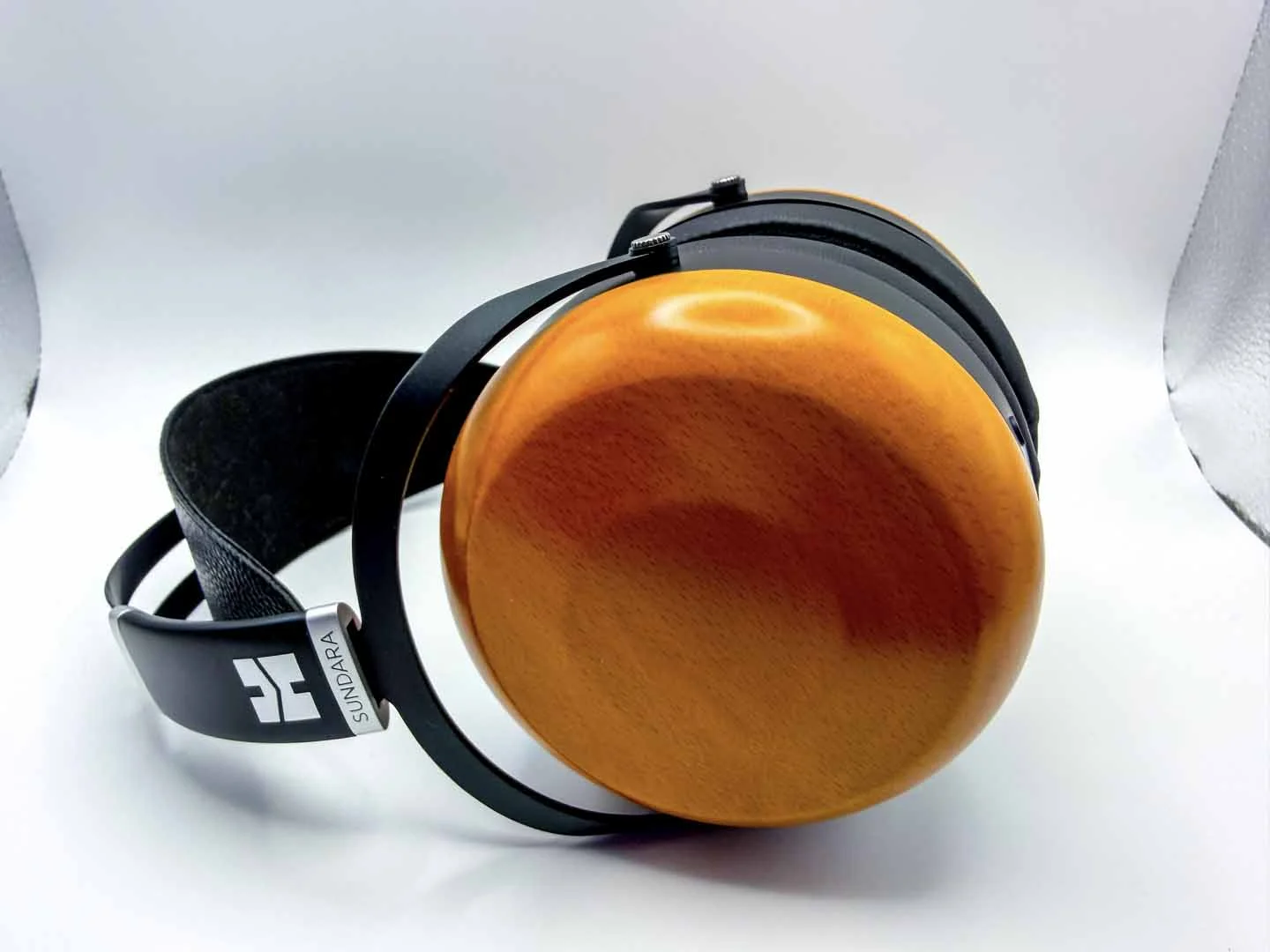
HIFIMAN builds the SUNDARA Closed-Back around a planar magnetic driver with Stealth Magnets and its NEO Supernano Diaphragm, housed inside an over-ear closed-back design with hand-assembled natural beechwood outer frames.
The specifications list a 6 Hz to 50,000 Hz frequency response, 20-ohm impedance, 98 dB sensitivity, and a weight of 432 grams.
Those numbers tell you what’s inside the monster.
They don’t tell you why it’s fun.
That part begins when the diaphragm starts moving.
I • Impact
This planar doesn’t confuse speed with politeness.
Drums snap. Bass lines stay defined. Percussion appears quickly and disappears just as cleanly. Dense passages don’t turn into musical traffic jams.
The driver moves with the kind of speed that lets notes maintain their shape, but there’s still enough physicality to make the music feel alive.
J • Joy
The moment I realized I’d stopped reviewing.
That’s always my favorite part.
The notebook was sitting beside me. The music was still playing. I wasn’t comparing sources anymore. I wasn’t thinking about frequency response. I wasn’t wondering whether another headphone might reveal one more layer.
I’d just disappeared into the album.
That’s the win.
U • Unleashed
This is for the listener who wants a closed-back without feeling closed in.
Someone who loves vocals that rise from the mix, enjoys hearing individual instruments occupy their own space, appreciates the speed of a planar driver, and wants enough EQ flexibility to personalize things without turning the headphone into a completely different creature.
It’s also for anyone who jumps between genres constantly and doesn’t want to change headphones every time the playlist changes personality.
Sound
 Sound
SoundThe easiest mistake to make with the SUNDARA Closed-Back would be describing it entirely through technical language.
Yes, the driver is fast.
Yes, separation is excellent.
Yes, staging is impressive.
But those things matter because of what they do to the music.
The SUNDARA Closed-Back creates space.
Space around voices. Space between instruments. Space behind the performance.
And somehow it creates enough of that space while simultaneously shutting out enough of the outside world that I can sink deeper into whatever I’m playing.
That combination became the entire personality of this headphone for me.
Bass
 Bass
BassPlanar bass often gets praised for speed, and the SUNDARA absolutely deserves that praise.
Bass notes arrive with definition rather than blooming into everything around them.
Kick drums hit quickly. Bass guitars remain textured. Electronic bass has shape.
There’s control here.
What impressed me more, though, was that the speed didn’t drain the bass of personality.
The SUNDARA Closed-Back can still punch.
It’s not a bass cannon, and anyone hunting for seismic low-frequency pressure may want to push the bottom end upward with EQ, but I never found the stock presentation weak.
It’s disciplined.
There’s a difference.
The bass supports the music instead of constantly reminding you that the headphone has bass. And because the driver releases those notes so quickly, the lower frequencies rarely smear upward and interfere with everything happening above them.
That cleanliness pays enormous dividends once the arrangement becomes busy.
Then I started playing with EQ.
This is where the SUNDARA impressed me even more.
Adding additional low-end energy didn’t immediately turn the presentation into mud. The driver handled the change with confidence, giving me more weight while maintaining much of the speed and definition I enjoyed stock.
Stock is balanced and satisfying.
Want more stomp?
Feed the monster.
It can take it.
Midrange and Vocals
Here’s where the SUNDARA Closed-Back marched directly into my happy place.
The vocals lift.
Anyone who has followed GearZilla for a while already knows how dangerous that phrase is around me.
I love vocals that rise above the instrumental bed.
Not disconnected.
Not artificially pushed five rows ahead of the band.
Just elevated enough that the singer seems to occupy a slightly different layer of the performance.
The SUNDARA Closed-Back does that beautifully.
Voices have presence. They have definition. They have room around them.
Female vocals can float above the arrangement with that almost suspended quality I love, while male vocals retain enough body to avoid becoming thin or overly polished.
The important part is what happens underneath them.
The band doesn’t disappear.
Guitars still have texture. Bass remains grounded. Percussion keeps its own space. Supporting instruments don’t get shoved into the basement just so the singer can stand on the roof.
The SUNDARA lifts the vocalist while preserving the complete performance.
That’s a difficult balance, and it’s one of the biggest reasons I kept reaching for these headphones.
A voice can give me goosebumps.
A great headphone lets that voice do it without sacrificing everything that made the song worth hearing in the first place.
Instrument Separation
 Instrument Separation
This may be the SUNDARA Closed-Back’s greatest technical strength.
The separation is superb.
When arrangements get complicated, the headphone doesn’t panic.
Multiple guitars remain distinguishable. Percussion doesn’t blend into a single metallic cloud. Bass stays anchored underneath the mix. Backing vocals retain their own positions.
Little production details remain available without jumping out and screaming, “LOOK HOW RESOLVING I AM!”
That last part matters to me.
I don’t want music dissected so aggressively that it stops feeling like music.
The SUNDARA gives me separation without disassembly.
Everything remains part of one performance.
I can simply follow whichever musician I want.
That feels more like standing inside a great mix than inspecting one under a microscope.
And again, the planar driver deserves a lot of credit.
Its speed means one sound isn’t still hanging around trying to finish its sentence while the next sound has already entered the room.
There’s order. There’s breathing room. There’s movement.
The monster is enormous, but it knows where its feet are.
Treble and Air
The upper frequencies help complete the illusion that this closed-back is somehow bigger on the inside.
Treble has enough presence to preserve texture, detail, and spatial information without becoming the main character.
Cymbals have crisp definition. Strings retain their bite. Room ambience remains present. Small echoes and reverberations help extend the environment beyond the immediate area around the earcups.
That sense of air is important because it keeps the headphone from feeling sealed off.
There’s still a ceiling.
There are still walls.
But somebody built them several blocks farther away than I expected.
I never felt like the treble was being used as a cheap trick to create artificial detail, either.
It supports the presentation rather than dominating it.
That restraint helps make the SUNDARA so easy to move across different genres.
Huge Soundstage
This is where the SUNDARA Closed-Back really starts tearing through the city.
Closed-back headphones aren’t supposed to sound like this.
At least not this easily.
There’s width.
There’s depth.
There’s actual layering.
Most importantly, there’s believable placement inside that space.
Making a headphone sound wide isn’t particularly impressive if everything just gets stretched sideways.
The SUNDARA does more than that.
Musicians occupy locations. Vocals sit forward. Instruments expand around them. Ambient information reaches beyond the main performance.
You begin getting that wonderful sensation that the song exists in an environment instead of being fired directly into your ears.
Is it going to replace the completely unrestricted air of a great open-back?
No.
I’m not going to pretend the wooden cups evaporate because I like the headphone.
But I also didn’t spend my listening sessions wishing I’d grabbed an open-back instead.
That might be the bigger accomplishment.
Closed Without Feeling Closed In
 Closed Without Feeling Closed In
The isolation became one of my favorite parts of the entire experience.
Sometimes I want a headphone to connect me to the room.
Sometimes I want the room to kindly leave.
The SUNDARA Closed-Back lets me choose the second option without forcing the music into a tiny box.
Once the headphones were on and the music started, distractions faded.
I could close my eyes and drift.
And because the stage remained so spacious, isolation didn’t feel like confinement.
It felt like removing everything that wasn’t part of the song.
That’s a very different experience.
Instead of hearing the music inside my environment, the music became the environment.
There were evenings during this review when I put them on intending to test three or four tracks and suddenly realized I’d wandered halfway through another album.
That’s why I’m excited about these headphones.
They don’t just impress me.
They disappear.

EQ: The Monster Has a Mutation Button
I really want to emphasize this because there’s an important difference between a headphone that needs EQ and one that rewards EQ.
The SUNDARA Closed-Back rewards it.
I already enjoy the stock tuning.
Someone who never wants to open a PEQ menu can buy these, plug them into a capable source, and have a fantastic time.
Nothing needs rescuing.
But if you’re like me and EQ curiosity eventually gets the better of you, there’s a lot of room to play.
The driver responds beautifully.
Want a little more low-end weight?
Easy.
Want to reshape the vocal balance?
Go for it.
Want to experiment with the upper frequencies or tweak the overall energy?
The SUNDARA gives you room without immediately losing its identity.
That’s what impressed me.
Some headphones respond to EQ like you’re trying to remodel a house while the family is still inside.
Move one wall and suddenly the plumbing explodes.
The SUNDARA feels more like a strong foundation.
Change the furniture. Paint the walls. Build another room.
The structure stays standing.
That makes it equally appealing to two completely different listeners.
The plug-and-play person gets excellent stock tuning.
The PEQ goblin gets a playground.
Build & Comfort
 Build & Comfort
And then there’s the wood.
Look at these things.
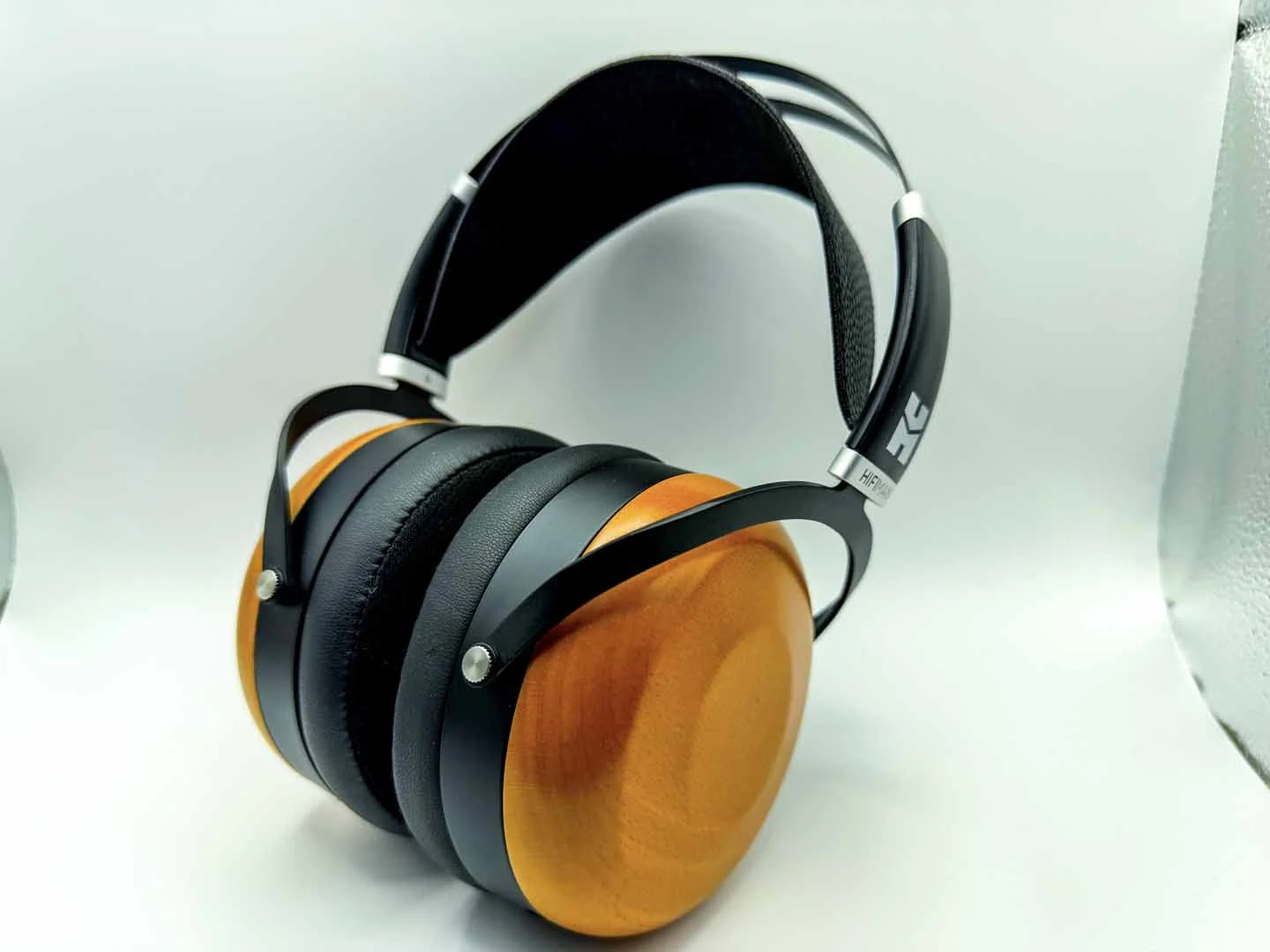
The natural beechwood outer cups immediately separate the SUNDARA Closed-Back from the endless parade of black plastic and anonymous metal designs sitting throughout the headphone world.
There’s warmth to them.
Personality.
The grain gives each cup a little organic variation, and paired with the matte-black structure, the headphone manages to look both modern and slightly old-school at the same time.
They feel like headphones rather than consumer electronics.
I love that.

At 432 grams, however, the SUNDARA Closed-Back isn’t pretending to be lightweight.
You’ll know there’s a headphone on your head.
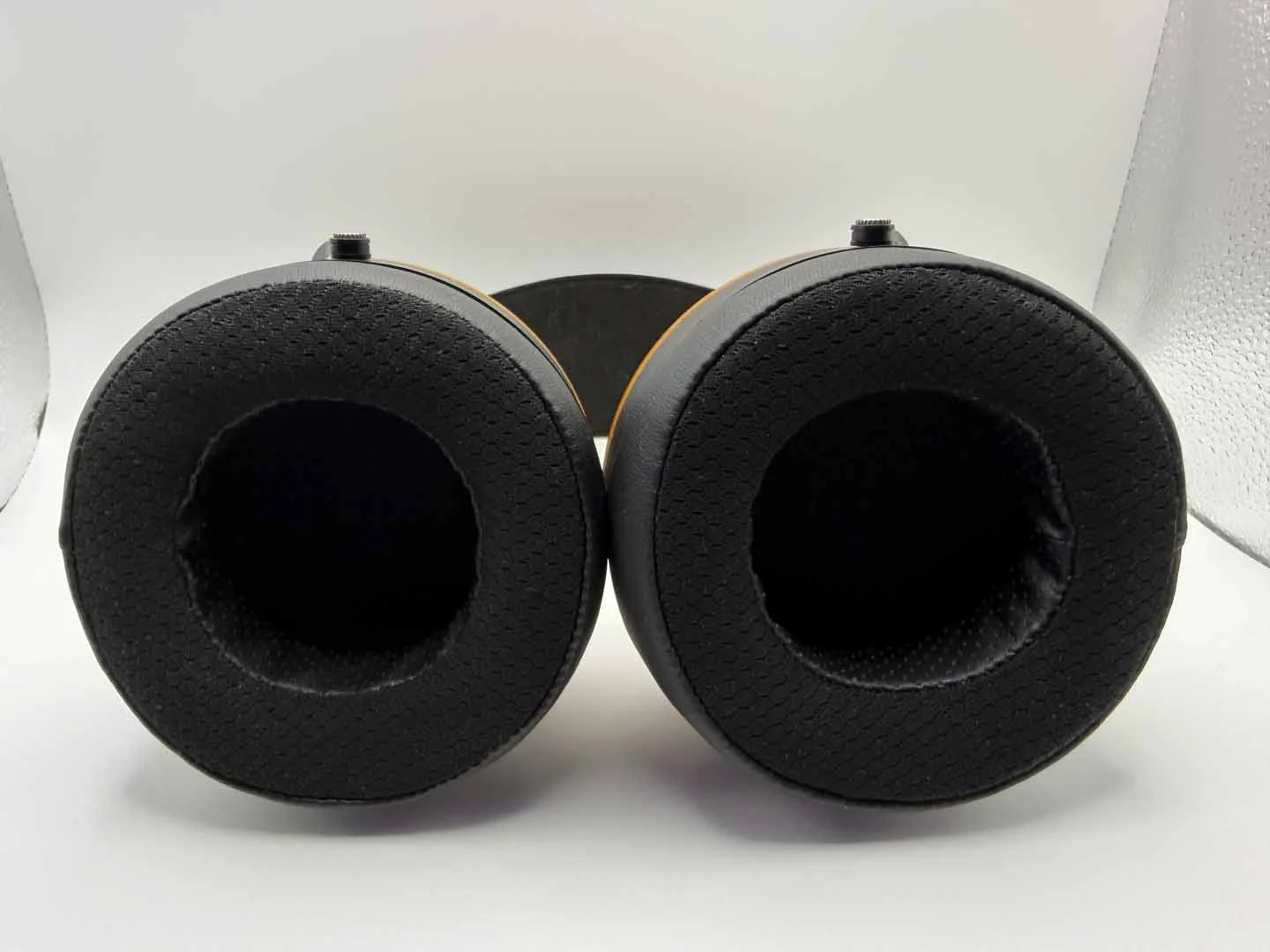
HIFIMAN’s suspension-style headband helps distribute that weight, and I didn’t find the design distracting once I settled into listening, but anyone particularly sensitive to heavier headphones should keep the number in mind.
The pads surrounded my ears comfortably, and the isolation became good enough that once music started, the physical presence of the headphone mattered less to me than the world it created inside the cups.
Which is generally how I want this relationship to work.
Power & Pairing
 Power & Pairing
The SUNDARA Closed-Back gave me another pleasant surprise here.
It didn’t behave like a headphone demanding one magical source combination before revealing its personality.
The Topping DX5 II became my primary desktop reference and gave me the cleanest look at what the driver could do, especially when I began experimenting with PEQ.
The HiBy R4 Evangelion made an excellent portable pairing and turned the SUNDARA into a surprisingly fun transportable setup, especially because the R4 gives me easy access to EQ when the tweaking itch arrives.
The FiiO K11 provided another desktop perspective, while the HiBy W4 let me see how the headphone behaved from a much smaller portable source.
Then I fed it through the Loxjie P20 Hybrid Tube Amp because audiophiles have apparently decided perfectly functioning equipment must occasionally be exposed to glowing glass.
That pairing brought another flavor to the presentation and reinforced something I’d already started noticing.
The SUNDARA Closed-Back has enough inherent technical ability that source changes can shape the experience without completely rewriting the headphone.
The Fosi SK01 gave me another opportunity to experiment with tone and amplification.
Across the different combinations, the personality remained recognizable.
Lifted vocals. Clean separation. Speed. Space. Impact.
Better source gear can help sharpen those characteristics.
It doesn’t need to rescue them.
Value
Now we have to talk about the elephant-sized kaiju standing in the middle of downtown.
$129.
The regular price listed for the SUNDARA Closed-Back is $399, while HIFIMAN currently has it available at a special price of $129.
At that price, I genuinely don’t understand how they packed this much headphone into the box.
Planar magnetic driver.
Stealth Magnets.
NEO Supernano Diaphragm.
Natural beechwood cups.
Superb separation.
Lifted vocals.
Excellent speed.
Real impact.
Huge closed-back staging.
Strong EQ capability.
And, most importantly, a presentation that made me repeatedly choose it over considerably more expensive headphones.
That last part is why I don’t want to reduce this review to some tired phrase about “punching above its price.”
Forget the price for a second.
I just like the headphones.
If the only reason I enjoyed it were that it cost $129, that wouldn’t be much of a recommendation.
The exciting part is that I’d still want to listen to it if the price tag weren’t sitting there waving its arms.
The sale price simply makes the whole thing slightly absurd.
Who Is This For?
The SUNDARA Closed-Back is for the person who wants to disappear into music without shrinking the music to do it.
You want isolation.
You also want space.
You love a vocalist rising above the track but don’t want the rest of the band sacrificed to make that happen.
You appreciate detail and separation but don’t want your favorite songs converted into laboratory specimens.
You like planar speed.
You still want impact.
Maybe you enjoy EQ and want a driver willing to follow you down that rabbit hole.
Maybe you never touch EQ and simply want something that sounds excellent when you press play.
Either listener can live here.
Most importantly, it’s for someone who wants one pair of headphones that can survive a playlist with absolutely no respect for genre boundaries.
That’s me.
And apparently this monster knows where I live.
GearZilla Score
 Slam: 4.5/5
 Vocal Lift: 4.9/5
 Holography: 4.8/5
 Target Lock: 4.8/5
 Air: 4.6/5
 EQ & Customization Potential: 5.0/5
 Value: 5.0/5
 Overall GearZilla Rating: 4.8/5 • S-Class Kaiju
Final Roar
 Final Roar
The HIFIMAN SUNDARA Closed-Back caught me completely off guard.
I expected a good planar.
I expected solid value.
I expected beautiful wooden cups and enough technical performance to make the current sale price interesting.
I didn’t expect it to become the headphone I kept choosing.
That’s the part I can’t explain with specifications.
The planar driver gives me the speed I want.
Vocals rise exactly the way I love.
Instrument separation is superb.
Bass has enough impact to keep the presentation alive.
The stage reaches far beyond what I expect from a closed-back design.
EQ gives me room to experiment without requiring me to fix anything first.
And the isolation lets me close my eyes and disappear into the music without sacrificing the sensation that the music itself has room to breathe.
There are more expensive headphones sitting around me.
Some will beat the SUNDARA Closed-Back in individual categories.
That’s fine.
Audio doesn’t need one undisputed heavyweight champion.
Different headphones create different windows into the songs we love.
But the SUNDARA Closed-Back gave me one of my favorite windows.
And lately, I keep opening it.
At some point during this review, the monster stopped storming through the city.
It sat down.
Put on some music.
And stayed awhile.
So did I.
These are currently my favorite headphones.
Not my favorite $129 headphones.
Not my favorite affordable planars.
Not my favorite closed-backs for the money.
My favorite headphones.
And that may be the biggest roar I can give them.
Buy If
 Buy If
- You love vocals that rise above the mix without disconnecting from the performance.
- You want superb instrument separation and fast planar transients.
- You need closed-back isolation but hate feeling trapped inside a tiny stage.
- You jump constantly between genres.
- You enjoy EQ and want headphones that respond exceptionally well to it.
- You don’t use EQ and simply want excellent stock tuning.
- You want speed without sacrificing impact.
- You appreciate natural wood and distinctive headphone design.
- You care more about how much a pair of headphones makes you enjoy music than about its price tag.
Skip If
 Skip If
- You specifically want the completely unrestricted openness of a true open-back headphone.
- You’re highly sensitive to heavier headphones.
- You want a huge amount of bass without using EQ.
- You prefer a darker presentation with vocals sitting farther back in the mix.
Hear the GearZilla Roar.
You can pick up this amazing pair directly from Hifiman: https://store.hifiman.com/index.php/sundara-closed-back.html
Share This Story, Choose Your Platform!