



Flagship Muscle. Digital Soul. One Seriously Hot Little Monster.
Overall GearZilla Rating: 4.4/5 ⭐
🎧 AK HC5: Oh, You Thought 100 Was Enough?
Most DAC dongles top out at 100 on their volume indicators and call it a day. Fair enough. That’s respectable. But apparently, nobody told Astell&Kern, because the AK HC5 just keeps going.
105… 110… 120?
Oh, HELLS NO!
TRY 150, BABY!
That’s right, 150 steps of volume control! Now, before anybody reaches for an engineering textbook, those numbers represent volume adjustments, not amplification power. But there’s something wonderfully excessive about a company that looks at an already capable design and decides to take things even further.
And that pretty much sums up the HC5. This is no run-of-the-mill dongle. It’s an intentionally engineered listening portal that combines flagship-inspired digital conversion, formidable amplification, and Astell&Kern’s fascinating Digital Audio Remaster (DAR) technology in a remarkably compact package.
I’ve spent the past month putting this little monster through its paces with a wide assortment of IEMs and full-size headphones, and it never gave me a reason to question its capabilities. The presentation is refined, the amplification is remarkably confident, and DAR adds another dimension by inviting listeners to explore familiar recordings through different digital-processing approaches. From a listening perspective, I found very little to criticize.
In fact, I was beginning to think Astell&Kern had created something dangerously close to portable audio perfection. I could practically hear Scotty from Star Trek shouting from engineering:
“She’s giving us all she’s got, Captain!”
And believe me, this little starship has some serious warp-drive potential.
Unfortunately, somebody forgot to check the engine temperature.
Because folks, the HC5 gets hot. REALLY hot. Not the gentle warmth you’d expect from sophisticated electronics, but the kind that builds surprisingly quickly, makes the aluminum chassis uncomfortable to hold, and radiates straight through your pants pocket. At one point, I genuinely wondered whether I was coming down with a fever. Turns out, I was just carrying around a miniature warp core!
And therein lies the HC5’s Achilles’ heel. It’s an extraordinarily capable portable DAC that delivers nearly everything I want from a premium listening experience, but its thermal behavior deserves attention, particularly if you expect to carry it in a pocket. For listeners who primarily use their DAC at a desk, it may be a much smaller consideration.
I’ve often said there’s a difference between costly and expensive audio equipment, and the HC5 firmly belongs in the costly category. Its engineering, versatility, and musical performance deliver genuine value, even at its premium price. The heat is a consideration rather than a universal dealbreaker, and it doesn’t diminish how much I’ve enjoyed listening to this remarkable little machine.
That’s why the Astell&Kern AK HC5 earns my 4.4/5 GearZilla rating. It’s a magnificent little monster that comes remarkably close to perfection, with the kind of performance that makes you want to boldly go where your music has never gone before.
Just keep an eye on the warp core.
Engage. And Listen Bigger! 🦖🎧
✅ Pros
Remarkably confident amplification across the headphones and IEMs evaluated; flagship-derived AK4191EQ and AK4499EX conversion architecture; sophisticated DAR processing with PCM and DSD options; clean, balanced, and refined sonic presentation; excellent clarity and instrumental organization; articulate vocals and controlled bass; smooth, revealing treble; six selectable DAC filters; 150-step volume control; satisfying physical adjustment wheel; informative OLED display; premium aluminum construction; 4.4mm balanced and 3.5mm single-ended outputs; noise-conscious circuitry and cable design; and impressive versatility within a compact form factor.
⛔ Considerations
Significant, rapid heat buildup is the HC5’s biggest challenge; my review unit became comfortably hot to handle and radiated noticeable heat through clothing when carried in a pants pocket. That substantially compromises its practicality as an everyday portable device and deserves attention from Astell&Kern. The premium launch price also requires serious consideration, while bus-powered operation draws energy from the connected source. Other comparatively minor limitations include no comprehensive onboard parametric EQ and limited OLED display customization. DAR’s audible benefits can vary by recording, headphones, and listener.

🤝 Disclosure: The Truth Behind the Roar
Huge thanks to Jason and the Astell&Kern team for providing the AK HC5 for evaluation alongside the PD20 digital audio player.
I’ve spent approximately one month exploring the HC5 with a variety of headphones, IEMs, and familiar recordings, focusing on amplification, sonic performance, digital-processing capabilities, and everyday usability.
Receiving equipment for review doesn’t buy a favorable verdict, guarantee a particular score, or protect a product from criticism.
My responsibility is to the reader, not the manufacturer.
That independence matters most when reviewing a product I genuinely enjoy.
The HC5 delivers an exceptional listening experience, but its thermal behavior is a significant practical concern. That I admire the engineering doesn’t make that compromise any less important.
The observations and final GearZilla rating reflect my independent evaluation, informed where useful by broader industry perspectives on the product’s sonic character.
Listen first. Figure out the story later.
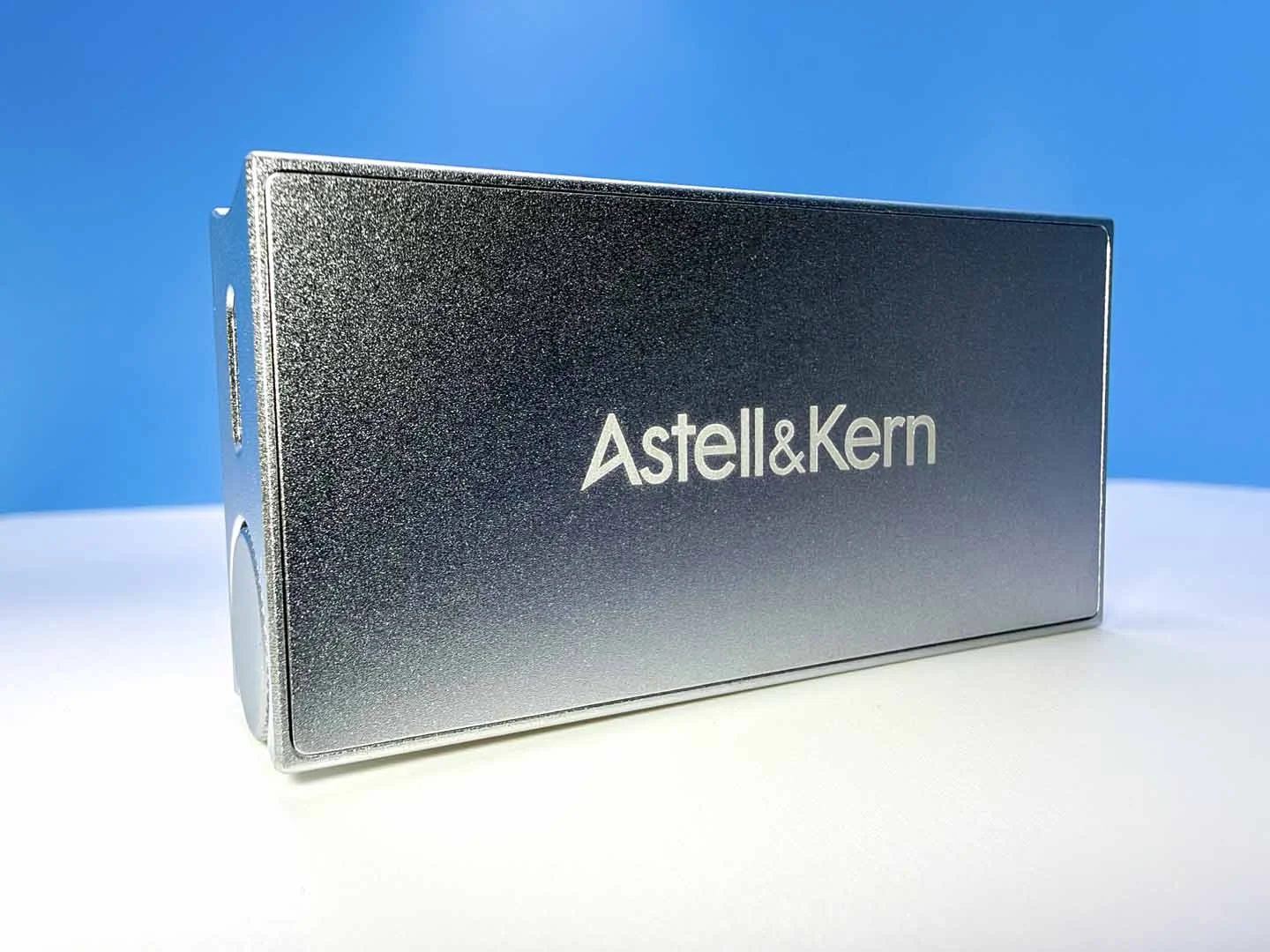
🎧 Review Perspective & Listening Setup: Finding the Monster’s True Personality
Every GearZilla review begins with the same philosophy: Listen first. Figure out the story later.
My approach is guided by one deceptively simple question:
Does this thing help me experience the music I already love in a new way?
I’m naturally drawn to lush, musical, immersive presentations with expansive width, convincing depth, expressive vocals, controlled bass, and smooth, non-fatiguing treble. But I also recognize that great audio comes in countless personalities. My preferences aren’t universal standards, and I don’t believe every product should be judged against a single sonic ideal. Understanding what a manufacturer intended is just as important as deciding whether that approach resonates with me.
That’s why I begin with factory settings, EQ disabled, and optional sound enhancements bypassed whenever practical. Before experimenting with what a device can do, I want to understand what it does naturally.
From there, I listen across different genres, recording qualities, and playback levels, paying particular attention to tonal balance, dynamics, instrumental separation, vocal presentation, spatial relationships, and long-session comfort. When comparing sources, I match listening levels as closely as practical because louder doesn’t automatically mean better, and a premium price doesn’t guarantee a more rewarding experience.
My reference equipment includes the FiiO K13 R2R and Topping DX5 II desktop DAC/amps, alongside the HiBy R4 portable player. Familiar dongles such as the iBasso DC-Tonfa, HiBy W4, and TANCHJIM SPACE II provide additional perspective on performance, versatility, and everyday usability.
For the HC5, I wanted to explore two sides of its personality: the underlying performance of its DAC and amplification system, and the additional possibilities introduced by Astell&Kern’s DAR technology. I began with DAR disabled to establish a baseline before exploring its PCM and DSD processing options, considering what each approach might contribute to the listening experience.
But evaluating a source component isn’t just about what reaches my ears. It’s also about what happens when the equipment becomes part of my everyday routine. How naturally does it fit into my listening habits? Is it convenient to use? Does its design enhance the experience, or introduce frustrations that aren’t obvious during a quick demonstration?
Those practical considerations became especially important during my month with the HC5.
Because as impressive as its sonic performance and engineering may be, even an extraordinary little monster can have an Achilles’ heel.
And this one revealed its weakness surprisingly quickly.
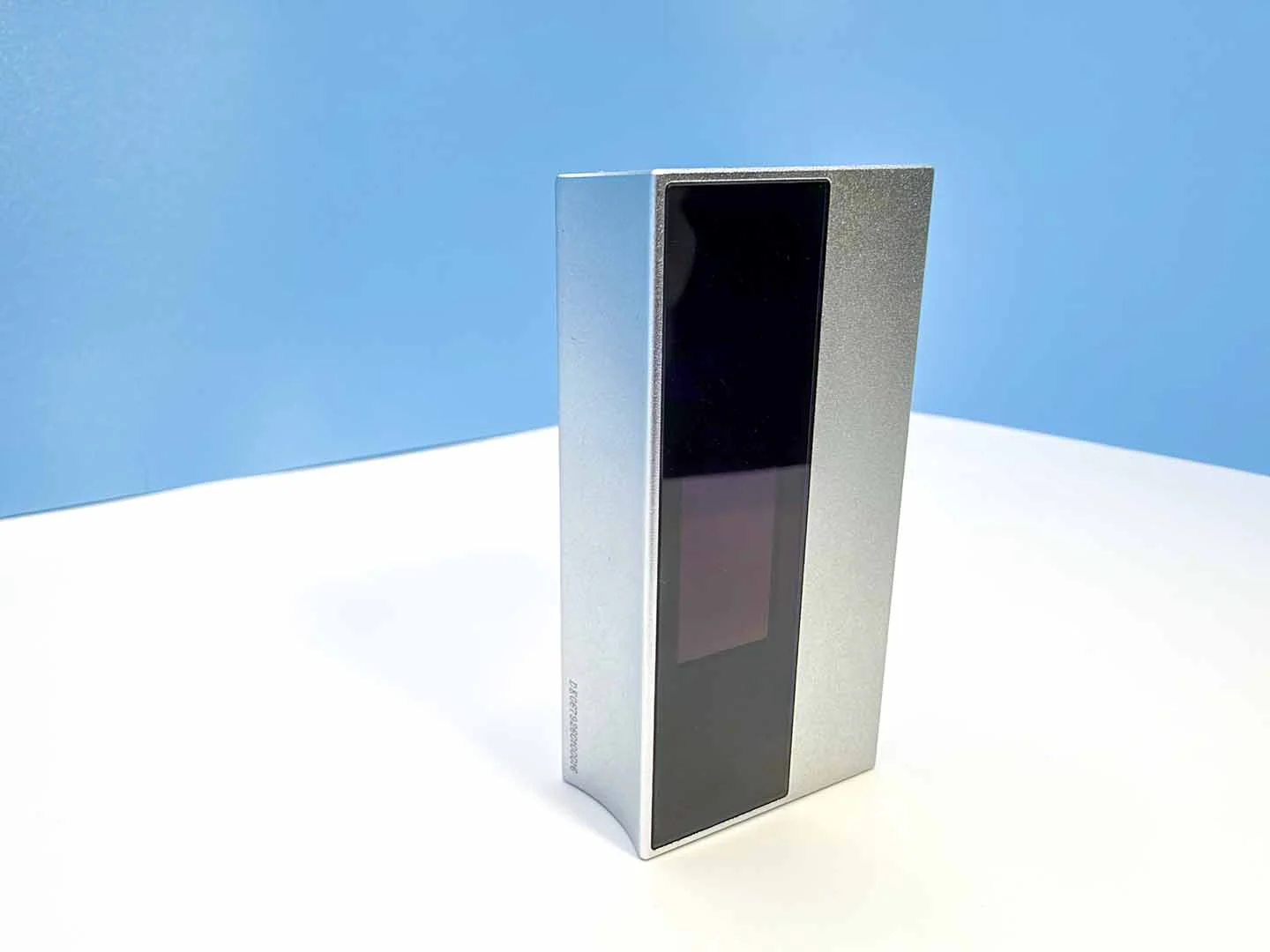
🏯 Astell&Kern: Flagship Ambition Without the Flagship Footprint
Astell&Kern has earned its reputation by approaching portable audio as a serious engineering discipline.
Its flagship digital audio players incorporate sophisticated DAC architectures, dedicated amplification systems, and carefully considered digital processing.
The AK HC5 feels like a distillation of that philosophy.
Rather than creating another conventional USB accessory, Astell&Kern brought technologies associated with its high-end music players into a compact, bus-powered device.
The HC5 combines an AKM AK4191EQ digital processor with an AK4499EX converter, High Driving Mode technology derived from the flagship SP4000’s development, and the company’s Digital Audio Remaster system.
That’s a considerable collection of engineering decisions for something weighing approximately 46 grams.
But the most interesting part isn’t how many technologies Astell&Kern managed to fit into such a small chassis.
It’s how they complement one another.
The conversion architecture provides the foundation. The amplifier accommodates a wide range of listening requirements. And DAR lets listeners explore alternative digital-processing approaches without changing their source device or headphones.
There’s a deliberate philosophy here.
Astell&Kern doesn’t merely want the HC5 to reproduce music competently.
It wants to give enthusiasts a more sophisticated way to interact with it.
And I appreciate that ambition.
The result feels less like a conventional dongle and more like an enthusiast audio component in a dramatically reduced form factor.
But that miniaturization also raises an important engineering challenge.
The more sophisticated electronics you pack into a compact enclosure, the more important thermal management becomes.
And as we’ll explore later, that’s one part of the HC5’s otherwise remarkable execution that left me wanting more.
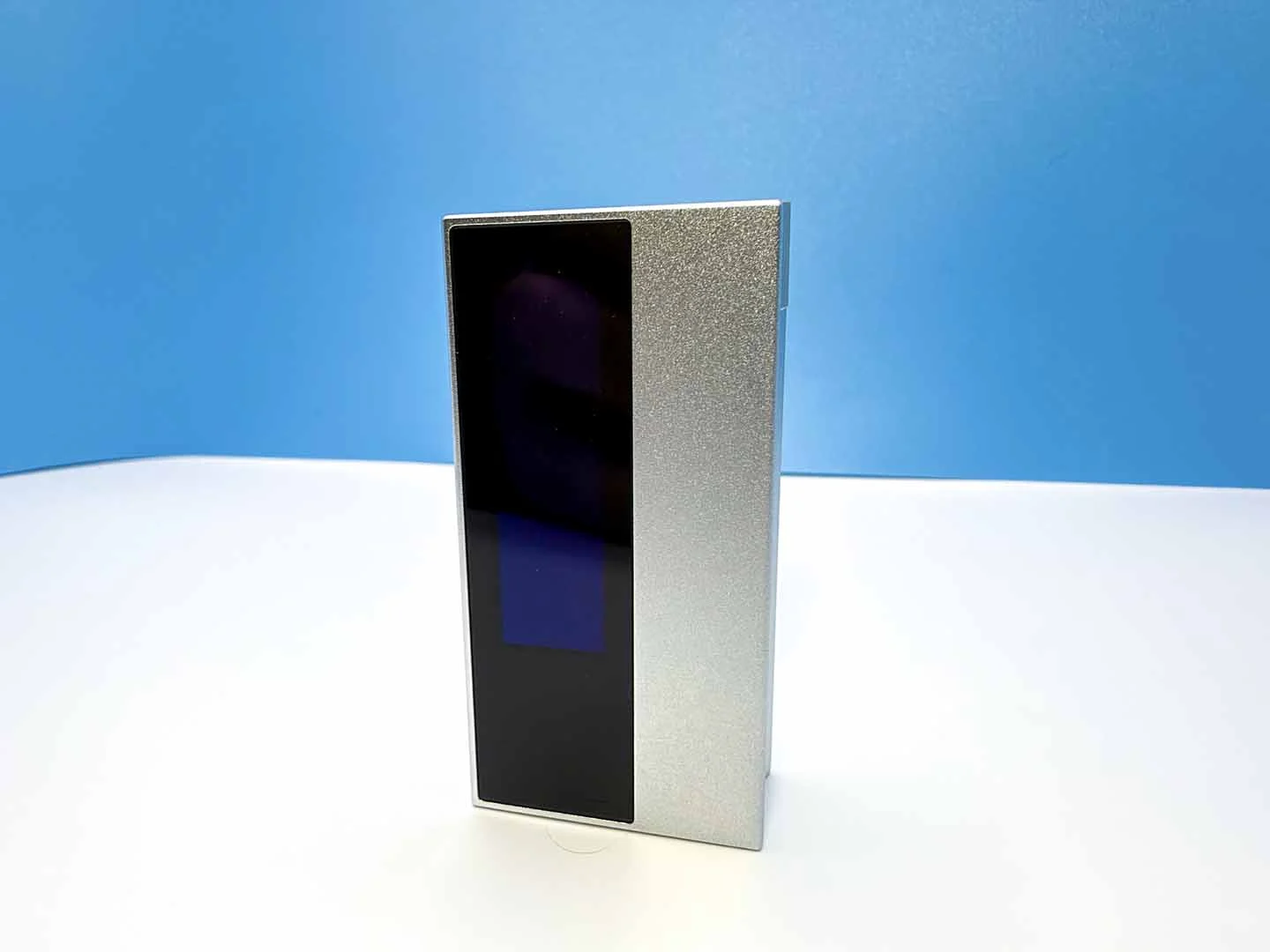
🎨 Design & Build: Solid Flow, Serious Intentions
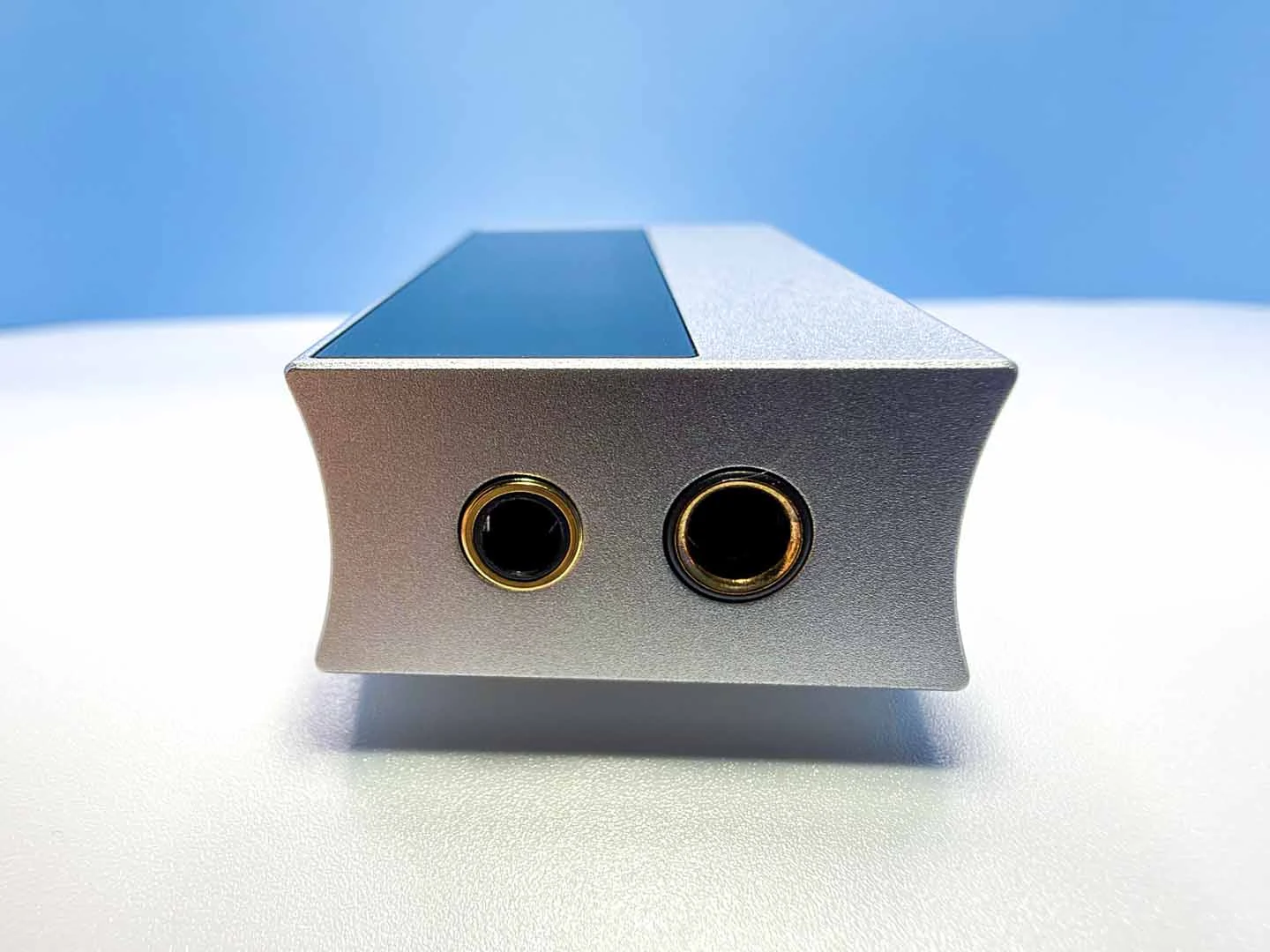
Astell&Kern calls the HC5’s industrial design philosophy “Solid Flow.”
It’s an appropriate description.
The satin-silver aluminum chassis combines precise angular geometry with softer curves, creating something that feels distinctly premium without becoming unnecessarily theatrical.
Its construction has a reassuring sense of purpose.
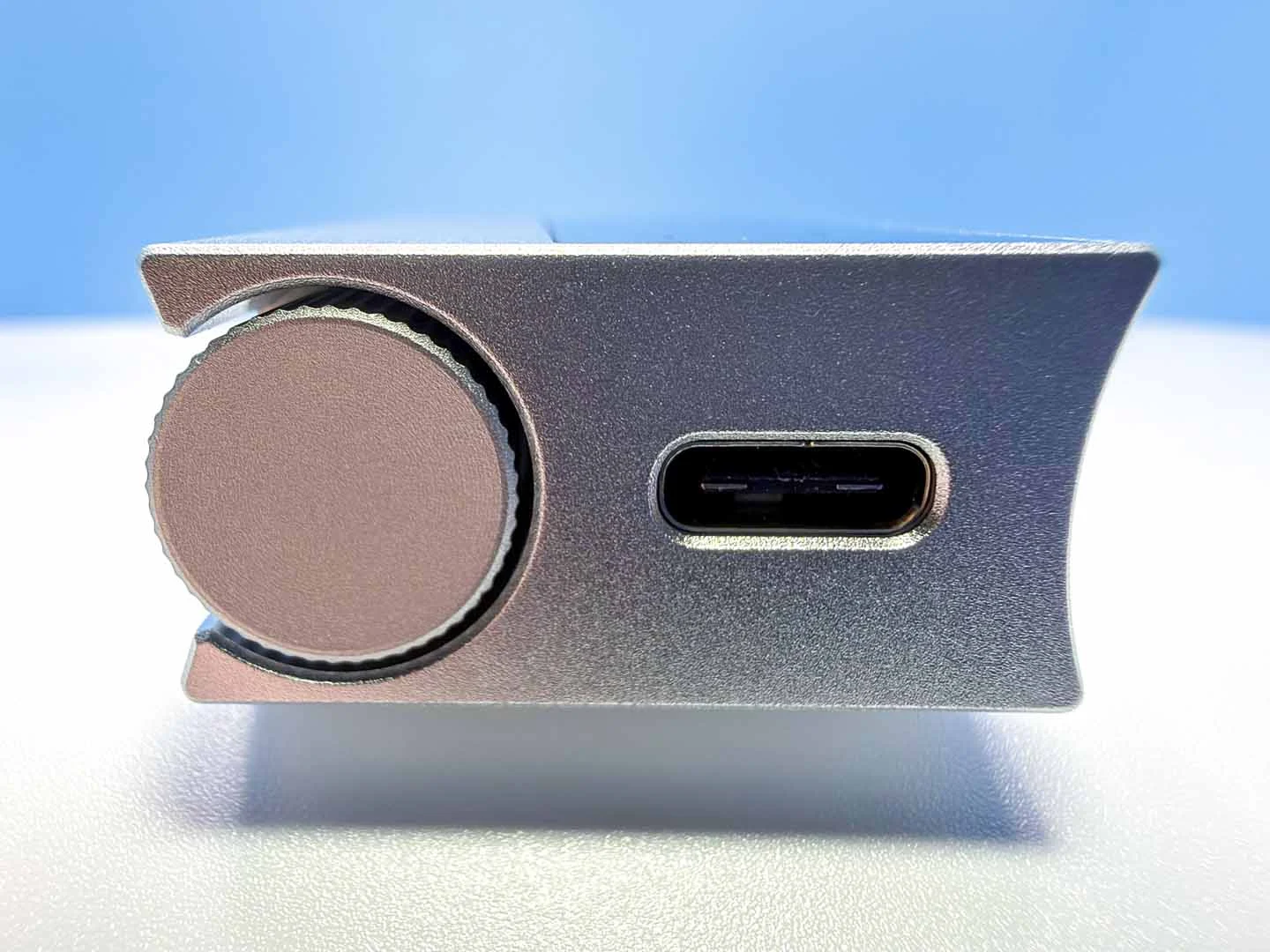
The physical volume wheel is particularly satisfying.
I enjoy having a dedicated tactile control rather than relying entirely on a smartphone interface. The 150-step adjustment system provides fine control, especially when switching between sensitive IEMs and headphones with different requirements.
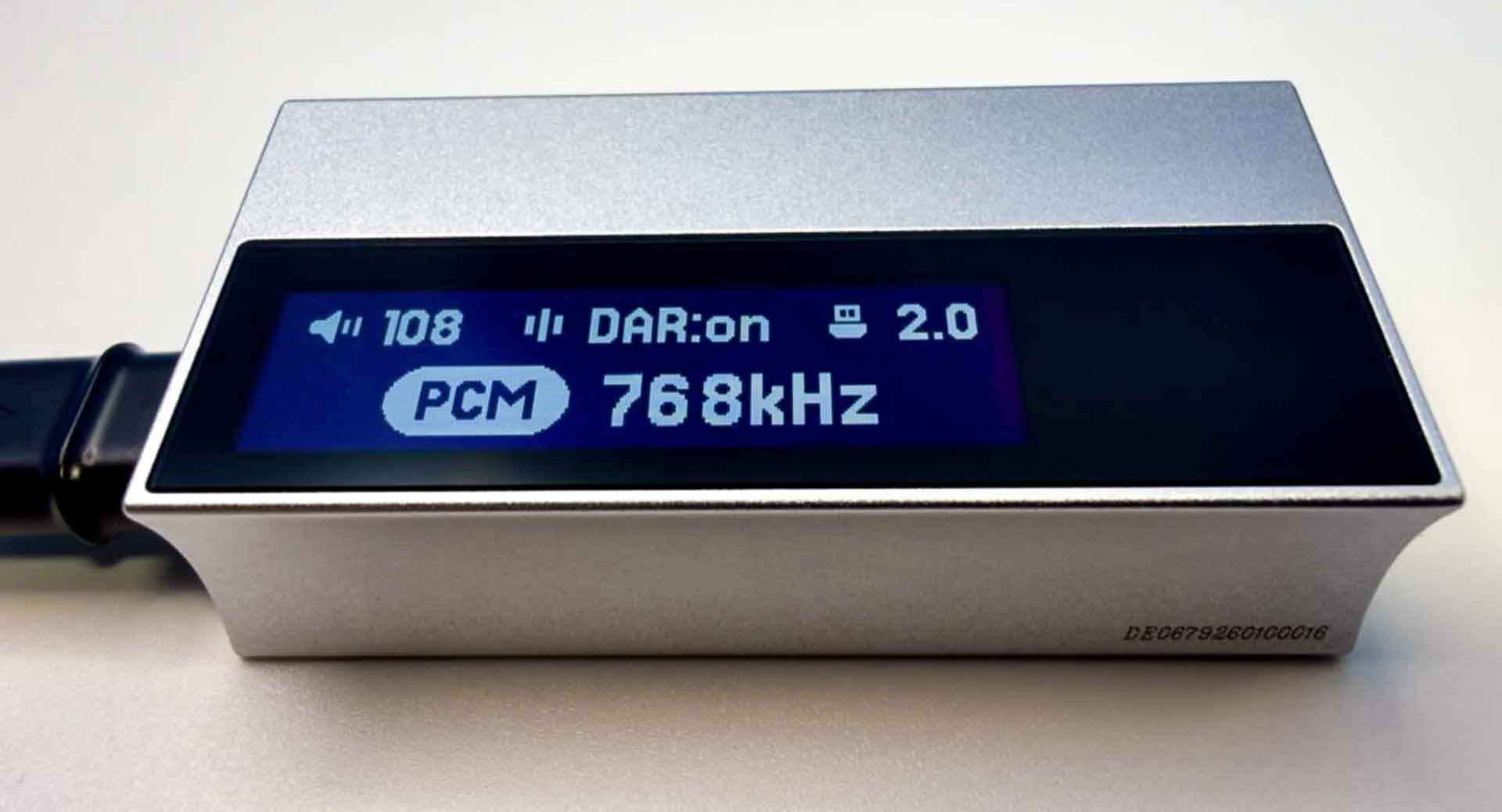
The 1.62-inch OLED display complements that experience by providing immediate playback and configuration information.
It’s a thoughtful interface for a compact device.
But here’s my little complaint.
Why can’t I change the OLED display color?
Astell&Kern, you’ve given me flagship-derived conversion, advanced amplification, selectable digital filters, and an entire digital remastering system.
And I can’t make the display purple?
I’m not asking for a nightclub.
Just a few color themes.
It’s a relatively small omission, but premium equipment should offer a little room for personal expression.
And honestly, if the HC5’s thermal behavior were better controlled, I’d have little else to complain about.
The display-color limitation is a missed opportunity.
The heat, however, is a real problem.
And that’s a much more consequential distinction.
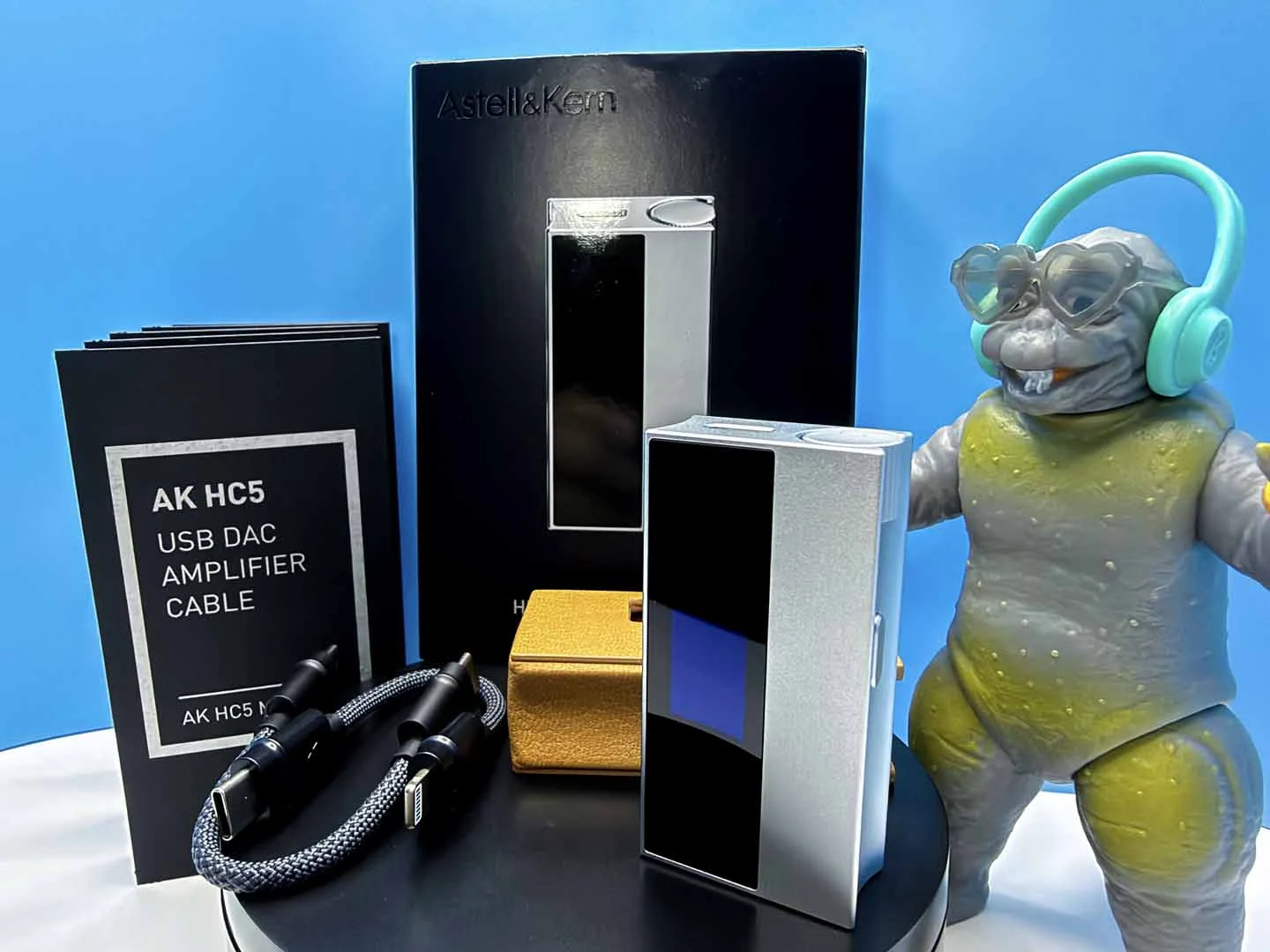
📦 Unboxing & Accessories: Ready for the Road
The accessory package includes USB-C to USB-C and USB-C to Lightning cables, a Synt3 protective case, a quick-start guide, and warranty documentation.
It’s a practical selection that supports common source-device connections while providing some protection for the aluminum chassis.
The included cable deserves particular attention.
Astell&Kern uses a dual noise-shielded design incorporating individually insulated tin-plated copper conductors, aluminum shielding, and an additional braided copper layer.
That construction is intended to minimize electromagnetic interference and help maintain signal integrity.
It’s another example of the company’s attention to detail that might otherwise go unnoticed in a compact DAC.
Ultimately, however, accessories aren’t what make the HC5 compelling.
It’s the engineering inside.
And, as I discovered, prospective owners should also understand how much heat that engineering produces.
⚙️ Technical Specifications: A Serious Little Machine
The AK HC5’s specifications show Astell&Kern’s ambition to deliver much of its flagship audio philosophy in a genuinely compact device.
Model: Astell&Kern AK HC5
Product category: Portable USB DAC and headphone amplifier
DAC architecture: AKM AK4191EQ digital processor and AK4499EX DAC
Amplification: High Driving Mode, derived from flagship SP4000 development
Audio support: PCM up to 32-bit/768kHz; native DSD up to DSD512
DAR processing: PCM conversion up to 352.8/384kHz; DSD conversion up to DSD256
DAC filters: Six selectable options
Outputs: 3.5mm single-ended and 4.4mm balanced
Maximum published unloaded output voltage: 2.5Vrms single-ended; 5Vrms balanced
Signal-to-noise ratio: 121dB single-ended; 125dB balanced
THD+N: 0.0005% single-ended; 0.0004% balanced
Output impedance: 0.5Ω single-ended; 1.1Ω balanced
Frequency response: ±0.006dB, 20Hz-20kHz
Display: 1.62-inch OLED
Volume adjustment: 150 steps
USB interface: USB-C, supporting UAC 1.0 and UAC 2.0
Construction: Satin-silver aluminum
Dimensions: 32 × 64.3 × 16mm
Weight: Approximately 46g
Power: USB bus-powered
US launch MSRP: $489
These are manufacturer-published specifications, and some require context.
The maximum voltage figures are measured without a connected load, not as guaranteed power into every headphone impedance.
Likewise, support for exceptionally high sampling rates doesn’t mean every recording contains more musical information simply because the number on the display increases.
And the low published distortion and noise figures don’t tell us everything about how the device behaves under different operating conditions.
That’s why real-world evaluation matters.
Because a specification sheet can tell us plenty about engineering capability.
But it won’t necessarily tell us whether the product becomes uncomfortable to hold after you’ve been listening for a while.
🧬 AKM Architecture: Flagship Precision in Miniature
The HC5 combines AKM’s AK4191EQ digital processor with the AK4499EX DAC.
That architecture separates digital processing from digital-to-analog conversion, reflecting a design philosophy associated with more ambitious high-end audio implementations.
It’s an impressive foundation for a portable device.
But I’ve never believed a DAC chip alone determines a product’s complete sonic character.
The analog output stage, power supply, amplification circuitry, connected headphones, and overall implementation all matter.
Two devices using the same converter can behave differently, just as devices using different architectures can sound surprisingly similar under carefully controlled conditions.
That’s why the HC5’s complete design matters more than the name printed on its DAC.
The sonic character associated with the HC5 is balanced, articulate, and refined, with a strong emphasis on organization and precision.
It doesn’t appear intended to coat every recording in exaggerated warmth or artificially increase bass weight.
Instead, the approach favors clarity, naturalness, and control.
That’s an important distinction for me.
I love lush, rich, musical presentations.
But I don’t expect every source to impose that particular personality on the headphones connected to it.
Sometimes a relatively neutral foundation offers more flexibility, letting different IEMs and headphones retain their own character.
And with the HC5, the sophisticated conversion architecture works alongside something equally important.
A remarkably capable amplification system.
⚡ High Driving Mode: Flagship Muscle in a Dongle’s Body
Remember when I said the HC5 handled just about everything I connected?
Well, Astell&Kern didn’t stumble into that capability by accident.
The company’s High Driving Mode technology draws from engineering developed for its flagship SP4000 digital audio player.
That’s a serious pedigree for something this compact.
Astell&Kern uses a horizontal OPAMP configuration designed to deliver substantial amplification without the space of a conventional high-end portable amplifier.
The company also emphasizes power-supply rejection and common-mode noise suppression, which matters because the HC5 receives power from a connected smartphone, computer, or other USB source.
I appreciate that attention to detail.
But what impressed me wasn’t the terminology.
It was the experience.
I spent a month connecting different headphones and IEMs, and the HC5 consistently inspired confidence.
No obvious struggle.
No sense that I needed to reach for something larger.
No moment where I thought the little monster had finally met its match among the equipment I was using.
Of course, that doesn’t mean it can handle every headphone ever made.
Different headphones demand different combinations of voltage and current, and some particularly challenging models still benefit from dedicated desktop amplification.
But within the range of equipment I evaluated, the HC5 was remarkably capable.
And that’s what makes the amplification story meaningful.
It’s not about winning a contest to see which dongle produces the largest number on a specification sheet.
It’s about giving enthusiasts the flexibility to enjoy different headphones without constantly wondering whether their source is holding them back.
The HC5 achieves that with impressive confidence.
But there’s one important caveat.
All that capability has to exist within a remarkably small physical enclosure.
And while I admire what Astell&Kern has achieved electrically, the thermal consequences became the one part of the experience I couldn’t overlook.
We’ll get to that.
Because first, there’s another fascinating piece of technology inside this little machine.
And it deserves a much bigger spotlight.
✨ Digital Audio Remaster: The HC5’s Secret Weapon
Let’s talk about the feature that makes the HC5 something more than a premium dongle with impressive amplification.
DAR. Digital Audio Remaster.
Three little letters that fundamentally change the conversation surrounding this device.
Without DAR, the HC5 would already be a compelling portable DAC/amp.
Its flagship-derived conversion architecture, capable amplification, excellent physical controls, and premium construction provide plenty of reasons to appreciate it.
But DAR introduces something different.
Astell&Kern isn’t simply giving listeners a way to play digital music.
It’s giving them different digital-processing paths through which to experience familiar recordings.
And for an enthusiast who enjoys experimenting with musical presentation, that’s a fascinating proposition.
🎼 What Exactly Is DAR?
DAR is Astell&Kern’s proprietary digital upsampling and remastering system.
It operates before digital-to-analog conversion, changing how supported source material is digitally processed depending on the selected mode.
The HC5 provides three primary choices.
DAR Off: The device plays supported audio without engaging its optional DAR remastering process. This provides the most direct starting point for evaluating its underlying DAC and amplification performance.
DAR PCM: Compatible PCM recordings are upsampled according to their original sample-rate family. Material derived from 44.1kHz can be processed to 352.8kHz, while material based on 48kHz can be processed to 384kHz.
DAR DSD: Compatible PCM material can be converted into a DSD stream. Lower-rate PCM sources are converted to DSD128, while higher-rate PCM sources can be converted to DSD256. The system can also process DSD material at higher DSD rates within these limits.
Those are meaningful options.
And they distinguish DAR from simply selecting between conventional DAC reconstruction filters.
The HC5 isn’t merely changing a roll-off characteristic.
It’s offering alternative digital-processing approaches before the analog signal ever reaches your headphones.
But what makes that interesting from a listening perspective?
Let’s explore.
🎧 DAR Off: Let the Recording Speak
There’s value in starting with the simplest available signal path.
With DAR disabled, the HC5 provides a relatively direct opportunity to appreciate its underlying conversion architecture and amplification system.
The presentation is clean, balanced, articulate, and technically disciplined.
It emphasizes clarity and organization rather than exaggerated warmth or artificial spectacle.
That makes DAR Off an excellent baseline.
And I appreciate that Astell&Kern hasn’t forced its remastering technology on every recording.
Because additional processing should be a choice.
Not an obligation.
Some music benefits from being left alone.
Sometimes the most satisfying listening experience is simply hearing a familiar recording through a capable source, without introducing another variable.
🎹 DAR PCM: A Different Kind of Refinement
DAR PCM processes compatible digital audio at a higher PCM sampling rate before conversion.
The technical objective is to provide a different digital reconstruction path.
And that can create interesting subjective possibilities.
Some listeners describe high-rate PCM processing as producing a smoother, more fluid presentation, with a sense of improved continuity between instruments.
Vocal textures may appear more relaxed.
Ambient information may seem more cohesive.
The perceived relationship between individual musical elements can feel less tightly constrained.
Those descriptions aren’t guaranteed effects of upsampling, and I wouldn’t claim every listener will hear them.
But they illustrate why the feature is worth exploring.
Astell&Kern isn’t simply increasing the sample-rate number for entertainment.
It’s implementing a distinct processing approach that enthusiasts can compare with the native signal path.
Of course, upsampling doesn’t create information that was absent from the original recording.
A CD-quality track doesn’t suddenly become an original high-resolution studio master simply because the HC5 processes it at 352.8kHz.
But the filtering and reconstruction process can change, and those differences may influence the resulting playback experience.
For enthusiasts interested in digital audio architecture, that’s a genuinely compelling capability.
🌌 DAR DSD: Exploring Another Musical Dimension
Now we’re getting into territory that particularly captures my imagination.
DAR DSD converts supported audio into a high-rate DSD representation before playback.
And that opens the door to exploring familiar music through an entirely different digital-processing approach.
Discussions of DSD reproduction often include descriptions such as smoother musical flow, organic texture, softer transient character, and a more continuous sense of ambience.
These impressions vary considerably between listeners and equipment, and converting PCM to DSD doesn’t inherently make a recording more accurate.
But the opportunity to explore that processing path is intriguing.
Imagine listening to a familiar vocal recording and paying particular attention to how the voice relates to the surrounding instruments.
Or revisiting a jazz performance and considering whether the room ambiance feels more continuous.
Or exploring an orchestral recording and listening for subtle differences in decay and the relationship between instrumental sections.
That’s the sort of curiosity DAR encourages.
And it’s one reason I enjoy this hobby.
Not simply hearing more.
Hearing differently.
The HC5 gives enthusiasts access to that experiment without requiring a separate computer-based processing system or another dedicated audio component.
And for a product this compact, that’s impressive.
🎤 DAR and the Art of Musical Texture
One of the most interesting aspects of digital remastering is how it invites us to consider musical texture.
When I evaluate audio equipment, I’m interested in more than whether a component can reveal microscopic details.
I care about how those details contribute to the performance.
Does a vocalist sound emotionally convincing?
Does an acoustic instrument retain the character of its resonance?
Does the space surrounding the performance feel believable?
And perhaps most importantly, does the music remain cohesive?
DAR provides different processing approaches through which to investigate those questions.
The native path emphasizes the HC5’s fundamental conversion and amplification performance.
DAR PCM offers an alternative high-rate reconstruction process.
DAR DSD explores another representation of the same musical material.
None of these modes is guaranteed to be universally superior.
But that’s part of the appeal.
Astell&Kern has created a device that encourages listeners to explore rather than simply accept one fixed configuration.
🌠 DAR and the Search for Holographic Audio
Anyone familiar with GearZilla Reviews knows I have a particular weakness for immersive listening.
I love width.
I love depth.
And I absolutely love the sensation that a recording occupies a believable three-dimensional environment.
But spatial perception is complicated.
It depends on the recording, headphones, fit, individual hearing, and the complete playback chain.
DAR can’t magically create a convincing concert hall from a recording that contains no meaningful spatial information.
And converting PCM to DSD doesn’t automatically position instruments more precisely.
Still, changes in digital processing may influence the perceived character of ambiance, continuity, and musical texture.
That’s what makes DAR worth investigating with spacious, carefully recorded music.
A recording that already contains convincing front-to-back relationships provides an excellent opportunity to explore whether different processing modes change the subjective experience.
And that’s the key word.
Experience.
I’m not interested in declaring that one processing mode is objectively superior simply because its mathematical representation is more elaborate.
I’m interested in whether the music becomes more engaging.
Whether the presentation feels more natural.
Whether the recording invites me to listen a little longer.
And whether I discover another perspective on something I thought I already knew.
For me, that’s the entire point of experimenting with audio.
⚖️ Does DAR Actually Make Music Better?
Here’s where we need to separate technical capability from guaranteed sonic improvement.
Astell&Kern describes DAR as a sophisticated way to enhance digital playback through upsampling and conversion.
That’s the intended design philosophy.
But higher sampling rates don’t inherently add missing musical information.
DSD conversion doesn’t automatically improve fidelity.
And a more spacious subjective impression doesn’t necessarily mean the recording is being reproduced more accurately.
Those limitations don’t make DAR irrelevant.
They simply establish what we’re actually evaluating.
The most useful question isn’t whether DAR produces the mathematically largest number.
It’s whether the processing changes the listening experience in a way you enjoy.
Sometimes the native path may be preferable.
Sometimes PCM remastering may be more satisfying.
And sometimes DSD processing may introduce a character that complements a particular recording.
The important point is that Astell&Kern gives enthusiasts the choice.
And that’s where DAR becomes a meaningful part of the HC5’s value proposition.
🦖 The GearZilla Verdict on DAR
DAR isn’t why I was initially impressed with the HC5.
That honor belongs to its remarkable amplification confidence.
But DAR may be the feature that best communicates the company’s broader ambition.
Astell&Kern could have created a powerful USB DAC with a prestigious converter and called it a day.
Instead, it introduced a sophisticated digital-processing platform that invites enthusiasts to explore familiar recordings from different perspectives.
That’s a genuinely interesting addition.
Not because every mode is guaranteed to sound better.
But because the ability to experiment has value.
Especially for listeners who enjoy discovering how different technologies shape the music-listening experience.
Amplification gives the HC5 its muscle. DAR gives it another dimension.
Together, they make this little machine far more interesting than its dimensions suggest.
🔬 Six Digital Filters: Fine-Tuning the Personality
Alongside DAR, the HC5 provides six selectable digital filters.
These offer different reconstruction characteristics, including variations in roll-off and impulse response.
Astell&Kern describes the available approaches as natural, acoustic, traditional, and harmonic presentations.
Now, I wouldn’t suggest that every filter produces a dramatic change with every recording.
Digital-filter differences can be subtle, and their audibility depends on the source material, connected headphones, listening levels, and individual perception.
But I appreciate having the options.
And there’s an important distinction between the filters and DAR.
Digital filters influence aspects of signal reconstruction.
DAR changes the digital processing path more broadly through upsampling or format conversion.
Together, they give the HC5 a surprisingly sophisticated toolset.
For enthusiasts who enjoy experimenting, that’s another reason to appreciate the engineering.
🎧 Listening Impressions: Precision, Refinement, and Musical Purpose
After a month with the HC5, the defining characteristic of my experience wasn’t simply how much amplification it could provide.
It was the combination of capability and refinement.
The HC5’s sonic character is generally balanced, clean, and articulate, with strong organizational ability and a presentation that emphasizes technical precision without becoming aggressively clinical.
It’s not an overtly warm or bass-heavy source.
Nor does it appear designed to impress by exaggerating treble energy.
Instead, it provides a disciplined foundation that allows the connected headphones and recordings to contribute much of the final sonic personality.
That restraint is important.
Especially when considering the role of DAR.
Because the HC5 offers both a relatively direct presentation and optional digital-processing paths, its appeal isn’t tied to forcing every recording into one fixed interpretation.
And I think that’s exactly how a sophisticated source component should behave.
🥁 Bass: Control Before Excess
The HC5’s low-frequency character favors definition and texture rather than deliberately inflated impact.
Bass lines retain their individual contours, and complex rhythmic arrangements benefit from a presentation that doesn’t automatically overwhelm the midrange.
The emphasis is on clarity and organization rather than sheer physical excess.
That’s a particularly interesting approach for a device with such substantial amplification ambitions.
Plenty of output capability doesn’t mean the sound needs to be artificially bass-heavy.
I enjoy bass with genuine authority.
I want kick drums to have impact, bass guitars to carry weight, and larger arrangements to retain the foundation that gives the music scale.
But I don’t want low-frequency energy overwhelming everything else.
The HC5’s restrained approach can be an excellent match for headphones that already deliver substantial bass.
Listeners seeking a consistently thunderous or deliberately warm presentation may prefer another source.
But that doesn’t make the HC5’s approach less valid.
It’s the difference between an amplifier that has muscle and one that insists on flexing constantly.
The HC5 has the muscle.
It simply doesn’t need to show off every second.
🎤 Midrange & Vocals: Articulation With Emotional Potential
Vocals are one of the most important elements of my listening experience.
I enjoy expressive texture, convincing body, and the sense that a singer occupies a believable position within the instrumental arrangement.
The HC5’s balanced presentation supports those priorities.
Its emphasis on articulation and clarity helps voices remain distinct without becoming overly forward.
Its precision can reveal subtle vocal details while preserving the relationship between the performer and the surrounding instruments.
For listeners who enjoy a particularly rich, romantic presentation, the HC5’s native character may feel comparatively restrained.
But that neutrality can also be valuable.
It allows the connected headphones to contribute their own tonal personality.
And DAR introduces another processing option for listeners interested in exploring how vocal texture and musical continuity might be perceived.
That’s a compelling combination.
A clean foundation with additional room for experimentation.
🌟 Treble & Air: Detail Without Drawing Blood
I’ve never believed audio equipment needs aggressive brightness to communicate detail.
Some of the most impressive listening experiences come from systems that preserve articulation and subtle harmonic information without constantly demanding attention.
The HC5’s refined sonic character favors that philosophy.
Upper-frequency information stays clear and organized, letting cymbals, strings, and ambient details contribute to the performance without turning every recording into a treble demonstration.
Of course, a bright IEM doesn’t become magically smooth simply because it’s connected to an expensive DAC.
The tuning of the connected headphones remains enormously important.
But a capable source with low noise and appropriate amplification provides a strong foundation.
And the HC5’s digital-processing flexibility makes it particularly interesting for listeners who enjoy exploring subtle differences in presentation.
🎯 Separation & Placement: Every Instrument Has a Purpose
Instrument separation is one characteristic I pay close attention to when reviewing audio equipment.
But I don’t believe the goal should be to pull every instrument as far away from its neighbors as possible.
A convincing musical performance depends on relationships.
The bass needs to support the rhythm.
The vocals need to interact with the arrangement.
The smaller details need to contribute without becoming disconnected from the whole.
The HC5’s clean and organized presentation is well suited to that kind of listening.
Individual instruments can remain recognizable while the overall performance retains cohesion.
That’s an important distinction.
Technical clarity is valuable.
But musical coherence is what makes the information meaningful.
And the HC5’s balanced character helps keep those priorities aligned.
🌌 Width & Depth: The Space Between the Notes
If you’ve followed GearZilla Reviews for any length of time, you know I have a weakness for immersive audio.
Width is wonderful.
Depth is where things become magical.
A convincing recording needs more than sounds distributed across a broad horizontal plane.
It needs relationships between foreground and background.
Intimacy and distance.
Presence and ambiance.
The HC5’s precise underlying presentation provides a strong foundation for exploring those qualities.
And DAR introduces another dimension worth investigating.
Different digital-processing approaches may influence a recording’s perceived continuity, texture, or openness.
But it’s important not to confuse those possibilities with guaranteed improvements.
The headphones and source material remain central.
The HC5’s appeal is that it offers several ways to approach the performance without requiring entirely different equipment.
And for someone who enjoys rediscovering familiar recordings, that’s a welcome capability.
🦴 Slam, Dynamics & Headroom: The Confidence Factor
This remains the HC5’s standout achievement in my month of listening.
It handled the headphones and IEMs I connected without giving me an obvious reason to question its capabilities.
And that confidence is valuable.
Dynamic reproduction isn’t simply about reaching a loud listening level.
It’s about preserving the contrast between delicate, quieter moments and powerful musical peaks without introducing strain or distortion.
A capable amplifier delivers the voltage and current needed to maintain that dynamic range, allowing the music to move effortlessly from subtle intimacy to explosive intensity.
The HC5’s published output capabilities suggest substantial flexibility for a device of this size.
And my listening experience reinforced that impression.
I didn’t feel compelled to reach for a larger amplifier simply to enjoy the equipment I was using.
That’s impressive.
Especially considering how compact the HC5 is.
But the irony is that while the amplifier never seemed overwhelmed, the chassis became uncomfortably hot remarkably quickly.
So the HC5’s amplification system earns considerable praise.
Its thermal behavior?
That’s another story entirely.
⚡ Speed, Transients & Resolution: Technical Ability With Restraint
Some technical performance makes an immediate impression.
Sharp leading edges. Crisp transients. Precisely placed instruments. Subtle details emerging from recordings you’ve heard countless times.
Those qualities can be fascinating, and I certainly appreciate them.
But pursuing technical precision at the expense of the complete musical experience is a mistake. Resolution should reveal the music’s character, not dissect it until the emotion disappears.
After all, I want to experience the performance, not conduct an autopsy.
An overly analytical presentation can make listening feel like an investigation rather than an emotional journey.
The HC5’s balanced character is appealing because it emphasizes clarity and composure.
It doesn’t try to manufacture excitement through exaggerated brightness or artificial sharpness.
The underlying conversion architecture provides a sophisticated foundation, while DAR offers additional processing paths for enthusiasts who enjoy experimenting.
The result is a device that rewards curiosity without requiring every listener to adopt the same sonic preferences.
And that’s a philosophy I appreciate.
🎵 Tonality & Timbre: The Beauty of Restraint
If I had to summarize the HC5’s sonic personality, I’d call it refined, balanced, articulate, and quietly musical.
Not warm enough to be considered overtly romantic.
Not bright enough to be considered aggressively analytical.
Not bass-heavy enough to satisfy somebody seeking constant low-frequency fireworks.
Instead, it occupies a middle ground where precision and musicality coexist.
That makes sense for a device intended to accommodate a wide variety of headphones.
Astell&Kern hasn’t created a source that insists on imposing one exaggerated sonic character on everything connected to it.
Instead, the HC5 provides a sophisticated foundation.
And DAR offers additional flexibility for listeners interested in exploring alternative processing paths.
That’s a meaningful combination.
One that makes the HC5 feel like a serious enthusiast tool rather than a product designed simply to produce an immediate wow factor.
🔌 Connectivity & Gaming: More Than Music
The HC5 provides 3.5mm single-ended and 4.4mm balanced headphone outputs, alongside USB-C connectivity supporting UAC 1.0 and UAC 2.0.
UAC 1.0 compatibility is particularly useful for supported gaming consoles and devices that don’t accommodate every USB audio configuration.
That expands the HC5’s practical versatility.
A serious portable DAC shouldn’t necessarily be reserved for carefully selected high-resolution recordings and quiet evening listening sessions.
Sometimes I want to enjoy a soundtrack, play a game, or connect another device without rebuilding my audio setup.
The HC5 makes those transitions relatively straightforward.
It doesn’t offer dedicated gaming-specific surround processing, and I wouldn’t mistake its capabilities for a specialized competitive gaming audio system.
But as a capable wired DAC and headphone amplifier, it has plenty to contribute.
There’s just one practical consideration.
If you’re using the HC5 for extended mobile gaming or entertainment sessions, its thermal behavior deserves attention.
Because the last thing I want while enjoying a game is another piece of hardware making my pocket uncomfortable.
🔥 Thermal Performance: The Monster’s Achilles’ Heel
For all its remarkable engineering, the Astell&Kern AK HC5 has one characteristic that caught me off guard: this little monster gets HOT, and it doesn’t take long! I’m not talking about the gentle warmth you’d expect from sophisticated electronics. During my evaluation, the aluminum chassis became genuinely uncomfortable to hold, and I could even feel the heat through my pants pocket. At one point, I honestly wondered whether I was coming down with a fever. Turns out, I was just carrying around a miniature audio furnace!
Now, some heat is understandable. Astell&Kern has packed an advanced DAC architecture, dedicated amplification, and sophisticated digital processing into a remarkably compact aluminum enclosure. All that engineering consumes power, and aluminum conducts heat readily. What surprised me wasn’t that the HC5 became warm, but how quickly and noticeably the temperature climbed.
Interestingly, I didn’t experience any obvious sonic deterioration or amplification instability as the device heated up. It continued delivering the same confident, refined performance that impressed me throughout my month of listening. And here’s an important distinction: for listeners who primarily use the HC5 on a desk, the warmth may be little more than an occasional consideration, provided the device has adequate ventilation and remains within safe operating temperatures. It’s the pocket-friendly, on-the-go experience where I found the heat considerably harder to ignore.
I haven’t taken controlled temperature measurements or evaluated multiple units, so I can’t say whether my experience is typical of every HC5. I can only report that my review sample became uncomfortably hot surprisingly quickly. That’s worth watching, particularly if you plan to carry it against your body. I wouldn’t recommend keeping it enclosed in a pocket while it’s running that hot, and a unit that gets too hot to handle comfortably deserves a pause and a conversation with the manufacturer.
Ultimately, I see the heat as a notable quirk rather than a universal dealbreaker. It doesn’t erase the HC5’s extraordinary amplification capabilities, sophisticated DAR processing, or otherwise excellent listening experience. For someone who primarily listens at a desk, it may barely influence the buying decision. For someone who expects comfortable pocket portability, it deserves considerably more attention.
It’s the one area where I’d love to see Astell&Kern improve an otherwise outstanding design. The HC5 has the muscle, the refinement, and the musical sophistication to earn its premium positioning.
It just needs a little more chill. And I don’t mean the music.
💰 Value: There’s Expensive, and There’s Costly
At its $489 US launch price, the Astell&Kern AK HC5 sits comfortably in premium territory, well above many excellent portable DAC/amps. That’s a substantial investment, especially in a market where remarkably capable dongles cost considerably less. But as I’ve said before, there’s a difference between expensive and costly, and I believe the HC5 demonstrates that distinction beautifully.
Expensive equipment commands a premium without necessarily delivering enough to justify it. Costly equipment requires a meaningful investment but rewards that commitment through exceptional engineering, versatility, craftsmanship, and long-term enjoyment. The HC5 falls into the latter category because Astell&Kern has created something considerably more ambitious than another USB accessory designed to make headphones louder.
Its flagship-derived AKM conversion architecture, impressive amplification, premium construction, and thoughtful physical controls are compelling on their own, but DAR strengthens the value proposition. Having the freedom to explore native playback, high-rate PCM upsampling, and DSD conversion gives enthusiasts different ways to experience familiar recordings without investing in additional equipment. DAR doesn’t guarantee better sound with every track, but that flexibility adds a dimension of musical exploration that I genuinely appreciate.
Of course, value depends on the listener. Someone using a single efficient IEM may find that a much less expensive dongle already provides everything they need. But for enthusiasts with a growing headphone collection, varied listening habits, and an appetite for exploring different digital-processing approaches, the HC5 offers a level of sophistication that helps justify its premium positioning. After a month of listening, I found myself appreciating not just what the HC5 could do, but how confidently and naturally it became part of my routine.
My one meaningful reservation is its tendency to run surprisingly hot, sometimes quite quickly. That’s worth considering if you plan to carry it in a pocket, although listeners who primarily use the HC5 on a well-ventilated desk may find it less consequential, provided operating temperatures remain comfortable and safe. It’s a drawback I can’t completely overlook, but it doesn’t erase the remarkable performance and versatility that make this device so compelling.
Ultimately, the HC5 is costly, not merely expensive, because its value extends beyond specifications or amplification power. It offers a sophisticated, rewarding listening experience that can remain relevant as your equipment and preferences evolve. Is it the best value for every audiophile? Certainly not. But for enthusiasts who appreciate what Astell&Kern has accomplished here, I believe the HC5 delivers plenty of reasons to feel good about the investment. And that’s what separates a premium price tag from genuine premium value.

👹 The GearZilla KAIJU DNA Scan: Flagship Muscle, Digital Soul, and a Fiery Weakness
Every audio monster has its own personality.
The HC5’s DNA reveals a fascinating mix of sophisticated engineering, musical refinement, and one particularly inconvenient weakness.
🦴 K • Kill Shot: Amplification Confidence
The HC5’s defining strength is the confidence it inspires across different headphones and IEMs.
Throughout my month of listening, that versatility consistently impressed me.
This isn’t simply a dongle that gets loud.
It’s a remarkably capable source component that felt ready for the equipment I connected.
🧬 A • Anatomy: Flagship Engineering
The AK4191EQ and AK4499EX architecture, SP4000-derived amplification technology, and thoughtful noise-suppression design demonstrate Astell&Kern’s serious approach to portable audio.
The HC5 isn’t simply a prestigious DAC chip enclosed in aluminum.
It’s a deliberately engineered audio system.
🥁 I • Impact: Precision With Purpose
The HC5 emphasizes clarity, control, and refinement rather than artificially exaggerated bass or aggressive treble.
Its sonic character is disciplined without feeling devoid of musical appeal.
For listeners who appreciate a capable, balanced source, that’s a meaningful strength.
✨ J • Joy: DAR and the Freedom to Rediscover
Digital Audio Remaster is one of the HC5’s most intriguing capabilities.
Exploring native playback, high-rate PCM processing, and DSD conversion gives enthusiasts different perspectives on familiar recordings.
Not every difference will be dramatic.
Not every recording will benefit.
But the freedom to experiment adds another dimension to the ownership experience.
And I love that.
🔥 U • Unleashed: The Monster Runs Hot
Here’s where the HC5’s almost flawless execution encounters its greatest weakness.
The heat builds quickly.
Really quickly.
And in my experience, the chassis became uncomfortably hot to handle and radiated noticeable heat through clothing.
That’s a significant concern for something designed around portable convenience.
The fixed OLED color and lack of comprehensive EQ are comparatively minor limitations.
Thermal behavior is what keeps this monster from earning an even higher score.
KAIJU DNA Verdict: An extraordinarily capable little powerhouse with flagship ambitions, sophisticated digital processing, and one very hot Achilles’ heel.

🦖 GearZilla Scorecard: Virtually Perfect, With a Little Heat!
The Astell&Kern AK HC5 makes a remarkably compelling case for premium portable audio. Its sophisticated AKM conversion architecture, formidable amplification, Digital Audio Remaster processing, and beautifully executed industrial design combine to create an experience that feels far more ambitious than a conventional USB DAC dongle. After a month of listening, I’ve come away deeply impressed with just how much Astell&Kern has accomplished in such a compact package.
But even the most impressive monster has its weaknesses, and the HC5’s rapid heat buildup prevents an otherwise exceptional ownership experience from reaching its full potential. Here’s how this little powerhouse earns its 4.4/5 GearZilla rating.
🎵 Musicality & Listening Enjoyment: 4.8/5 ⭐
The HC5 delivers a refined, articulate, and beautifully controlled presentation that makes listening feel effortless. Its balanced character allows different headphones and IEMs to retain their individual personalities, while its clarity, instrumental organization, and natural vocal reproduction provide a wonderfully satisfying foundation. After a month, I remain thoroughly impressed with its musical capabilities, especially how its sophisticated engineering complements rather than competes with the recordings I enjoy.
🔬 DAC Architecture & Technical Performance: 4.8/5 ⭐
The combination of AKM’s AK4191EQ digital processor and AK4499EX converter represents serious engineering ambition in a remarkably compact form factor. Astell&Kern has clearly invested considerable attention in the complete implementation, including noise suppression, signal integrity, and the surrounding analog circuitry. The HC5’s technical sophistication is impressive, but what earns this score is how naturally those technologies come together to support a clean, refined, and engaging listening experience.
⚡ Amplification & Headroom: 4.9/5 ⭐
This is where the HC5 absolutely flexes its muscles. Throughout my month of evaluation, I connected a wide assortment of IEMs and full-size headphones, and the HC5 never gave me a compelling reason to question its capabilities. The SP4000-derived High Driving Mode technology and substantial published output voltage support an ambitious amplification design that feels remarkably confident in practice. It’s not an unlimited powerhouse, but for something this small, the versatility is exceptional. And that wonderfully excessive 150-step volume control makes fine adjustment part of the pleasure.
✨ Digital Audio Remaster (DAR): 4.9/5 ⭐
DAR is one of the HC5’s most fascinating capabilities and a major reason I consider it more than another premium DAC dongle. Native playback, high-rate PCM upsampling, and DSD conversion transform the device into a platform for musical experimentation. These processing options don’t magically create information absent from the original recording, nor will every listener prefer the same setting, but they offer meaningful opportunities to explore familiar music through different digital paths. For someone who loves rediscovering favorite recordings, that flexibility is enormously appealing.
🔬 Digital Filters & Sound Customization: 4.5/5 ⭐
The HC5’s six selectable digital filters complement DAR by giving you more control over the reconstruction process. I appreciate that Astell&Kern offers these options without making them mandatory, letting enthusiasts experiment while retaining the original presentation when preferred. The differences can be subtle, and I wouldn’t suggest every filter produces a dramatic transformation. I’d also welcome more comprehensive onboard EQ and greater display personalization, but the available processing options already make the HC5 unusually sophisticated for its size.
🎨 Build Quality & Craftsmanship: 4.9/5 ⭐
Astell&Kern’s Solid Flow design philosophy gives the HC5 a distinctive identity, combining angular precision with softer contours in a beautifully finished aluminum chassis. The physical volume wheel feels purposeful, the OLED display communicates useful information, and the overall construction reinforces the impression of a serious enthusiast instrument rather than a disposable accessory. My only aesthetic complaint is that you can’t customize the display color. A purple theme would look magnificent, but that’s hardly enough to diminish my admiration for the craftsmanship.
🎛️ Controls & Everyday Usability: 4.7/5 ⭐
I appreciate equipment that makes sophisticated technology accessible without demanding constant menu navigation or complicated software configuration. The HC5’s physical volume wheel, informative OLED display, selectable filters, and DAR controls create an interface that’s both practical and enjoyable. Moving between different headphones and playback configurations feels natural, and the 150-step adjustment system offers welcome precision. It’s an intelligently designed device that clearly respects the way enthusiasts interact with their equipment.
🔥 Portability & Thermal Performance: 3.4/5 ⭐
Here’s where an otherwise extraordinary little monster reveals its Achilles’ heel. At approximately 46 grams, the HC5 is wonderfully compact, but my review sample became uncomfortably hot surprisingly quickly, with enough heat to make handling unpleasant and radiate through my pants pocket. I didn’t notice obvious sonic instability, but the temperature affected how comfortably I could use it on the move. For listeners who primarily keep their DAC on a well-ventilated desk, this may be less consequential, provided operating temperatures remain safe. For pocket-based listening, however, it’s worth serious consideration. The HC5 is exceptionally portable, but its thermal behavior limits that convenience.
💰 Value & Long-Term Appeal: 4.6/5 ⭐
At its $489 US launch price, the HC5 represents a substantial investment, particularly when excellent portable DACs are available for considerably less. But as I’ve said before, there’s a difference between expensive and costly. The HC5 justifies its premium positioning through sophisticated conversion, impressive amplification flexibility, meaningful digital-processing options, and exceptional craftsmanship. Its heat buildup keeps the ownership experience from feeling completely polished, but I still believe its capabilities and long-term versatility make it a compelling investment for enthusiasts who appreciate what Astell&Kern has accomplished.
🧡🦖 Overall GearZilla Score: 4.4/5 ⭐ | 150 Steps to Audio Nirvana, With a Little Heat!
After a month of listening, the Astell&Kern AK HC5 has earned my admiration as one of the most sophisticated and capable portable DAC/amps I’ve encountered. Its amplification inspires confidence, its conversion architecture delivers impressive refinement, and DAR introduces an entirely different dimension of musical exploration. The craftsmanship and physical controls complete an experience that feels remarkably close to everything I want from premium portable audio.
The one frustration is how quickly the chassis becomes hot during operation. For listeners who primarily use the HC5 at a desk, that concern may have relatively little impact on their enjoyment, although an uncomfortably hot unit should always be assessed. For those expecting comfortable pocket portability, it’s a more meaningful consideration. I also wish Astell&Kern offered greater display customization, but that’s a minor complaint compared with the thermal behavior.
The 4.4/5 rating reflects my assessment of the complete experience rather than a mathematical average of the individual categories. The HC5 excels in nearly every area that matters most to my listening habits, but its rapid heat buildup deserves acknowledgment. I wouldn’t consider that a universal dealbreaker, particularly given the extraordinary performance available here, but it’s enough to keep an otherwise outstanding product from earning an even stronger score.
Ultimately, the HC5 is costly, not merely expensive. Its engineering sophistication, versatility, and sheer listening enjoyment make the premium investment worthwhile for the right enthusiast.
The amplification gives it muscle. The conversion gives it precision. DAR gives it another dimension. And the chassis? Well, that could use a little more chill.
GearZilla Final Rating: 4.4/5 ⭐

🦖 Final Roar: Some Monsters Are Worth the Heat
There’s a moment in this hobby when the pursuit of better equipment gives way to something more meaningful. You stop wondering whether there’s another DAC to audition, another amplifier to compare, or another specification worth investigating. You simply settle into your favorite music, let the outside world disappear, and remember why you fell in love with listening in the first place.
That’s the experience I ultimately want from high-end audio. Not an endless exercise in technical superiority, but the confidence to stop evaluating and start enjoying. The best equipment doesn’t constantly remind you how sophisticated it is. It quietly earns your trust until the technology becomes secondary to the performance.
After a month with the Astell&Kern AK HC5, that’s the impression that stayed with me. What began as curiosity about an ambitious little dongle developed into genuine appreciation for how naturally it fit into my listening routine. I stopped thinking about whether it was capable enough and started treating it as a dependable companion. For someone who regularly auditions new equipment, that’s a meaningful distinction.
And perhaps that’s the HC5’s greatest accomplishment. It doesn’t need to convince you that portable audio deserves to be taken seriously. It simply behaves as though that argument was settled years ago. Its execution has a maturity that makes the technology feel purposeful rather than performative, and I find that far more impressive than another attempt to win an imaginary specification war.
Of course, I can’t conclude this review without acknowledging the irony of an audio device that remains so composed musically while occasionally making me wonder whether my pants are experiencing spontaneous combustion. The HC5’s tendency to heat up quickly is worth monitoring, particularly for listeners who carry their equipment against their bodies. For someone who listens primarily at a desk, it may be a comparatively minor consideration, provided operating temperatures remain safe. That distinction matters because I don’t believe a product should be dismissed for a limitation that may have little bearing on how someone actually intends to use it.
And that’s really where I land with the HC5. I wouldn’t hesitate to recommend auditioning it, but I’d encourage buyers to consider how and where they’ll use it. Its considerable strengths deserve to be experienced, while its thermal behavior deserves an equally fair assessment. Neither should overshadow the other.
I’ve always believed there’s a difference between owning impressive equipment and owning equipment that genuinely enriches your relationship with music. The former can make you feel good about a purchase. The latter makes you look forward to using it. That’s the distinction that matters long after the packaging is put away, the novelty fades, and the next shiny piece of audio equipment starts demanding your attention.
The HC5 belongs in that second conversation. It’s an investment in a listening experience, not just a collection of premium components, which makes its substantial asking price easier to understand. I can forgive a few imperfections in something that consistently rewards my curiosity, even if I can’t ignore them entirely.
My 4.4/5 GearZilla rating reflects that balance. The HC5 comes remarkably close to everything I want from a premium portable DAC/amp, with one noticeable limitation that prevents an otherwise exceptional experience from feeling completely effortless. For the right enthusiast, particularly one who values a sophisticated listening companion more than absolute pocket convenience, there’s a great deal to love here.
And perhaps the highest compliment I can offer Astell&Kern is that, after a month of evaluating the HC5, I’m no longer particularly interested in proving what it can do.
I’d rather just listen to what it lets me enjoy.
That’s when audio equipment earns its place. That’s when the music wins. And that’s when the journey becomes more important than the technology that takes us there.
Set a course for audio nirvana. Engage!
And remember, boldly go where your music has never gone before.
✅ Buy If
- You want a premium portable DAC/amp with exceptional amplification confidence across a wide variety of headphones and IEMs.
- You appreciate clean, refined, highly resolving sound that preserves the character of your favorite recordings.
- You’re interested in exploring Astell&Kern’s Digital Audio Remaster (DAR) technology, including PCM upsampling and DSD conversion.
- You value sophisticated AKM conversion architecture and flagship-inspired engineering in a compact package.
- You enjoy experimenting with selectable digital filters and different playback configurations.
- You appreciate tactile physical controls, including an exceptionally precise 150-step volume adjustment system.
- You want beautifully executed aluminum construction, a useful OLED display, and a distinctive premium design.
- You primarily listen at a desk or in another stationary environment where the device can remain adequately ventilated.
- You’re comfortable investing $489 in a sophisticated audio component that offers considerably more than basic digital conversion and amplification.
⛔ Consider Another DAC/Amp If
- Your efficient IEMs already sound great with an affordable dongle, and you don’t need extra amplification or processing features.
- You want the smallest, simplest, most affordable way to connect wired headphones to your smartphone.
- You routinely carry your DAC/amp in a pants pocket while listening and prioritize comfortable, low-temperature operation.
- You prefer a device with an independent battery rather than one powered by your connected source.
- You require comprehensive onboard parametric EQ or extensive sound-customization options beyond digital filters and DAR.
- You want full control over display colors and interface personalization.
- You have little interest in exploring different digital-processing modes and would rarely use the HC5’s more advanced capabilities.
- You’re uncomfortable with the possibility of significant chassis heat during operation, particularly given the temperatures I encountered with my review sample.
🛒 Ready to Meet the Astell&Kern AK HC5?
There’s something wonderfully satisfying about discovering audio equipment that makes sophisticated engineering feel effortless. The Astell&Kern AK HC5 packs an extraordinary range of capabilities into a compact, beautifully constructed package, delivering the amplification confidence, sonic refinement, and digital-processing flexibility that makes it easy to forget you’re listening through something so small.
What makes the HC5 particularly appealing is its ability to grow with your curiosity. Whether you’re enjoying a familiar recording through a favorite IEM, exploring the character of a different headphone, or experimenting with DAR’s alternative processing paths, there’s a genuine sense of freedom in having so much capability at your fingertips. The physical controls and premium construction make the experience even more rewarding, reinforcing the impression that this little machine was designed for enthusiasts who genuinely enjoy interacting with their equipment.
Its tendency to run hot deserves consideration, especially for listeners who prioritize pocket portability, but it doesn’t diminish the remarkable experience for those whose listening habits suit its design. At its $489 US launch price, the HC5 earns its 4.4/5 GearZilla rating as an exceptionally capable, thoughtfully engineered portable DAC/amp that offers tremendous enjoyment for the right enthusiast.
Ready to take your listening beyond the ordinary?
Explore the Astell&Kern AK HC5 at the Official Website
150 steps. Flagship DNA. Digital soul. One seriously capable little monster.
Pick your monster and Listen Bigger! 🦖🎧
Share This Story, Choose Your Platform!