


 Disclosure
 Disclosure
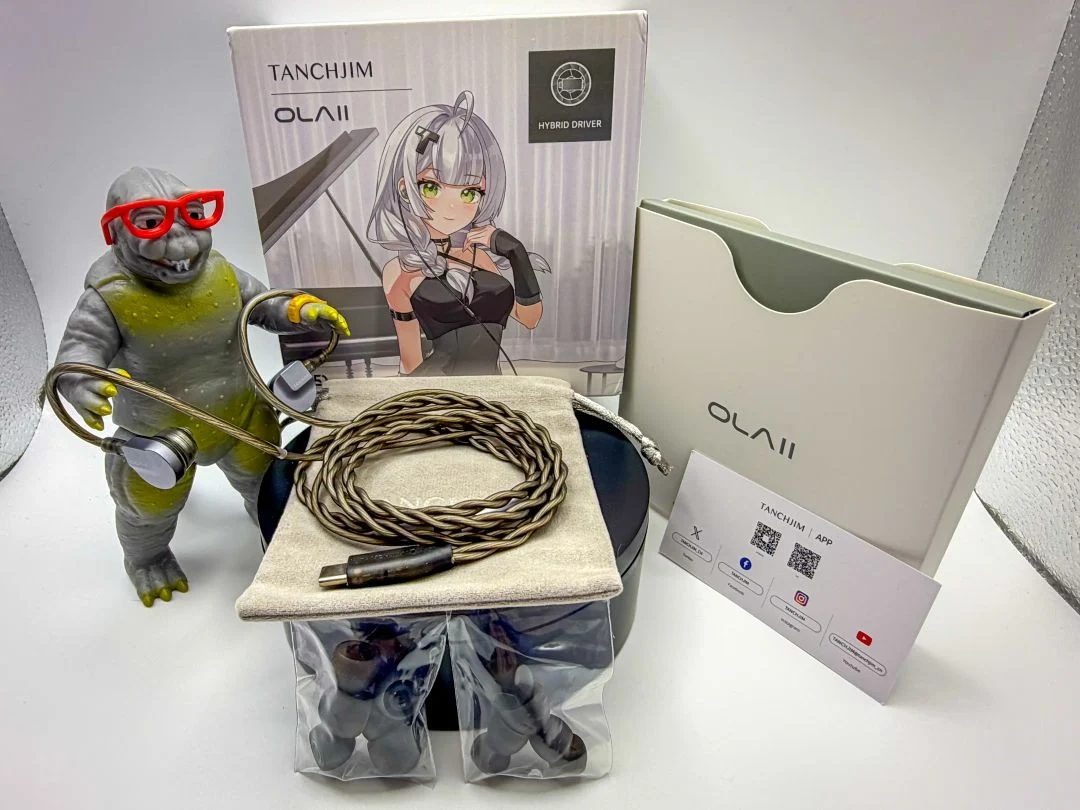
TANCHJIM generously provided the OLA II for this review, and I’m genuinely grateful to Isabel and the TANCHJIM team for the opportunity.
There’s something I appreciate about a manufacturer sending over a piece of gear and essentially saying, “Go live with it. Tell us what you hear.”
That trust means a lot to me.
It also doesn’t buy a positive review.
Gear provided to GearZilla Reviews doesn’t guarantee favorable coverage, a particular score, protection from criticism, or any influence over my conclusions. Whether something comes directly from a manufacturer, gets purchased with my own money, arrives through a trade, or finds its way to me from another enthusiast, the mission stays exactly the same.
I want to understand what the product was designed to do.
I want to hear it before I start trying to change it.
I want to live with it long enough that the specifications stop being the story.
And eventually, I want to answer the question that matters most to me:
Does this thing help me enjoy the music I already love in a new way?
The OLA II made that question unusually interesting.
Because every time I thought I had figured out what this tiny IEM was, I changed one thing and discovered another version of it hiding underneath.
That became the review.
 Review Setup
 Review Setup
Every GearZilla review begins the same way.
Stock tuning. Flat EQ. No rescue mission.
Before I touch a PEQ slider, roll tips, swap cables, or start chasing the holographic, vocal-forward presentation that normally makes me happy, I want to hear the product the way the manufacturer intended it to leave the box.
For the OLA II, my listening included the Topping DX5 II, HiBy R4 Evangelion, FiiO K11, HiBy W4, Cayin RU3, Loxjie P20 Hybrid Tube Amp, and Fosi SK01, with Apple Music Lossless serving as my primary music source.
I also spent considerable time experimenting with the OLA II’s DSP implementation, PEQ, different tips, alternate cables, and different source pairings.
That last part became more important than I expected.
Some IEMs tolerate experimentation.
The OLA II reacts to it.
You change the tips and the presentation moves.
You change the source and it moves again.
You introduce DSP and suddenly the edges sharpen.
You start playing with PEQ and the thing practically turns into an audio chemistry set.
The OLA II does not simply allow you to tinker.
It encourages bad behavior.
And I mean that as a compliment.
Tiny Shell. Huge Laboratory.
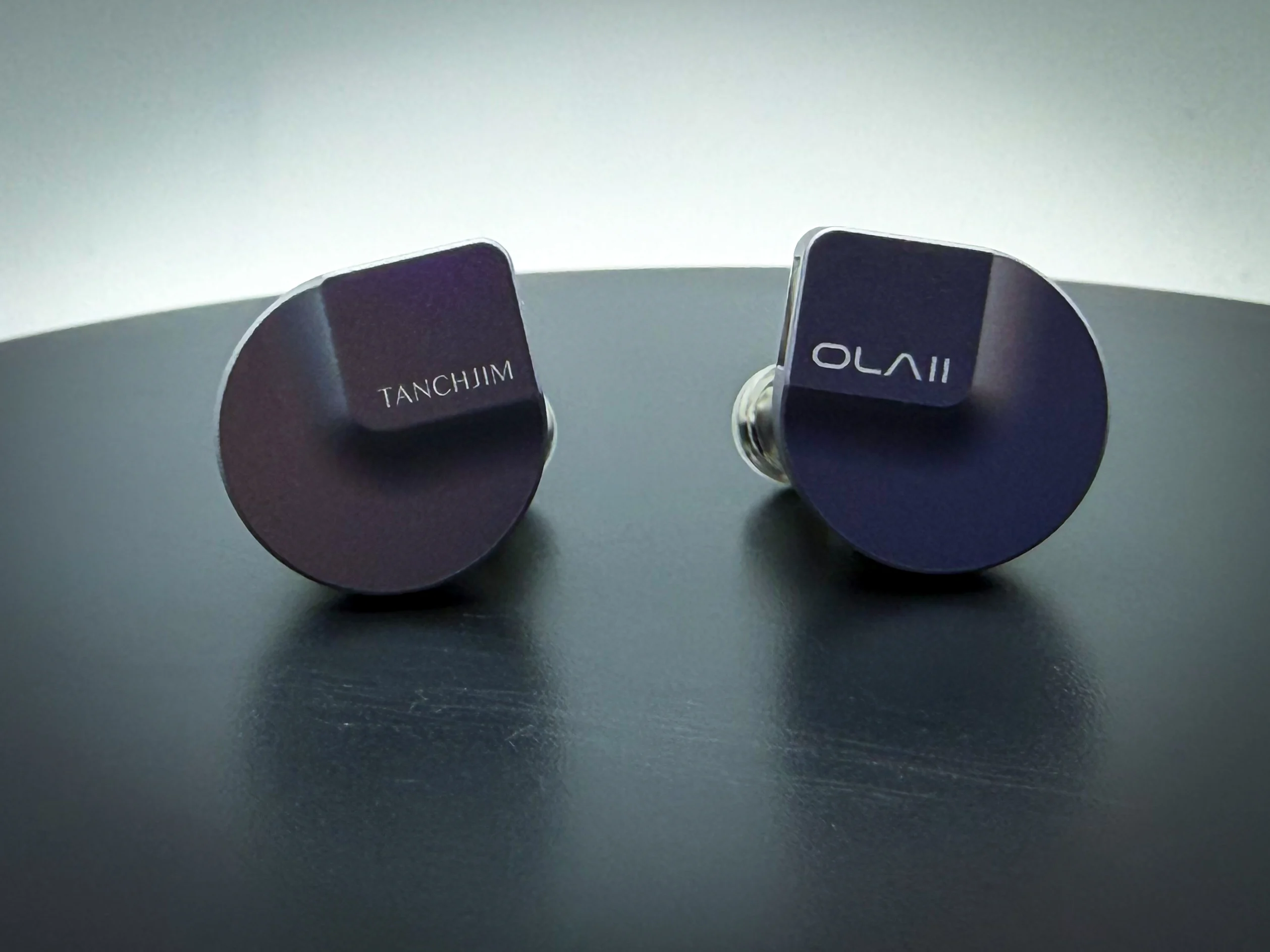
My first reaction to the OLA II had absolutely nothing to do with its driver configuration.
It was simply:
Where did the IEM go?
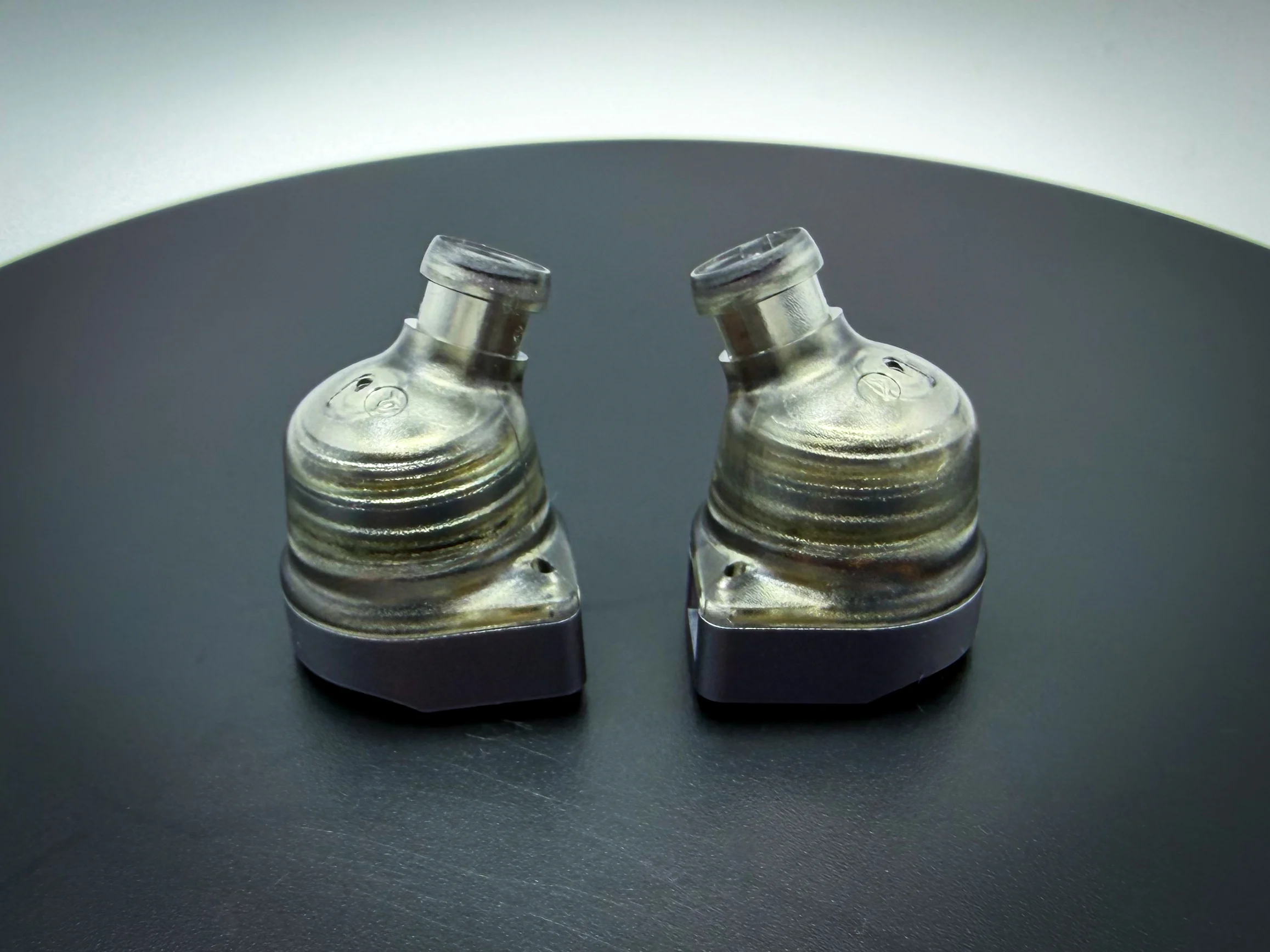
These shells are tiny, and look fantastic.
Not “pretty compact for a hybrid.”
Tiny.
They settle into my ears so naturally that after a few minutes I stop thinking about them. That matters more than it probably gets credit for because comfort directly affects how long I’m willing to listen.
I used these at my desk.
I walked around with them.
I listened in bed.
I had multiple sessions where the OLA II practically disappeared physically while the music kept going.
That alone gives it an enormous usability advantage over some larger hybrids that feel like they require an architectural permit before entering your ear.
Then I started listening closely.
And the personality of the OLA II got much more interesting.
KAIJU DNA SCAN
 KAIJU DNA SCAN
Every monster leaves behind a genetic signature.
Here’s what this one looks like.
K • Kill Shot
The OLA II’s greatest weapon is flexibility.
This isn’t an IEM that gives you one personality and demands that you accept it.
It’s a technically capable foundation that responds dramatically to tips, cables, sources, PEQ and DSP.
If you enjoy shaping your own sound, the OLA II gives you a lot of room to play.
A • Anatomy
The OLA II is a ground-up redesign from the original OLA.
TANCHJIM moved from a single dynamic driver to a coaxial 1DD + 1BA hybrid, combining a 10mm DMT 5 dual-magnetic, dual-cavity dynamic driver for the lows and mids with a PURE Hi balanced armature handling the upper frequencies. TANCHJIM says both drivers operate along the same coaxial axis to improve imaging and preserve coherence between vocals and instruments.
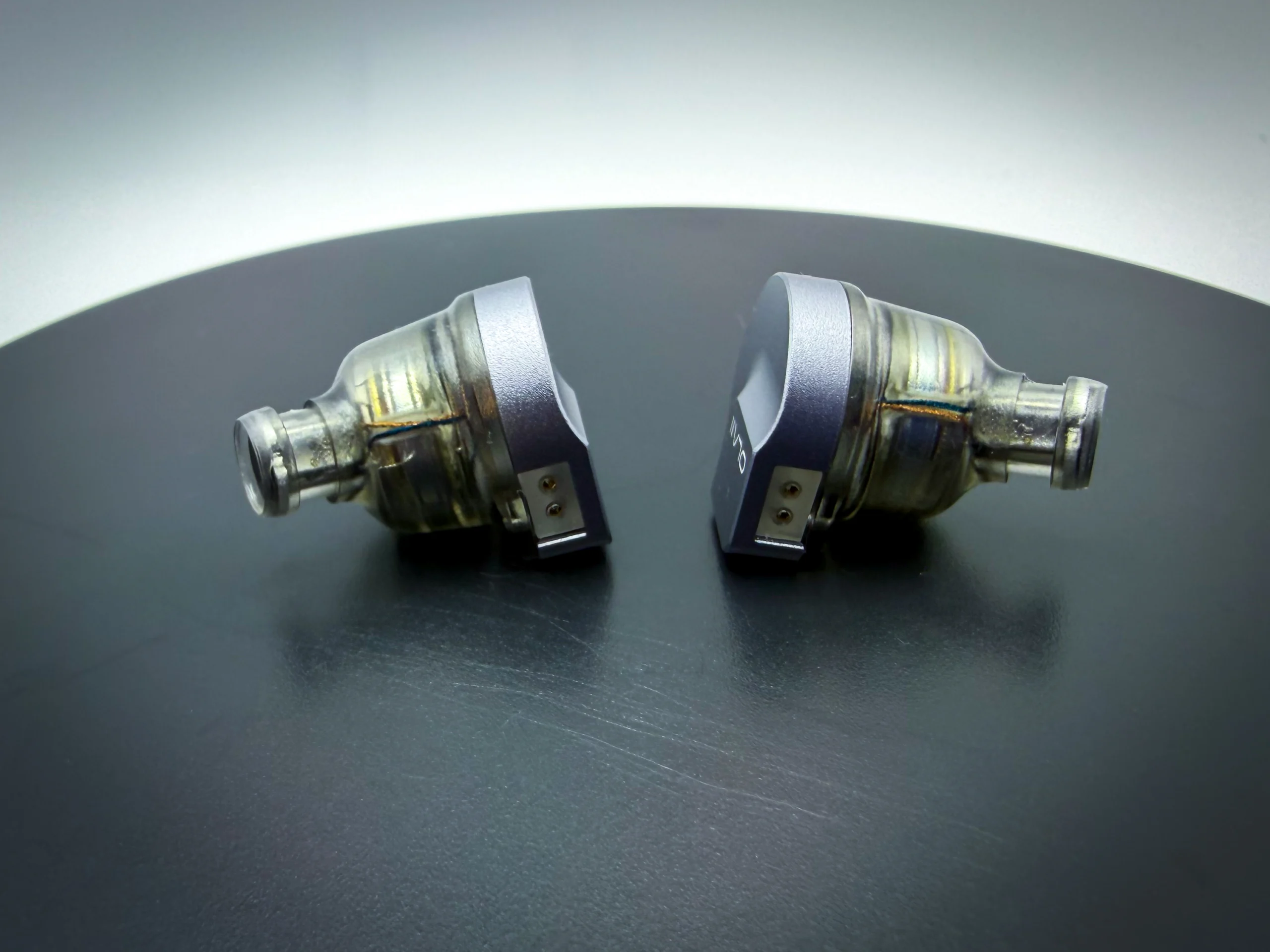
The OLA II is rated at 30Ω ±10% impedance, 121 dB/Vrms sensitivity, and an 8Hz to 48kHz frequency response, with detachable 0.78mm 2-pin connections. TANCHJIM’s reviewer documentation lists THD at 0.05% @ 1kHz / 94dB.
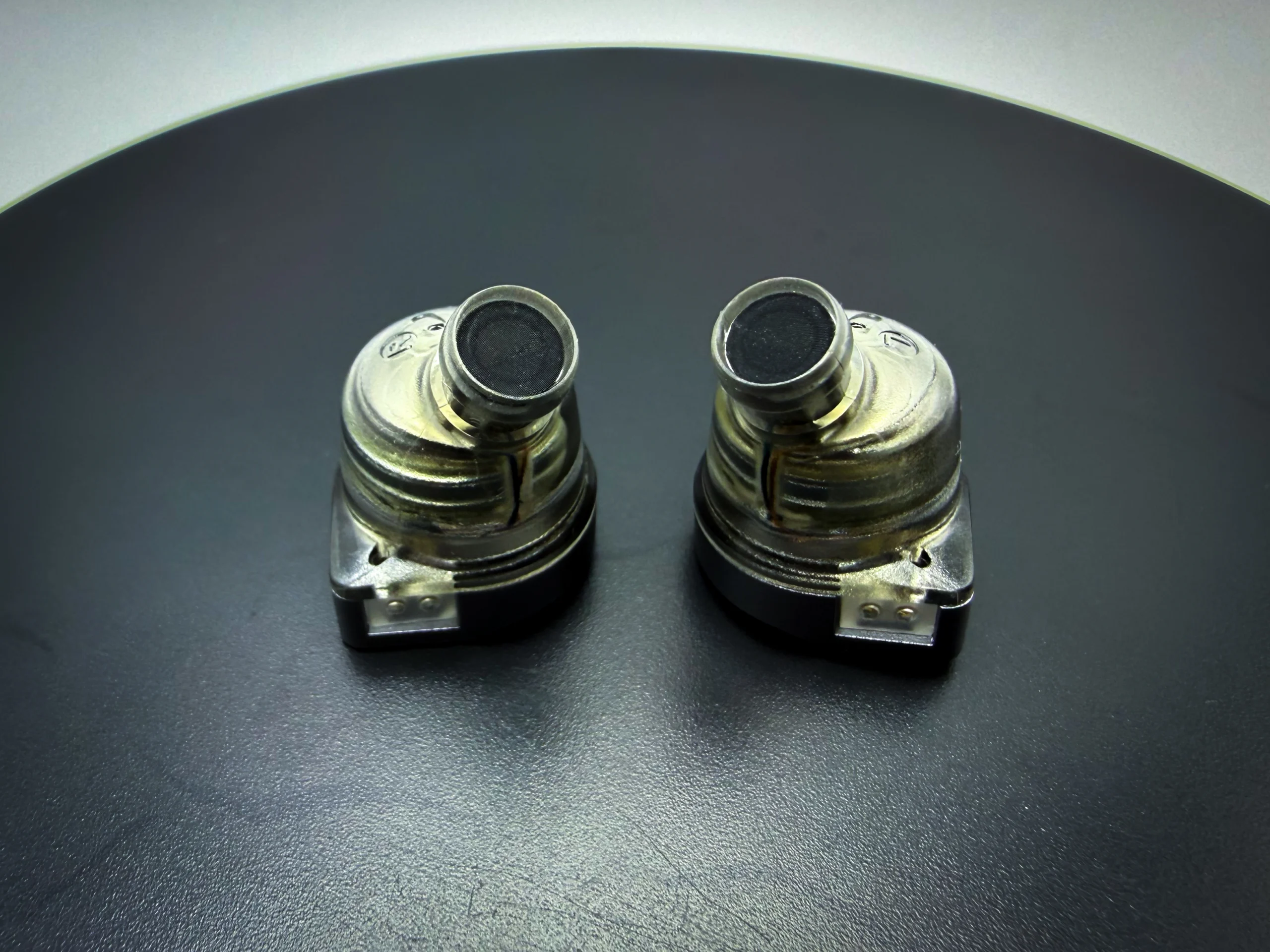
Three cable versions are offered: 3.5mm single-ended, 4.4mm balanced, and USB-C DSP-Master. The cables detach at the earpiece, but the plug termination is fixed to each cable rather than using a modular connector system.
I • Impact
The OLA II doesn’t chase impact by throwing huge amounts of bass at you.
It uses definition.
Bass notes have weight.
Drums strike cleanly.
Electronic tracks retain punch.
Busy passages remain organized.
The impact feels controlled rather than exaggerated, which fits the rest of the tuning beautifully.
J • Joy
The joy came from discovering how many personalities were hiding inside one tiny shell.
A tip swap changed the balance.
A cable change altered what I was hearing up top.
DSP sharpened the entire presentation.
PEQ opened another rabbit hole entirely.
I kept thinking I’d finished evaluating the OLA II and then I’d change something and think:
Well… now I need another hour.
That’s fun.
U • Unleashed
The OLA II makes the most sense for someone who enjoys being involved.
Maybe you’re experimenting with PEQ for the first time.
Maybe you already have a drawer full of tips and three dongles you swear all have completely legitimate reasons for existing.
Maybe you simply want a tiny comfortable IEM that can move between a phone, DAP and desktop system without becoming boring.
The OLA II is happy to follow you down that rabbit hole.
Sound
 Sound
The easiest way for me to describe the OLA II is precise without feeling dismantled.
There’s a lot of information here.
Instrument edges are easy to follow.
Individual elements occupy clearly defined positions.
Separation is immediately noticeable.
But the music still feels like a performance.
That distinction became increasingly important during my time with it.
I’ve heard technically impressive IEMs that separate things so aggressively that the song starts sounding like someone accidentally left all the individual studio tracks open.
Cool.
Educational.
Not always what I want when I’m supposed to be enjoying an album.
The OLA II gives me clarity without completely disassembling the music.
Everything remains connected.
Vocals sit inside the performance.
Bass flows naturally into the mids.
Treble adds definition without sounding like it belongs to a completely different driver.
The hybrid implementation feels cohesive.
And for me, that matters far more than simply being able to say there’s a dynamic driver and a BA inside.
If I’m constantly hearing the crossover strategy instead of the song, something went wrong.
I rarely thought about the drivers while listening to the OLA II.
That’s a win.
Bass
The OLA II is not a bass cannon.
It doesn’t walk into the room, flip the table, and announce that sub-bass is now in charge.
Instead, the bass is clean, controlled, and surprisingly satisfying.
There’s enough weight to give kick drums real shape.
Electronic bass has physical presence.
Bass guitars remain easy to follow.
But the low end never starts bleeding into everything above it.
That cleanliness becomes especially useful with busier tracks.
Bass information stays distinct instead of turning into a blanket under the rest of the arrangement.
And because the notes themselves have satisfying density, I never felt like the OLA II was starving the music of foundation.
It simply chooses precision over excess.
That distinction became particularly obvious with EDM.
The OLA II handled electronic music extremely well because the bass hit with enough authority to keep the track moving while the rest of the mix remained crystal clear.
It has punch.
It just knows when to leave.
Midrange and Vocals
This is where the OLA II and I had our most complicated relationship.
The vocals are excellent in several ways.
They’re clear.
They’re articulate.
They’re easy to isolate.
They retain texture.
What they generally don’t do is lift dramatically above the instrumental bed.
And anyone who has read more than one GearZilla review knows where that lands with me.
I love vocals that float.
I love that moment when the singer seems to rise just slightly above everything underneath and occupies a layer of their own.
The OLA II prefers something more integrated.
On Olivia Dean’s “A Couple of Minutes,” her voice was soulful and beautifully clear, but it remained connected to the instrumentation around it.
Nothing felt buried.
Nothing felt veiled.
But the singer wasn’t standing on top of the song.
She was standing inside it.
That can be extremely natural.
It also means listeners chasing pronounced vocal lift may want something else, or they may want to reach for PEQ.
The bigger issue for me was midrange body.
The OLA II can sound noticeably lean through the mids.
That character remains present even after experimentation.
You can add warmth.
You can shape presence.
You can influence the overall tonal balance.
But the underlying foundation remains relatively slim.
That’s not automatically a flaw.
It’s simply something you should understand before buying.
If your happy place is thick, lush, romantic mids straight out of the box, this probably isn’t your monster.
Instrument Separation
This may be the OLA II’s greatest technical strength.
The separation is excellent.
Dense arrangements remain understandable.
Instruments don’t pile on top of each other.
Backing vocals retain their positions.
Percussion remains distinct.
You can follow individual parts without the presentation feeling artificially torn apart.
That balance impressed me.
Dominique Fils-Aimé’s “Feeling Good” became one of my favorite moments during the review.
The vocal separation was fantastic.
Individual layers became extremely easy to follow while the performance itself stayed cohesive.
And then came the important part.
Goosebumps.
That’s always the moment I care about.
Technical capability matters because of what it allows music to do.
The OLA II gave me enough separation to hear deeper into the recording without making me feel like I was conducting an autopsy on it.
I could analyze the track.
I just didn’t have to.
Treble and Air
The PURE Hi balanced armature handles the upper frequencies, with TANCHJIM specifically pointing toward extension, overtones and air as part of its role in the coaxial system.
The result is crisp.
Treble carries plenty of information.
Cymbals have clean edges.
Electronic transients pop.
Small production details remain easy to identify.
There’s enough upper-frequency energy to support the OLA II’s sense of clarity without making the entire tuning sound artificially bright.
At least…
Until you start feeding it more power than it wants.
Running the OLA II from the Topping DX5 II at higher output levels produced a strange crunchy quality in the treble for me, almost like crackling riding around the upper frequencies.
My first thought was that something might be wrong.
Then I lowered the output.
Gone.
That taught me something useful about the OLA II.
This thing does not want to be bullied.
It’s efficient.
Give it clean power.
Use sensible gain.
Let it breathe.
More amplification isn’t automatically more performance.
Sometimes more is just more.
And in this case, too much could make the little monster bite back.
Soundstage and Imaging
The OLA II stretches sideways.
That became one of the clearest spatial characteristics throughout my listening.
There’s meaningful horizontal width, and instruments can occupy convincing positions across that space.
Movement from left to right is easy to follow.
Individual locations remain stable.
There’s enough distance between sounds to prevent the stage from feeling cramped.
Where the OLA II is less impressive is vertically.
It doesn’t build some towering three-dimensional cathedral around your head.
The presentation expands outward more than upward.
Think:
Wide road.
Not:
Skyscraper.
That keeps me from putting it among the most holographic IEMs I’ve heard, but it doesn’t diminish how accurate the imaging itself can be.
Target lock is excellent.
The OLA II knows where things are.
It just prefers putting them around you on the same floor instead of opening six additional stories above your head.
DSP-Master: The Monster Finds a Scalpel
 DSP-Master: The Monster Finds a Scalpel
The USB-C version of the OLA II adds TANCHJIM’s DSP-Master platform, which the company positions above the DSP-Standard tier used in other products in its own lineup. TANCHJIM is careful to frame those as internal tiers rather than making claims against DSP implementations from other brands.
The DSP version also supports 8-band PEQ through the TANCHJIM app.
For me, engaging DSP changed the character of the OLA II in a very obvious way.
Everything became more surgical.
Separation sharpened.
Edges gained definition.
Imaging felt more deliberate.
The presentation became increasingly precise.
That can be fantastic.
It can also be a little ruthless.
The OLA II already leans toward clarity and a relatively slim midrange presentation.
DSP pushes farther in that direction.
It’s almost like turning on the fluorescent lights inside the studio.
Suddenly you can see everything.
Every cable.
Every mic stand.
Every little detail sitting in the corner.
Useful?
Absolutely.
But sometimes I don’t want to inspect the room.
Sometimes I want to turn the lights down and listen.
That’s the tradeoff.
DSP isn’t automatically better.
It’s different.
And because the OLA II responds so strongly to tuning changes, that difference becomes another tool rather than a simple upgrade path.
PEQ: The Laboratory Opens
This is where the OLA II became one of the most entertaining IEMs I’ve reviewed lately.
It responds exceptionally well to PEQ.
There are IEMs where you make a change and wonder whether you actually heard anything or simply moved your eyebrows differently.
The OLA II is not subtle about it.
Change the profile and the presentation follows.
Want more body through the mids?
You can get there.
Want to soften the upper frequencies?
Easy.
Want a little more weight down low?
Go.
Want to emphasize the already impressive separation?
The OLA II is more than happy to cooperate.
I even experimented with a Squiglink-based profile from our pal Mark Ryan, Mr. Super* Review, originally created for the original OLA.
The OLA and OLA II are obviously different IEMs, so I wasn’t treating that profile as some magical universal solution.
But as an experimental starting point?
It worked surprisingly well.
And that experience reinforced something I’d been hearing throughout the review.
The OLA II isn’t stubborn.
It gives you a strong technical foundation and then allows you to steer it.
The important caveat is that PEQ doesn’t completely erase the underlying character.
The mids can still lean thin.
The OLA II still sounds like the OLA II.
And I actually prefer that.
EQ should help me shape the monster.
I don’t necessarily want it replacing the monster with another one.
Tip Rolling
 Tip Rolling
The OLA II responded meaningfully to tip changes as well.
The Eletech Baroque tips became one of my favorite combinations.
They helped calm some of the upper-frequency behavior I was hearing and created a more balanced overall presentation without sacrificing the clarity that makes the OLA II appealing.
Given how small the shell is, fit and insertion can influence the experience substantially.
That makes tip rolling worthwhile rather than ceremonial.
It also makes the OLA II a fantastic candidate for anyone who already owns a ridiculous number of tips and needs to justify that drawer to another human being.
You know who you are… 
Cable Rolling
 Cable Rolling
Cable conversations can turn into audiophile cage matches remarkably quickly, so I’ll keep this grounded in my own listening experience.
When I swapped the stock configuration for my Effect Audio Ares S II, I heard less of the treble sizzle that had been bothering me.
The presentation became easier for me to settle into.
That’s the observation.
I’m not claiming a cable rewrote the laws of acoustics.
There are multiple variables involved whenever you change part of the signal chain, including termination, ergonomics, fit and source interaction.
But my experience changed.
And because this is a listening review, that experience matters.
More importantly, it reinforced the larger story.
The OLA II responds to experimentation.
A lot.
Build & Comfort
The shell may be one of my favorite things about the entire product.
Not because it’s flashy.
Because it stays out of the way.
The OLA II is extremely small, lightweight and easy to wear for long sessions.
That gives it a completely different kind of luxury than an IEM covered in exotic materials and complicated faceplates.
This one disappears.
I can listen in bed.
I can move around.
I can wear it through a long album without eventually reaching up to adjust pressure.
That usability counts.
Sometimes the best-designed piece of gear is the one you stop noticing.
And the OLA II gets very close to that.
Power & Pairing
 Power & Pairing
The OLA II gave me a strong reminder that system matching isn’t always about buying more power.
The Topping DX5 II showed me how resolving the OLA II could become, but it also exposed how unpleasant the upper frequencies could get when I pushed the output too far.
The HiBy R4 Evangelion became one of my favorite pairings because it gave me enough clean power while making PEQ experimentation incredibly easy.
That combination felt almost purpose-built for the OLA II.
The HiBy W4 and Cayin RU3 gave me additional portable perspectives, while the FiiO K11 provided another clean desktop reference.
Then I involved the Loxjie P20 Hybrid Tube Amp, because apparently I remain physically incapable of seeing an audio product without eventually asking what happens if tubes get involved.
Across all of these sources, the OLA II’s personality remained recognizable.
But the edges changed.
The balance changed.
The amount of perceived precision changed.
The upper frequencies changed.
That source sensitivity made pairing genuinely interesting.
And again, you don’t need an expensive chain.
You need a chain that suits what you’re trying to accomplish.
Three Versions, Three Different Paths
TANCHJIM offers the OLA II in 3.5mm single-ended, 4.4mm balanced, and USB-C DSP-Master versions.
One detail is worth understanding before ordering.
The IEM uses detachable 0.78mm 2-pin cables, but the termination itself is fixed.
So you aren’t getting one cable with interchangeable plugs.
You’re choosing a cable configuration.
That makes the decision pretty easy.
If you already have a DAP, DAC, dongle or amplifier you love, the 3.5mm or 4.4mm version makes sense.
If your priority is plugging directly into a compatible USB-C device and immediately gaining DSP and PEQ control, the DSP-Master version is where the OLA II becomes particularly interesting.
The three configurations aren’t really better and worse versions.
They’re aimed at different ecosystems.
Value
The OLA II doesn’t win because it has an impressive driver list.
That market is already full of impressive driver lists.
It doesn’t win because coaxial architecture exists.
TANCHJIM itself acknowledges in its reviewer documentation that coaxial hybrids aren’t unique at this level and instead frames the OLA II around the complete package of tuning, fit and DSP-Master convenience.
I think that’s exactly right.
The value comes from the total experience.
You get an extremely comfortable shell.
A cohesive hybrid implementation.
Excellent instrument separation.
Strong imaging.
Clean bass.
Useful horizontal width.
Detachable cables.
Multiple source options.
DSP.
PEQ.
And enough responsiveness to teach a curious listener a lot about how their entire setup influences the final experience.
That last part makes the OLA II particularly interesting to me.
This isn’t simply a product.
It’s almost a learning platform for the hobby.
You can hear what a tip change does.
You can hear what PEQ does.
You can hear what DSP does.
You can experiment with different front ends.
And after all of that, you still have an IEM that’s perfectly capable of just playing music.
That’s value.
Who Is This For?
 Who Is This For?
The OLA II makes the most sense for someone who sees an EQ menu and thinks:
Oh good.
Not:
Absolutely not.
If you enjoy adjusting your gear, experimenting with tips, moving between sources, or learning what different changes actually do to the listening experience, there is a lot to love here.
It also makes a ton of sense for listeners who value clarity, separation, imaging and comfort.
The tiny shells make it incredibly easy to live with.
Its controlled bass and organized presentation allow it to move comfortably across genres.
Its DSP implementation gives phone-first listeners another path.
Its PEQ responsiveness gives hobbyists an enormous playground.
But if you want thick mids, huge bass and vocals automatically floating above the track the moment you press play?
That’s where I’d hesitate.
The OLA II wants participation.
For the right listener, that’s the attraction.
 GearZilla Score
 Slam: 3.8/5
Clean, defined and satisfying with enough impact to support the music, but this isn’t an IEM designed to flatten downtown with bass.
 Vocal Lift: 3.6/5
Excellent clarity and separation, but vocals generally remain integrated into the performance instead of consistently floating above it.
 Holography: 4.0/5
Convincing horizontal width and good spatial organization, although the presentation doesn’t expand vertically with the same authority.
 Target Lock: 4.6/5
One of the OLA II’s strongest attributes. Imaging is stable, precise and extremely easy to follow.
 Air: 4.2/5
Crisp extension with strong detail retrieval, but source and gain matching matter if you want to keep the upper frequencies behaving.
 EQ & Customization Potential: 5.0/5
Outstanding. PEQ, DSP, tips, cables and source changes all give you meaningful ways to reshape the presentation.
 Value: 4.5/5
Exceptional comfort, strong technical performance and massive customization potential create a compelling package for the price.
 Overall GearZilla Rating: 4.2/5 • A-Class Kaiju
Final Roar
 Final Roar
The TANCHJIM OLA II kept changing the review on me.
I started thinking the story would be the coaxial hybrid architecture.
Then I put them in my ears and thought the story might be how ridiculously small they are.
Then I heard the separation.
Then I started changing tips.
Then the cable.
Then PEQ.
Then DSP.
Then sources.
Eventually I realized I was chasing the wrong story.
The OLA II isn’t interesting because of one trick.
It’s interesting because everything interacts with it.
The stock tuning gives you a clean, precise and cohesive foundation.
Bass has enough weight to keep music grounded without clouding the presentation.
Instrument separation is excellent.
Imaging is one of the strongest parts of the package.
The stage stretches convincingly across the horizontal plane.
The shells are so comfortable that they almost disappear.
Then you start touching things.
And the monster starts mutating.
DSP pushes it toward surgical precision.
PEQ can add body, reshape the tonal balance and dramatically alter the presentation.
Tip rolling changes the relationship between clarity and upper-frequency energy.
Cable and source changes produced meaningful differences during my listening.
That makes the OLA II incredibly engaging for someone who enjoys experimentation.
It also exposes its limitations.
The mids can be thin.
Vocals don’t naturally lift the way I personally love.
The stage doesn’t build enormous vertical height.
Too much power can make the treble unpleasant.
And if you simply want to plug in an IEM and never think about tuning again, the OLA II’s greatest strength may not matter to you at all.
But that’s okay.
Not every monster needs to destroy the same city.
The OLA II knows exactly where it belongs.
It’s for the listener who wants to understand their gear.
The person who hears a change and wants to know why.
The hobbyist who starts with one tip, reaches for another, opens PEQ, changes sources and suddenly realizes three hours have passed.
I know that person.
Apparently I’m that person.
And the OLA II gave me one of the most entertaining laboratories I’ve had sitting on my desk lately.
I never found one configuration that made me say:
This is the OLA II. We’re done.
Instead, I kept finding different versions of it.
And maybe that’s the point.
The OLA II doesn’t hand you one perfect answer.
It gives you the tools to chase yours.
Tiny shell. Huge laboratory.
Buy If
 Buy If
- You genuinely enjoy PEQ, tip rolling, cable rolling and source experimentation.
- You prioritize excellent imaging and instrument separation.
- You want an extremely small, comfortable IEM you can wear for hours.
- You enjoy a presentation with convincing horizontal width.
- You want a USB-C DSP option with 8-band PEQ capability.
- You value clarity, precision and clean transients.
- Your library jumps constantly between genres.
- You want an IEM that changes meaningfully as the rest of your setup evolves.
 You enjoy a presentation with convincing horizontal width.
 You value clarity, precision and clean transients.
 You want an IEM that changes meaningfully as the rest of your setup evolves.
Skip If
 Skip If
- You need vocals strongly lifted above the mix without touching EQ.
- You want thick, lush and romantic mids straight out of the box.
- You’re shopping specifically for enormous bass quantity.
- You prioritize towering vertical staging and fully spherical holography.
- You enjoy throwing high gain at every IEM simply because the switch exists.
- You want one permanent plug-and-play tuning and have absolutely no interest in experimentation.
 You want thick, lush and romantic mids straight out of the box.
 You enjoy throwing high gain at every IEM simply because the switch exists.
 You want one permanent plug-and-play tuning and have absolutely no interest in experimentation.
Hear the GearZilla Roar.
You can pick up this amazing IEM today at Linsoul: https://www.linsoul.com/products/tanchjim-ola-ii?sca_ref=11879552.OojOmCDscN
Share This Story, Choose Your Platform!