



Four drivers, one remarkably comfortable fit, and a natural, neutral tuning that proves great listening doesn’t always need a grand entrance.
🎧 Kiwi Ears KE4 MK2: The Art of Being Effortless
I have a confession to make. While reviewing the Kiwi Ears KE4 MK2, I kept reaching for them… like a lot! 😬
Not because they delivered the most spectacular bass I’d ever experienced. Not because they created an enormous, holographic musical universe around my head. And certainly not because they introduced some revolutionary new sound signature that made me question everything I thought I knew about personal audio.
I kept reaching for them because… they sounded good.
With just about everything.
And the more time I spent listening, the more one word kept returning to me.
Effortless.
That’s really the story of the $199 Kiwi Ears KE4 MK2, a four-driver tribrid that combines a 10mm biocellulose dynamic driver, two balanced armatures, and a planar tweeter into a remarkably approachable listening experience.
This isn’t the kind of IEM that grabs you by the collar and demands your attention. It doesn’t attempt to overwhelm you with thunderous bass, dazzling treble, or a presentation so expansive that your favorite singer might need a GPS to find the microphone.
Instead, it settles comfortably into your ears, finds a natural balance, and gets out of the way.
And apparently, that’s exactly what I needed more often than I realized.
I spent a full month listening to the KE4 MK2, moving between genres, recordings, and familiar favorites. Its smooth, relaxed presentation worked beautifully with vocals, its fuller lower midrange gave instruments convincing body, and its restrained overall character made extended sessions an absolute pleasure.
There are compromises. Its intimate presentation doesn’t deliver the expansive immersion I personally chase. Its bass is controlled rather than particularly physical. And despite generally agreeable treble, I noticed occasional graininess with certain hip-hop tracks, where the planar driver’s contribution didn’t quite complement the rest of the tuning.
But those moments were exceptions rather than the defining experience.
The KE4 MK2 isn’t extraordinary because it does everything exceptionally well. It’s enjoyable because so little about it gets between me and my music.
That’s why it earns a 4.3/5 GearZilla rating.
✅ Pros: Exceptionally smooth and relaxed tuning; natural-neutral tonal balance; fuller lower mids that flatter vocals; clean bass with good control; convincing instrumental clarity and separation; comfortable all-day wear; lightweight resin construction; excellent modular cable with interchangeable 3.5mm and 4.4mm terminations; agreeable treble with a welcome touch of planar lift; broad versatility across musical genres; and a consistently effortless listening experience.
⛔ Considerations: Bass lacks the physical slam some listeners crave; presentation is intimate rather than expansive or holographic; vocals aren’t especially lush or romantic; occasional planar graininess appeared with certain hip-hop recordings; treble isn’t particularly airy or sparkling; relatively limited included ear-tip selection; large shells fill the concha and may present fit challenges for smaller ears; and the tuning doesn’t offer a particularly distinctive sonic spectacle.

🤝 Disclosure: The Truth Behind the Roar
Huge thanks to Rosie and the wonderful Linsoul team for generously providing the Kiwi Ears KE4 MK2 for review. I genuinely appreciate their continued trust, support, and willingness to help me explore so many interesting products in personal audio.
Every GearZilla review begins with the same philosophy: Listen first. Figure out the story later.
My responsibility is always to the reader. Receiving a review sample doesn’t purchase a positive verdict, guarantee a particular score, or protect a product from criticism. This review reflects my independent listening experience, personal observations, and conclusions. I received no payment or editorial approval in exchange for my opinions.
The KE4 MK2’s 4.3/5 GearZilla rating reflects the complete experience. Its effortless presentation, natural tonal balance, excellent comfort, and versatile performance made it an IEM I repeatedly chose throughout my evaluation. But I’ve also been clear about its restrained dynamics, intimate spatial character, and occasional upper-frequency graininess.
Those distinctions matter because I want readers to understand what a product actually delivers, not simply what its manufacturer promises.
I’m grateful to Rosie and Linsoul for making independent exploration possible and helping enthusiasts discover which products might genuinely improve their listening lives.
Listen first. Figure out the story later. 🦖🎧
🎧 Review Perspective & Listening Setup: When the Music Takes Over
Anyone familiar with GearZilla Reviews knows I have a particular weakness for rich, musical, immersive sound. I love generous spatial depth, vocals that rise beautifully from the performance, textured bass with physical authority, and enough warmth to make familiar recordings feel wonderfully alive.
But here’s something I’ve learned through years of exploring audio equipment.
My favorite tuning isn’t necessarily the right tuning for every recording, listener, or listening occasion.
That’s why every GearZilla evaluation begins with a question:
Does this thing help me experience the music I already love in a new way?
Sometimes the answer involves extraordinary spatial immersion, spectacular bass, or a wonderfully romantic presentation. Other times, the experience comes from something considerably more understated.
With the KE4 MK2, that something is ease.
I approached this evaluation with the factory tuning intact, letting the IEM show its intended acoustic character rather than immediately applying EQ to make it sound more like my personal favorites.
My listening equipment includes the FiiO K13 R2R, Topping DX5 II, and HiBy R4, with additional portable equipment available for comparison. These sources offer useful flexibility when exploring different playback configurations, though I don’t assume a particular DAC architecture, expensive amplifier, or balanced connection automatically improves an IEM’s performance.
I consider comfort, practicality, physical construction, and long-session enjoyment just as seriously as frequency balance and technical presentation.
And this time, the extended listening experience became one of the most revealing parts of the review.
Finding the KE4 MK2’s Personality
I didn’t come away thinking the KE4 MK2 was the most technically remarkable IEM at $199.
I came away realizing how consistently I enjoyed listening to it.
That may sound like a modest accomplishment, but there’s an important difference between appreciating an IEM during a focused evaluation and wanting to use it after the evaluation.
The KE4 MK2 kept finding its way back into my ears.
Its natural-neutral character didn’t require me to choose recordings around a particular strength. The bass stayed controlled, vocals sounded believable, and the planar tweeter added just enough upper-frequency lift to preserve clarity without turning the entire presentation into a treble demonstration.
There’s no exaggerated warmth here, nor the particularly gooey, sultry richness that sometimes makes me fall in love with an IEM.
But it isn’t sterile, clinical, or emotionally vacant, either.
It’s meta tuning with clarity, delivered with a remarkably effortless personality.
🏯 Kiwi Ears: Refining the New Meta
The original Kiwi Ears KE4 earned attention for embracing the contemporary neutral-with-bass-boost approach often described as New Meta tuning.
Rather than emphasizing exaggerated contrast between bass and treble, this philosophy generally aims for a controlled low-frequency foundation, a natural midrange, and upper frequencies that preserve detail without becoming unnecessarily aggressive.
The KE4 MK2 builds on that foundation while substantially changing the hardware.
The original model’s dual-dynamic isobaric bass arrangement is gone. In its place, Kiwi Ears has selected a single 10mm biocellulose dynamic driver, accompanied by two balanced armatures and a planar tweeter.
That redesign is interesting, but driver changes aren’t inherently improvements.
A more complicated architecture can introduce additional crossover and acoustic integration challenges, and a planar tweeter doesn’t automatically guarantee greater clarity, speed, or resolution.
What matters is how the complete system performs.
And in the KE4 MK2, the result is a cohesive, relaxed presentation that prioritizes naturalness over dramatic coloration.
Kiwi Ears hasn’t reinvented musical excitement here. It makes a compelling case for musical restraint.
🎨 Design & Build: Understated Outside, Comfortable Inside
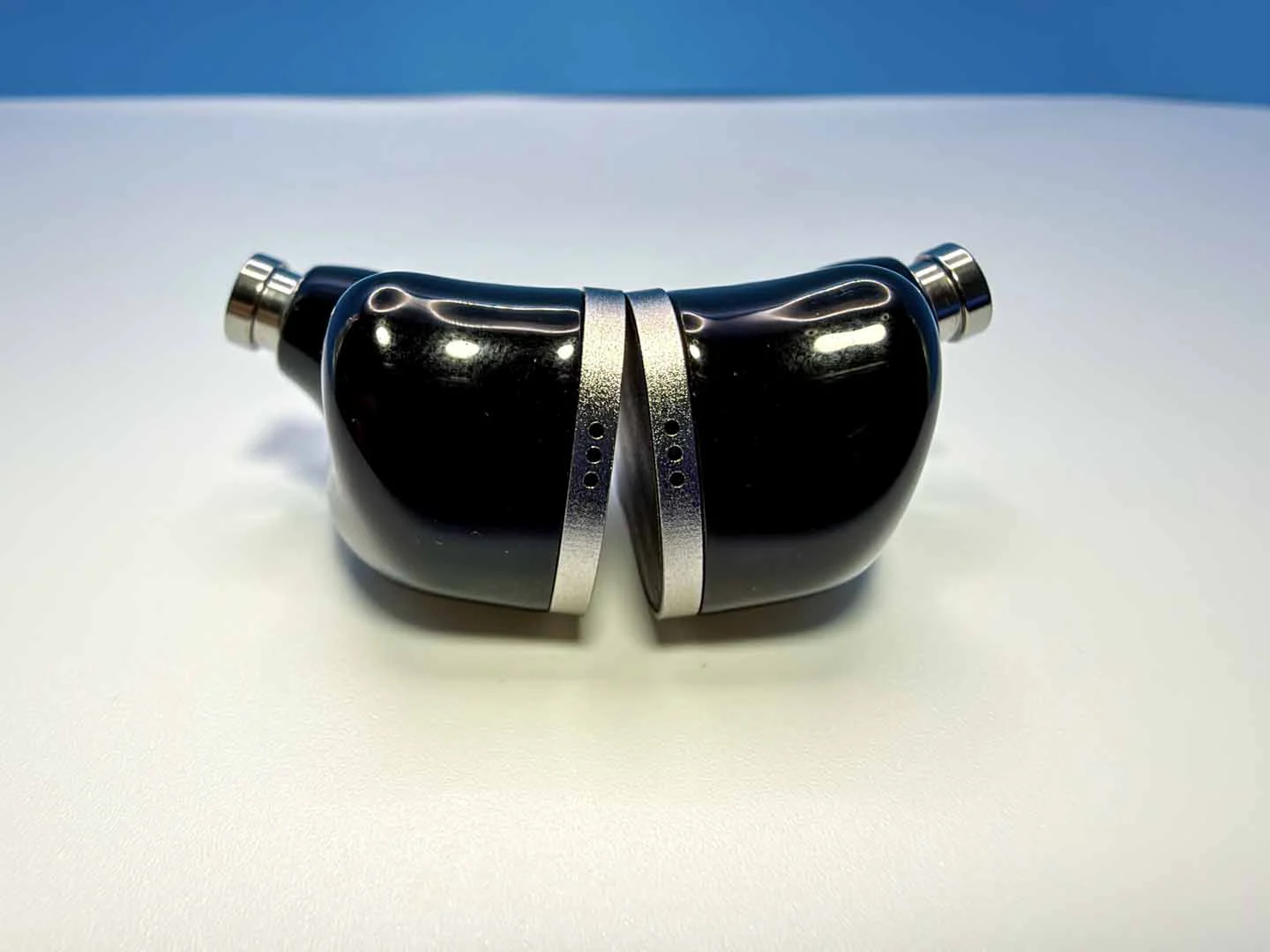
The KE4 MK2 doesn’t arrive looking like a miniature piece of alien technology.
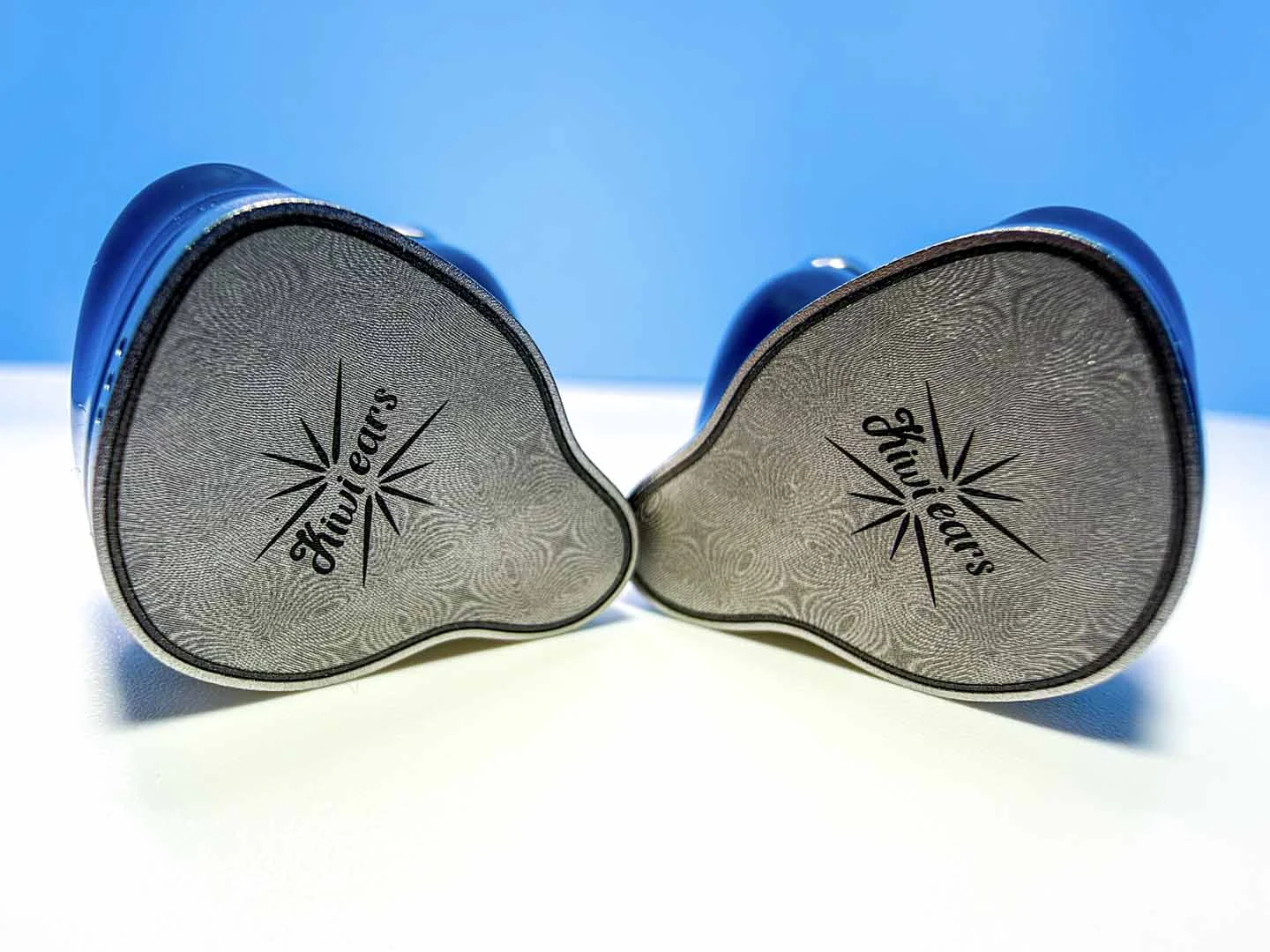
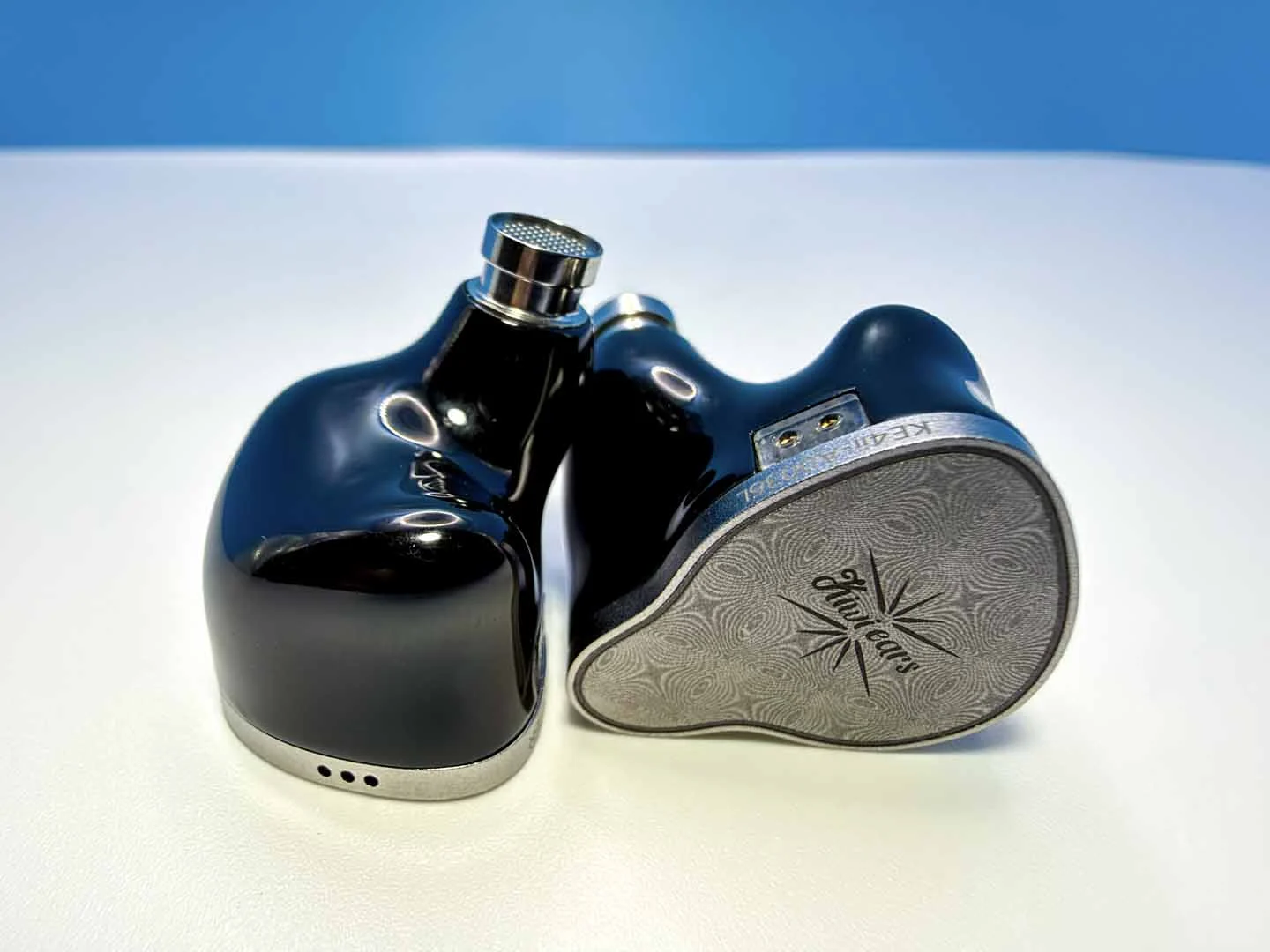
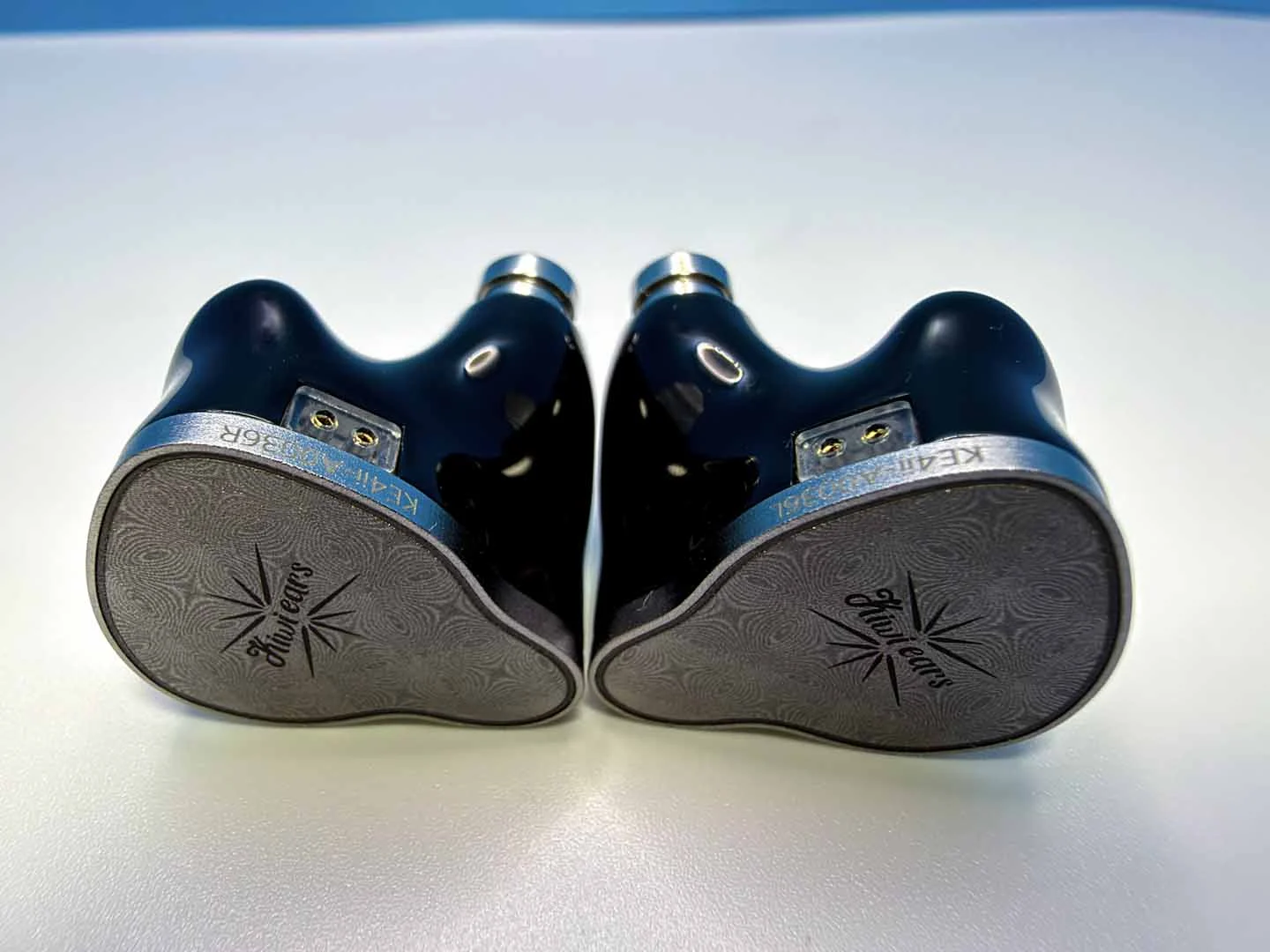
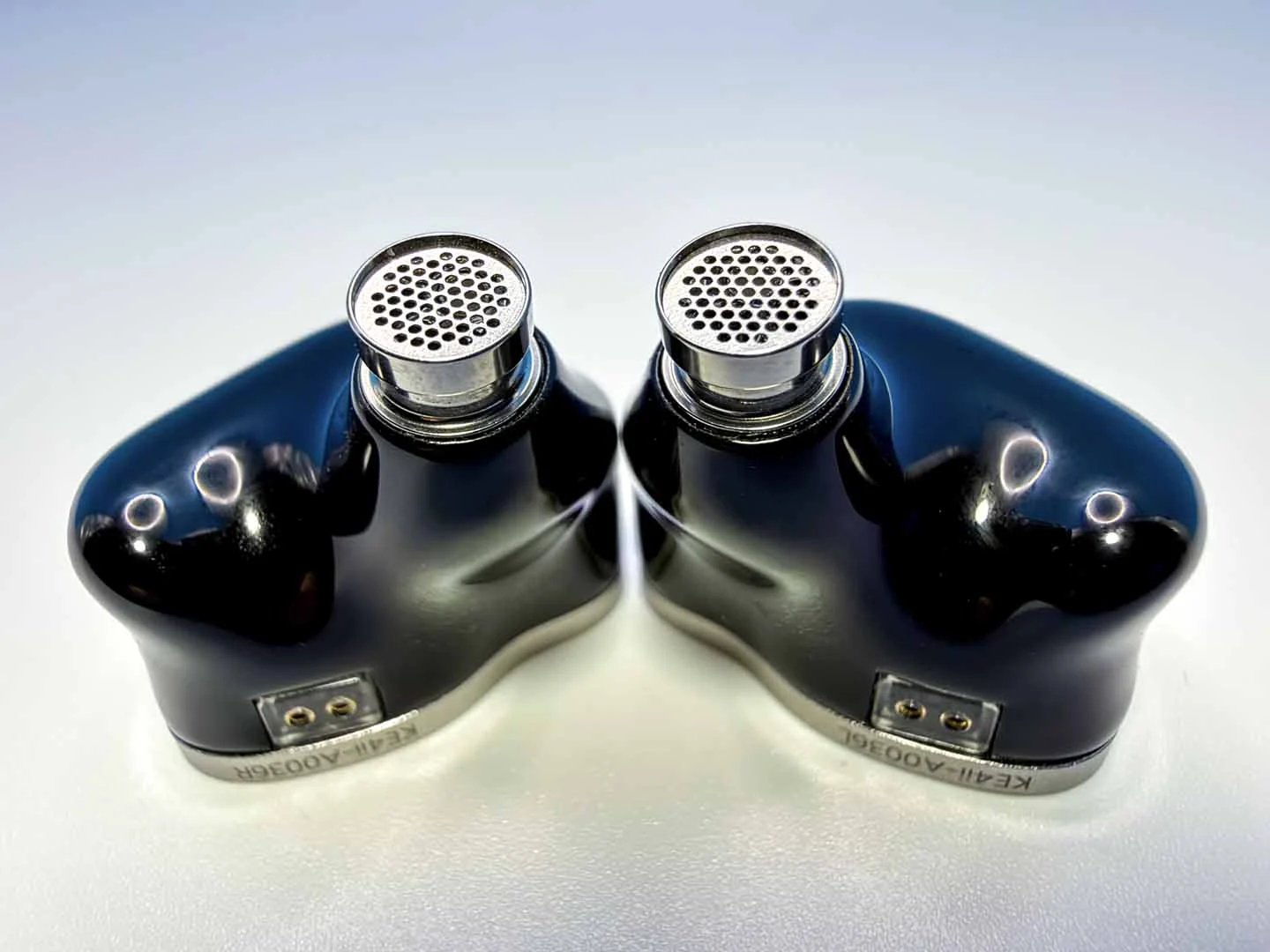
Its brushed metallic faceplates feature subtle geometric detailing, while the resin housings maintain a restrained, contemporary appearance.
There’s nothing particularly extravagant about the design, and I think that suits the product beautifully.
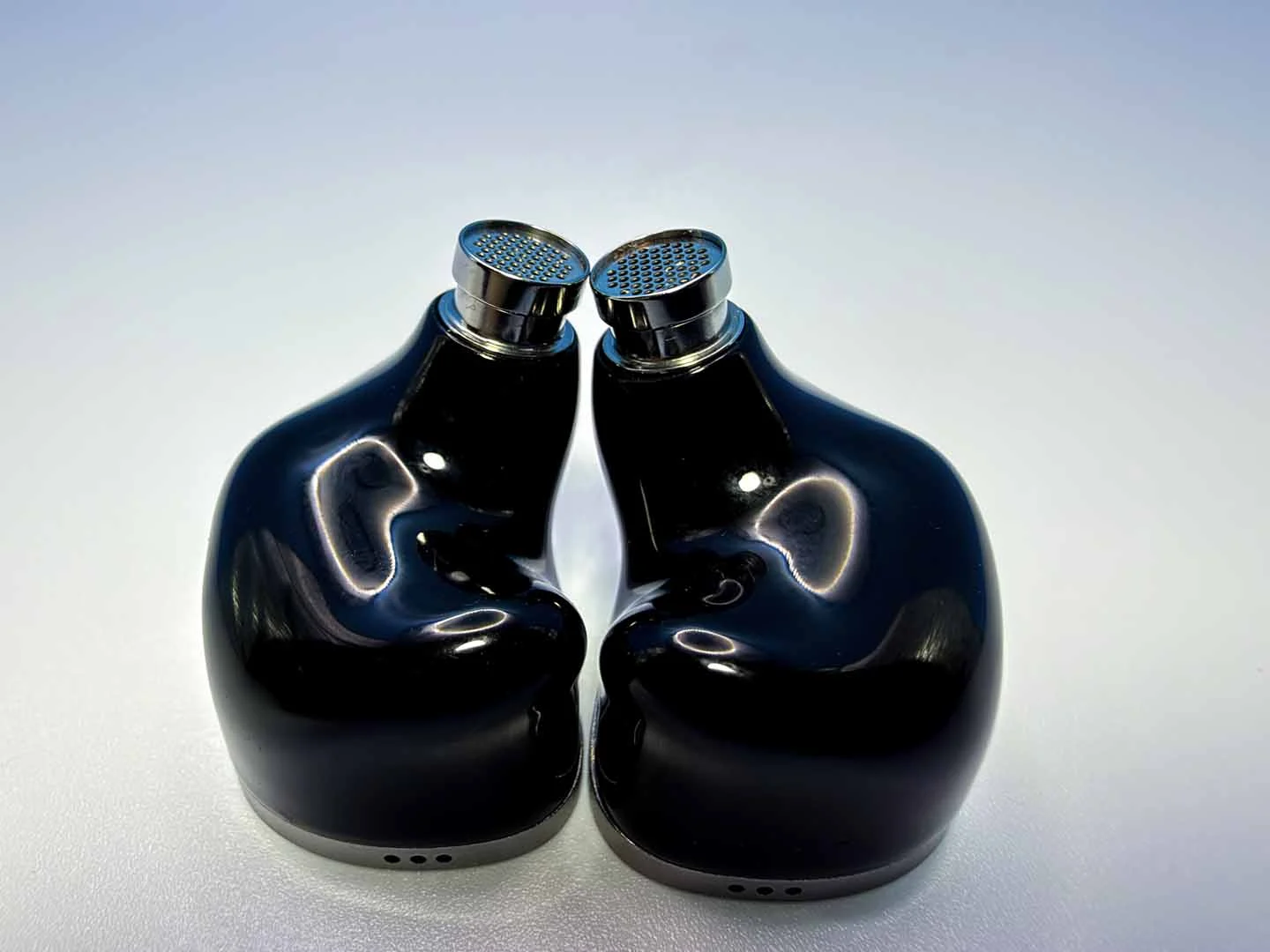
The shells feel lightweight, the finishing is attractive, and the overall construction makes a good impression without relying on elaborate decoration.
But the real triumph is comfort.
I wore the KE4 MK2 all day, and they felt fantastic.
That’s a meaningful accomplishment because IEM comfort can become a problem long before sound quality does. A shell can seem perfectly acceptable during a ten-minute audition, only to begin pressing against the outer ear as the hours accumulate.
That wasn’t my experience.
The KE4 MK2 remained comfortable enough that I could focus on listening rather than constantly adjusting the fit.
There is an important qualification, however.
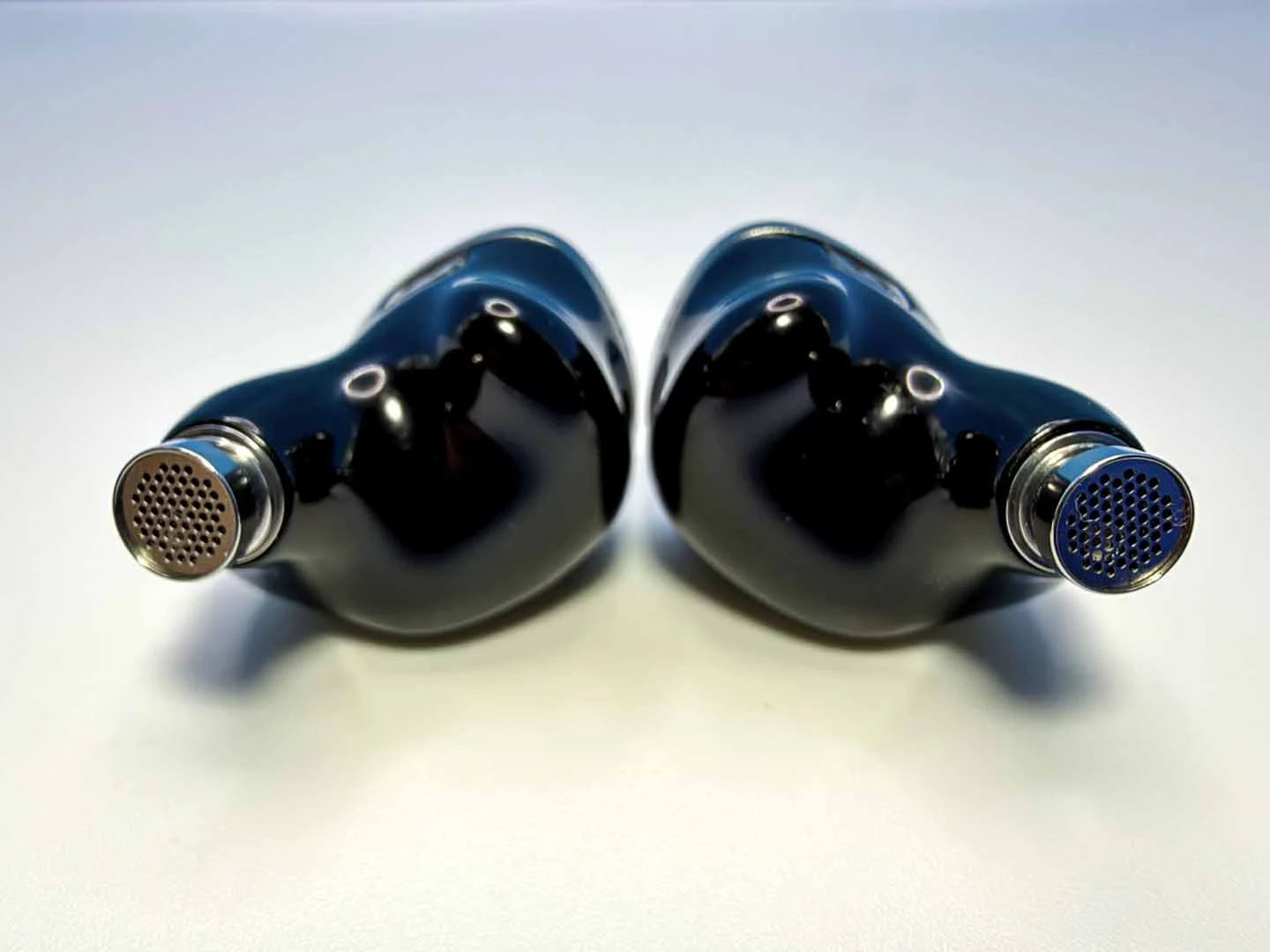
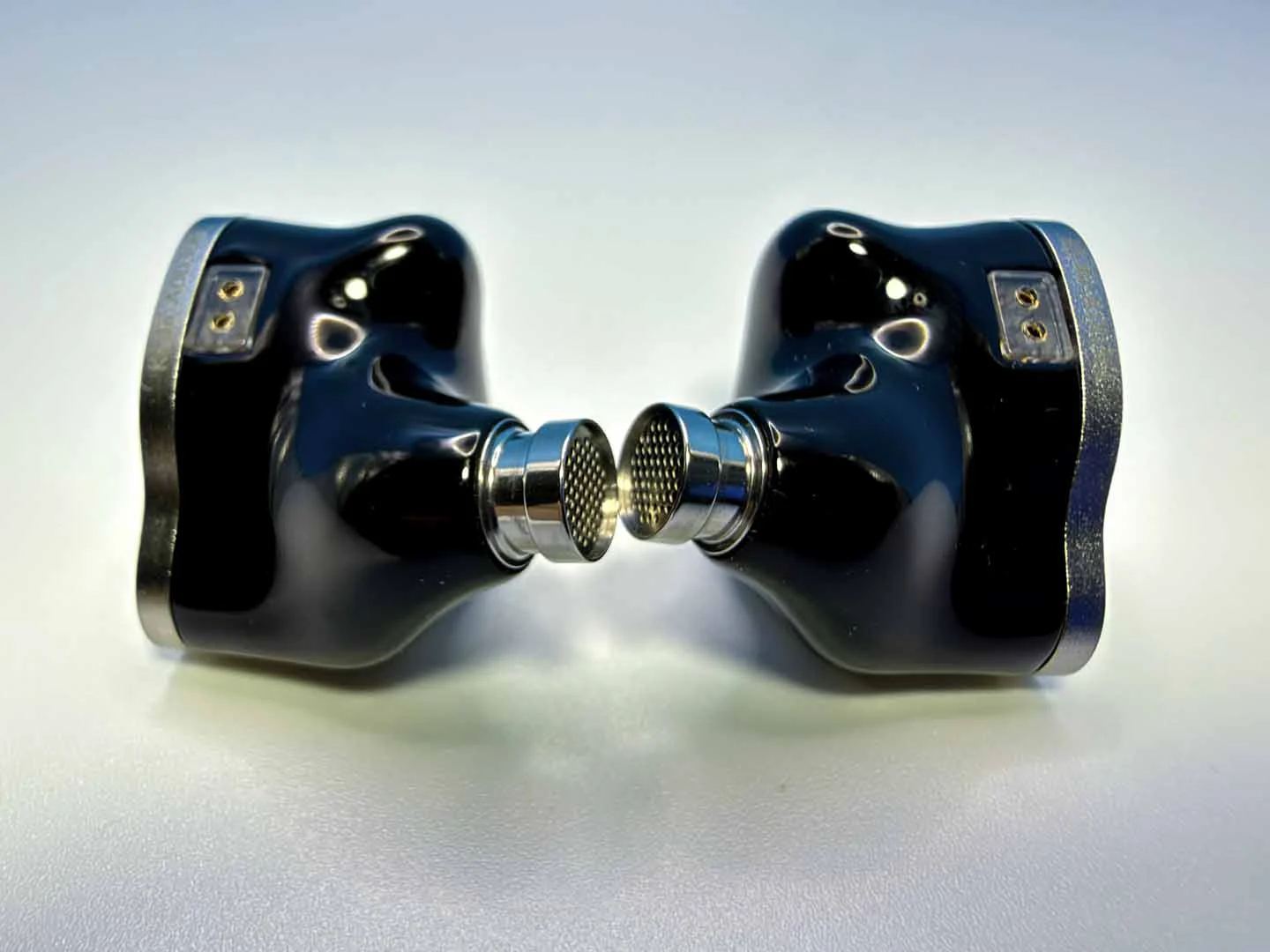
These shells are substantial, and they fill the concha.
For my ears, that shape fit very comfortably. But listeners with particularly small conchae may find the housings occupy too much space, potentially creating pressure or preventing an ideal seating position.
I wouldn’t describe the KE4 MK2 as universally small-ear friendly simply because I personally found them comfortable.
Still, for my particular anatomy, they delivered one of the most satisfying aspects of the ownership experience.
The KE4 MK2 doesn’t just sound effortless. Wearing it feels effortless, too.

📦 Unboxing & Accessories: That Cable Deserves Some Love
I have to give Kiwi Ears credit for the cable.
I love it.
At $199, I expect practical accessories that complement the product rather than feeling like an afterthought, and the KE4 MK2’s modular cable is a particularly welcome inclusion.
Interchangeable 3.5mm single-ended and 4.4mm balanced terminations make it easy to switch between compatible sources. That flexibility is valuable for enthusiasts who regularly switch between portable DACs, digital audio players, and desktop equipment.
Of course, balanced doesn’t automatically mean better sound. The appropriate connection depends on the source, its output characteristics, and the listening conditions.
But convenience matters, and avoiding the need to replace an otherwise perfectly good cable just to access another output is a practical benefit.
The package also includes silicone ear tips and replacement nozzle filters. The tip selection is functional, though I’d welcome more variety, especially considering how much shell geometry and seal can influence comfort and tonal balance.
At its asking price, I don’t expect an accessories treasure chest. I do expect useful choices that make the product easier to live with.
And thanks especially to that cable, Kiwi Ears delivers.
Accessories & Presentation: Practical, attractive, and made considerably more appealing by an excellent modular cable.
⚙️ Technical Specifications: Four Drivers, One Philosophy
The KE4 MK2 uses a four-driver tribrid configuration, assigning different frequency regions to three driver technologies.
Model: Kiwi Ears KE4 II / KE4 MK2
Manufacturer: Kiwi Ears
Type: Wired tribrid in-ear monitor
Driver configuration: 1 dynamic driver + 2 balanced armatures + 1 planar tweeter per earpiece
Low-frequency driver: 10mm biocellulose dynamic driver
Midrange and lower-treble drivers: 2 custom balanced armatures
Upper-frequency driver: Planar tweeter
Crossover: Three-way acoustic system
Published impedance: 13Ω ±1Ω at 1kHz
Published sensitivity: 104dB ±1dB at 1kHz
Published frequency response: 20Hz–20kHz
Shell construction: Medical-grade resin with metallic faceplates
Connector: 0.78mm 2-pin
Cable terminations: Interchangeable 3.5mm and 4.4mm
Official listed price: $199 USD
🧬 The Biocellulose Dynamic Driver
Kiwi Ears has replaced the original KE4’s dual-dynamic bass system with a single biocellulose diaphragm driver.
Biocellulose is interesting because manufacturers can use its material characteristics to design diaphragms with specific stiffness, mass, and damping properties. But the material alone doesn’t tell us how bass will sound.
In practice, I hear controlled, clean low frequencies that provide a stable foundation without drawing excessive attention.
There’s enough bass to keep music grounded, but this configuration doesn’t deliver enormous slam or physical rumble just to impress.
🎤 The Balanced Armatures
The two balanced armatures contribute to the midrange and lower-treble reproduction, supporting the KE4 MK2’s vocal clarity and instrumental organization.
I appreciate that the presentation generally feels cohesive rather than obviously split between multiple technologies.
The fuller lower mids are especially welcome, providing natural body to voices and instruments without introducing excessive warmth.
✨ The Planar Tweeter
The planar tweeter handles the uppermost frequencies, adding a welcome lift to the otherwise restrained tuning.
It’s an interesting choice because planar drivers are often marketed around speed, detail, and extension, though those characteristics can’t be assumed from driver technology alone.
In my listening, the planar contribution generally enhances definition without making the KE4 MK2 particularly bright or analytical.
There were exceptions, however, particularly with some hip-hop recordings where I noticed graininess in the upper frequencies.
That behavior deserves attention, and I’ll explore it further in the treble discussion.
Four drivers describe the engineering. Effortless musical balance describes the experience.
🎧 Listening Impressions: An Effortless Kind of Enjoyment
I think personal audio tends to celebrate extremes.
We talk about bass that shakes our skulls, treble that reveals previously undiscovered civilizations buried inside recordings, and spatial presentations so enormous they make a concert hall seem like a modest living room.
Those experiences can be wonderful.
But they’re not necessarily what I want every time I reach for an IEM.
Sometimes I simply want to listen to music.
The KE4 MK2 seems particularly well suited to that uncomplicated pleasure.
Its presentation is smooth, relaxed, and naturally balanced. The bass behaves itself, the midrange has pleasing substance, and the treble offers enough definition to keep things interesting without constantly announcing its presence.
The result isn’t particularly lively. It’s not aggressively detailed. It isn’t warm, sultry, or romantically colored.
And it’s certainly not a flat, emotionally detached reference monitor.
It lives in that interesting territory between technical neutrality and musical accessibility.
Natural-neutral is the description that feels most accurate to me.
The longer I listened, the less I thought about how the KE4 MK2 was reproducing individual frequencies and the more I appreciated how consistently it handled my music.
That’s not the same as claiming it excels at absolutely everything.
It doesn’t.
Its intimate presentation limits immersion, the bass sometimes lacks physical authority, and occasional upper-frequency graininess keeps me from describing the treble as universally flawless.
But these compromises rarely disrupted my overall enjoyment.
And that explains why I kept coming back.
The KE4 MK2 doesn’t specialize in spectacular moments. It specializes in making ordinary listening consistently enjoyable.
🌸 Ear Tips & Fit: A Comfortable Fit With One Important Caveat
Eartips are one of the least glamorous but most consequential parts of the IEM experience.
They influence seal, insertion depth, comfort, and perceived frequency balance. And because every ear is different, the same IEM can feel wonderfully natural to one listener and frustratingly awkward to another.
The KE4 MK2 worked beautifully for me.
The shells settled comfortably in place, and I could listen for extended periods without the pressure or irritation that sometimes comes with larger designs.
But their overall dimensions deserve attention.
The housings fill the concha rather fully. That doesn’t automatically mean they’ll be uncomfortable for smaller ears, but it introduces a potential fit challenge that shouldn’t be dismissed.
Someone with a narrower or shallower concha may experience pressure even if the nozzle itself forms an adequate seal.
I’d encourage anyone considering the KE4 MK2 to evaluate the complete shell fit, not simply whether the ear tips stay in place.
I also wish Kiwi Ears had included a wider selection of tips to accommodate different fit preferences.
For me, though, the physical experience was exceptional.
A full day of listening without comfort becoming the story is a genuine achievement.
🔬 Frequency Response: The Science Behind Effortless
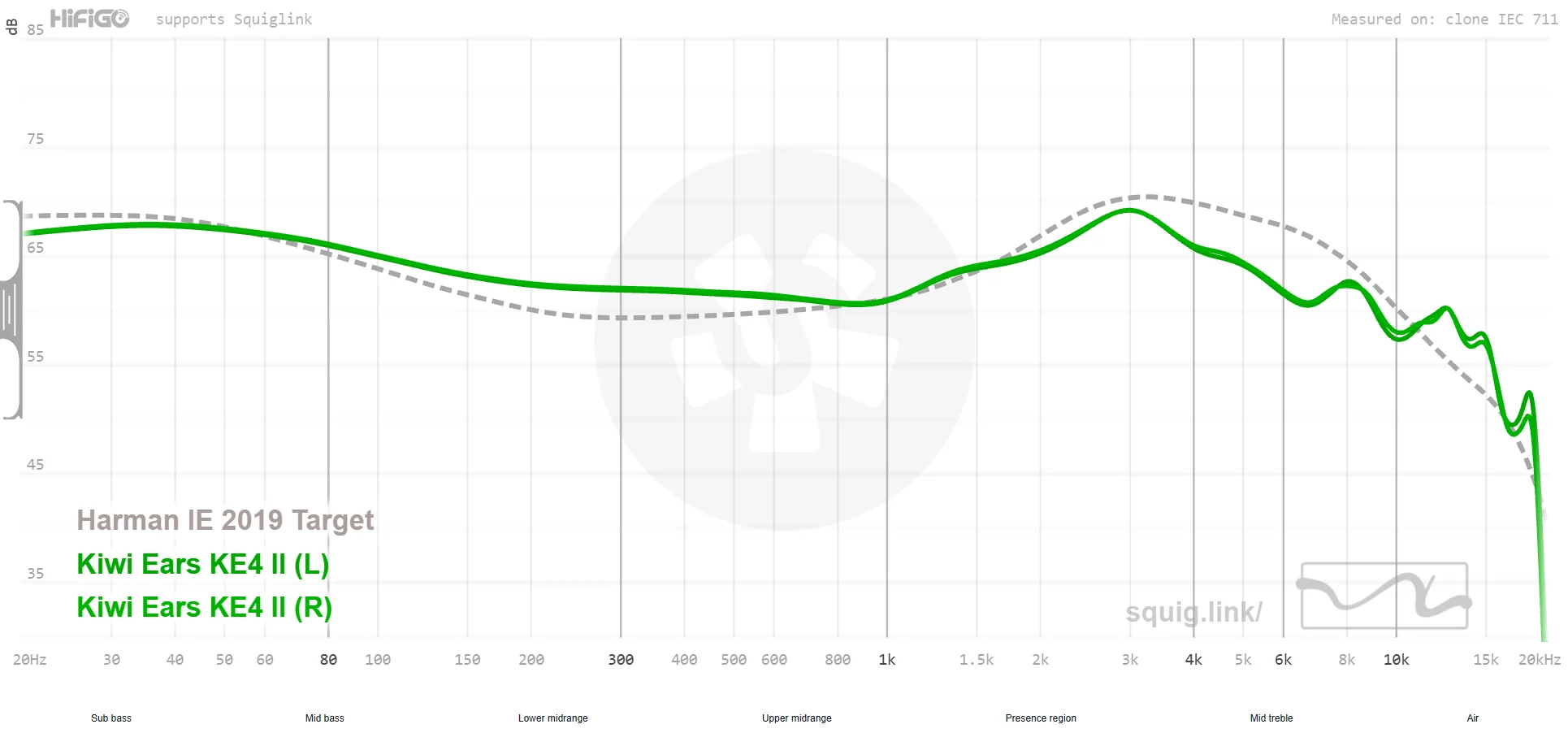
The Kiwi Ears KE4 MK2’s frequency-response measurements reveal something interesting about its personality, particularly when compared with the Harman IE 2019 target. While the overall response follows a recognizable contemporary tuning philosophy, the KE4 MK2 takes a comparatively restrained approach to both low-frequency emphasis and upper-midrange energy. Rather than chasing dramatic contrasts between frequency regions, it maintains a relatively continuous relationship between bass, midrange, and treble. That helps explain why I found its presentation so natural and approachable, even if it didn’t consistently deliver the excitement or physical authority I sometimes crave.
Looking at the Super* Review’s Squiglink graph, the low frequencies show a modest elevation that gradually transitions into the lower midrange. Compared with the Harman target, it emphasizes the deepest bass less, while parts of the lower midrange sit somewhat higher. This relationship matches the controlled bass and substantial vocal body I experienced. It also helps explain why the KE4 MK2 doesn’t sound particularly thin or clinical despite its neutral-leaning character. There’s enough low-frequency foundation to give music appropriate weight, but the tuning doesn’t rely on an exaggerated bass shelf to create fullness.
The upper midrange tells an equally interesting story. The response rises toward about 3 kHz but stays slightly below the Harman target, with additional restraint in parts of the presence and lower-treble regions. In practice, that balance helps explain why vocals remain intelligible without becoming aggressively forward and why instruments retain definition without sounding excessively sharpened. The left and right channels also track closely across most of the measured range, suggesting good channel matching on this particular sample.
Of course, frequency response only tells us so much. It can reveal tonal relationships, but it doesn’t independently establish resolution, transient speed, instrument separation, dynamic impact, or perceived spatial dimensions. Nor can it explain every subjective observation, including the occasional upper-frequency graininess I noticed on certain hip-hop recordings. Those characteristics require careful listening, and measurements farther into the treble become increasingly sensitive to insertion depth and the measurement system itself.
I appreciate how naturally this graph complements my listening impressions. The KE4 MK2 isn’t attempting to impress through exaggerated bass or an aggressively elevated presence region. Instead, it uses restraint to maintain a balanced, familiar presentation that makes extended listening remarkably enjoyable.
The graph helps explain the tuning. It doesn’t explain why I kept reaching for the KE4 MK2.
🥁 Bass: Controlled, Clean, and Content to Behave
Let’s talk about bass, because this is where the KE4 MK2 makes its priorities particularly clear. If you’re looking for a thunderous low-frequency experience that turns every kick drum into a small geological event, this probably isn’t your first stop. The KE4 MK2 has bass, certainly, and it’s nicely controlled, but it doesn’t approach low-frequency reproduction with the kind of physical enthusiasm that immediately grabs me by the collar.
The Squiglink measurements provide some useful context. There’s a modest bass elevation relative to the midrange, but it’s less pronounced than the Harman IE 2019 target, particularly in the deepest frequencies. Rather than presenting a dramatic bass shelf, the KE4 MK2 transitions gradually into the lower midrange. That helps explain why its low end sounds grounded and cohesive without becoming particularly dominant. The graph doesn’t tell us exactly how a kick drum will feel, but its overall tonal balance matches the restrained bass presentation I heard.
During listening, I appreciated how effectively the KE4 MK2 provided a foundation without overwhelming everything above it. Bass guitars retained their fundamental weight, electronic bass lines remained intelligible, and acoustic instruments weren’t buried beneath unnecessary low-frequency emphasis. The low end also avoided the excessive bloom that can make an otherwise enjoyable recording feel congested. There’s a sense of discipline here that works especially well across genres, even if it occasionally comes at the expense of excitement.
On more rhythmically aggressive recordings, however, I wanted greater punch and physical authority. There’s a difference between hearing bass clearly and feeling the rhythmic impact that makes certain tracks irresistible, and the KE4 MK2 doesn’t always bridge that gap. I wouldn’t characterize its low end as weak, but neither would I call it especially visceral. That distinction matters because listeners looking for substantial slam may find its otherwise pleasing balance a little too polite.
Still, the restraint contributes to the KE4 MK2’s broader appeal. Its bass supports the music without constantly drawing attention to itself, letting vocals and instruments maintain their natural relationships. It’s a tuning decision that favors consistency over spectacle, and while it won’t satisfy every bass enthusiast, it fits the product’s overall personality. This isn’t bass designed to steal the show. It’s bass designed to let the show happen.
🎤 Lower Midrange: Where Naturalness Finds Its Voice
The lower midrange is one of my favorite aspects of the KE4 MK2, and it plays a significant role in defining the IEM’s natural personality. There’s a pleasing fullness to voices and instruments that gives recordings convincing body without turning the entire presentation excessively warm or thick. It’s an important distinction, particularly for someone like me who generally gravitates toward lush, romantic sound signatures but still appreciates a well-executed natural-neutral tuning.
The Squiglink graph helps explain this characteristic. Between approximately 200 Hz and 1 kHz, the KE4 MK2 measures somewhat above the Harman IE 2019 target, while the upper-midrange rise remains comparatively restrained. That relationship matches the vocal substance I heard, especially on recordings where a singer’s natural resonance contributes heavily to the emotional character of the performance. Rather than relying on pronounced presence-region energy to emphasize vocals, the KE4 MK2 lets the underlying body remain an important part of the presentation.
I love a beautifully resonant cello, a rich male vocal, or an acoustic guitar with enough body to feel almost tangible. Give me those qualities wrapped in a lush, immersive presentation, and I’m usually a very happy Kaiju. But I also recognize that natural weight and exaggerated warmth aren’t the same thing, and the KE4 MK2 demonstrates that difference rather convincingly. Male vocals have satisfying substance without becoming excessively chesty, while female vocals retain a believable sense of body rather than sounding artificially thin or sharpened.
What impressed me most was how naturally singers fit into the surrounding arrangement. The KE4 MK2 doesn’t consistently enlarge voices or push them dramatically forward, and it doesn’t attempt to make every performer sound impossibly intimate. Instead, it maintains a comfortable relationship between vocal presence and instrumental accompaniment. That approach may seem less immediately captivating than a particularly romantic midrange, but it becomes increasingly appealing during longer listening sessions.
The result is a midrange that feels familiar, balanced, and genuinely enjoyable. It doesn’t deliver the gooey richness I sometimes seek, but it also avoids the sterile character that can make technically competent equipment feel emotionally distant.
Sometimes the most convincing vocal presentation isn’t the richest or most romantic. It’s the one that sounds like a human being singing.
🎤 Upper Midrange: Clarity Without the Spotlight
There’s an interesting difference between making vocals clear and making vocals dramatically forward, and the KE4 MK2 leans decisively toward the former. Singers remain intelligible, well-defined, and naturally integrated into the mix without consistently projecting far beyond the instruments accompanying them. That balance contributes significantly to the relaxed listening experience that defines this IEM, particularly when moving between recordings with very different production styles.
The frequency-response measurements help explain that character. The KE4 MK2’s upper-midrange rise peaks around 3 kHz, but it remains slightly below the Harman IE 2019 target, with additional restraint through parts of the presence region. This doesn’t mean the IEM lacks vocal clarity or instrumental articulation. Instead, it suggests that the tuning preserves those qualities without relying on the more pronounced upper-midrange emphasis found in some contemporary designs.
I’ve heard plenty of IEMs that create excitement by pushing vocals forward and sharpening the leading edges of instruments until everything feels immediate and intensely detailed. That approach can be thrilling, especially during a quick demo, but it can also become tiring once the initial excitement wears off. The KE4 MK2 takes a more measured approach, letting voices stay in place within the arrangement rather than demanding constant attention. Combined with the fuller lower midrange, that restraint gives vocals substance without making them sound overly thick or aggressively projected.
I wouldn’t describe the KE4 MK2 as a dedicated vocal specialist in the lush, floating, deeply intimate sense I sometimes chase. It doesn’t consistently create the sensation of a singer hovering in front of me, nor does it use exaggerated brightness to manufacture an impression of extraordinary vocal presence. What it does offer is a convincing, comfortable presentation that remains enjoyable across a wide variety of recordings.
That consistency is a meaningful strength. The KE4 MK2 doesn’t require every song to complement a highly specific tonal personality, and I rarely felt distracted by excessive upper-midrange energy. Instead, I could simply enjoy the relationship between the performer and the music.
The KE4 MK2 doesn’t put every singer on a pedestal. It gives them a convincing place in the music.
🌟 Treble & Air: A Little Lift, With an Occasional Rough Edge
The planar tweeter is one of the most interesting elements of the KE4 MK2’s revised architecture, and for most of my listening, I liked the upper-frequency character the complete design delivered. It has enough definition to keep instruments intelligible and preserve clarity without making the presentation aggressively bright or analytical. That restraint works especially well alongside the fuller lower midrange, creating a balance that generally favors smoothness over spectacle.
Interestingly, the Squiglink measurements show that the KE4 MK2 isn’t particularly elevated across much of the presence and lower-treble region compared with the Harman IE 2019 target. Its response through approximately 4-8 kHz remains comparatively subdued, consistent with the relaxed character I experienced. The graph also shows localized peaks and dips farther into the treble, but those features warrant caution because measurements above approximately 8-10 kHz can be strongly influenced by insertion depth, coupler resonances, and other testing variables.
That relatively restrained upper-frequency balance doesn’t mean the KE4 MK2 sounds dull. Cymbals retain recognizable texture, instrumental edges remain sufficiently defined, and smaller details generally emerge without requiring exaggerated treble emphasis. But I wouldn’t describe it as particularly sparkling or airy. It doesn’t consistently produce the ethereal high-frequency extension or expansive sense of openness that I enjoy from more spacious, immersive presentations.
However, one characteristic occasionally interrupted the otherwise smooth experience. During a handful of hip-hop tracks, I noticed some graininess in the upper frequencies that sounded slightly coarse compared with the rest of the presentation. It wasn’t a consistent issue across every recording, and I wouldn’t characterize the KE4 MK2 as generally harsh or fatiguing. Still, the contrast was noticeable precisely because the tuning was otherwise so controlled.
It’s tempting to point directly at the planar tweeter, but I don’t think that would be fair without additional testing. The complete acoustic design, crossover implementation, recording quality, and overall frequency balance all contribute to what we hear, and the graph alone cannot establish the cause of that occasional roughness. What I can say is that the KE4 MK2 generally delivers a pleasing upper-frequency balance with a few recording-dependent exceptions worth acknowledging.
The treble usually knows exactly how much attention to request. Occasionally, it asks for a little too much.
🎯 Instrument Separation & Placement: Everything in Its Place
One of the KE4 MK2’s strengths is its ability to keep musical elements organized without making that organization seem artificially exaggerated. Instruments remain recognizable, vocals stay in place, and the presentation generally avoids the congestion that can make busier recordings hard to follow. There’s a sense of composure here that complements the restrained tonal balance, keeping the music coherent even when arrangements become more complicated.
The controlled bass and relatively measured presence region certainly contribute to the overall tonal character, but I wouldn’t use the frequency-response graph as proof of superior instrument separation. Those are different observations, and the distinction matters. What I heard was an IEM that maintained meaningful differentiation between musical elements without relying on aggressively emphasized treble or unnaturally sharpened outlines to create the impression of technical precision.
Guitars, keyboards, percussion, and vocals generally occupied recognizable positions in recordings, and I rarely felt one element unnecessarily obscured another. At the same time, the KE4 MK2 didn’t consistently create enormous distances between instruments or give individual performers a dramatic sense of separation. Its presentation remained relatively compact and intimate, favoring cohesion over the kind of spectacular spatial organization that can make certain recordings feel almost holographic.
That’s not necessarily a weakness, although it does establish an important limitation for listeners who prioritize an especially dimensional presentation. The KE4 MK2 can keep an arrangement organized without making it feel enormous, and those qualities shouldn’t be confused. Its strength lies in maintaining clarity and coherence within a believable listening space rather than expanding every musical element into its own imaginary corner of the room.
For me, the result was satisfying even if it wasn’t especially spectacular. Music remained easy to follow, instruments retained their individual identities, and the presentation rarely felt artificially dissected.
The KE4 MK2 is more interested in keeping the music organized than making every instrument perform its own spectacular solo.
🌌 Width & Depth: An Intimate Conversation
Anyone who follows my reviews knows that I love holographic audio. Give me convincing width, front-to-back depth, and the sensation that performers occupy a dimensional environment around me, and I’m usually hooked. There’s something magical about listening to a familiar recording and suddenly feeling as though the musicians have escaped the confines of the recording itself. Unfortunately, that isn’t quite the experience the KE4 MK2 delivers.
Its presentation is intimate rather than expansive, with vocals occupying a relatively close, natural position and instruments arranged around them without extending dramatically beyond the apparent listening space. There’s enough separation to prevent the music from feeling consistently congested, but the KE4 MK2 doesn’t create an especially enormous or immersive environment. Instead, it draws the performance inward, giving recordings a personal, comfortably contained character.
I want to emphasize that intimacy and congestion aren’t the same thing. An IEM can present music within a relatively compact space while still maintaining clarity and meaningful instrument separation, and that’s largely what happens here. The KE4 MK2 doesn’t routinely make instruments feel stacked on top of one another, but it also doesn’t create the dramatic lateral expansion or layered front-to-back dimensionality that defines my favorite immersive listening experiences.
Its restrained upper-frequency tuning may contribute to the overall impression of smoothness and reduced brilliance, but the Squiglink graph cannot independently explain the presentation’s perceived width or depth. Those characteristics remain subjective listening observations, and I wouldn’t attribute them directly to the frequency response or planar tweeter.
Instead, the KE4 MK2 offers a convincing sense of musical closeness. Vocals feel comfortably present, instruments remain organized, and the overall presentation encourages relaxed listening rather than constant admiration of its spatial abilities. Listeners chasing an enormous holographic experience may want something more ambitious, but those who appreciate a personal, intimate presentation could find this approach particularly appealing.
It doesn’t invite you into an enormous concert hall. It pulls up a comfortable chair and lets the music come to you.
🔬 Detail & Resolution: Meta Tuning With Clarity
Here’s where I think the KE4 MK2 deserves particular credit. It sounds clean and articulate without constantly reminding me that it’s trying to reproduce fine detail, and that’s an underrated quality in a market where technical performance is frequently presented as a competition to reveal the smallest possible musical information. The KE4 MK2 isn’t interested in winning that competition through exaggerated emphasis. Instead, its clarity feels like a natural consequence of the overall presentation.
Some IEMs make their technical ambitions immediately obvious through elevated treble, aggressively defined transients, or unusually sharp instrumental outlines. Those characteristics can create a striking first impression, particularly during brief comparisons, but they can also shift attention away from the relationship between musical elements. The KE4 MK2 takes a more relaxed approach, keeping smaller details accessible without constantly pushing them into the foreground.
The Squiglink measurements support the idea that this isn’t especially aggressive in its presence-region tuning, but they don’t establish its actual resolving ability. I wouldn’t claim that a relatively smooth frequency response guarantees superior detail retrieval, just as I wouldn’t assume that the planar tweeter automatically provides a technical advantage over well-executed balanced-armature designs. The listening experience matters, and what I heard offered enough articulation to keep recordings engaging without making the presentation feel artificially analytical.
Subtle instrumental textures remained recognizable, smaller background elements generally retained their identities, and the KE4 MK2 maintained enough definition to prevent its relaxed character from becoming dull. At the same time, I wouldn’t describe it as an extraordinary resolution specialist. It doesn’t consistently uncover layers of information that transform familiar recordings into entirely new experiences, nor does it present detail with the spectacular immediacy of more overtly technical IEMs.
What impressed me was the balance. The KE4 MK2 delivers enough clarity to communicate the recording without making technical exhibitionism the centerpiece. And that brings me back to the simplest description I can offer: meta tuning with clarity. Not a revolution, not a technical spectacle, just a remarkably approachable balance.
🦴 Slam & Dynamics: Where Restraint Becomes a Limitation
There’s a difference between music sounding balanced and music feeling particularly alive, and this is one area where the KE4 MK2 leaves me wanting a little more. Its low-frequency performance is controlled, its overall presentation is cohesive, and its relaxed tuning makes extended listening easy. But when a recording calls for explosive energy or substantial physical impact, the KE4 MK2 doesn’t always deliver the excitement I’m looking for.
The frequency-response measurements offer some context without explaining the entire experience. Compared with the Harman IE 2019 target, the KE4 MK2 has a more modest sub-bass elevation, which is consistent with the comparatively restrained low-frequency emphasis I heard. But bass quantity and dynamic impact aren’t interchangeable. A graph can’t independently tell us how convincingly an IEM reproduces the contrast between quiet and loud passages or how forcefully a percussion strike will be perceived.
During more energetic recordings, I sometimes wanted greater punch from kick drums and a stronger sense of physical authority from bass-heavy passages. The KE4 MK2 reproduced those elements competently, but it rarely made them feel especially explosive. Similarly, its broader presentation favored consistency over dramatic contrast, which occasionally reduced the excitement I expected from recordings that thrive on rhythmic intensity.
That restraint isn’t inherently a flaw, particularly for listeners who prioritize smoothness and long-term comfort. In fact, it’s part of what makes the KE4 MK2 so easy to enjoy across different genres. But there’s a tradeoff between maintaining a relaxed presentation and delivering the sort of dynamic enthusiasm that makes me instinctively turn up the volume.
I wouldn’t call the KE4 MK2 lifeless, and I certainly wouldn’t suggest every recording needs thunderous impact to be enjoyable. It’s simply a more measured performer than my personal preferences sometimes demand.
The KE4 MK2 rarely throws a punch. Fortunately, it doesn’t spend much time picking fights with your ears, either.
⚡ Speed & Transients: Clean Without Being Aggressive
The KE4 MK2 generally presents percussion and instrumental attacks with enough definition to keep music organized, but it doesn’t exaggerate those attacks to create an artificially urgent personality. That restraint matches the rest of its tuning and contributes to the natural, easygoing character that makes the IEM appealing during extended listening sessions.
Percussive elements remain recognizable, bass notes retain sufficient articulation, and instruments generally transition through their attacks and decays without becoming excessively blurred. At the same time, I wouldn’t characterize the KE4 MK2 as exceptionally fast or aggressively incisive. Its transient presentation feels controlled and natural rather than deliberately spectacular, which suits the overall listening experience even if it occasionally limits excitement.
This is also an area where I want to be careful about drawing conclusions from driver technology or frequency-response measurements. A planar tweeter doesn’t automatically mean faster transient behavior, and a conventional frequency-response graph cannot independently show how quickly an IEM responds to complex musical information. The complete acoustic system matters, and perceived speed depends on several aspects of how a recording is reproduced.
What I can confidently describe is the listening experience itself. The KE4 MK2 keeps music coherent without creating an exaggerated impression of urgency. Its attacks are defined enough to maintain rhythmic organization, while its restrained overall character keeps the presentation from becoming unnecessarily sharp or mechanical.
For listeners chasing the last word in perceived speed or exceptionally crisp percussion, this may not be the most exciting option. But for someone who appreciates a natural balance between articulation and smoothness, the KE4 MK2 makes a convincing argument for restraint.
Quick enough to keep the music organized. Relaxed enough to let it breathe.
🎵 Tonality & Timbre: Natural Is the Word
If there’s one sonic characteristic I want readers to remember about the KE4 MK2, it’s that this IEM sounds natural. Not particularly warm, not cold, not especially lush, sultry, or gooey, and certainly not sterile or aggressively analytical. Its personality sits in that appealing space where musical elements feel appropriately balanced without constantly drawing attention to individual frequency regions. I’d describe it as natural-neutral, and that distinction matters because neutrality doesn’t have to mean lifelessness.
The Squiglink measurements help explain why this balance works. The KE4 MK2 combines a modest low-frequency elevation with relatively full lower mids and a restrained upper-midrange response compared with the Harman IE 2019 target. Those relationships match the substantial vocal body, controlled bass, and generally relaxed upper-frequency presentation I experienced. The tuning doesn’t follow a perfectly flat response, nor does it need to. What matters is how naturally those regions work together.
There’s enough lower-midrange body to make voices believable, sufficient bass presence to anchor the arrangement, and enough upper-frequency clarity to keep instruments intelligible. None of those qualities consistently overwhelms the others, and that equilibrium gives the KE4 MK2 its inviting character. It doesn’t pursue the romantic richness of my favorite lush IEMs, but it also avoids the emotionally distant personality I sometimes encounter with more clinical presentations.
Timbre matters here because convincing musical reproduction involves more than getting the broad tonal balance right. Instruments should retain their recognizable character, and voices should sound like people rather than exaggerated collections of frequencies. The KE4 MK2 generally achieves that balance, giving acoustic instruments and vocals a credible sense of body while maintaining enough definition to preserve their individual identities. The occasional upper-frequency graininess I noticed remains an exception worth acknowledging, but it doesn’t define the overall experience.
What I appreciated most was how easily the KE4 MK2 adapted to different recordings. I didn’t feel compelled to select music that specifically complemented a dramatic sonic personality, nor did I constantly reach for equalization to correct an obvious imbalance. Instead, I simply listened, and when the next album started, I usually kept listening.
The KE4 MK2’s most appealing tonal achievement is that it doesn’t constantly remind me of its tuning.
🎮 Gaming Performance: Clarity With Spatial Limitations
Although this evaluation primarily focuses on music, the KE4 MK2 has characteristics that may appeal to listeners who also use their IEMs for gaming.
Its clean separation, controlled bass, and natural midrange could support dialogue intelligibility and help preserve the relationship between different sound effects.
For story-driven or cinematic games, the relaxed tonal balance may also make longer sessions enjoyable without excessive treble fatigue.
However, its intimate spatial presentation deserves consideration.
Competitive games depend on directional and positional information, and an IEM that sounds organized during music playback doesn’t automatically deliver superior positional accuracy.
I haven’t established the KE4 MK2’s performance through dedicated competitive gaming benchmarks, so I wouldn’t recommend it for gaming based on assumptions.
Its sonic character is promising for general-purpose listening and entertainment.
But the 4.3/5 GearZilla rating reflects my music-listening experience, not unperformed gaming tests.
🎛️ Amplification & Source Pairing: Keep It Simple
With a published impedance of about 13ω and a sensitivity of 104dB, the KE4 MK2 isn’t designed for unusually demanding amplification.
A suitable portable DAC, digital audio player, or clean desktop source should provide enough power for normal listening.
Its relatively low impedance makes source output impedance worth considering, particularly with multi-driver IEMs that can shift tonal balance when paired with certain outputs.
But I wouldn’t recommend powerful amplification simply because the KE4 MK2 combines four drivers.
Nor would I assume that using the included 4.4mm balanced termination automatically improves sound quality.
The meaningful considerations are suitable output characteristics, low noise, adequate volume control, and a comfortable listening level.
I’d also encourage listeners to experience the stock tuning before experimenting with EQ.
The KE4 MK2’s greatest strength is the coherence of its natural-neutral presentation, and that deserves to be understood on its own terms.
Of course, someone seeking more bass impact or greater upper-frequency sparkle may find EQ useful.
But those adjustments would change the experience rather than automatically correct a defective tuning.
Give the KE4 MK2 a suitable source, a comfortable seal, and your favorite playlist. Then get out of its way.

👹 The GearZilla KAIJU DNA Scan: Anatomy of an Effortless Monster
Every Kaiju has a personality.
Some arrive stomping through the city, demolishing everything in sight and announcing their presence with enough energy to rattle the windows.
Others are considerably more reserved.
The KE4 MK2 belongs to the second group.
Its defining characteristic isn’t spectacular force or extraordinary technical ambition. It’s how naturally its various qualities work together.
🎯 K • Kill Shot: Effortless Versatility
The KE4 MK2’s greatest strength is how easily it moves between musical genres without demanding special attention.
It doesn’t need extraordinary bass, spectacular treble, or enormous spatial presentation to remain enjoyable.
It simply sounds good with just about everything.
And I kept reaching for it.
🧬 A • Anatomy: Four Drivers, One Relaxed Personality
The combination of a biocellulose dynamic driver, two balanced armatures, and a planar tweeter creates a coherent, natural-neutral presentation.
There’s interesting engineering beneath those shells, but the hardware rarely becomes more important than the experience.
That’s exactly how I prefer it.
🦴 I • Impact: Controlled Rather Than Commanding
The KE4 MK2 provides clean, appropriately weighted bass that supports the music without taking over.
But listeners seeking powerful slam or substantial physical impact may find it overly restrained.
This isn’t the monster you invite over when you want the furniture rearranged.
🎩 J • Joy: The Pair I Kept Reaching For
This is where the KE4 MK2 makes its strongest argument.
I didn’t continually return to it because it dominated any particular technical category.
I returned because the music sounded consistently enjoyable, the comfort was exceptional, and I rarely had to think about the equipment.
That’s a meaningful form of listening enjoyment.
🎤 U • Unleashed: Naturalness Has Its Limits
The KE4 MK2 isn’t especially holographic, lush, dynamic, or expansive.
Its upper frequencies occasionally develop a grainy character with certain hip-hop recordings, and the overall tuning doesn’t deliver the immediate excitement of more aggressive alternatives.
Those are real compromises.
But they don’t erase its strengths.
🦖 The KAIJU Conclusion: Effortless by Design
Some IEMs become memorable because they deliver something extraordinary.
The KE4 MK2 became memorable because it made ordinary listening so enjoyable.
Four drivers. Natural-neutral tuning. One remarkably effortless experience.
💰 Value: When Everyday Enjoyment Is the Upgrade
At $199, the KE4 MK2 enters a competitive market filled with ambitious driver configurations, increasingly sophisticated tuning targets, and manufacturers promising extraordinary technical performance.
And that makes its understated personality particularly interesting.
The KE4 MK2 doesn’t attempt to justify its price through one spectacular specialty.
Instead, it offers a combination of clean, natural-neutral sound, comfortable construction, pleasing vocal reproduction, useful accessories, and versatility across musical styles.
That package has genuine value.
I especially appreciate the full-day comfort and excellent modular cable, features that keep mattering after the initial excitement of a new purchase fades.
The sonic performance also holds up well during extended listening.
There’s enough clarity to keep music organized, enough body to make vocals enjoyable, and enough tonal restraint to avoid becoming tiring.
But its value proposition isn’t universal.
Listeners seeking enormous bass impact, exceptional holographic immersion, or a lush and emotionally colored presentation may find more specialized alternatives better suited to their preferences.
And that brings me back to something I’ve said many times.
A product doesn’t become valuable simply because it performs well on paper. It becomes valuable when you actually want to use it.
I kept using the KE4 MK2.
That says plenty.

🦖 GearZilla Scorecard: The Anatomy of Effortless
The KE4 MK2 earns its 4.3/5 overall GearZilla rating through a consistently enjoyable combination of natural-neutral tuning, clarity, exceptional comfort, and practical versatility.
Here’s how this remarkably effortless little monster performs across the GearZilla scorecard.
✨ Clarity: 4.4/5 ⭐
The presentation remains clean and organized without relying on exaggerated brightness or sharply etched detail. The planar tweeter contributes useful definition, while the overall tuning remains relaxed. Clarity feels natural rather than artificially emphasized, making familiar recordings easy to appreciate without turning every listening session into an analytical exercise.
🎤 Midrange & Vocals: 4.5/5 ⭐
One of the KE4 MK2’s most appealing qualities. Fuller lower mids add pleasing vocal body, while the natural, neutral tuning keeps singers believable rather than artificially rich or dramatically forward. Voices sound wonderfully authentic, with enough substance to feel present without becoming overly warm, lush, or romantic.
🥁 Bass: 4.1/5 ⭐
Clean, controlled, and appropriately present. The bass anchors the performance without overwhelming the midrange or introducing unnecessary thickness. However, it lacks some of the visceral impact and physical authority that make more dynamic tunings especially exciting. It’s a disciplined low end that prioritizes balance over brute force.
🎯 Separation & Placement: 4.3/5 ⭐
Instruments remain distinguishable and well organized, even as arrangements become more involved. The presentation emphasizes cohesion rather than exaggerated separation or dramatic positioning. Everything has a convincing place in the mix, although individual elements don’t occupy particularly expansive distances from one another.
🌌 Width & Depth: 3.8/5 ⭐
The KE4 MK2 offers an intimate rather than expansive presentation. It doesn’t create the holographic immersion, generous width, or convincing front-to-back dimensionality I personally favor. Instrument placement remains coherent and natural, but listeners searching for a vast musical environment may find the experience somewhat confined.
🔬 Detail & Resolution: 4.3/5 ⭐
Clear and articulate without sounding aggressively analytical. The KE4 MK2 provides enough definition to make smaller musical details accessible, particularly with the additional upper-frequency lift from its planar tweeter. However, it doesn’t deliver the extraordinary microdetail or technical precision of more resolution-focused designs.
🌟 Treble & Air: 4.0/5 ⭐
Generally smooth and restrained, with a welcome touch of planar lift that helps maintain clarity. However, I noticed occasional graininess with certain hip-hop recordings, where the upper-frequency presentation didn’t quite complement the otherwise relaxed tuning. The KE4 MK2 also isn’t particularly airy or sparkling, favoring agreeable treble over spectacular extension.
🦴 Slam & Dynamics: 3.9/5 ⭐
Competent but decidedly relaxed. The KE4 MK2 doesn’t consistently deliver the physical impact, explosive energy, or dramatic contrasts of more dynamically assertive tunings. Its restraint contributes to the effortless listening experience, but it can also leave energetic recordings wanting a little more excitement.
🎤 Vocal Lift: 4.2/5 ⭐
Vocals have believable body and natural placement rather than dramatic elevation. The fuller lower mids make singers especially enjoyable, but the KE4 MK2 doesn’t consistently create the floating, forward vocal presentation I sometimes crave. Its strength is authenticity rather than theatrical intimacy.
⚡ Speed & Transients: 4.2/5 ⭐
Percussion and instrumental attacks remain clean enough to preserve rhythmic organization without artificially exaggerating sharpness or immediacy. The overall character is measured and composed rather than exceptionally fast or aggressive. This approach supports the tuning’s natural personality.
🎵 Tonality & Timbre: 4.6/5 ⭐
A defining strength of the KE4 MK2. Natural-neutral fits best, combining fuller lower mids, controlled bass, and appropriate upper-frequency definition without becoming excessively warm or clinical. Instruments and vocals retain believable character, and the tonal balance works beautifully across different recordings. This is meta tuning with clarity, delivered with remarkable consistency.
🎛️ Tuning & Pairing Flexibility: 4.5/5 ⭐
The stock tuning handles varied musical styles with very little fuss, making the KE4 MK2 an excellent everyday listening companion. Its modular cable adds convenient connection flexibility, and the IEM doesn’t demand an elaborate supporting system to sound enjoyable. Genre versatility is one of its greatest practical strengths.
☁️ Comfort & Fit: 4.8/5 ⭐
Absolutely exceptional in my experience. I enjoyed a full day of listening without discomfort, and the lightweight shells felt fantastic throughout. However, the housings are substantial and fill the concha, which may be challenging for listeners with smaller ears. For my anatomy, the comfort was outstanding.
🎨 Design & Build: 4.4/5 ⭐
Understated, attractive, and lightweight. The brushed metallic faceplates and resin housings create a clean visual identity that complements the relaxed sonic personality. There’s nothing particularly extravagant about the design, but its craftsmanship and exceptional everyday wearability make it a satisfying package.
📦 Accessories & Presentation: 4.5/5 ⭐
I love the included cable. Its modular design and interchangeable 3.5mm and 4.4mm terminations provide excellent convenience and flexibility. The overall package feels thoughtfully equipped for its price, although a more generous selection of ear tips would improve the ownership experience.
🎶 Listening Enjoyment: 4.7/5 ⭐
This is where the KE4 MK2 makes its strongest argument. I kept reaching for this pair, not because it did everything exceptionally well or offered some extraordinary sonic specialty, but because it sounded good with just about everything.
Its smooth, relaxed personality, natural vocals, excellent comfort, and genre versatility made it remarkably easy to enjoy.
I didn’t need to analyze it, adjust it, or search for the perfect recording.
I simply listened.
Effortless. That’s the word.
💰 Value: 4.5/5 ⭐
At $199, the KE4 MK2 offers a compelling mix of natural, neutral tuning, excellent comfort, pleasing vocal reproduction, good clarity, and practical accessories. It may not deliver spectacular performance in every technical category, but its consistency and everyday usability make it a worthwhile investment for listeners who prioritize long-term enjoyment over momentary excitement.
🧡🦖 Overall GearZilla Score: 4.3/5 ⭐ | Effortless by Design. Natural by Nature.
The KE4 MK2’s 4.3/5 rating reflects the complete listening experience, not a mathematical average of individual categories. Its natural-neutral tonality, pleasing vocals, exceptional comfort, and tremendous versatility outweigh its relatively restrained dynamics, intimate spatial presentation, and occasional upper-frequency graininess.
It isn’t the most exciting IEM I’ve heard, nor the most immersive or technically spectacular.
But there’s something wonderfully satisfying about a product that makes listening this easy.
I kept reaching for it because the music simply sounded good.
And that’s a quality no specification sheet can adequately capture.
Effortless by Design. Natural by Nature. 🦖🎧

🦖 Final Roar: The Beauty of Effortless
I spend a lot of time searching for something extraordinary in personal audio.
Sometimes it’s an enormous, holographic presentation that makes a familiar recording feel like an entirely new experience. Sometimes it’s the rich warmth of a beautifully tuned midrange, the physical authority of a powerful dynamic driver, or the almost startling clarity that reveals something I’ve somehow missed after hundreds of listens.
Those moments are part of what makes this hobby so much fun.
But after spending a full day with the Kiwi Ears KE4 MK2, I found myself appreciating something considerably simpler.
I just wanted to keep listening.
No dramatic moment saw the heavens open, an orchestra appear in my living room, or a bass drop threaten the structural integrity of my desk.
The KE4 MK2 wasn’t doing anything particularly extraordinary.
And yet, album after album, I kept reaching for it.
Its bass had enough control to maintain a clean foundation without overwhelming the recording. The fuller lower midrange gave vocals a wonderfully believable presence, and the planar tweeter added enough upper-frequency lift to maintain clarity without constantly demanding attention.
It wasn’t warm and gooey. It wasn’t especially lively. And it certainly wasn’t an analytical reference monitor determined to expose every imperfection in my music library.
It was natural.
That word kept coming back to me almost as frequently as effortless.
Natural in the relationship between vocals and instruments. Natural in the balance between low-frequency weight and midrange clarity. Natural in the way it moved between genres without asking me to adjust my expectations every time the playlist changed.
Of course, natural doesn’t mean flawless.
I would’ve enjoyed greater physical authority from the bass. I would’ve loved more of the expansive, holographic immersion that makes certain IEMs so captivating. And the occasional graininess I noticed in the upper frequencies reminded me that the planar-assisted tuning doesn’t complement every recording equally.
Those limitations prevent the KE4 MK2 from earning a higher rating.
But I also believe an IEM’s value extends beyond the individual characteristics we analyze during a review.
There’s something meaningful about a product that fits comfortably, sounds consistently good, and doesn’t require constant attention to remain enjoyable.
The KE4 MK2 delivered that experience throughout an entire day of listening.
And the fact that I kept reaching for it is probably the most revealing compliment I can offer.
Great audio doesn’t always announce itself. Sometimes it simply makes you forget you’re listening to equipment.
The Kiwi Ears KE4 MK2 understands that beautifully.
✅ Buy If
- You want a smooth, relaxed IEM that’s enjoyable across a wide variety of musical genres.
- You appreciate natural-neutral tuning rather than exaggerated warmth or clinical brightness.
- You value convincing vocal body and fuller lower mids.
- You prefer controlled bass over overwhelming low-frequency emphasis.
- You enjoy an intimate, cohesive presentation.
- You prioritize extended listening comfort.
- You want a practical modular cable with both 3.5mm and 4.4mm terminations.
- You appreciate clarity that doesn’t constantly draw attention to itself.
- You’re looking for a versatile everyday IEM around $199.
⛔ Consider Another IEM If
- You want powerful, visceral bass slam and substantial physical impact.
- You prefer an expansive, holographic presentation with remarkable front-to-back depth.
- You love especially warm, lush, sultry, or romantic tuning.
- You want aggressive dynamics and an immediately lively sonic personality.
- You prioritize exceptional treble sparkle and air.
- You’re particularly sensitive to occasional upper-frequency graininess.
- You have very small ears or limited concha space and struggle with larger shells.
- You’re looking for a highly specialized IEM that delivers a distinctive sonic spectacle.
🛒 Ready to Experience Effortless?
There’s something wonderfully refreshing about an IEM that doesn’t need to impress you with exaggerated bass, spectacular treble, or an enormous spatial presentation to make a convincing argument.
The Kiwi Ears KE4 MK2 offers natural-neutral tuning, pleasing vocal body, controlled bass, and enough clarity to keep music organized without making the listening experience unnecessarily analytical.
Add excellent comfort, lightweight construction, and a practical modular cable, and you have a package that makes a lot of sense for everyday use.
Its intimate presentation and restrained dynamics won’t appeal to everyone, and the occasional upper-frequency graininess is worth noting.
But at $199, the KE4 MK2 delivers an approachable, consistently enjoyable experience that I found myself returning to throughout my evaluation.
That’s why it earns a 4.3/5 GearZilla rating.
Ready to hear what effortless sounds like?
Explore the Kiwi Ears KE4 MK2 at Linsoul
Listen Bigger! 🦖🎧
Share This Story, Choose Your Platform!