



Is the TWISTURA WoodNote Worth Buying?
Absolutely! The TWISTURA WoodNote is one of those affordable IEMs that makes you wonder why more manufacturers don’t put this much thought into the entire package. With a 10mm wood-fiber composite dynamic driver, premium CNC-machined aluminum shells, three interchangeable tuning nozzles, a modular 3.5mm/4.4mm cable, and an absolutely gorgeous purple hard case, the WoodNote delivers impressive value in the sub-$200 IEM market. Its energetic, bright-leaning sound won’t suit everyone, but I genuinely enjoy its presentation. More importantly, everything about this little monster feels intentional.
✅ Pros: Outstanding build quality, beautifully machined aluminum shells, excellent packaging and presentation, generous accessories, gorgeous purple hard carrying case, premium modular cable with both 3.5mm and 4.4mm terminations, three interchangeable tuning nozzles, comfortable compact design, engaging single-dynamic-driver sound, and impressive overall value. A product that demonstrates genuine attention to detail throughout the ownership experience.
⛔ Cons: Bright-leaning presentation may not appeal to listeners seeking a consistently warm or relaxed sound, tuning depends on nozzle and ear-tip selection, cable stiffness may affect comfort and fit, alternative nozzles aren’t clearly distinguishable once removed from their holders, and listeners chasing maximum hybrid-level technical performance may find limitations in its single-driver architecture.
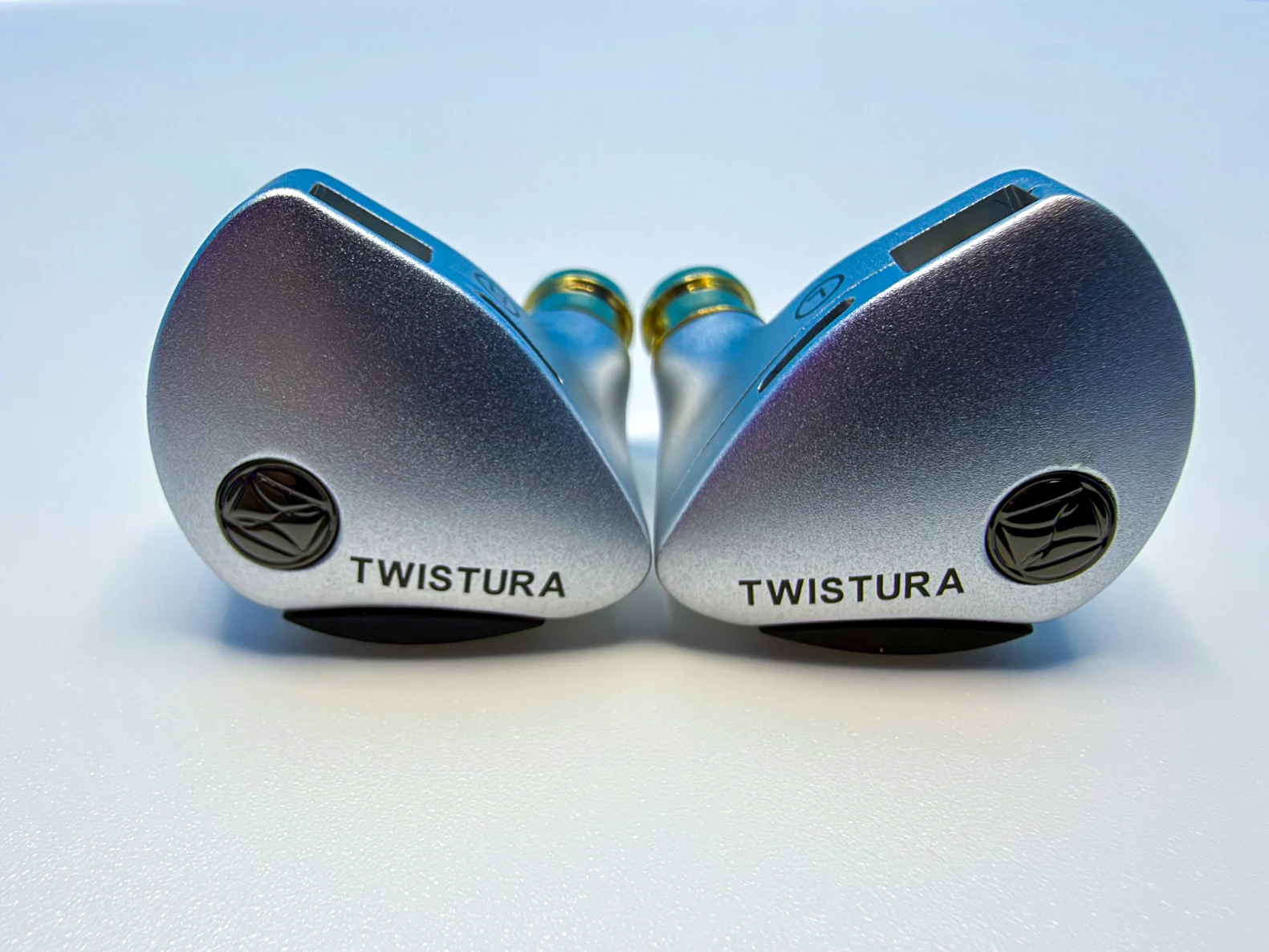
🎨 Somebody at TWISTURA Actually Cared
I’ve reviewed enough IEMs to recognize the routine.
Another box arrives. Another impressive-sounding driver material. Another spec sheet promises astonishing resolution, earth-shattering bass, and a soundstage apparently large enough to fit a professional football stadium.
You open the package, admire the shells, untangle the cable, and eventually discover a little fabric pouch that looks suspiciously similar to the one you received with the last dozen IEMs.
Nothing necessarily wrong with any of that.
But every once in a while, something different arrives.
Something that makes you stop unpacking and actually appreciate what you’re holding.
Enter the TWISTURA WoodNote.
This little monster caught my attention before I played a single note.
The aluminum shells are beautifully constructed. The modular cable looks and feels like something that belongs with a more expensive product. The accessories are carefully organized, with enough tuning options to make experimenting part of the fun.
And then there’s the case.
A gorgeous purple hard case.
Come on, TWISTURA. Seriously?
At this price?
Somebody over there clearly decided that the little things weren’t going to be little.
And that’s what I appreciate most about the WoodNote. There’s a sense of purpose in the design that goes beyond specifications, marketing language, or an expensive-looking photograph.
But gorgeous packaging only gets you through the door.
The music still has to earn its place in my collection.
Fortunately, the WoodNote doesn’t disappoint.
What surprised me wasn’t some miraculous new sound signature. It’s that this thoughtfully constructed little monster actually delivers an enjoyable listening experience to match its presentation.
To my ears, the sound leans energetic and somewhat bright, with the clarity and presence that tend to catch my attention. Interestingly, that’s not quite the warm, relaxed character other reviews describe. And with three interchangeable tuning nozzles, there’s a story worth exploring about how differently listeners can experience the same IEM.
But here’s what matters.
I enjoy listening to it.
Not because of the purple case. Not because it has a wood-fiber diaphragm. And certainly not because TWISTURA included enough accessories to open a small electronics shop.
I enjoy it because the sound has character.
And when you combine that enjoyment with the craftsmanship, thoughtful presentation, and sheer value of the complete package, something becomes pretty obvious.
TWISTURA didn’t just put together another IEM. It gave this product a personality.
And I respect the hell out of that.
🦖 Disclosure
Huge shoutout to Lucie and the entire TWISTURA team for sending the WoodNote to the GearZilla listening lab for review!
I’m incredibly grateful for their generosity, trust, and the opportunity to spend time with this thoughtfully designed little monster. It’s always exciting to work with manufacturers who clearly care about their products, and the WoodNote has given me plenty to appreciate, from its excellent craftsmanship and outstanding presentation to that absolutely gorgeous purple hard case.
But as always, generosity doesn’t buy a positive review, and provided gear doesn’t influence my final score. My listening impressions, opinions, and conclusions are entirely my own. No manufacturer, distributor, or retailer controls what I write.
My mission remains simple: understand what a product was designed to accomplish, evaluate how effectively it delivers, and share an authentic listening experience with fellow music lovers.
Listen first. Figure out the story later.
Huge thanks to Lucie and the TWISTURA team for trusting GearZilla with the WoodNote. Let’s make some noise! 🦖
🏭 The Story Behind TWISTURA: A Young Brand With Something to Prove
TWISTURA is a relatively young name in the crowded enthusiast-audio world. Established in 2024, the company has approached the market with several single-dynamic-driver designs rather than building an enormous catalog around every available driver configuration.
The WoodNote follows earlier releases such as the D-Major and represents an ambitious expression of the company’s approach to materials, acoustic engineering, and product presentation.
I find that interesting.
The IEM market has become extraordinarily competitive, particularly at the affordable end. Manufacturers regularly introduce new configurations, exotic diaphragm materials, increasingly complicated hybrid systems, and ambitious marketing claims.
Innovation is certainly welcome.
But sometimes I wonder whether we’re becoming so obsessed with what’s inside an IEM that we’ve forgotten to appreciate everything surrounding it.
TWISTURA appears to understand that hardware doesn’t exist in isolation.
How an IEM looks matters. How it feels matters. How easily you can change the tuning matters. The quality of the cable matters. Even the carrying case matters when you’re actually living with a product.
Those details don’t automatically improve the sound, but they absolutely shape the ownership experience.
And the WoodNote makes an unusually strong argument for paying attention to all of them.
This young brand is trying to make an impression by thinking beyond the driver.
That’s a philosophy I can appreciate.
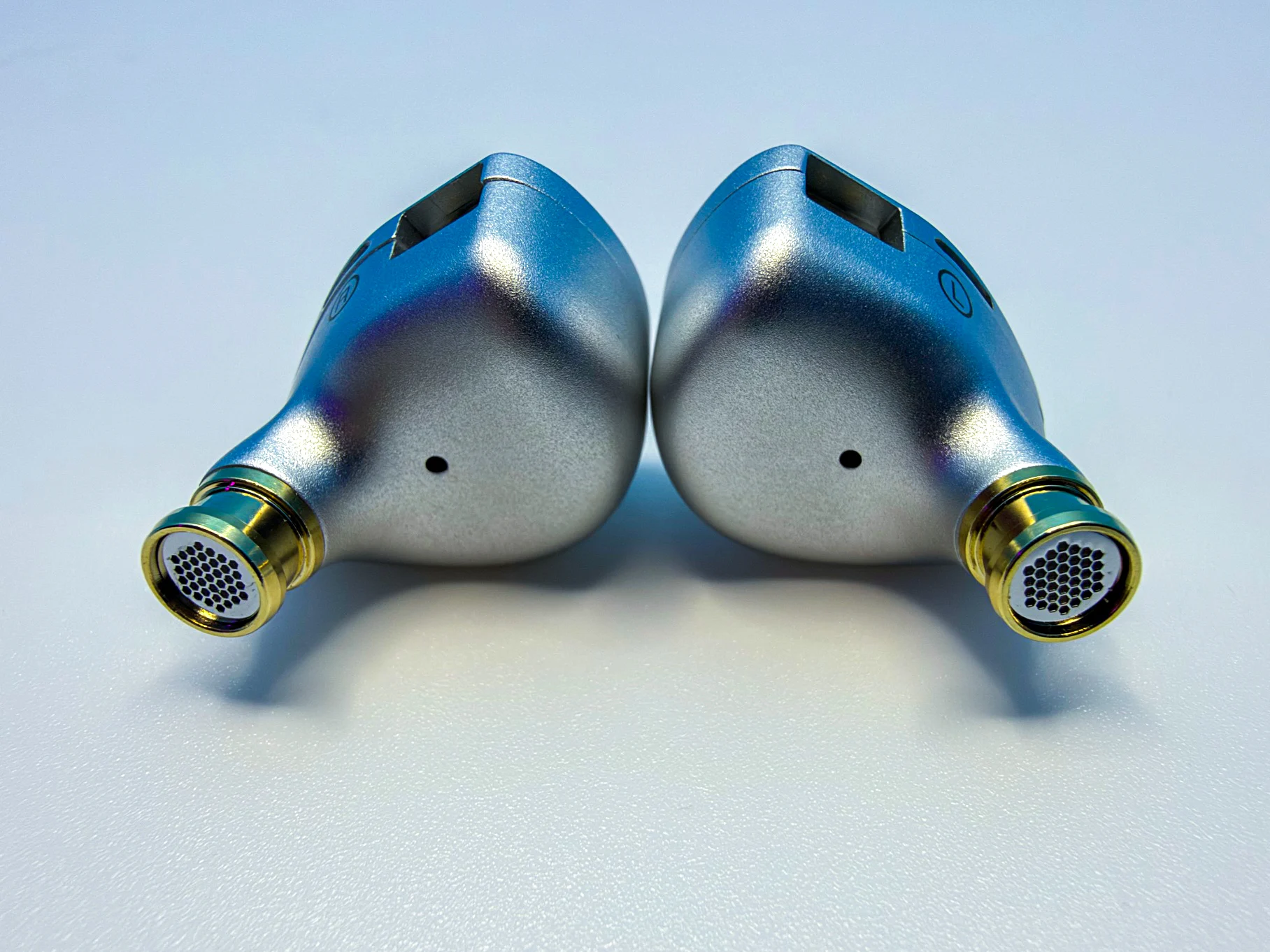
⚙️ What’s Inside the WoodNote? One Driver, Plenty of Thought
At the heart of the WoodNote is a 10mm dynamic driver featuring a natural wood-fiber composite diaphragm.
Yes, wood.
And before anyone starts imagining a miniature mahogany concert hall inside each ear, there’s some interesting engineering to understand.
🧬 Natural Wood-Fiber Composite Diaphragm
TWISTURA uses selected wood fibers formed into a dome-shaped composite diaphragm, supported by a flexible suspension.
The goal is to balance the diaphragm’s stiffness, damping, and movement to manage resonance and unwanted breakup.
It’s an intriguing materials-science application.
But I want to make an important distinction.
Wood doesn’t automatically mean warm sound.
An IEM’s final tonal character depends on far more than the diaphragm material. The magnetic circuit, diaphragm geometry, acoustic chambers, nozzle design, damping, and overall frequency-response tuning all help determine what reaches your ears.
You can build an energetic IEM using an organic diaphragm material, just as you can build a wonderfully warm-sounding IEM using a metal or synthetic diaphragm.
That distinction matters because the WoodNote’s wood-fiber story is interesting without needing to become a marketing fairy tale.
🧲 Dual-Magnet, Dual-Chamber Engineering
The WoodNote pairs its 10mm driver with a dual-magnetic motor system and a dual-chamber acoustic design.
The magnetic system is intended to provide efficient driver control, while the acoustic chambers and guided ventilation help manage airflow, internal pressure, and resonance.
It’s a relatively sophisticated architecture for a single-dynamic-driver IEM.
And that’s where my appreciation for the design begins.
TWISTURA could have focused its marketing entirely on the novelty of using wood fibers.
Instead, the WoodNote incorporates several complementary engineering decisions.
The diaphragm is one part of a larger system.
One driver. Multiple design choices. A clear effort to make everything work together.
🎛️ Three Tuning Nozzles: Let Your Ears Decide
The WoodNote includes three interchangeable tuning-nozzle configurations:
- Standard: The baseline tuning, generally described by other reviewers as fuller and smoother.
- Vocal Enhanced: An alternative that shifts the presentation toward greater upper-midrange presence.
- Instrumental: Another alternative with a different balance of bass, midrange, and upper-frequency energy.
These options aren’t cosmetic.
Published measurements and reviewer comparisons indicate that nozzle selection can meaningfully change the tonal balance, particularly the relationship between bass and upper-midrange energy.
That’s especially relevant to my experience because I hear the WoodNote as leaning bright, while several other reviewers describe a considerably warmer presentation.
Different nozzles, ear tips, insertion depths, and ears can all shape that experience.
The important thing is that TWISTURA gives listeners options.
Rather than assuming everyone should enjoy the same tuning, the WoodNote encourages experimentation.
I appreciate an IEM that invites you to find your own monster instead of insisting there’s only one correct way to listen.
📋 Technical Specifications
- Driver: Single 10mm dynamic driver
- Diaphragm: Natural wood-fiber composite dome
- Motor: Dual-magnetic system
- Acoustic Architecture: Dual-chamber construction with guided ventilation
- Shell: CNC-machined aluminum alloy
- Impedance: 18Ω
- Sensitivity: 125 dB/V, manufacturer-rated
- Frequency Response: 8Hz-21kHz, manufacturer-rated
- THD: ≤0.05%, manufacturer-rated
- Nozzle Diameter: 6mm
- Shell Weight: Approximately 7g per earpiece
- Connector: 0.78mm 2-pin
- Cable Terminations: Interchangeable 3.5mm single-ended and 4.4mm balanced
- Tuning: Three interchangeable nozzle pairs
- Ear Tips: Four styles, three sizes per style
- Case: Purple rigid carrying case
- Original Review Price: Approximately $179 USD
None of those specifications alone tell you whether you’ll enjoy the WoodNote.
But taken together, they show how much attention TWISTURA invested in its design.
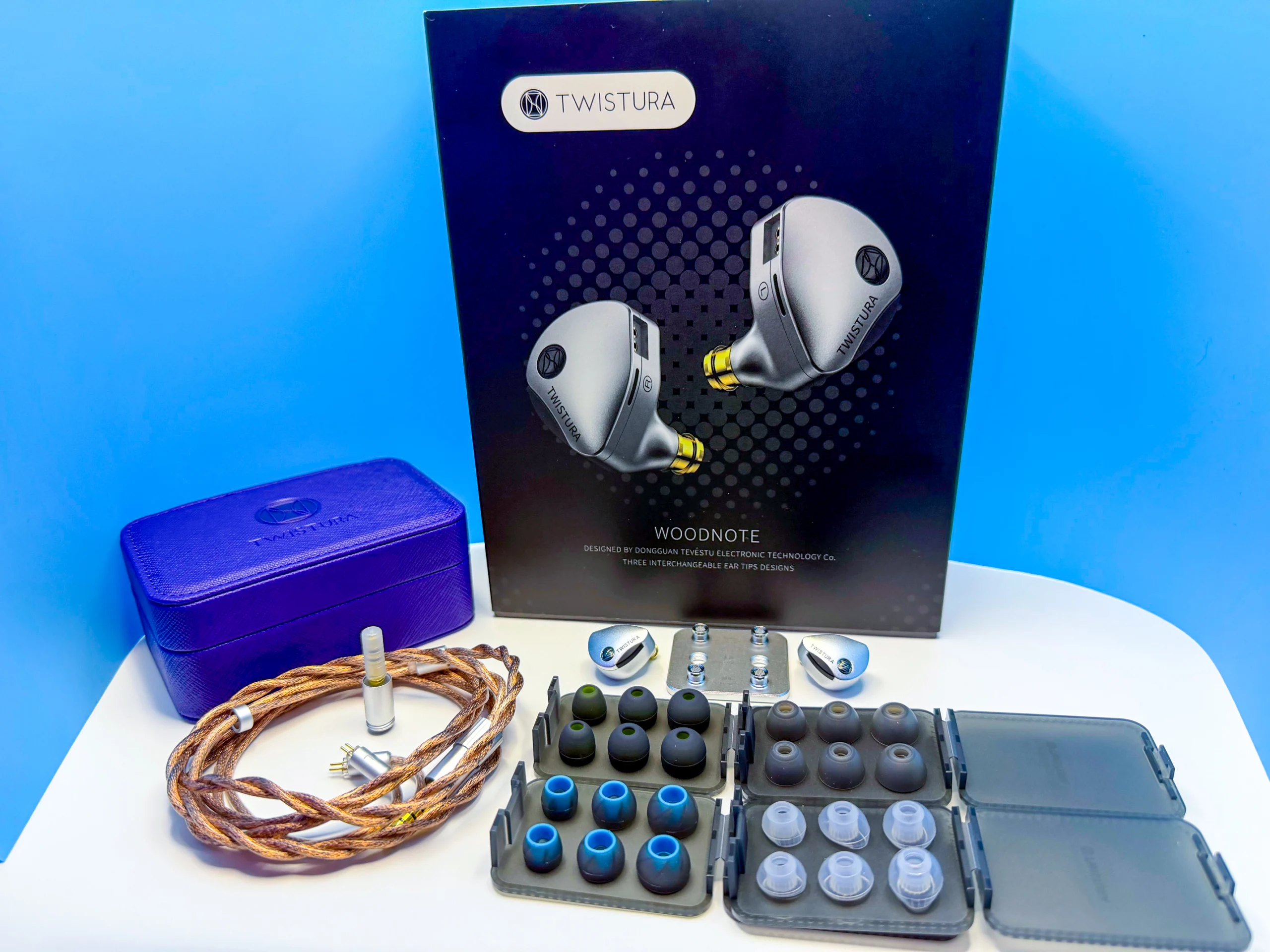
📦 First Impressions: Wait, All of This Comes in the Box?
There are good unboxing experiences.
Then there are packages that make you wonder whether the manufacturer accidentally included someone else’s accessories.
The WoodNote comes surprisingly close to the latter.
TWISTURA absolutely nailed the presentation.
Everything feels deliberate, from the carefully arranged IEMs to the organized accessories and beautifully finished carrying case.
This doesn’t feel like somebody gathered a collection of generic extras at the last minute.
It feels like an entire package designed to belong together.
And I love that.
🎨 The Purple Case Deserves Its Own Applause
I have to talk about this case.
It’s purple.
Not another black cloth pouch. Not a little synthetic leather bag with a drawstring. Not something that looks like it came free with a pair of sunglasses.
A proper, distinctive hard case with an attractive finish and soft interior.
It’s gorgeous.
And there’s something wonderfully unnecessary about that decision.
TWISTURA could’ve used a generic case, saved some money, and probably heard very few complaints.
Instead, somebody decided the WoodNote deserved something with character.
Is it the most important part of an IEM?
Of course not.
Does it improve frequency response, imaging, or bass extension?
Absolutely not.
Do I love it anyway? You better believe I do.
The case makes the WoodNote feel special, and that adds value.
🔌 A Modular Cable That Belongs Here
The included copper cable continues the premium impression.
It’s substantial, beautifully finished, and equipped with interchangeable 3.5mm and 4.4mm terminations.
Even better, the modular connection uses a locking mechanism instead of relying solely on friction to hold everything together.
That’s a detail I appreciate.
When you’re moving between portable dongles, DAPs, desktop amplifiers, and different outputs, being able to swap the termination without changing the entire cable is genuinely useful.
It’s also the sort of convenience that shouldn’t require purchasing a separate aftermarket accessory.
The one consideration is ergonomics.
A substantial cable can feel luxurious in your hands without necessarily being the most comfortable thing hanging around your ears. Other reviewers have reported stiffness or earhooks that interfere with fit.
It’s something worth considering, particularly for those of us with smaller ears.
🎧 Twelve Pairs of Ear Tips
Four styles of ear tips.
Three sizes per style.
Twelve pairs altogether.
And they’re neatly organized rather than tossed into a little bag.
Thank you, TWISTURA.
Ear tips affect seal, comfort, insertion depth, perceived bass response, and upper-frequency balance. Having several choices included is more than a generous gesture.
It gives you the chance to find the best match for your ears without spending extra money right away.
And because the WoodNote includes interchangeable tuning nozzles, the tips and nozzles offer considerable flexibility.
This is what I mean by thoughtful packaging. Not simply more stuff, but more useful stuff.
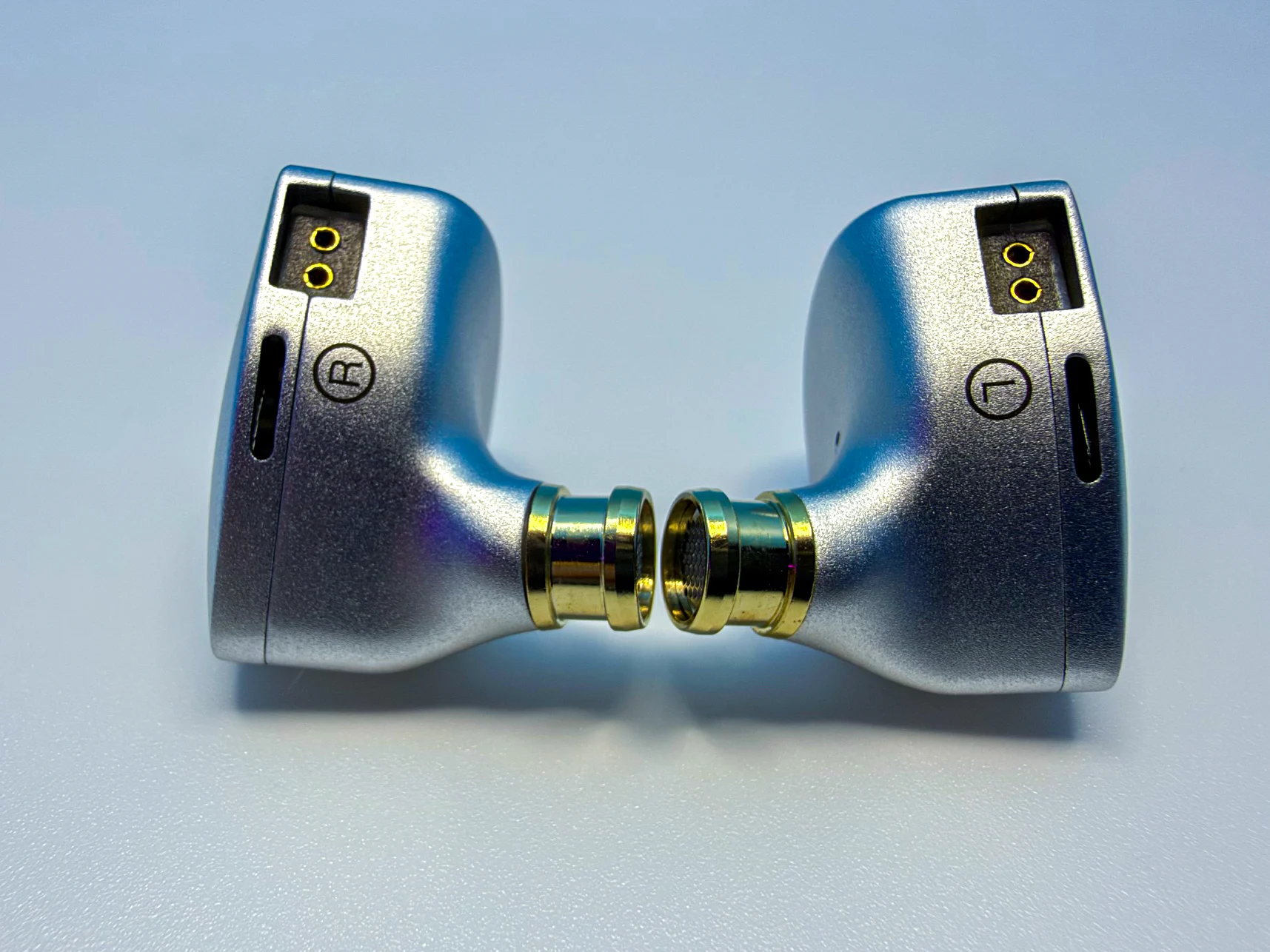
🛠️ Build Quality: Premium Without the Pretension
The WoodNote’s aluminum shells are beautiful.
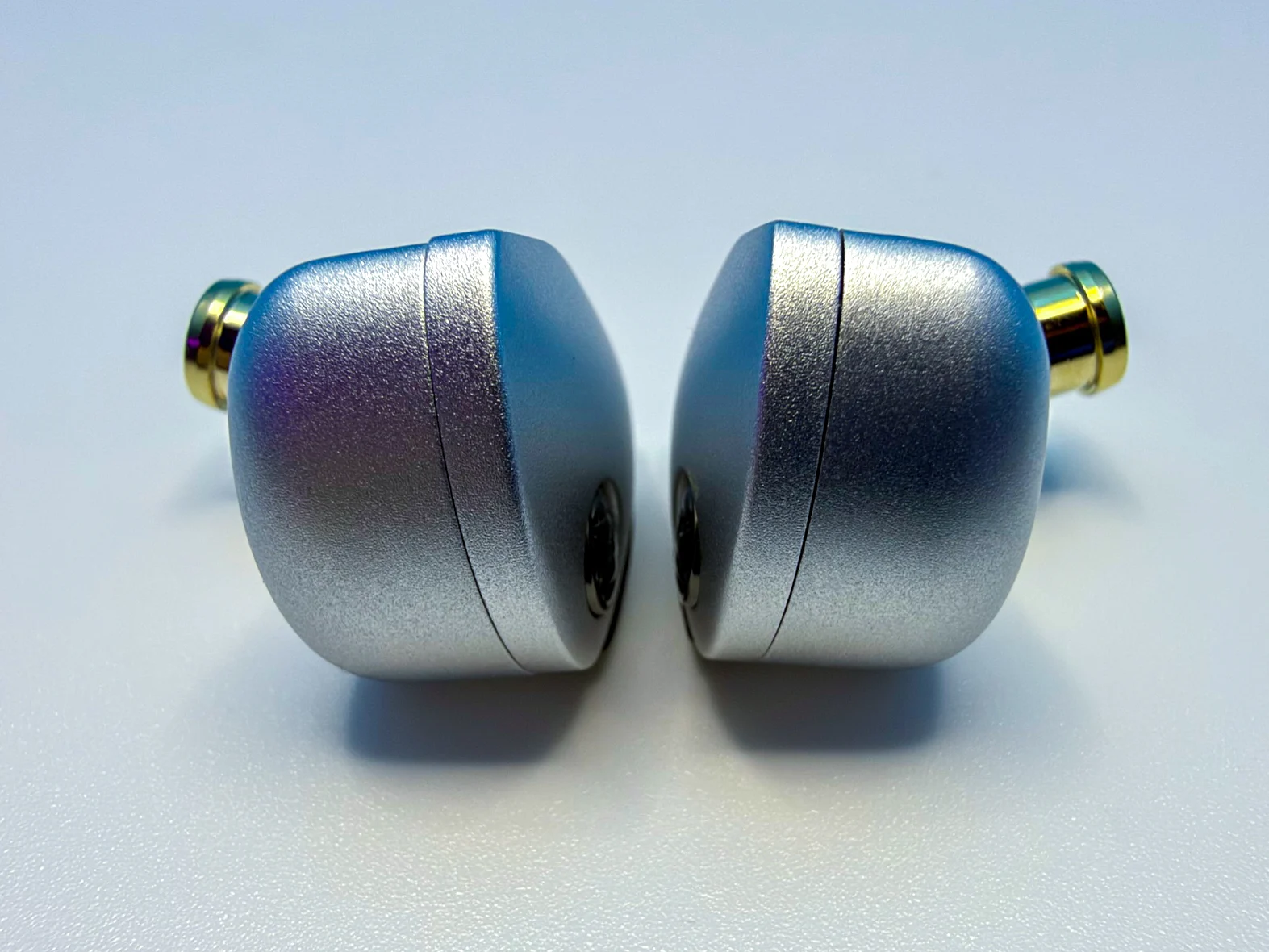
The machining is clean, the contours are deliberate, and the overall construction communicates quality without resorting to enormous housings or excessive ornamentation.
I particularly appreciate that TWISTURA didn’t make these shells unnecessarily large.
As someone with smaller ears, I’ve developed a healthy appreciation for manufacturers that remember an IEM actually needs to fit inside a human ear.
A beautiful shell is far less appealing when it feels like you’re negotiating with a stubborn piece of furniture.
The WoodNote takes a more restrained approach.
Its compact metal construction feels premium, while the overall design avoids turning the physical hardware into a spectacle.
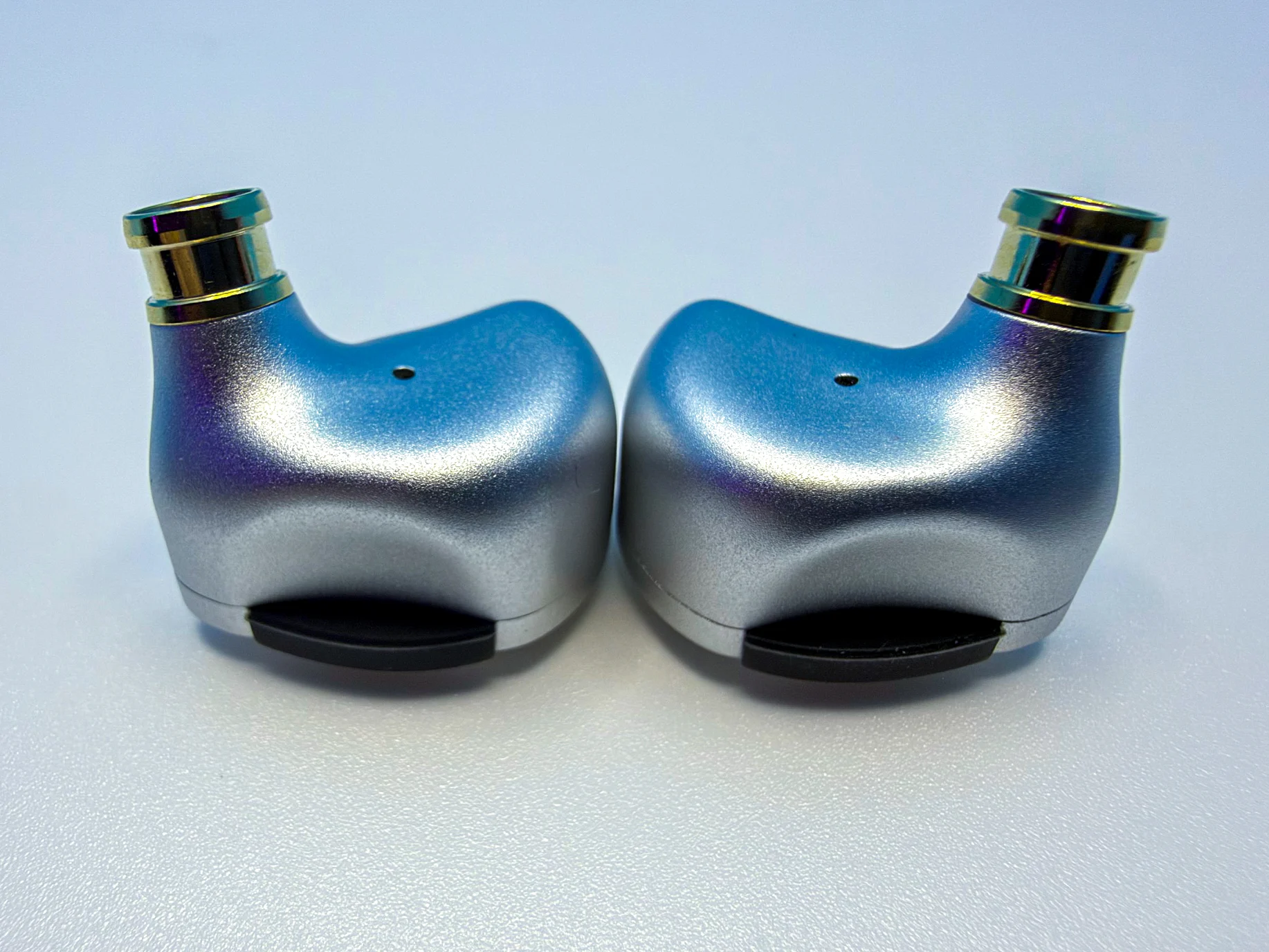
There’s also a distinctive dark silicone element integrated into the shell.
Whether every visual detail contributes meaningfully to function is debatable, but the design gives the WoodNote a recognizable identity.
And that matters in a category where products increasingly resemble one another.
The cable, nozzles, metal shells, and accessory organization all reinforce the same impression.
Somebody paid attention.
Not just to the product photography.
To the actual product.
🎧 Review Setup: The GearZilla Listening Lab
Every GearZilla review starts in the same place:
Listen first. Figure out the story later.
I don’t begin with a frequency-response chart and decide what I’m supposed to hear.
I listen to music.
Familiar music. Music I love. Recordings I’ve heard through countless headphones, amplifiers, and IEMs.
Eventually, I come back to one question:
Does this thing help me enjoy the music I already love in a new way?
With the WoodNote, the answer starts with the presentation. I appreciated its build quality, accessories, and obvious attention to detail before I even got into the sound.
But I don’t give an IEM a pass because it has beautiful packaging.
The sound needs to hold up independently.
And my initial listening has been encouraging.
I enjoy its presentation. The sound has brightness and energy that work for me, and the overall experience feels well matched to its price.
For the full evaluation, I want to distinguish the WoodNote’s natural tuning from changes introduced by nozzle selection, ear tips, and source pairing.
🖥️ Desktop Listening Equipment
GearZilla’s desktop inventory includes:
- Streaming Source: Apple Music Lossless
- Network Streamer: Fosi Audio S3 Lite
- DACs and Amplifiers: Topping DX5 II, FiiO K11, Loxjie P20, and xDuoo DM-01
🎒 Portable Listening Equipment
Available sources in the GearZilla collection include:
- iFi iDSD Gr2
- Astell&Kern PD20
- Astell&Kern AKHC5
- iBasso DC-Tonfa
- Cayin RU3
- TANCHJIM SPACE II
- HiBy R4
- HiBy W4
- NICEHCK NK1 Ultra
Testing transparency: These are components in the GearZilla listening inventory. Listing them doesn’t imply that every component has been used in a documented WoodNote listening session. Specific source, nozzle, and ear-tip combinations will be identified in the completed review.
My preferred approach is to establish how the WoodNote sounds without EQ first, then explore whether tuning adjustments improve the experience.
The goal isn’t to turn the WoodNote into something else. It’s to understand what TWISTURA actually built.

Every monster has its own genetic signature.
The WoodNote’s DNA isn’t built around maximum driver count, outrageous bass, or some extraordinary claim about redefining sound.
It’s built around craftsmanship, completeness, versatility, musical engagement, and value.
And that gives this little monster an interesting identity.
K • Kill Shot
The complete ownership experience.
The WoodNote’s greatest advantage isn’t any single specification.
It’s how much you get, how well everything is presented, and how deliberately the pieces fit together.
Beautiful aluminum shells. Modular cable. Tuning nozzles. Multiple ear-tip styles. Thoughtful packaging. A gorgeous hard case.
And sound that makes the overall experience worth enjoying.
TWISTURA understands that value is about more than what’s inside the driver housing.
A • Anatomy
One driver, thoughtfully engineered.
The 10mm natural wood-fiber composite diaphragm is supported by a dual-magnetic motor, dual-chamber acoustic architecture, guided ventilation, and interchangeable tuning nozzles.
It’s a cohesive approach to acoustic design.
I can’t attribute every quality I hear to a particular material or chamber, but I appreciate the effort behind the complete system.
This isn’t complexity for its own sake.
I • Impact
An energetic presentation that doesn’t need to dominate.
At least from my initial listening, the WoodNote’s appeal isn’t based on trying to overwhelm me.
Instead, there’s an enjoyable sense of presence and clarity that complements its single-driver identity.
Bass quantity, physical slam, and dynamic performance still deserve their own careful evaluation, particularly across the different tuning nozzles.
But the overall character has already made a favorable impression.
J • Joy
This is where the WoodNote really gets me.
There’s joy in opening a product that feels special.
There’s joy in finding beautifully finished hardware, thoughtful accessories, and little touches that somebody clearly didn’t have to include.
And there’s considerably more joy when the product actually sounds good.
I don’t need every IEM in my collection to be a technical champion.
I want products with personality.
I want to enjoy familiar music.
I want an occasional surprise.
The WoodNote delivers a wonderful first impression and an enjoyable listening experience at a price that makes the package feel especially rewarding.
U • Unleashed
Don’t judge the WoodNote by driver count alone.
Its strengths are broader than that.
This is an IEM for someone who appreciates carefully constructed hardware, wants flexibility without immediately purchasing additional accessories, and enjoys exploring different sound signatures.
It’s also a reminder that a product doesn’t have to be revolutionary to be genuinely desirable.
Sometimes careful execution is enough.
The WoodNote isn’t trying to become the biggest monster in the city. It’s trying to be one of the most thoughtfully equipped.
🎼 Sound: A Little Brightness, a Lot of Personality
Here’s where the TWISTURA WoodNote gets particularly interesting.
Several reviewers describe it as warm-neutral, naturally balanced, and relatively forgiving, especially with its Standard tuning nozzles.
My ears tell me something a little different.
I hear a bright-leaning, energetic IEM with satisfying low-frequency support, clear vocal presence, and an upper end that likes to make itself known.
And I enjoy it.
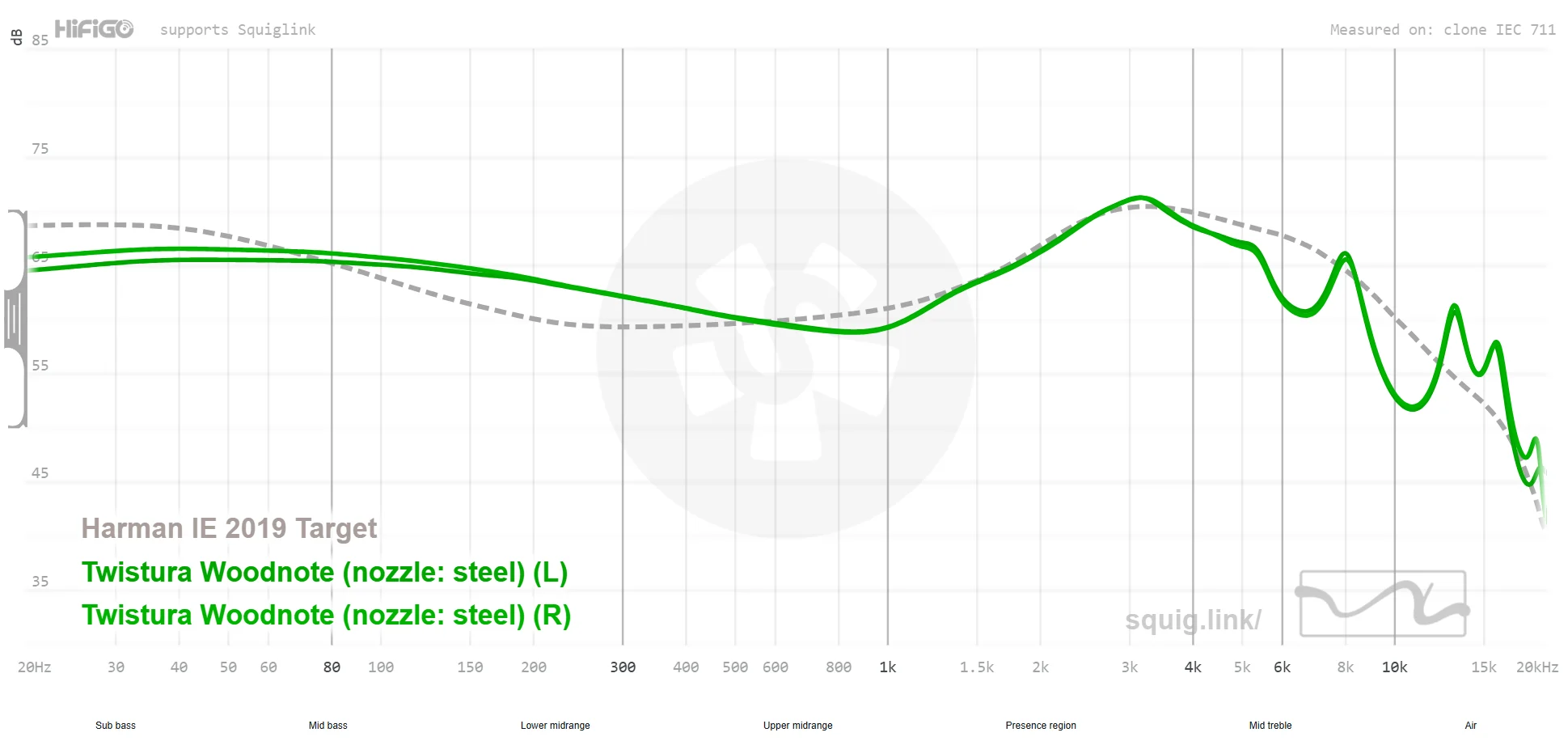
Now, thanks to a frequency-response measurement published by Mark at Super Review via Squiglink*, we have a little more insight into what’s happening behind the sound.
The graph measures the WoodNote with its steel tuning nozzles and compares its response against the Harman IE 2019 target. A few things immediately stand out.
First, the bass is elevated relative to the lower midrange, but it doesn’t display the dramatic low-frequency shelf associated with more aggressive bass-focused tuning.
Second, the response gradually reduces in the lower midrange before climbing substantially into the upper midrange and presence regions, peaking around 3kHz.
Third, the higher frequencies show several peaks and valleys rather than an entirely smooth downward progression.
That combination helps explain why the WoodNote can possess satisfying bass and natural musical body while still sounding lively, clear, and somewhat bright.
It’s not a bass-light IEM pretending to be detailed. It’s a balanced foundation with an energetic upper-frequency personality.
And there’s one more thing I appreciate about this measurement.
The left and right channels follow each other closely through much of the frequency range.
That’s encouraging from a manufacturing-consistency perspective, although one measured sample can’t establish quality control across every unit, and frequency-response matching alone doesn’t prove imaging accuracy.
Still, it’s a nice detail.
The WoodNote’s interchangeable tuning nozzles make this especially interesting because different configurations can change the balance between bass, midrange, and treble. The graph we’re discussing represents the steel-nozzle configuration, not every possible version of the WoodNote’s sound.
And that distinction matters.
The graph helps explain what I’m hearing. It doesn’t get to decide whether I enjoy it.
That’s my job.
🥁 Bass: A Foundation, Not a Demolition Crew
Looking at the WoodNote’s frequency-response curve, the first thing I notice is how relatively restrained its low-frequency elevation is.
The bass rises gently relative to the lower midrange, extending through the sub-bass and mid-bass without an enormous shelf or exaggerated hump.
That’s an interesting tuning choice.
Rather than pushing bass so far forward that everything else must compete for attention, the WoodNote appears designed to preserve low-frequency presence while leaving room for the midrange and upper frequencies.
The graph suggests that bass is an important part of the foundation, but not the defining feature of the entire presentation.
And I appreciate that.
I’m certainly not opposed to powerful bass. My ZiiGaat Doscinco proves I love a warm, satisfying low end when it’s executed beautifully.
But not every IEM needs to bring the same monster to the party.
Sometimes I want bass that supports the music rather than dominates it.
The WoodNote’s measured low-frequency balance matches that approach.
The next question is how well the driver converts that tuning into actual performance.
A frequency-response graph can help us understand bass quantity. Bass texture, perceived speed, note definition, and physical impact require listening.
The WoodNote seems to support the music rather than bury it under a mountain of bass.
And that’s a perfectly reasonable design decision.
🎤 Midrange & Vocals: The Climb Toward Clarity
Now we’re getting into the part of the frequency response that helps explain the WoodNote’s personality.
The graph shows a gradual reduction in energy through the lower midrange, reaching its lowest relative point around 800Hz to 1kHz before climbing toward a prominent peak near 3kHz.
That upper-midrange rise is important.
It’s a region strongly associated with vocal intelligibility, instrumental presence, and the forward energy of many recordings.
When you emphasize that region, vocals and certain instruments can become more prominent without making the entire sound signature bright.
And that’s consistent with my first impression of the WoodNote.
I hear clarity and presence.
There’s enough upper-midrange energy to give the presentation a lively character, even though the bass hasn’t disappeared.
It also helps explain how two listeners might describe the same IEM differently.
Someone focusing on the WoodNote’s low-frequency support and overall naturalness may describe it as warm-neutral.
Another listener, particularly one sensitive to upper-midrange energy, may notice the 3kHz emphasis and describe the presentation as brighter.
Both descriptions can reflect genuine listening experiences.
The key distinction is whether the WoodNote retains enough lower-midrange body to keep the vocals believable.
That’s the balance I care about.
I love vocal lift, but I don’t want it at the expense of emotional weight or natural timbre.
The WoodNote’s upper-midrange energy gives vocals an opportunity to step forward. Whether they truly float depends on the listening experience, not the graph.
🎯 Instrument Separation & Placement: Keeping the Music Organized
One reason I enjoy an energetic IEM is that it makes individual instruments easier to distinguish.
A prominent upper-midrange region can emphasize string attack, vocal articulation, and certain percussion textures.
That increased presence can create a stronger subjective impression of separation.
But here’s where I want to be careful.
Hearing something more prominently doesn’t necessarily mean you’re hearing more information.
A frequency-response curve describes tonal balance. It doesn’t directly measure an IEM’s ability to separate individual instruments, resolve complex arrangements, or position sounds within a stereo image.
Those qualities require listening comparisons.
The WoodNote’s single-dynamic-driver architecture is interesting because one driver reproduces everything rather than splitting it across multiple driver types.
That can simplify crossover requirements and avoid some integration challenges associated with more complicated hybrid designs.
But a single driver isn’t automatically more coherent, just as multiple drivers aren’t automatically more resolving.
Execution matters.
What I appreciate about TWISTURA is that the company has clearly invested thought into the entire acoustic system rather than assuming additional drivers are the only path toward better performance.
And that makes the WoodNote worth taking seriously.
More drivers don’t guarantee better music. Better engineering gives the music a fighting chance.
🏟️ Soundstage & Imaging: How Big Is This Wooden Monster?
Ah, soundstage.
My favorite rabbit hole.
I love an expansive presentation. Width, depth, air, believable instrument placement, and vocals that seem to escape the little shells in my ears.
Give me a convincingly holographic recording, and I’m a happy kaiju.
The WoodNote’s published reviews disagree somewhat about its spatial performance.
Some listeners describe a fairly spacious presentation with good separation. Others hear a more conventional in-ear soundstage.
That’s not particularly surprising.
Recordings, individual anatomy, insertion depth, frequency response, channel matching, and other factors influence soundstage perception.
The Super Review measurement gives us one useful piece of the puzzle.
The left and right channels track closely across much of the measured range.
That’s encouraging because large frequency-response differences between channels can affect perceived balance and potentially disrupt imaging.
But close channel matching doesn’t automatically mean an enormous soundstage or precise three-dimensional placement.
And the upper-midrange and treble balance can affect perceived openness without changing the presentation’s physical dimensions.
In other words, the WoodNote may sound clear and spacious without delivering the enormous holographic environment I personally chase.
Those are different qualities.
A well-organized stage isn’t necessarily a giant stage. And a giant stage isn’t necessarily well organized.
That’s exactly why GearZilla evaluates width, depth, separation, and placement independently.
🔬 Detail & Resolution: Bright Doesn’t Automatically Mean Better
I’ve made this distinction before, and the WoodNote gives me another reason to revisit it.
An IEM can sound incredibly detailed because certain frequencies emphasize sounds that are already present in a recording.
A little more upper-midrange or treble energy can make guitar picks, vocal consonants, cymbal attacks, and other textures easier to notice.
That can be enjoyable.
But it doesn’t necessarily mean the driver is extracting information that another IEM somehow missed.
The WoodNote’s measured rise toward approximately 3kHz, combined with its uneven higher-frequency response, helps explain why certain elements may draw attention.
And that’s perfectly fine.
I’m enjoying its clarity.
What interests me is whether the WoodNote can maintain that clarity when the recording becomes complicated.
Can I follow an individual instrument through a dense arrangement?
Do subtle background elements remain distinguishable?
Does the presentation preserve texture without turning every sound into an artificially sharpened outline?
Those questions separate perceived brightness from meaningful technical performance.
The WoodNote doesn’t need to outperform every hybrid in its price range to make a strong impression.
But I want its clarity to feel purposeful, not simply exaggerated.
There’s a difference between turning up the lights and revealing what’s actually in the room.
✨ Treble & Air: A Little Spice in the Wooden Recipe
Here’s where my ears and the measurement begin telling a similar story.
The WoodNote leans bright in my listening.
And the Super Review graph shows several features that help explain why.
The broad rise into the presence region peaks around 3kHz, while the higher frequencies include notable variations around approximately 6kHz, 8kHz, and beyond.
There’s a dip near 6-7kHz, followed by another peak around 8kHz and additional unevenness in the upper treble.
Now, we need to treat those higher-frequency measurements carefully.
The graph was produced using a clone IEC 711 coupler, and upper-treble measurements are especially sensitive to insertion depth, coupler resonance, and measurement technique.
So I wouldn’t automatically associate every visible peak with a particular sound or claim that a graph establishes exactly how much air an IEM produces.
But the overall pattern does reinforce something I hear.
This isn’t an IEM with a completely subdued upper-frequency personality.
There’s energy here.
And I like it.
I enjoy that articulation and liveliness when they serve the music.
The important question is whether that energy remains enjoyable across recordings and listening levels.
Brightness can become tiring when upper-midrange emphasis makes certain vocals sound aggressive or when cymbals and percussion get too sharp.
That’s where the WoodNote’s interchangeable tuning nozzles and included ear tips become more than just attractive accessories.
They give listeners practical ways to experiment with the balance.
And that’s part of what makes this product interesting.
I don’t want to remove the WoodNote’s personality. I want to understand how to get the most enjoyment from it.
🎵 Tonality & Timbre: Wood Doesn’t Automatically Mean Warm
I have to return to the wood-fiber diaphragm because it’s central to the WoodNote’s identity.
The moment you mention wood in audio, you’re tempted to talk about warmth, richness, organic timbre, and all those lovely descriptive words we associate with natural materials.
And sometimes those associations are useful.
But they can also become misleading.
A diaphragm’s material properties influence its mechanical behavior, but they don’t automatically determine the full frequency response or subjective tonal character.
The WoodNote demonstrates why that distinction matters.
Its measured response combines relatively restrained bass elevation, a lower-midrange reduction, and a prominent rise into the upper midrange.
To my ears, that produces a lively, somewhat bright-leaning sound rather than the consistently warm presentation some might expect from its name or diaphragm material.
And I appreciate that.
There’s something refreshing about an IEM that doesn’t fit neatly into a story we’ve already written for it.
The WoodNote uses an interesting natural composite material, but its sound comes from the complete acoustic design.
Not from a romantic assumption about what wood is supposed to sound like.
The wood is part of the engineering story. The music gets the final word.
☁️ Comfort & Fit: Small Shells, Big Appreciation
I don’t have enormous ears.
I’ve reviewed enough oversized IEMs to know that beautiful engineering means little if you can’t wear them comfortably.
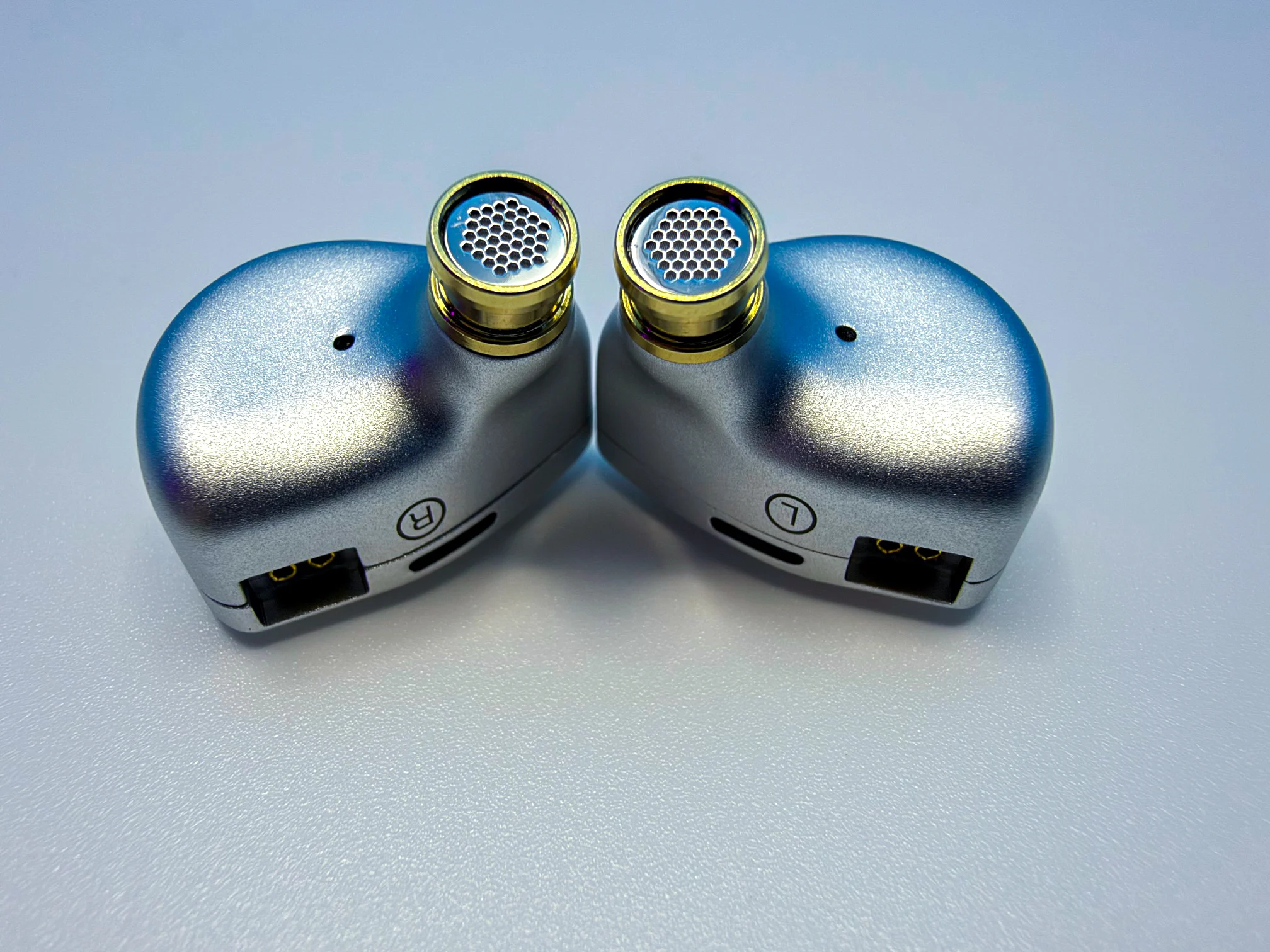
The WoodNote’s compact aluminum housings are a welcome design choice.
At approximately 7g per earpiece, the shells avoid some of the excessive bulk that comes with increasingly elaborate multi-driver configurations.
The included ear-tip selection also gives owners a useful starting point for establishing a proper seal.
But fit is about the entire system.
The cable’s stiffness, earhook shape, insertion depth, nozzle diameter, and tip material can all affect comfort.
That’s why I’d encourage WoodNote owners to explore the included accessories before buying replacements.
TWISTURA offers plenty of options.
Use them.
A great IEM shouldn’t require a separate accessory shopping spree just to become comfortable.
🔥 Source Pairing, Nozzle Rolling & EQ: Find Your Own WoodNote
I love an IEM you can experiment with.
Not because every product needs endless modification, but because small changes can meaningfully change how we experience our favorite music.
The WoodNote gives you two physical tuning tools right out of the box.
First, the interchangeable nozzles.
Second, the ear tip selection.
That’s a useful combination.
If the presentation feels too bright, the Standard nozzle may be worth exploring. If you’d prefer additional vocal presence or a leaner balance, the alternatives provide another direction.
Ear tips can also change seal, insertion depth, and how you perceive upper frequencies.
And then there’s source pairing.
A smoother or warmer source may be appealing to someone who wants to retain the WoodNote’s clarity without emphasizing its upper-frequency energy.
But I wouldn’t assume that a different DAC will completely rewrite the IEM’s personality.
I’d establish a reliable fit, compare the nozzles, and only then consider source changes or EQ.
Don’t immediately perform reconstructive surgery on a monster you haven’t finished getting to know.
🦖 The Purple Case Test
Every once in a while, a product makes me think about how we define value.
We spend an incredible amount of time discussing drivers, frequency-response targets, acoustic chambers, distortion measurements, and whether an IEM delivers enough microdetail to justify its price.
All worthwhile conversations.
But I’ve started thinking about another question.
Does the manufacturer make you feel like your purchase mattered?
That’s the Purple Case Test.
It’s not an official engineering standard.
No international committee measures accessory generosity in units of purple.
At least, I hope there isn’t.
But the idea is simple.
Did the manufacturer put meaningful thought into the experience of owning the product?
TWISTURA clearly did.
The WoodNote doesn’t simply arrive with the bare minimum.
It arrives with options.
Options for listening. Options for fit. Options for connecting to different sources. And a carrying case that’s distinctive enough to become part of the product’s identity.
It’s a surprisingly complete package.
And none of those details would mean much if I didn’t enjoy the sound.
Fortunately, I do.
That’s what makes the WoodNote interesting.
Not that TWISTURA included a beautiful case.
They seem to have applied the same attention to the whole product as they did to the case.
That’s the art of giving a damn.
💰 Value: The Whole Package Matters
The WoodNote originally launched at around $179, putting it among some seriously competitive single-dynamic-driver and hybrid IEMs.
At that price, buyers have plenty of choices.
Some competitors may offer more bass. Others may deliver stronger technical separation, greater resolution, or a different tonal balance.
So why consider the WoodNote?
Because it’s now $129, and its value extends beyond sound alone.
You get beautifully finished aluminum shells, a specialized dynamic driver, interchangeable tuning nozzles, a substantial modular cable, twelve pairs of ear tips, and one of the most attractive carrying cases I’ve seen in this segment.
And you’re getting a sound I genuinely enjoy.
When discounted below its original price, the package becomes even more compelling.
But I wouldn’t recommend the WoodNote simply because it includes more accessories than competing products.
Extra items don’t automatically make an IEM better.
They matter when they’re useful, thoughtfully chosen, and complement a genuinely enjoyable product.
The WoodNote checks those boxes, and it makes me appreciate what TWISTURA is trying to accomplish.
Sometimes outstanding value isn’t about getting the cheapest product. It’s about getting a product that makes the money feel well spent.
👹 Who Is This For?
The WoodNote makes a compelling case for listeners who want a thoughtfully constructed single-dynamic-driver IEM with substantial accessories and an engaging presentation.
It’s particularly appealing to enthusiasts who appreciate premium materials, modular cables, interchangeable tuning, and the ability to experiment without immediately buying aftermarket accessories.
The WoodNote also makes a strong case as an entry point into more premium IEM ownership.
The packaging is impressive. The hardware feels substantial. The accessories encourage exploration. And the whole experience makes the hobby feel special.
That matters.
On the other hand, listeners who want enormous bass impact, guaranteed relaxed treble, or the technical strengths associated with some multi-driver hybrids should evaluate the WoodNote carefully.
Its tuning flexibility is welcome, but those different configurations won’t necessarily transform it into every kind of IEM.
The WoodNote is for somebody who appreciates the complete experience, not just the specification sheet.

📊 GearZilla Scorecard
✨ Clarity: 4.6/5
Clear, articulate, and engaging, with upper-midrange energy that brings detail forward without making the entire presentation analytical.
🎤 Midrange & Vocals: 4.5/5
Enjoyable vocal presence and articulation, although the upper-midrange emphasis may occasionally sacrifice some warmth and body.
🥁 Bass: 4.3/5
A satisfying low-frequency foundation without overwhelming the presentation. More supportive than dominant, with a measured balance that favors overall coherence.
🎯 Separation & Placement: 4.4/5
Capable instrument organization and separation for a single dynamic driver, although it doesn’t necessarily match the layering of stronger technical performers.
🏟️ Width & Depth: 4.2/5
A convincing sense of space, though it lacks the enormous holographic scale I personally chase. More naturally presented than dramatically expansive.
🔬 Detail & Resolution: 4.4/5
Good perceived detail and articulation, although some of that impression comes from the energetic upper-midrange tuning rather than outright technical resolution.
✨ Treble & Air: 4.3/5
Enjoyably bright and lively, with welcome articulation and openness. Its upper-frequency energy won’t appeal to every listener equally.
🦴 Slam & Dynamics: 4.3/5
Engaging dynamic expression with enough punch to keep the music lively, though it isn’t designed for massive physical impact.
🎤 Vocal Lift: 4.5/5
An appealing vocal presence, supported by an elevated upper midrange, though it doesn’t consistently achieve an exaggerated floating or holographic presentation.
⚡ Speed & Transients: 4.5/5
Lively articulation and responsive attacks give the WoodNote an energetic, engaging personality.
🎵 Tonality & Timbre: 4.5/5
An enjoyable single-driver presentation with natural qualities, although its brighter edge may occasionally compete with warmth and richness.
🎛️ Tuning & Pairing Flexibility: 4.8/5
Three interchangeable tuning nozzles, extensive ear-tip options, and a modular cable provide excellent versatility and opportunities for experimentation.
☁️ Comfort & Fit: 4.6/5
Compact aluminum shells and generous ear-tip selection are promising, although cable stiffness and individual anatomy can affect the experience.
🎨 Design & Build: 4.9/5
Beautifully machined aluminum construction, distinctive styling, and a clear sense of purpose throughout the physical design.
📦 Accessories & Presentation: 5.0/5
One of the WoodNote’s defining strengths. Outstanding packaging, modular cable, multiple tuning options, generous ear tips, and that unforgettable purple hard case.
💰 Value: 4.9/5
An exceptional complete package for the price, especially at a discount. TWISTURA makes a strong case for thoughtful engineering and generous accessories.
🦖 Overall GearZilla Score: 4.5/5 | S-Class Kaiju
The overall rating is an editorial assessment of the complete product, including its sound, engineering, construction, accessories, versatility, and ownership experience, rather than a simple arithmetic average of the individual categories.
🦖 Final Roar: Sometimes the Little Things Are the Big Things
I’ve reviewed enough audio gear to know that a premium presentation doesn’t guarantee premium performance. I’ve encountered beautifully designed products that didn’t sound particularly interesting, expensive IEMs with disappointing accessories, and affordable little monsters that delivered far more musical enjoyment than their specifications suggested. That’s the wonderful, occasionally maddening reality of this hobby. Price, driver count, and packaging rarely tell the whole story.
But the TWISTURA WoodNote reminds me that the entire experience matters.
From the moment I opened the box, I could appreciate the thought that went into this product. The beautifully machined aluminum shells, premium modular cable, interchangeable tuning nozzles, neatly organized ear tips, and thoughtful presentation all add up to something that feels far more special than its price suggests. And then there’s that fabulous purple hard case. I keep coming back to it because it perfectly captures what I appreciate about the WoodNote. TWISTURA didn’t have to include something so distinctive, just as it didn’t have to provide multiple tuning options or interchangeable cable terminations. It could’ve delivered a capable single-dynamic-driver IEM in an ordinary package and called it a day.
Instead, somebody clearly wanted the customer to enjoy the entire ownership experience. And I love that.
Of course, none of those extras would matter nearly as much if the music disappointed me. Fortunately, the WoodNote delivers an enjoyable listening experience to match its impressive presentation. Its somewhat bright-leaning character works for my ears, offering the clarity, presence, and energy I appreciate without trying to overwhelm me with exaggerated bass or technical fireworks. It’s not the most resolving, spacious, or refined IEM in my collection, but it has a personality I genuinely enjoy, and that counts for something.
What I find particularly interesting is how differently listeners describe its sound. Some reviewers hear a warm-neutral presentation, while my ears pick up more upper-frequency energy. The frequency-response measurements help explain that contrast, and the interchangeable tuning nozzles let owners explore different balances. I appreciate that flexibility because no one definition of perfect tuning works for everyone. Sometimes finding the right sound is as much about understanding your own preferences as it is about understanding the equipment.
The WoodNote isn’t trying to win a driver-count competition or convince me it can outperform every technically ambitious hybrid at a similar price. Its strengths are more grounded: thoughtful acoustic engineering, excellent craftsmanship, meaningful accessories, enjoyable sound, and outstanding overall value. It could improve in spatial scale and upper-frequency refinement, but those limitations don’t diminish what TWISTURA has accomplished.
At 4.5/5, the WoodNote earns its S-Class Kaiju rating not because it’s perfect, but because the complete experience is genuinely impressive. It balances sound quality, construction, versatility, and value in a way that makes it easy to appreciate, and even easier to recommend to the right listener.
An IEM doesn’t have to revolutionize the industry to deserve recognition. Sometimes it just needs to show someone cared enough to get the little things right.
🏆 The GearZilla Purple Case Award
Beautifully built? Absolutely. Wonderfully packaged? Without question. Enjoyable sound? You bet. Purposeful design? That’s the whole story.
The TWISTURA WoodNote proves that thoughtful engineering and exceptional attention to detail can still distinguish a product in an increasingly crowded market. It isn’t the biggest, baddest monster in the collection, but it’s one of those rare affordable products that makes me appreciate everything that went into creating it.
And that beautiful purple case? Yeah, I’m keeping that one.
Somebody at TWISTURA gave a damn. And it shows.

🎶 GearZilla Listening Playlist: New Music, New Monsters
One of my favorite parts of reviewing audio gear is discovering new music along the way. Every IEM deserves its own soundtrack, and every GearZilla Field Report should introduce something new to explore. Forget recycling the same audiophile demonstration tracks. I want music with personality, recordings that challenge the equipment, and songs that remind me why I fell in love with this hobby in the first place.
While reviewing the TWISTURA WoodNote, these tracks stood out. From atmospheric indie and layered rock to hip-hop, acoustic performances, and a little Texas swagger, each brought something interesting to the listening experience.
🌧️ Indie | normal the kid – failure!
Oh, this one sounds absolutely beautiful on the WoodNote.
The separation between the rain, piano, and subtle foot-pedal sounds genuinely impressed me. Each element remained distinct, creating an intimate, textured presentation that made the recording feel alive. I could appreciate the piano performance while still hearing the environmental details and small mechanical movements around it, without losing the music’s emotion.
Sometimes great separation isn’t about hearing more instruments. It’s about appreciating everything happening between the notes.
🌙 Dream Pop | The Marías – No One Noticed
The dreamy vocals, atmospheric synthesizers, and spacious production made this a natural standout during my listening sessions. It’s a wonderful contrast to WoodNote’s energetic personality, giving me a chance to appreciate softer vocal textures and the recording’s layered atmosphere.
🌸 Indie Pop | Clairo – Sofia
Oh, I absolutely love Clairo’s voice.
Her delivery feels wonderfully effortless, a soft, intimate quality that draws me into the music without demanding attention. “Sofia” combines her dreamy vocals with infectious guitar melodies, lively percussion, and an irresistible groove. It’s one of those songs I can return to again and again.
Through WoodNote, I especially enjoyed revisiting the contrast between her gentle vocals and the song’s energetic instrumentation. It’s exactly the kind of recording that reminds me why vocal presentation matters so much to my listening experience.
Give me a beautiful voice, a little air, and room for the music to breathe, and I’m a happy kaiju.
🎸 Indie Rock | The War on Drugs – Under the Pressure
I love how this track gradually builds into a sprawling arrangement of guitars, synthesizers, and percussion. It’s the kind of recording that makes instrument separation and dynamic expression especially interesting, and it earned its place in the WoodNote rotation.
🌿 Psychedelic / Instrumental | Khruangbin – May Ninth
Khruangbin’s combination of smooth guitar, understated percussion, and effortless groove is wonderfully inviting. This track brought a completely different energy to the playlist and gave us a welcome chance to appreciate the WoodNote with something more relaxed and organic.
🎤 Hip-Hop | Little Simz – Gorilla
Now we’re talking rhythm, articulation, and attitude. The punchy production, confident vocal delivery, and tight instrumental arrangement made this an exciting change of pace. I love bringing tracks like this into a review because they challenge an IEM in ways that delicate acoustic recordings simply don’t.
🤠 Texas Hip-Hop | BigXthaPlug – Texas
Come on now. I’m from the Lone Star State. You knew Texas had to make the playlist!
BigXthaPlug brings unmistakable swagger, commanding vocals, and bass-heavy production that gives the WoodNote a very different musical workout. It’s a track with attitude, weight, and personality, and I had a blast bringing a little Texas-sized energy into the review.
Everything’s bigger in Texas. Even the playlist.
🎧 Personal Favorite | Owen Chaim – Step Back
One of my personal favorites, and a track I couldn’t leave out of this review.
There’s something special about revisiting music I already love through a new IEM. I know the song, I know what draws me to it, and I enjoy discovering how a different presentation changes my connection to the recording. The WoodNote gave me another reason to spend time with this one.
Sometimes the best test track isn’t an audiophile masterpiece. It’s simply a song you love.
🪕 Acoustic / Indie Folk | Novo Amor – Anchor
Delicate acoustic textures, intimate vocals, and an atmospheric arrangement make this a beautiful change of pace. After spending time with more energetic material, I appreciated returning to something that emphasizes space, emotion, and subtle instrumental details.
🌵 Alternative Country | Sturgill Simpson – Turtles All the Way Down
A little country, a little psychedelia, and a whole lot of personality. The acoustic instrumentation, distinctive vocal delivery, and organic arrangement brought yet another flavor into the WoodNote sessions. It’s exactly the kind of musical variety I want represented in my reviews.
✅ Buy If
- You appreciate excellent build quality and thoughtful product design.
- You love premium packaging and an enjoyable unboxing experience.
- You want a capable single-dynamic-driver IEM with its own character.
- You value interchangeable tuning nozzles.
- You prefer having several ear-tip choices included.
- You want a modular cable with both 3.5mm and 4.4mm connections.
- You enjoy clarity and upper-frequency presence.
- You appreciate products that feel more complete than their price suggests.
- You believe value is about the entire ownership experience.
⛔ Skip If
- You’re especially sensitive to brighter tuning configurations.
- You want the most relaxed possible upper-frequency presentation without experimenting with fit or nozzles.
- You dislike substantial cables or stiff earhooks.
- You’re seeking a very specific sound signature and aren’t interested in tuning adjustments.
- You prioritize maximum multi-driver technical performance over single-driver coherence.
- You don’t care about accessories, presentation, or modular connections and would rather spend entirely on sonic performance.
- You expect interchangeable nozzles to transform one IEM into three completely different products.
🧡🦖 GearZilla Verdict: 4.5/5 | S-Class Kaiju
The TWISTURA WoodNote proves that outstanding value isn’t simply about spending less. It’s about getting more for your money, and this little monster delivers thoughtful engineering, craftsmanship, and musical enjoyment in a package that feels far more premium than its price suggests.
From the beautifully machined aluminum shells and natural wood-fiber composite driver to the modular cable, interchangeable tuning nozzles, generous ear-tip selection, and unforgettable purple hard case, TWISTURA has created an ownership experience that punches well above its weight. These aren’t just accessories thrown into a box to pad a specification sheet. They’re meaningful additions that make the WoodNote more versatile, enjoyable, and rewarding to own.
And importantly, the sound delivers. I genuinely enjoy the WoodNote’s engaging, somewhat bright presentation, with clarity, vocal presence, and a lively character. It isn’t the most technically accomplished or spatially expansive IEM in my collection, and its upper-frequency energy won’t appeal to everyone. But I appreciate what it delivers, especially considering how much TWISTURA includes for the money.
What makes the WoodNote particularly compelling is that it doesn’t demand a pile of aftermarket purchases to feel complete. You get multiple tuning options, different ear tips, and both 3.5mm and 4.4mm connections right out of the box. That’s the kind of practical value I wish more manufacturers prioritized. And while competing IEMs may outperform it in individual categories, few products make such a convincing case through the combination of sound, build quality, flexibility, and presentation.
The WoodNote isn’t perfect, but it’s an outstanding buy. Especially at discounted pricing, it offers a genuinely rewarding entry into premium-feeling personal audio without demanding a premium investment. TWISTURA clearly understands that great value comes from respecting the entire customer experience, not just the hardware producing the music.
It’s not just an IEM with a wooden diaphragm. It’s a product with a personality, a purpose, and a price that makes the whole experience even sweeter.
And that purple case? Still one of my favorite little touches. Sometimes the details that cost the manufacturer a little extra are exactly what make a product feel special.
🏆 GearZilla Purple Case Award
🦖 Ready to meet the WoodNote?
Explore the TWISTURA WoodNote and discover what thoughtful design sounds like!
Hear the GearZilla Roar.
Listen Bigger! 🦖
Share This Story, Choose Your Platform!