


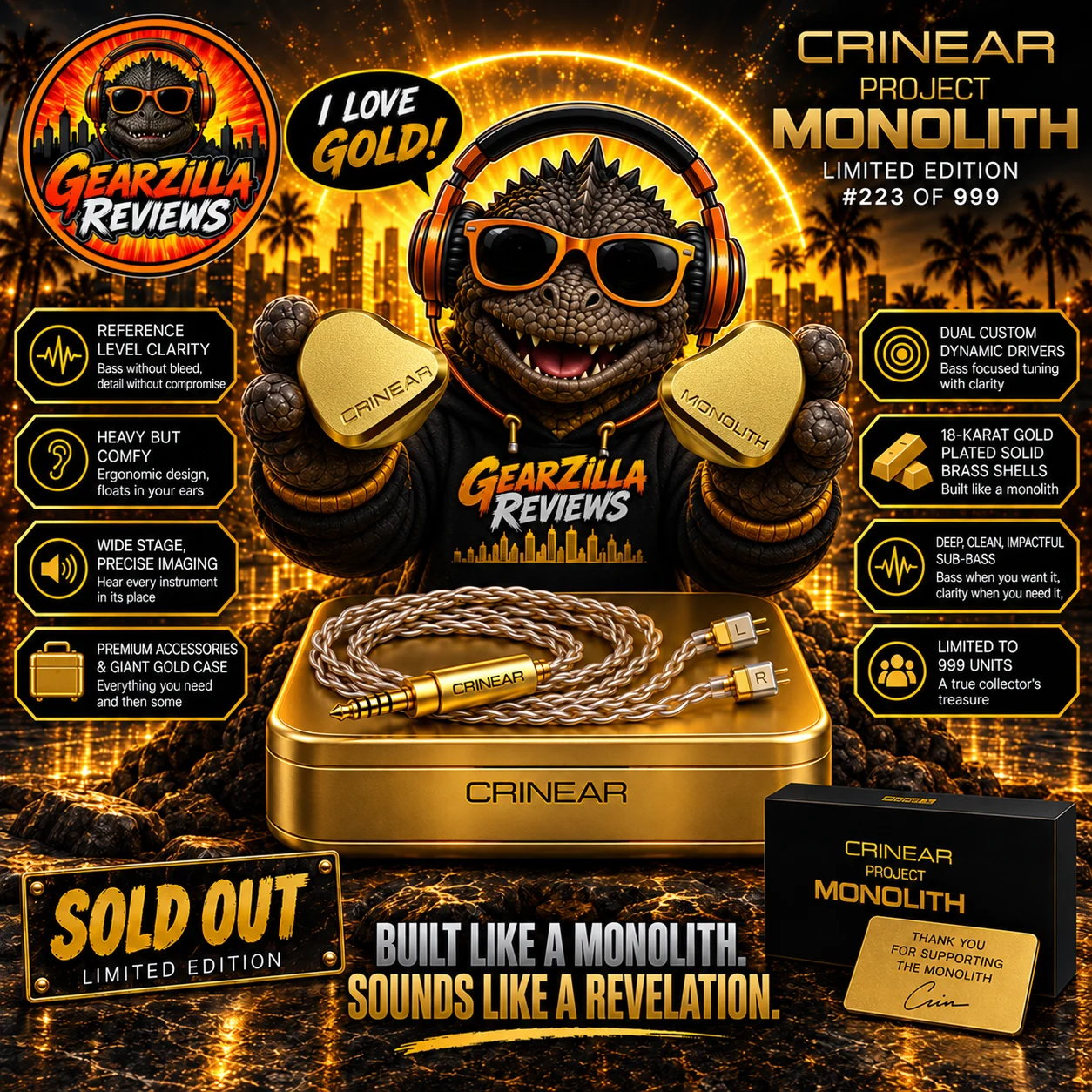
✅ Pros: Monumental yet exceptionally controlled sub-bass, superb bass-to-midrange separation, clean vocals, excellent clarity and microdetail, strong imaging, premium 18-karat gold-plated brass construction, excellent ergonomics despite the weight, impressive accessories, distinctive limited-edition presentation, strong technical performance.
⛔ Cons: Heavy solid-brass shells, not designed for neutral or reference-tuning fans, vocal-centric and acoustic listeners may prefer something more mid-focused, limited versatility compared with more balanced all-rounders, and the 999-unit production run makes availability increasingly difficult.
📢 Disclosure
Before we begin, I want to clearly state that I purchased the CrinEar Project MONOLITH with my own money.
This is simply one audiophile’s thoughts after spending considerable time getting to know one of the most talked-about limited releases in recent memory.
And yes…
Mine is #223 of only 999 ever made.
There’s something strangely satisfying about knowing that no matter how many people join this hobby, only 999 of us will ever own one.
That alone makes the MONOLITH feel different before the music even starts.
🏆 Gold Means Something
There was never any doubt this project was personal.
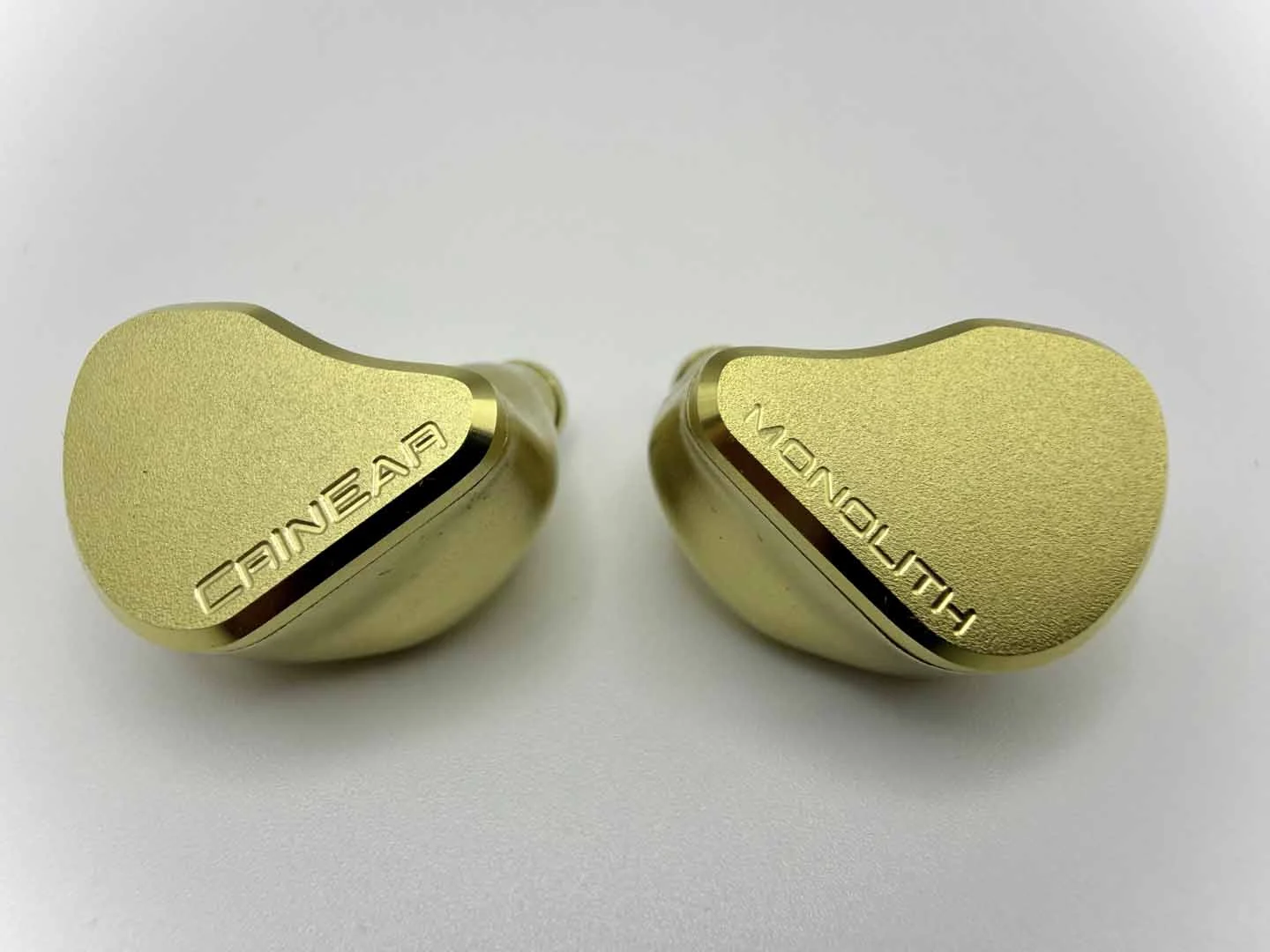
Crinacle literally signed every box in gold.
That’s a statement.
Not because of the autograph…
Because of what it represents.
The MONOLITH isn’t another collaboration where someone’s name gets stamped onto an existing shell with a slightly tweaked tuning.
Everything here feels intentional.
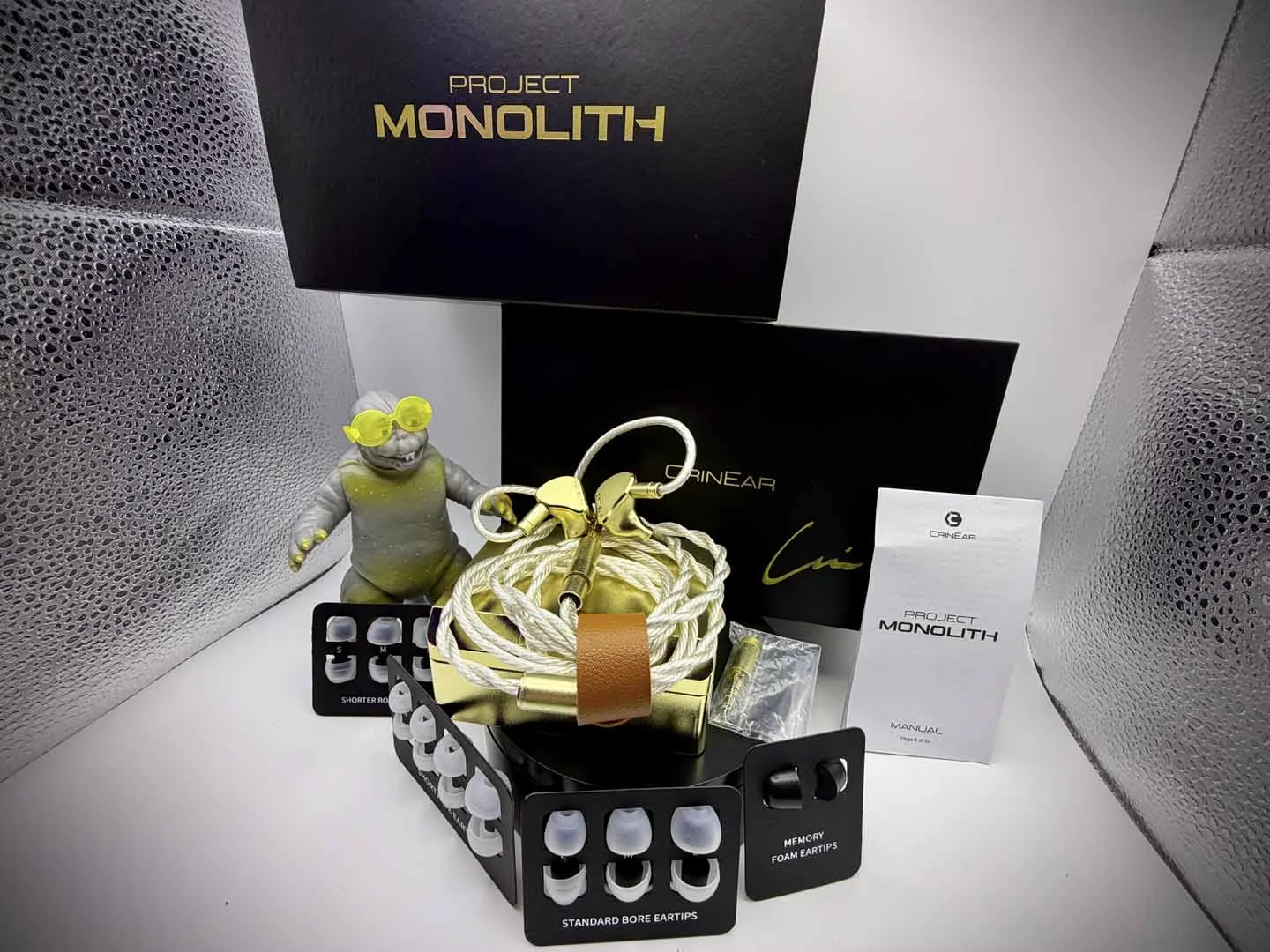
The machined brass shells.
The massive gold presentation case.
The cable.
The accessories.
The tuning.
Even the decision to limit production to 999 units.
This wasn’t designed to appeal to everyone.
It was designed for the people who had been wondering:
“What happens if Crinacle builds a bass monster without sacrificing everything else?”
The answer surprised me.
🧬 KAIJU DNA SCAN
Every monster leaves behind a genetic signature.
Here’s what this one looks like.
🎯 K • Kill Shot
Bass that behaves itself.
That’s the magic trick.
Instead of overwhelming the mix, the MONOLITH delivers enormous low-end impact while somehow keeping vocals and treble startlingly clean.
It’s like watching Godzilla politely remove his shoes before entering your house.
Impossible…
Yet somehow happening.
🧬 A • Anatomy
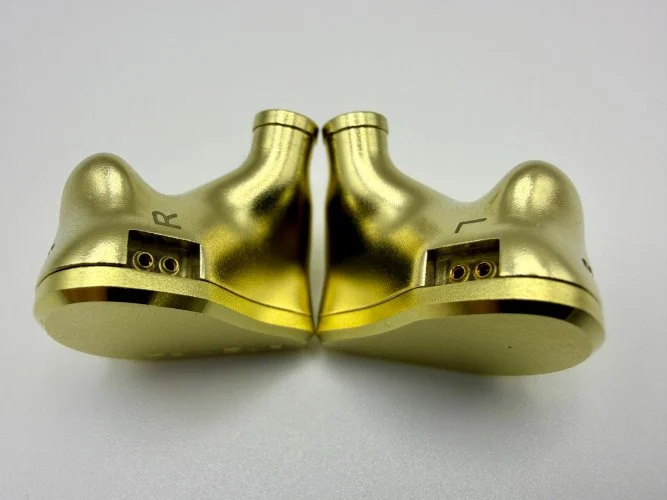
Dual custom CrinEar dynamic drivers housed inside beautifully machined 18-karat gold-plated solid brass shells.
Every piece feels engineered rather than manufactured.
The shells are surprisingly ergonomic.
Yes…
They’re heavy.
But once they’re seated…
You stop noticing the weight entirely.
💥 I • Impact
This isn’t bass for bassheads.
It’s bass for people who appreciate control.
When the recording asks for violence…
The MONOLITH delivers it.
When the music doesn’t…
Neither does the MONOLITH.
That restraint is what separates it from so many bass cannons.
😁 J • Joy
Every time I opened the giant gold case I smiled.
Every time.
Sometimes audio gear simply feels special.
This is one of those products.
🔥 U • Unleashed
The MONOLITH feels particularly at home with:
- 🎛️ EDM
- 🎤 Hip-Hop
- 🌃 Synthwave
- 🎬 Movie scores
- 🎶 Modern Pop
- ⚡ Electronic
- 🦖 Anything where sub-bass is supposed to feel like another instrument instead of background support
🎵 Sound
Let’s address the elephant in the room.
Or perhaps…
The kaiju. 🦖
Everyone calls the MONOLITH a bass cannon.
I don’t completely agree.
Sure…
There’s bass.
Lots of it.
Ridiculous amounts of sub-bass.
But calling it a bass cannon almost undersells what makes it remarkable.
The real achievement isn’t how much bass exists.
It’s how little that bass interferes with everything else.
The bass shelf refuses to bleed into the mids.
Vocals remain clean.
Treble stays remarkably transparent.
Microdetail survives.
Air survives.
Imaging survives.
That’s incredibly difficult to accomplish.
Instead of permanently boosting every song, the MONOLITH simply waits.
When a track asks for bass…
It unleashes absolute mayhem. 💥
When the mix backs off…
The MONOLITH backs off too.
That’s maturity.
Not excess.
🥁 Bass
This is obviously where the MONOLITH earns its reputation.
The sub-bass reaches frightening depths, but it never becomes loose or bloated.
Kick drums have weight.
Electronic drops feel physical.
Movie scores become cinematic.
But the magic is in the restraint.
This isn’t bass constantly demanding your attention.
It’s bass waiting for the recording to give it permission.
When the track contains enormous low-frequency information, the MONOLITH delivers enormous low-frequency information.
When it doesn’t…
The rest of the music is allowed to breathe.
That’s what separates this tuning from a novelty.
The bass isn’t covering the music.
It’s participating in the music.
🎤 Midrange & Vocals
For something carrying this much low-end energy, the cleanliness of the midrange is startling.
Vocals remain remarkably clear.
Female vocals retain sparkle.
Male voices don’t disappear beneath the bass shelf.
Acoustic guitars still sound like wood and strings.
There’s enough separation between the bass and mids that the MONOLITH rarely feels like it’s forcing every performance through the same bass-heavy filter.
Would I choose this first for an evening of intimate acoustic vocals?
Probably not.
That’s not its primary mission.
But the MONOLITH avoids one of the biggest mistakes bass-focused IEMs can make.
It doesn’t sacrifice the singer to feed the subwoofer.
✨ Treble & Air
The upper frequencies remain remarkably transparent considering what’s happening downstairs.
Hi-hats stay crisp.
Fine details survive.
Microdetail remains accessible.
There’s enough air to prevent the presentation from becoming dark or congested.
That matters enormously.
Without that upper-frequency clarity, this much bass could easily turn the MONOLITH into a blunt instrument.
Instead, the treble provides enough illumination to preserve texture, separation, and space.
The result is a presentation that feels far more technically capable than the words bass monster might suggest.
🌌 Soundstage & Imaging
Imaging is one of the MONOLITH’s strongest technical qualities.
That enormous low-end presence doesn’t collapse the stage or smear positional information.
Instruments remain organized.
Vocals hold their position.
Ambient information stays intact.
The MONOLITH doesn’t create its excitement by throwing everything into one giant wall of sound.
There’s actual structure underneath the impact.
That’s a huge part of why the tuning works.
🛠️ Build & Comfort
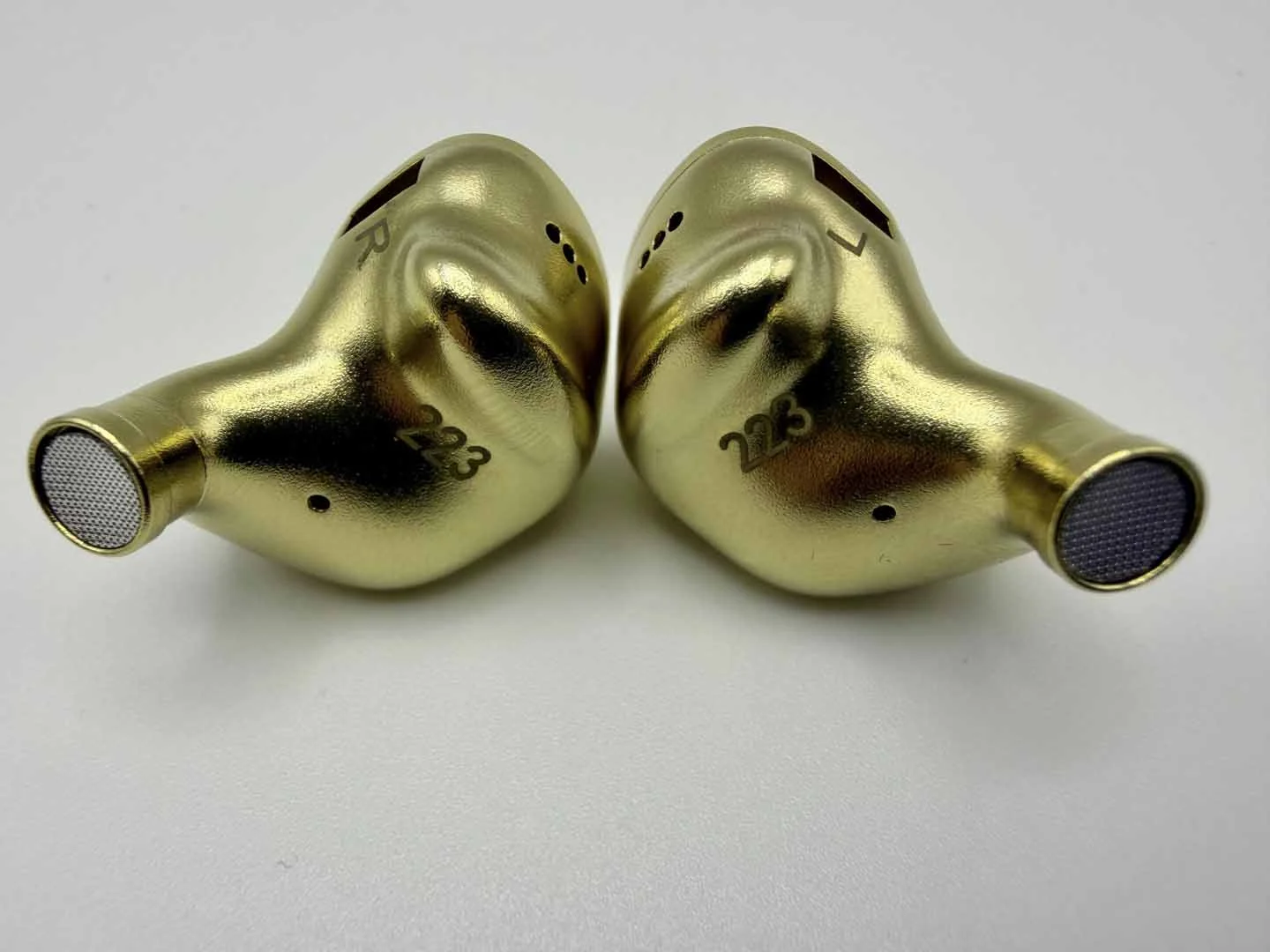
The MONOLITH may be one of the most beautifully constructed IEMs I’ve ever handled.
The gold-plated brass shells feel almost like jewelry.
Dense.
Cold.
Premium.
They’re heavier than almost anything else in my collection.
Sliding solid brass into your ears feels…
Unusual.
For about ten seconds.
Then something unexpected happens.
They disappear.
The ergonomics are excellent.
Weight distribution is excellent.
Comfort is excellent.
I found myself forgetting they were made from brass until I removed them.
The accessory package deserves applause as well. 👏
The giant gold case is wonderfully over-the-top.
The thick cable feels worthy of a flagship.
And the mountain of included ear tips means almost everyone should find their ideal fit without immediately shopping for aftermarket options.
Everything screams intention.
Nothing feels like an afterthought.

⚡ Power & Pairing
The MONOLITH appreciates quality amplification.
A phone can drive it.
A good DAC rewards it.
My Topping DX5 II gave the bass noticeably tighter control while opening the stage and improving overall layering.
The additional current doesn’t create more bass.
It creates better bass.
That’s exactly what this tuning deserves.
💰 Value
At $399, this wasn’t trying to compete with budget champions.
It was trying to create something memorable.
Mission accomplished.
You’re buying:
- 🏆 One of only 999 ever produced
- ✨ Gorgeous 18-karat gold-plated brass construction
- 🎁 Outstanding accessories
- 🧬 Exceptional engineering
- 🎵 A tuning unlike almost anything else
- 🦖 A genuinely special ownership experience
There’s also collector appeal here.
Five years from now…
People won’t ask whether it’s still in stock.
They’ll ask whether anyone is willing to sell theirs.
🦖 GearZilla Scorecard
💥 Slam: 5.0/5. This is the MONOLITH’s calling card. Sub-bass reaches incredibly deep, hits with genuine physical authority, and can turn electronic drops, kick drums, and cinematic scores into an event. More importantly, it doesn’t pound away indiscriminately. The MONOLITH waits for the recording to ask for impact, then absolutely unloads.
🎤 Vocal Lift: 4.25/5. Vocals remain remarkably clean considering the sheer amount of low-end energy available. Female vocals retain sparkle, male voices stay clear of the bass shelf, and the midrange rarely feels buried. This still isn’t the IEM I’d reach for first when intimate vocals are the entire point of the evening, but singers never feel sacrificed to feed the subwoofer.
🌌 Holography: 4.5/5. The MONOLITH creates a convincing sense of space, layering, and dimensionality without relying on exaggerated width. Ambient information remains intact, performers occupy recognizable positions, and that enormous bass foundation doesn’t collapse the presentation into a wall of sound.
🎯 Target Lock: 4.75/5. Imaging is one of the MONOLITH’s strongest technical weapons. Instruments remain organized, vocals stay anchored, and individual elements are remarkably easy to follow even when the low frequencies are going berserk. Placement feels deliberate and stable rather than vague or smeared.
🌬️ Air: 4.6/5. This is one of the reasons the MONOLITH works so well. Despite the massive bass shelf, the upper frequencies stay open, crisp, and surprisingly transparent. Hi-hats retain definition, fine details remain accessible, and there’s enough breathing room to keep the presentation from becoming dark, thick, or congested.
🧬 Technical Performance: 4.75/5. The real achievement here isn’t simply bass quantity. It’s control. The MONOLITH preserves clarity, microdetail, separation, imaging, and upper-frequency information while delivering enormous low-frequency energy. That combination turns what could have been a novelty bass cannon into a genuinely accomplished IEM.
💰 Value: 4.25/5. At $399, the MONOLITH was never a budget champion. You’re paying for premium gold-plated brass construction, excellent accessories, a distinctive limited-production presentation, strong technical performance, and a tuning that genuinely stands apart. Being one of only 999 units adds another layer to the ownership experience, though its specialized personality keeps it from being a universally recommended value.
🏆 Overall GearZilla Rating: 4.5/5 • S-Class Kaiju 🦖
🦖 Final Roar
The MONOLITH isn’t trying to be everyone’s endgame.
It’s trying to be the endgame for a very specific listener.
Someone who wants more.
More sub-bass. 💥
More craftsmanship. ✨
More presence.
More drama.
But never at the expense of clarity.
That’s the part people miss.
The MONOLITH isn’t impressive simply because it has huge bass.
It’s impressive because it knows exactly when to have huge bass.
That restraint is what transforms something that could have been a novelty into something genuinely special.
Crinacle didn’t build a blunt instrument.
He built a precision wrecking ball.
Massive when the music demands it.
Controlled when it doesn’t.
And for the lucky 999 of us who get to own one…
That’s something worth celebrating. 🦖
✅ Buy If
- 💥 You want one of the cleanest bass-focused tunings available.
- 🥁 You love sub-bass but refuse to sacrifice detail.
- ✨ You appreciate premium craftsmanship and beautiful industrial design.
- 🏆 You enjoy owning rare audio gear with genuine collector appeal.
- 🎧 You want an IEM that feels every bit as special as it sounds.
- 🌌 You want massive low-end capability without sacrificing imaging and space.
- 🎯 You value technical control alongside physical bass impact.
⛔ Skip If
- 🎤 You primarily listen to vocal-centric acoustic music.
- 📏 You prefer neutral or reference tuning.
- ⚖️ You dislike heavier metal shells.
- 🎶 You want one IEM to excel equally across every genre.
- 🏆 Collector appeal doesn’t matter to you.
- 🥁 You prefer restrained bass regardless of what’s contained in the recording.
Hear the GearZilla Roar. 🦖🎧
Share This Story, Choose Your Platform!