



✅ Pros: Exceptional instrument separation, superb resolution, deep and disciplined sub-bass, wonderfully refined electrostatic treble, beautiful female vocals, convincing imaging, strong source scaling, a premium modular stock cable, and the kind of long-term listening appeal that becomes more impressive the longer you live with it.
⛔ Cons: The Variations isn’t an instant thrill ride. Its recessed mid-bass can make rock, hip-hop, and male vocals sound leaner than warmth lovers may prefer; the soundstage is spacious rather than enormous; and the large 6.5mm nozzle may cause fit fatigue for listeners with smaller ear canals.
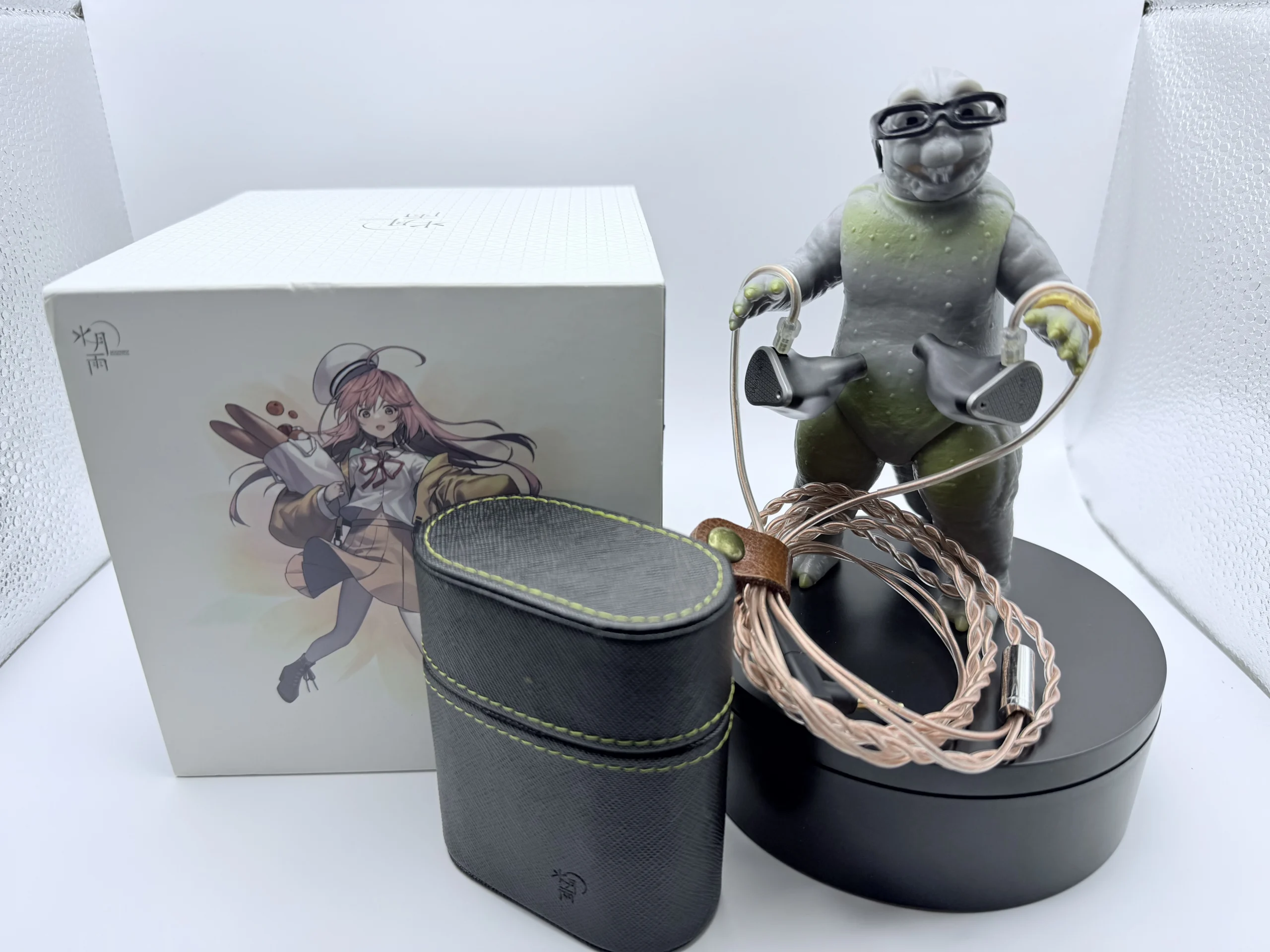
🦖 Disclosure
This review reflects my own long-term experience with the Moondrop Variations.
My approach at GearZilla is pretty simple. I want to spend enough time with a product that the specification sheet is no longer the story. I listen across familiar music, different sources, tips, cables, and listening environments until I understand what the gear is actually trying to do.
Then I ask the question that matters most to me:
Does this thing help me enjoy the music I already love in a new way?
The Variations took longer than most to answer that question.
That’s exactly why this review became interesting.
🎬 The Monster That Rewards Patience
Some monsters show you exactly who they are the moment they walk into the room.
The Moondrop Variations wasn’t one of them.
I first heard it at CanJam Dallas after Matt from BloomPod recommended it. Everyone seemed to be talking about the Variations as one of those benchmark IEMs you simply had to hear, so I went back three times to figure out what I was missing.
Every audition left me with basically the same reaction:
“They’re good… but I don’t get the hype.”
I expected some giant first-listen moment. Maybe ridiculous bass. Maybe a massive stage. Maybe treble that immediately announced the EST drivers.
Instead, the Variations sounded almost… restrained.
Then I bought my own pair.
Months later, once the convention noise, rushed demos, unfamiliar sources, and five-minute listening windows disappeared, I finally understood what everybody had been talking about.
The Variations isn’t built around a party trick.
It’s built around organization.
The longer I listened, the more I noticed how easily it separated instruments, how naturally small details emerged, and how the entire frequency range seemed carefully controlled rather than exaggerated for effect.
Three demos weren’t enough.
Living with it was.
📦 First Impression: Where’s the Wow?
The funny thing about the Variations is that its greatest strengths are exactly the kind of things that can disappear during a quick demo.
It doesn’t assault you with upper-midrange energy.
It doesn’t flood the presentation with mid-bass.
It doesn’t inflate the stage simply to make everything seem larger.
Instead, it presents music with a sense of order that becomes increasingly impressive once you know what to listen for.
The first word that eventually kept coming back to me wasn’t detail.
It was resolve.
There’s a difference.
Plenty of IEMs create the impression of detail by lifting the upper frequencies and adding edge to everything.
The Variations doesn’t need to shout.
It simply lets you hear more.
That realization completely changed my opinion of it.
🎧 Review Setup
Every GearZilla review starts with the same philosophy:
Listen first. Figure out the story later.
The Variations saw time with portable sources and desktop gear, but one pairing that made its strengths especially obvious was my Topping DX5 II. Moving to a cleaner desktop source tightened the bass, improved the sense of layering, and made an already organized presentation feel even more polished.
That’s one of the things I like about the Variations.
It’s easy enough to enjoy without a complicated chain, but revealing enough to reward better upstream gear.
I also spent time swapping tips because the Variations use a relatively large nozzle, and fit really affects comfort and bass response. Once I found a combination that worked for my ears, the shells themselves were comfortable enough for long sessions.
This wasn’t a review where source matching completely changed the personality.
It was a review where better sources made the personality easier to appreciate.
🧬 KAIJU DNA SCAN
K • Kill Shot
Instrument separation is the Variations’ superpower.
The stage isn’t the largest I’ve heard of, but the organization on it is outstanding. Instruments don’t simply occupy a big space. They occupy specific places within it.
That difference becomes obvious on busy recordings.
Instead of pushing everything farther away, the Variations create space between individual elements. Guitars, percussion, backing vocals, keyboards, and smaller production details remain distinct without the entire presentation feeling artificially dissected.
Once you get used to that level of organization, it becomes hard not to miss it when you switch to something less capable.
A • Anatomy
The Variations is a five-driver tribrid built around one dynamic driver, two balanced armatures, and two electrostatic drivers.
A 10mm LCP diaphragm dynamic driver handles bass duties, using Moondrop’s composite copper inner-cavity structure. A customized Softears-D-Mid-B composite balanced armature handles the midrange, while a pair of Sonion high-power electrostatic drivers handles the upper frequencies.
Moondrop rates the Variations at 15.2 ohms at 1 kHz, with sensitivity commonly listed around 118 dB/Vrms, although some published listings cite 116 dB/Vrms. Its specified frequency range extends from 9 Hz to 40 kHz, with an effective response of 20 Hz to 20 kHz, and total harmonic distortion is listed below 1% at 1 kHz.
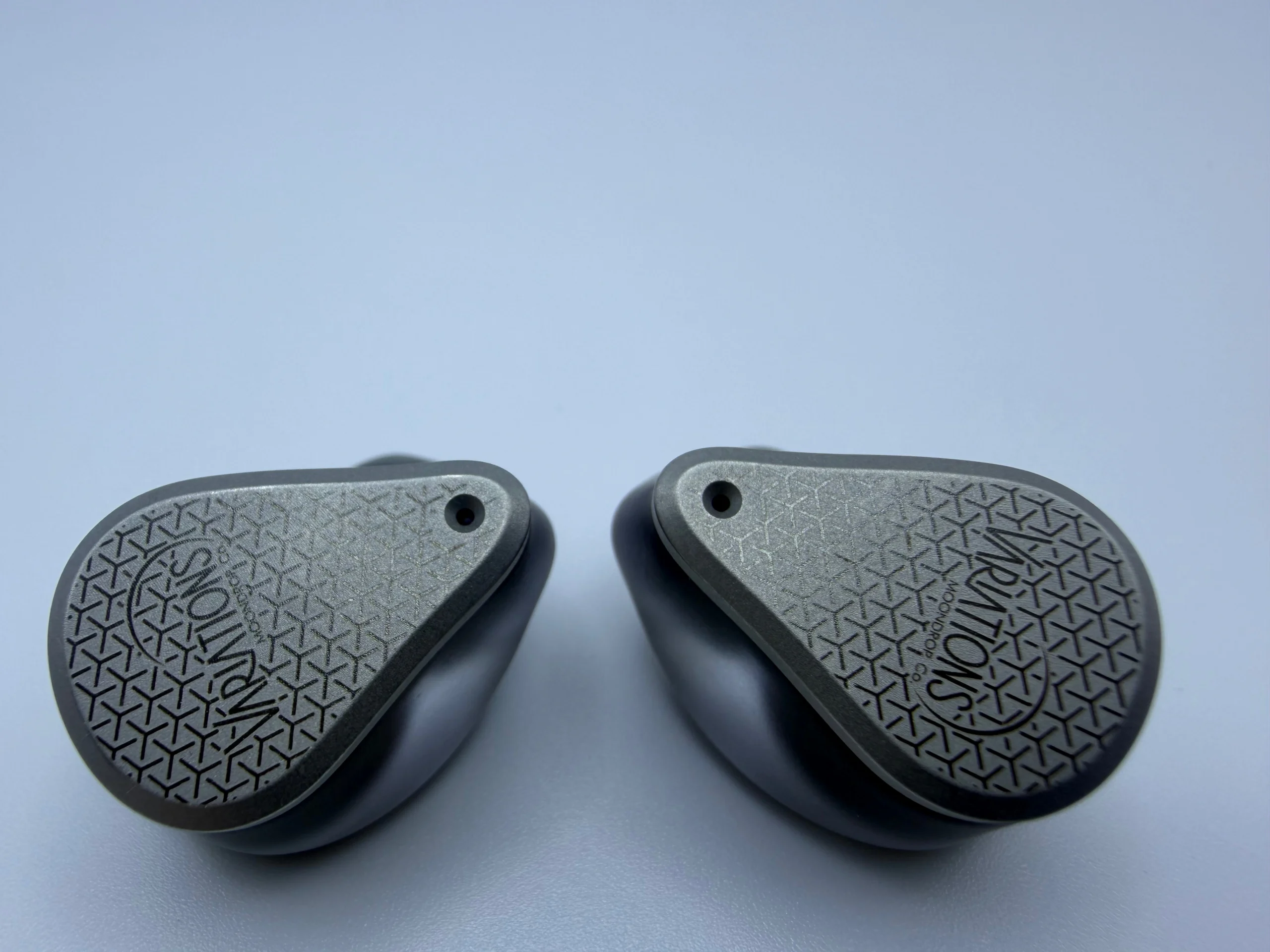
The physical construction combines a sand-blasted stainless-steel faceplate with a 3D-printed medical-grade resin acoustic cavity. It connects via a recessed 0.78mm 2-pin interface, and the stock 6N single-crystal copper cable includes interchangeable 3.5mm, 2.5mm, and 4.4mm terminations.
That cable deserves credit.
For once, I don’t feel compelled to replace this stock accessory immediately.
I • Impact
The Variations doesn’t create impact by hammering you with mid-bass.
It creates impact through control.
The sub-bass reaches impressively deep, but the tuning deliberately pulls energy away from the mid-bass region. That gives the low end an almost subwoofer-like character: deep rumble when the recording asks for it, followed by a quick retreat that keeps the mids exceptionally clean.
That approach won’t be for everybody.
If you want rock drums to hit with huge chesty weight or old-school hip-hop to have a thick, rolling mid-bass foundation, you may find the Variations a little restrained.
But if you value clean separation between bass and everything above it, the implementation is incredibly disciplined.
J • Joy
The joy in this review came from changing my mind.
That doesn’t happen as often as you might think.
Three CanJam auditions left me wondering why everybody was so excited about the Variations. Living with it turned that skepticism into respect.
That experience reminded me that great gear doesn’t always reveal itself in five minutes.
Some products are impressive because they demand attention.
Others become impressive because they keep showing you things after the excitement of a first listen is gone.
The Variations belong firmly in that second group.
U • Unleashed
This monster comes alive with music that benefits from layering, separation, and clean transient information.
Jazz is fantastic.
Acoustic recordings shine.
Orchestral music benefits from keeping sections organized.
Progressive rock becomes easier to follow.
Female vocals can sound spectacular.
And beautifully recorded material gives those EST drivers plenty of room to show what refinement actually sounds like.
If your music rewards attention, the Variations rewards you back.
🎼 Sound
The Variations has earned its reputation by doing something deceptively difficult.
It sounds technical without constantly reminding you that it’s technical.
The overall presentation is clean, highly resolved, and tightly controlled. Bass extends deep, the midrange stays remarkably uncluttered, and the treble has the extension and texture that makes small spatial information easier to hear without turning every recording into a brightness contest.
The tuning follows a modified Harman-style philosophy, but what interests me more than the target itself is the way each driver system contributes to the final result.
Nothing feels like it’s fighting for attention.
That coherence is a big part of the appeal.
🥁 Bass: Subwoofer, Not Sledgehammer
Bass on the Variations can be misunderstood if you judge it only by slam.
The sub-bass is excellent.
It reaches deep, stays clean, and can deliver genuinely satisfying rumble when the recording contains it. Electronic music and cinematic low-frequency effects can sound impressive because the dynamic driver produces depth without spraying bass energy across the rest of the frequency range.
The catch is the mid-bass recession.
There’s noticeably less energy around the upper-bass/lower-mid transition than you’d get from a warmer or more traditionally bass-forward setup. That gives the Variations its famously clean presentation, but it also means kick drums can feel lighter and male vocals can lose some chest.
It’s bass with boundaries.
Deep.
Fast.
Disciplined.
But not particularly thick.
That’s why Slam remains one of the lower scores in my GearZilla breakdown despite the excellent extension.
🎤 Midrange & Vocals
The midrange is exceptionally clean, but it’s also where the Variations’ tuning becomes most dependent on your preferences.
Female vocals can sound absolutely gorgeous.
There’s clarity, sweetness, and enough upper-midrange presence to make expressive performances feel vivid without automatically becoming shouty. The separation between voices also keeps harmonies and backing vocals unusually easy to follow.
Male vocals can be a little more complicated.
Because of the reduced mid-bass and lower-mid warmth, deeper voices may not carry the same chest and density you’d hear from a warmer set like the Doscinco.
That doesn’t make them unnatural.
It makes them leaner.
If you love transparency, that can sound wonderfully clean.
If you want every singer wrapped in warmth, you may find yourself wishing for more meat on the bones.
🎯 Instrument Separation
This is the reason I finally understood the Variations.
Its separation is exceptional.
On complex tracks, sounds remain independent without becoming disconnected. You can follow individual guitar lines through a busy mix, isolate percussion more easily, and hear backing elements that might blur together on a less resolving set.
The impressive part is that this doesn’t feel artificially exaggerated.
The Variations isn’t drawing neon outlines around every instrument.
It’s simply resolving enough information that the boundaries already present in the recording become easier to hear.
That’s a much more natural kind of technical performance.
🌌 Soundstage & Imaging
The soundstage is spacious, but it isn’t enormous.
That distinction matters.
If you’re chasing the widest IEM experience possible, other options project farther outside your head.
The Variations focuses more on what happens inside the stage.
Imaging is excellent, depth is convincing, and individual positions remain easy to identify. Rather than making the venue seem gigantic, it makes the musicians inside that venue easier to locate.
I’ll take accurate placement over artificially stretched width most days.
✨ EST Treble & Air
The treble became my biggest surprise.
Before owning the Variations, I associated electrostatic drivers with brightness.
The Variations taught me that EST implementation is much more interesting than simply adding sparkle.
What I hear here is refinement.
Cymbals shimmer instead of splash.
Reverb tails linger naturally.
Tiny textures remain audible behind primary instruments.
There’s excellent extension and air, but the upper frequencies rarely feel forced forward just to impress you.
That’s the distinction I didn’t understand during my first few auditions.
The EST drivers aren’t there to yell.
They’re there to finish the edges.
And they do it beautifully.
🔬 Resolution: Detail Without the Flashlight
Resolution may be the Variations’ most important technical strength after separation.
There’s a difference between turning up the lights and actually revealing more of the room.
Some bright IEMs make everything seem detailed because they constantly illuminate the upper registers.
The Variations don’t rely on that effect.
Background information appears naturally. Room cues, harmonics, reverb, and smaller production details remain available without distracting from the main performance.
That’s why I keep coming back to the word resolve.
The Variations isn’t showing off information.
It’s preserving it.
☁️ Build & Comfort
The Variations still feels every bit like a premium IEM.
The combination of translucent resin and sand-blasted stainless steel has aged remarkably well, and the design still feels elegant years after release.
The shells are slightly larger than average, but shell size wasn’t the bigger issue for me.
The nozzle is.
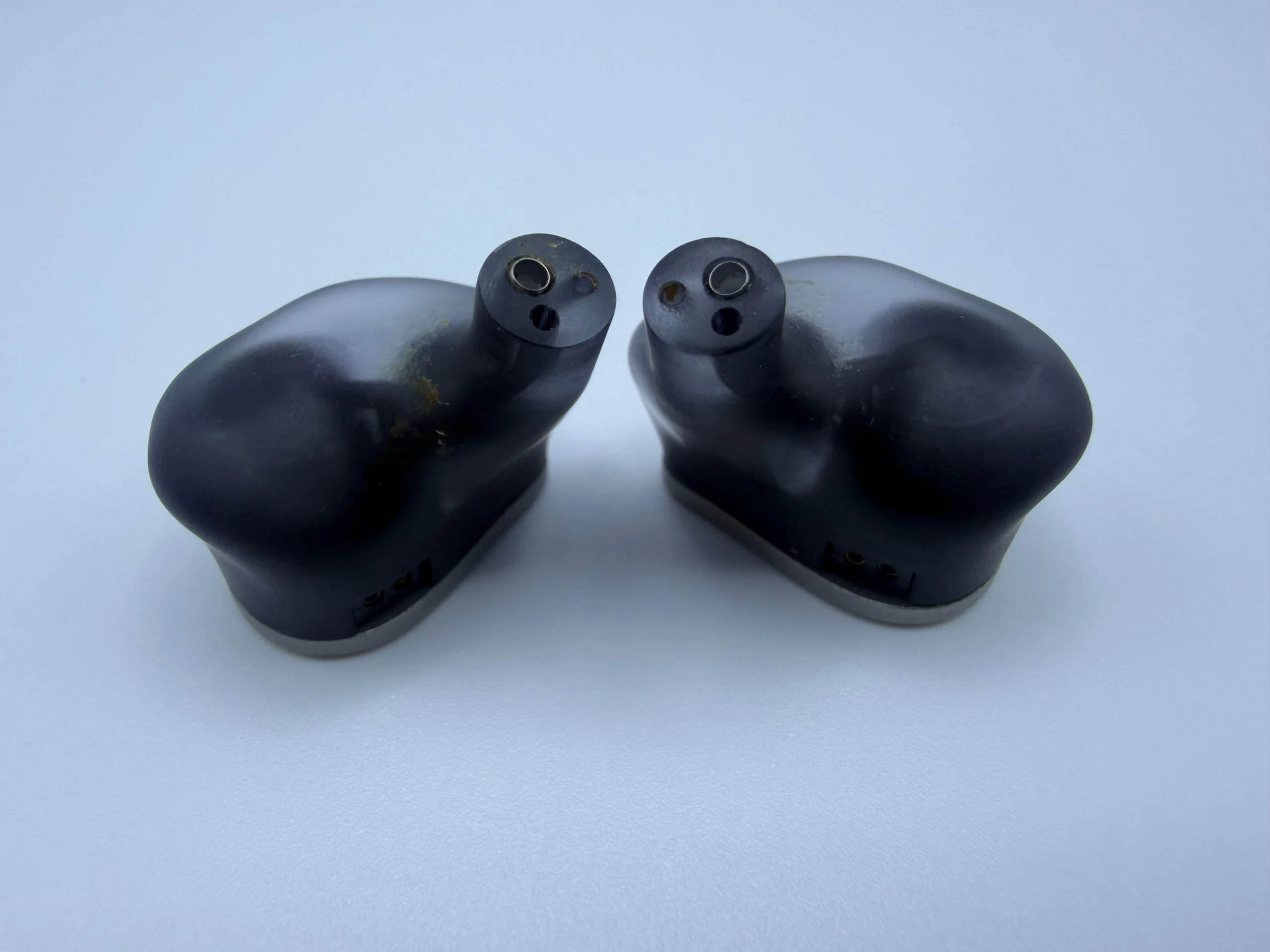
At roughly 6.5mm, it’s substantial, and listeners with smaller ear canals may experience fatigue or struggle to find a tip that stays comfortable during longer sessions.
Once I found the right tips, comfort became a non-issue for my ears, but this is absolutely one of those IEMs where I’d take fit seriously before assuming everyone will have the same experience.
The right tips make all the difference.
🧵 Cable & Accessories
The stock cable is unusually good.
You get 6N high-purity single-crystal copper, a recessed 0.78mm 2-pin connection, and interchangeable termination plugs for 3.5mm single-ended, 2.5mm balanced, and 4.4mm balanced use.
That modularity makes it easy to move the Variations between portable and desktop setups without having to buy another cable right away.
That sounds like a small thing.
It isn’t.
At this price level, I appreciate an accessory package that feels designed around actually owning the product rather than simply filling the box.
⚡ Power & Pairing
The Variations is efficient enough to sound great from portable gear, but it really benefits from a cleaner source.
The 15.2-ohm impedance and high sensitivity make it relatively easy to drive, so power itself isn’t the challenge. Better gear improves control and refinement rather than sheer volume.
With the Topping DX5 II, I heard tighter low-frequency control, cleaner layering, and even more polished separation.
That’s what good scaling should look like.
The IEM doesn’t sound broken from a dongle.
It simply gives better gear more opportunity to show what it can do.
🧬 EQ Potential
The Variations takes EQ well, but I’d approach it lightly.
The most obvious target for experimentation is the mid-bass region. A modest lift can add additional weight to drums and male vocals without completely changing the clean character that makes the Variations special.
You can also adjust the upper mids or treble if you prefer something softer, though I personally wouldn’t want to sacrifice much of what those EST drivers are doing.
I wouldn’t EQ this IEM because I think the tuning is wrong.
It’s an IEM I’d EQ because the underlying technical platform is good enough to tolerate experimentation.
That’s an important difference.
💰 Value
The Variations has been around long enough that “new” is no longer part of its sales pitch.
I actually think that makes the value discussion more interesting.
The IEM market moves ridiculously fast. Every few months, another hybrid appears with more drivers, a new tuning philosophy, bigger bass, or a fresh claim about technical performance.
Yet the Variations keeps getting discussed.
That persistence says something.
It’s not perfect, and the market has absolutely caught up in areas where the Variations once seemed extraordinary.
But the combination of resolution, separation, sub-bass control, EST refinement, modular accessories, and overall coherence still makes it easy to understand why this became a benchmark.
Sometimes the best test of gear isn’t how exciting it seems at launch.
It’s whether anybody still cares years later.
People still care about the Variations.
So do I.
🦖 GearZilla Scorecard
🦴 Slam: 4.1/5. Sub-bass extension is excellent, but the recessed mid-bass limits the physical punch and warmth some listeners will want.
🎤 Vocal Lift: 4.65/5. Female vocals are a particular strength, with sweetness, clarity, and excellent separation. Male vocals can sound slightly lean because of the reduced lower-mid warmth.
🌌 Holography: 4.4/5. The stage has good depth and dimensionality, although sheer width isn’t the Variations’ biggest strength.
🎯 Target Lock: 4.9/5. Imaging and separation are outstanding. This is where the Variations earns its benchmark reputation.
🌬️ Air: 4.8/5. The dual EST implementation delivers excellent extension, shimmer, and spatial information without becoming aggressively bright.
🧬 EQ Potential: 4.55/5. There’s plenty of technical headroom for careful tuning, especially if you want to restore some mid-bass weight.
💰 Value: 4.5/5. Years after release, the Variations remains competitive because its technical foundation and overall refinement have aged extremely well.
🏆 Overall GearZilla Rating: 4.5/5 • S-Class Kaiju 🦖👑
🦖 Final Roar
The Moondrop Variations reminded me why I don’t make final judgments from a convention floor.
Three CanJam demos told me it was good.
Living with it taught me why it was special.
That difference matters because the Variations isn’t the kind of IEM that wins through spectacle. It doesn’t have the biggest stage, it doesn’t hit with the hardest mid-bass, and it isn’t trying to create a five-minute adrenaline rush through exaggerated treble or oversized dynamics.
Instead, it gets more impressive as the distractions disappear.
You start noticing how well it separates instruments, how naturally those EST drivers extend the top end, how cleanly the sub-bass stays out of the midrange, and how much information survives inside dense recordings without being shoved into your face.
The weaknesses are real. The mid-bass recession can make rock and hip-hop feel lighter than I’d prefer, male vocals can lose some body, and that 6.5mm nozzle won’t fit every ear comfortably.
But none of those things erase what the Variations does exceptionally well.
This was one of the biggest opinion reversals I’ve had in the hobby.
I expected a monster that would knock me over.
Instead, I found one that waited patiently for me to notice what it was doing.
And once I did, I finally understood the hype.
Some monsters demand your attention. The Variations quietly earn your respect.
✅ Buy If
- 🎯 You prioritize outstanding instrument separation and imaging.
- 🔬 You want real resolution without relying on exaggerated brightness.
- 🌬️ You love refined, extended EST treble with plenty of air.
- 🌊 You want deep, controlled sub-bass that stays out of the midrange.
- 🎤 Female vocals are a major part of your listening.
- 🎻 You listen to jazz, acoustic, orchestral, progressive rock, or other layered recordings.
- 🎧 You want an IEM that rewards long-term listening instead of chasing instant wow factor.
- ⚡ You want something efficient enough for portable use but capable of scaling with better sources.
- 🧵 You appreciate a premium modular stock cable with multiple termination options.
- 🧠 You enjoy gear that reveals more of itself the longer you spend with it.
⛔ Skip If
- 🥁 You want huge mid-bass slam and thick kick drums.
- 🔥 You prefer warm, lush, or bass-forward tuning.
- 🎤 You want male vocals to sound especially thick and chesty.
- 🌌 Maximum soundstage width is one of your biggest priorities.
- 🎢 You want an aggressive V-shaped presentation.
- 🤯 You expect an instant “wow” moment within the first few minutes.
- 👂 You have smaller ear canals and struggle with large nozzles.
- 🎶 You prefer a softer, richer presentation over clean technical precision.
Hear the GearZilla Roar. 🦖🎧
Patience rewarded. Resolution revealed.
Listen Bigger!
Share This Story, Choose Your Platform!