



Monstrous Power. Personalized Sound. A $2,000 Revelation for My Ears.
Overall GearZilla Rating: 4.8/5 ⭐
🎧 PD20: Apparently, My Ears Needed Prescription Glasses
I’ve spent years reviewing audio equipment, chasing that elusive combination of musicality, technical precision, and emotional engagement that makes a great listening experience truly memorable. Along the way, I’ve encountered some remarkable headphones, sophisticated amplifiers, and digital audio players capable of revealing details I never expected to hear. But every once in a while, something comes along that changes the conversation entirely, and the Astell&Kern PD20 did exactly that.
Not because it has four DAC chips, although that’s impressive. Not because it offers three amplifier modes, adjustable current, sophisticated digital processing, or a seemingly endless collection of sound-customization options, although I certainly enjoyed exploring them all.
The PD20 genuinely changed the way I heard music I’d been listening to for years.
And I wasn’t remotely prepared for it.
Before we get into that revelation, however, we need to establish something about this magnificent piece of equipment. The PD20 is an absolute unit, and I mean that in the most affectionate way possible. It’s substantial, beautifully engineered, unapologetically luxurious, and equipped with some seriously meaty amplification. Over my month-long evaluation, I spent hours listening almost every day, connected every headphone I had available, and never once wished for more power.
Astell&Kern has essentially created a personal sound laboratory that fits in your hands, with physical controls that make adjusting your listening experience feel less like navigating a computer and more like operating a sophisticated piece of professional audio equipment.
And believe me, I explored.
I spent a considerable amount of time getting acquainted with the amplifier controls, exploring the sound-processing options, and discovering how much flexibility Astell&Kern packed into this unusually ambitious digital audio player. The sheer number of possible combinations can feel almost overwhelming, but I appreciated that the company had made so much of the experience accessible rather than burying every adjustment several menus deep.
Then I discovered Personal Sound.
Now, I’m reasonably skeptical whenever a manufacturer promises that an algorithm can transform my listening experience. The audio industry has been making variations of that promise for years, and I’ve learned that genuinely meaningful improvements don’t always accompany impressive marketing language.
Nevertheless, I decided to give the PD20’s hearing assessment a proper opportunity. I began by listening to several familiar recordings, paying attention to the presentation before activating any individualized correction. Then I completed the hearing test, allowed the system to generate a profile based on my responses, and returned to those same tracks.
Folks, I was absolutely floored.
Imagine spending years believing your eyesight is perfectly fine, only to discover that you’ve actually needed prescription glasses all along. Someone finally hands you a pair tailored specifically to your vision, and suddenly the world snaps into spectacular high-definition focus. Details emerge where you never realized anything was missing, familiar objects take on new definition, and everything feels clearer and more complete.
That’s the closest analogy I can offer for what the PD20 did for my ears.
I hadn’t realized how much my own hearing characteristics influenced how I experienced familiar music until I heard those recordings before and after calibration. The improvement in perceived clarity was remarkable, and what fascinated me most was that I hadn’t necessarily noticed those missing details before the comparison.
The recordings hadn’t changed, and nobody had secretly remastered my favorite albums overnight. What changed was how the music was presented to accommodate my individual hearing responses, and that was enough to make familiar tracks feel surprisingly fresh.
Of course, none of this means the PD20 is perfect. In fact, some of its biggest frustrations have absolutely nothing to do with sound quality.
For one thing, this gorgeous machine is ridiculously slippery. The polished, glass-like surfaces on my review unit seemed almost determined to escape from my desk, and after watching it repeatedly slide onto the carpet, I eventually secured it in a zippered protective case because I was genuinely nervous about damaging something this expensive.
The finish is also an absolute fingerprint magnet, which meant I spent an unreasonable amount of time chasing smudges with a cleaning cloth. Combine that with the considerable weight and substantial dimensions, and the PD20 becomes a rather curious example of a portable music player that I was genuinely reluctant to take anywhere.
Still, those frustrations couldn’t diminish what I enjoyed most about this extraordinary machine. Its amplification inspired confidence, its customization options encouraged exploration, and its surprisingly comfortable thermal behavior made extended listening an absolute pleasure.
I’m genuinely sad to send this one back, and while I probably can’t justify buying a $2,000 digital audio player for myself today, I can absolutely imagine owning one someday.
The Astell&Kern PD20 earns my 4.8/5 GearZilla rating because it didn’t simply give me another way to play music. It gave me an entirely new perspective on how I hear it.
And that’s a pretty extraordinary accomplishment.
✅ Standout Strengths & Considerations
✅ Standout Strengths
Extraordinary amplification confidence across every headphone I evaluated; genuinely transformative Personal Sound hearing correction; sophisticated Triple AMP architecture with Class A, Class AB, and Hybrid modes; adjustable Class A current; four ESS ES9027PRO DACs; proprietary TERATON ALPHA and Enhanced Signal Alignment technologies; intuitive Sound Master Wheel; extensive EQ and Sound Studio customization; Advanced Digital Audio Remaster processing; seven selectable digital filters; Audiosphere spatial processing; crossfeed; expansive touchscreen; premium industrial design; extensive wired and wireless connectivity; and remarkably comfortable thermal behavior throughout a month of extended listening.
⛔ Considerations
The PD20’s slick, polished surfaces made my review unit surprisingly prone to sliding across smooth furniture, while its fingerprint-attracting finish required frequent cleaning. Its substantial size and weight reduce its practicality as an everyday portable device, particularly without a protective case. The sheer number of available adjustments may overwhelm listeners who simply want a straightforward plug-and-play experience, and its $2,000 price places it firmly in luxury territory. As impressive as its capabilities are, the PD20 makes the most sense for enthusiasts who genuinely want to explore what they’re paying for.

🤝 Disclosure: The Truth Behind the Roar
Huge thanks to Jason and the Astell&Kern team for loaning me the PD20 digital audio player for independent evaluation.
I spent about a month exploring the PD20 with the headphones and IEMs in my review collection, focusing on amplification, personalized hearing correction, digital processing, sound customization, thermal performance, and everyday usability.
Receiving equipment for review doesn’t guarantee a favorable verdict, a particular score, or protection from criticism. My responsibility is to the reader, not the manufacturer, and that independence matters just as much when reviewing something I genuinely love.
The PD20 delivered one of the most memorable experiences I’ve had with a digital audio player, but its slippery exterior, fingerprint-prone finish, substantial weight, and high price deserve as much attention as its remarkable engineering.
Manufacturer specifications and independent industry coverage provide technical context where appropriate. My personal listening experiences, however, are my own, and I haven’t substituted other reviewers’ impressions for observations I didn’t make.
Listen first. Figure out the story later.
🎧 Review Perspective & Listening Setup: Finding the Monster’s True Personality
Every GearZilla review begins with a simple philosophy: listen first and figure out the story later. I want to understand what a piece of equipment contributes to the musical experience before getting too distracted by its engineering, marketing promises, or impressive specs.
My listening preferences naturally lean toward lush, musical, immersive presentations with convincing spatial depth, expansive width, expressive vocals, rich but controlled bass, and smooth treble that reveals detail without introducing fatigue. Those preferences influence what I enjoy, but I don’t believe every source component should impose the same sonic character on the headphones connected to it.
In fact, one of the things I appreciate most about sophisticated source equipment is the ability to preserve the personality of different headphones while providing enough flexibility to explore subtle changes in presentation.
That makes the PD20 a particularly interesting product to evaluate because Astell&Kern has given listeners an unusually large collection of variables to consider. Between the amplifier modes, adjustable current, hearing compensation, EQ, spatial effects, digital filters, and remastering technology, the final presentation can be influenced by much more than the underlying DAC architecture.
My reference equipment includes the FiiO K13 R2R and Topping DX5 II desktop DAC/amps, alongside the HiBy R4 portable player. Familiar portable sources such as the iBasso DC-Tonfa, HiBy W4, and TANCHJIM SPACE II provide additional perspective on the performance and practicality available at different price points.
For the PD20, I approached the listening experience with two primary objectives. First, I wanted to understand whether the player could confidently drive the assortment of headphones and IEMs available in my review collection. Second, I wanted to explore whether Astell&Kern’s extensive personalization options could meaningfully improve my enjoyment of familiar recordings.
I also paid close attention to the everyday experience because source equipment needs to function as part of a real listening routine. A player can possess extraordinary technical capabilities and still become frustrating if its controls are cumbersome, its interface interrupts the music, or its physical design makes ownership unnecessarily stressful.
Those practical considerations became especially important with the PD20, although not for the reason I’d initially expected.
After a month of listening, I was far less concerned about what the player could do electrically than about keeping the beautiful thing from sliding onto the floor.
🏯 Astell&Kern: Understanding the House Sound and the Philosophy Behind the Prestige
Astell&Kern occupies an interesting position in the personal audio market because it has spent years treating portable music playback as a serious high-fidelity engineering discipline rather than just another consumer-electronics convenience.
While smartphones and conventional portable players increasingly emphasize versatility, wireless integration, and everyday accessibility, Astell&Kern approaches the category with an almost uncompromising focus on audio reproduction. Its premium players incorporate sophisticated DAC architectures, dedicated amplification systems, carefully engineered power supplies, and proprietary signal-processing technologies intended to preserve musical information as faithfully as possible.
That ambition helps explain why the company’s products command premium prices, but it also raises an interesting question about their sonic identity.
What exactly is the Astell&Kern house sound?
It’s tempting to characterize an entire manufacturer with a few familiar audiophile adjectives—refined, neutral, analytical, or musical—but I’ve never believed that approach tells the complete story. Astell&Kern has used different converter architectures, amplifier designs, and processing technologies across its product families, and those decisions can influence how individual models are perceived.
Still, certain priorities consistently appear throughout the company’s engineering philosophy.
Astell&Kern emphasizes low noise, precise signal handling, exceptional instrumental organization, natural tonal balance, and the ability to reveal subtle information without relying on exaggerated coloration. The goal is generally to present a recording with clarity and control while preserving the musical relationships that make a performance convincing.
That last point matters to me because I’ve heard plenty of technically impressive equipment that seemed more interested in dissecting recordings than communicating their emotional character.
I appreciate resolution, but I don’t want music to feel like an autopsy.
A sophisticated source should help me understand the relationship between the instruments, the performer, and the acoustic environment without constantly reminding me how impressive its specifications are.
Independent evaluations of the PD20 offer some useful context here. Headfonia characterizes its underlying presentation as balanced, resolving, and natural, while Twister6 describes a smoother, fuller-bodied personality with analog-like musicality. Those observations aren’t necessarily contradictory, especially given that the PD20 offers several amplifier configurations and an extraordinary range of sound-processing options.
To me, the more interesting story is how Astell&Kern has expanded its philosophy with this particular player.
Instead of building one premium source and expecting every listener to appreciate its preferred presentation, the PD20 introduces a more personal approach to high-fidelity audio. Its hearing-based correction system acknowledges that individual listeners perceive sound differently, while its physical controls and processing tools let you refine the experience without constantly changing equipment.
That’s a meaningful evolution in the company’s design philosophy.
Astell&Kern has traditionally emphasized getting closer to the recording. With the PD20, it’s also exploring how to bring the recording closer to the listener.
After experiencing Personal Sound myself, I have tremendous appreciation for that distinction.

🎨 Design & Build: Beautiful, Prestigious, and Dangerously Slippery
Astell&Kern calls the PD20’s industrial design philosophy Sound Lab Control, and the inspiration becomes clear once you start interacting with the hardware.
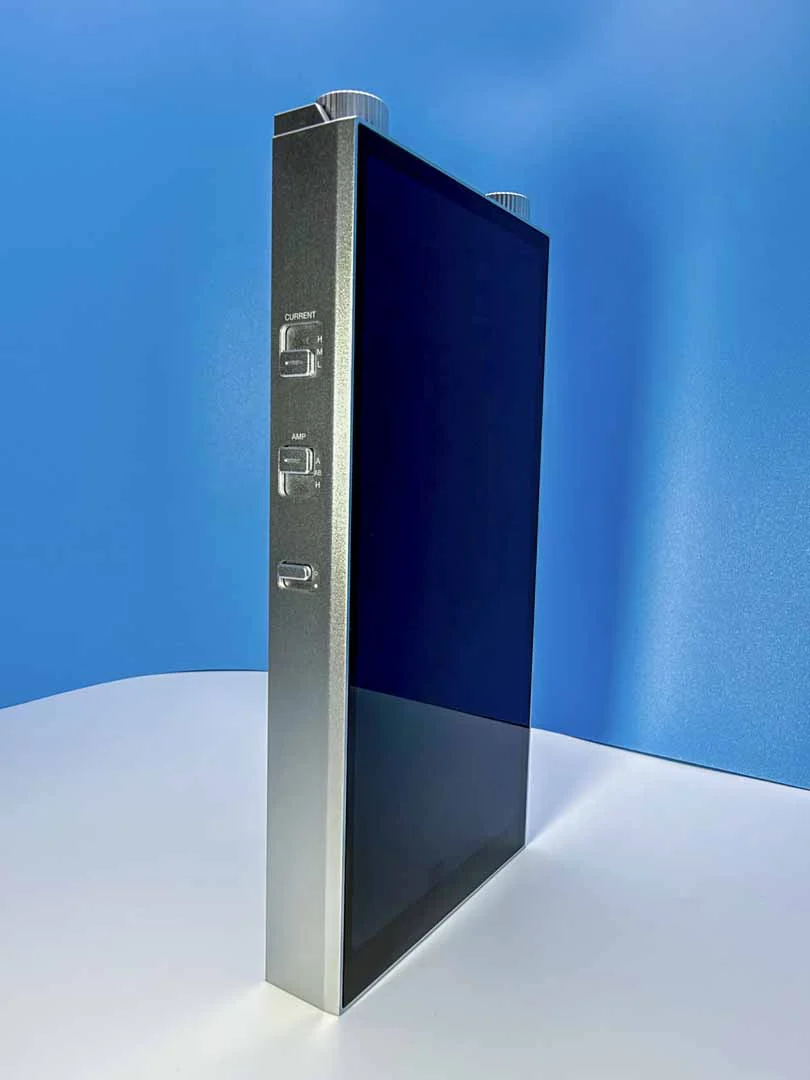
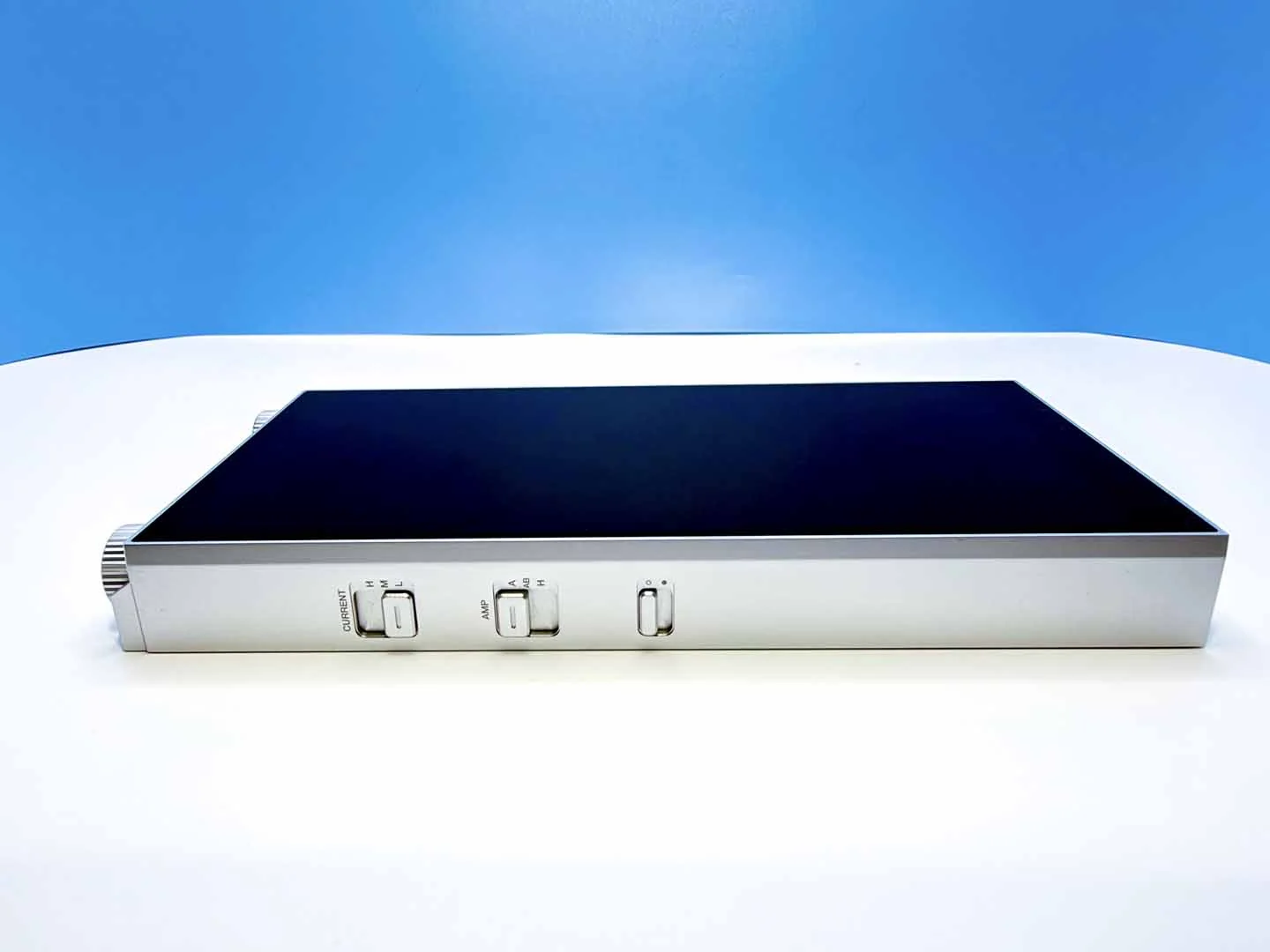
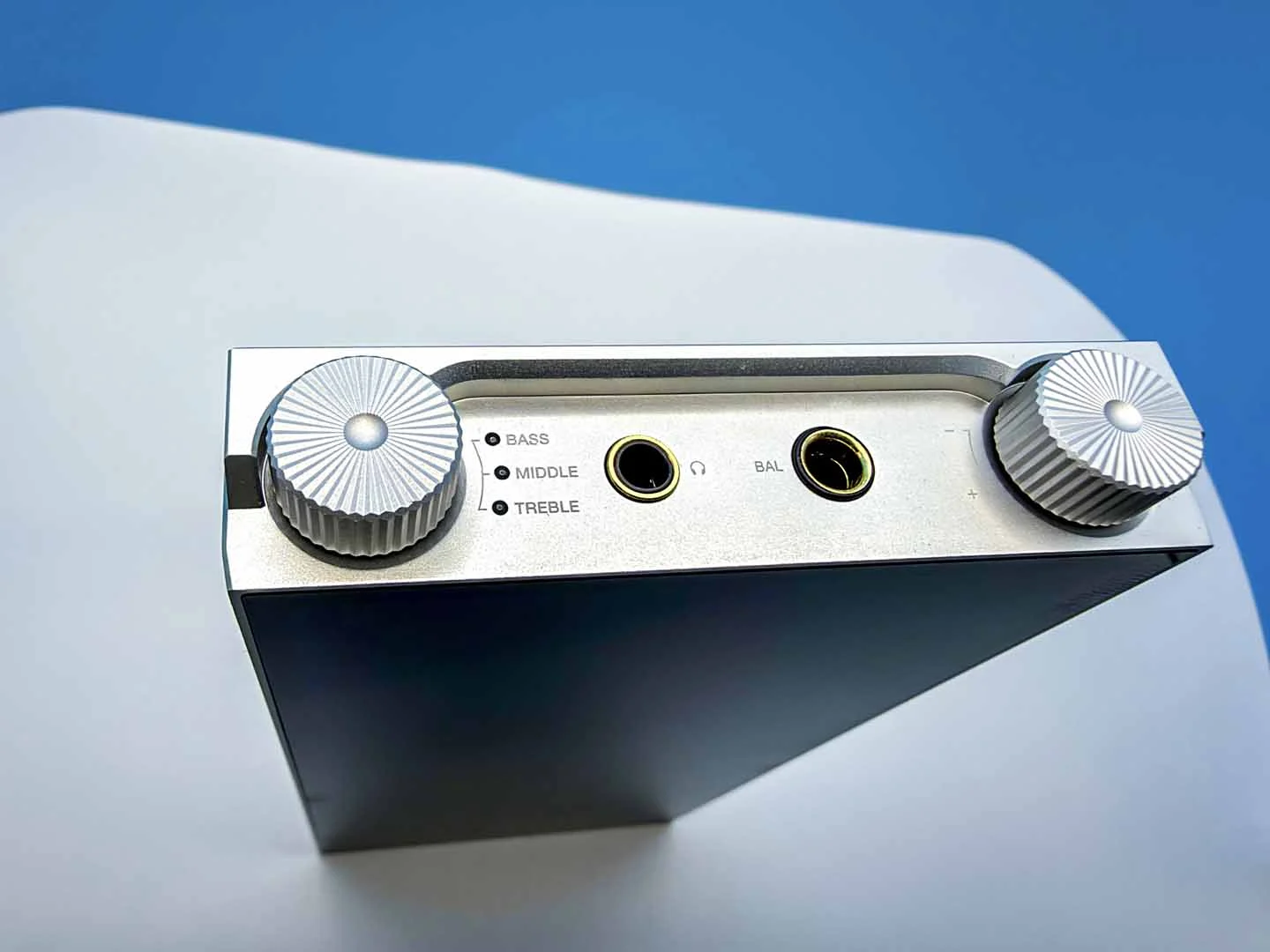
The player features two substantial rotary wheels across the top, dedicated amplifier switches along the side, and a large touchscreen that provides access to an impressive collection of settings. Rather than forcing owners to navigate software menus for every adjustment, Astell&Kern has borrowed elements of the tactile experience associated with professional studio equipment.
The result is distinctive, purposeful, and undeniably luxurious.
The symmetrical upper controls create a particularly attractive visual identity, with one wheel dedicated to volume and the other assigned to sound customization. The precisely arranged side switches reinforce the impression that you’re operating a serious audio component rather than an ordinary portable media player.
The aluminum chassis and six-inch display add to that sense of quality, while the substantial 313-gram weight gives the PD20 a reassuring physical presence.
And I understand why people appreciate that.
There’s something satisfying about equipment that feels carefully engineered, especially when its physical design matches the attention to detail inside.
The PD20 has prestige in spades, and I don’t think there’s anything wrong with acknowledging that luxury is part of the appeal. People appreciate beautifully crafted watches, cameras, and musical instruments for reasons that extend beyond their basic functionality, and high-end audio equipment can inspire the same appreciation.
Unfortunately, the PD20 also taught me a memorable lesson in why physical beauty and everyday practicality aren’t always the same thing.
This gorgeous machine is ridiculously slippery.
I’m not exaggerating when I say that the player repeatedly slid off my desk and landed on the carpet. The polished, glass-like surfaces on my review unit offered remarkably little resistance against smooth furniture, and after several incidents, I began to worry that my next encounter with gravity might have considerably more expensive consequences.
Eventually, I secured the player inside a zippered protective case simply to keep it from wandering off on its own.
I realize that sounds a little absurd, but it’s genuinely frustrating to feel the need to restrain a $2,000 music player before you can comfortably enjoy it.
The polished finish also attracts fingerprints with astonishing enthusiasm. I found myself constantly reaching for a cleaning cloth because even ordinary handling quickly left the player looking less pristine than its beautiful industrial design deserved.
It’s a curious contradiction because the same surfaces that make the PD20 look luxurious also make it more demanding to live with.
To be clear, Astell&Kern specifies an aluminum body, so I’m not suggesting the entire chassis is constructed from glass. My complaint concerns the smooth, polished surfaces and how they behave during everyday handling.
I strongly encourage anyone buying the PD20 to invest in a high-quality protective case immediately, and I genuinely wish Astell&Kern had included one in the standard package.
For me, this isn’t a device I’d casually throw into a backpack or carry around town without substantial protection.
Its weight, size, and finish make it feel much more comfortable as the centerpiece of a dedicated listening setup, perhaps sitting beside a favorite chair or resting securely on a desk.
Once I started thinking about the PD20 that way, its personality made much more sense.
It’s portable by design, but luxurious by temperament.
That’s not necessarily a bad thing, but prospective owners should understand the distinction.
📦 Unboxing & Accessories: A Luxury Experience Missing One Essential Ingredient
The PD20’s accessory package includes dedicated earphones for the Personal Sound calibration process, along with the basic items necessary to begin using the player.
Including the measurement earphones matters because they provide a consistent reference for the hearing assessment. If Astell&Kern expects owners to take individualized audio correction seriously, it makes sense to supply the earphones intended for that measurement rather than leaving the process’s accuracy entirely dependent on whatever equipment happens to be available.
I appreciate that decision because Personal Sound is arguably the PD20’s most distinctive feature, and making the assessment accessible immediately helps communicate its importance.
What frustrated me, however, was the omission of an included protective case.
Given the player’s premium positioning, considerable weight, and smooth exterior surfaces, I would have appreciated a case designed specifically to secure the hardware while preserving access to its physical controls.
My month with the PD20 reinforced that feeling every time I cleaned fingerprints from the finish or worried about another accidental slide across my desk.
At this price, I don’t believe asking for proper physical protection is unreasonable.
⚙️ Technical Specifications: The Engineering Behind the Experience
The PD20’s specifications reveal an extraordinarily ambitious digital audio platform, especially given how many different technologies Astell&Kern has integrated into a single device.
Model: Astell&Kern PD20
Category: High-resolution digital audio player
DAC architecture: Four ESS ES9027PRO converters in a Quad-DAC configuration
Amplification: Selectable Class A, Class AB, and Hybrid
Amplifier current: High, Mid, and Low adjustments in Class A and Hybrid
Proprietary technologies: TERATON ALPHA, Enhanced Signal Alignment, Advanced Digital Audio Remaster
Personalization: Audiodo Personal Sound with independent left/right correction
Sound customization: Sound Master Wheel, Audiodo EQ, tonal tilt, digital filters, and spatial processing
Sound Master adjustment: 160 steps from -8.0 to +8.0 dB
Volume control: 150-step adjustment scale
Digital filters: Seven selectable options
Spatial processing: Audiosphere with Subtle, Balanced, Immersive, and Echoic presets
Display: 6-inch, 2160 × 1080 touchscreen
Processor: Octa-core
Internal storage: 256GB
Expandable storage: microSD support up to 2TB
Maximum supported PCM playback: 32-bit/768kHz
Maximum native DSD playback: DSD512
Analog outputs: 3.5mm single-ended and 4.4mm balanced
Additional digital output: Optical via 3.5mm
Published maximum unloaded output: 5Vrms single-ended; 10Vrms balanced
Signal-to-noise ratio: 124dB single-ended; 127dB balanced
Output impedance: 0.7Ω single-ended; 1.7Ω balanced
Wireless connectivity: Wi-Fi and Bluetooth 5.3, including LDAC and aptX HD
Network features: Roon Ready and Qobuz Connect
Additional functions: USB DAC, BT Sink, ReplayGain, crossfeed, and network playback features
Battery: 5,770mAh
Published playback time: Approximately 14 hours under specified test conditions
Published charging time: Approximately four hours with compatible USB PD charging
Dimensions: 77.5 × 155.7 × 17.3mm
Weight: Approximately 313g
Official US listed price: $2,000
These specifications are manufacturer-published figures, and some require context.
The maximum output voltages are measured without a connected headphone load, so they shouldn’t be interpreted as guaranteed continuous power into every possible impedance. Similarly, the published battery-life figure reflects a particular listening configuration rather than a promise that every amplifier mode and processing combination will provide identical endurance.
There’s also an important distinction between the player’s maximum supported audio formats and the processing limits of individual features. Personal Sound and the Audiodo Equalizer support audio up to 32-bit/192kHz, while Audiosphere supports audio up to 32-bit/96kHz.
That doesn’t mean the PD20 loses its ability to play higher-resolution material. It means certain processing features depend on the playback format and sample rate.
Those distinctions matter because sophisticated audio technology deserves accurate explanation, not celebration through impressive numbers.
But what makes the PD20 fascinating isn’t any one specification.
It’s how much control Astell&Kern has given listeners over the entire experience.
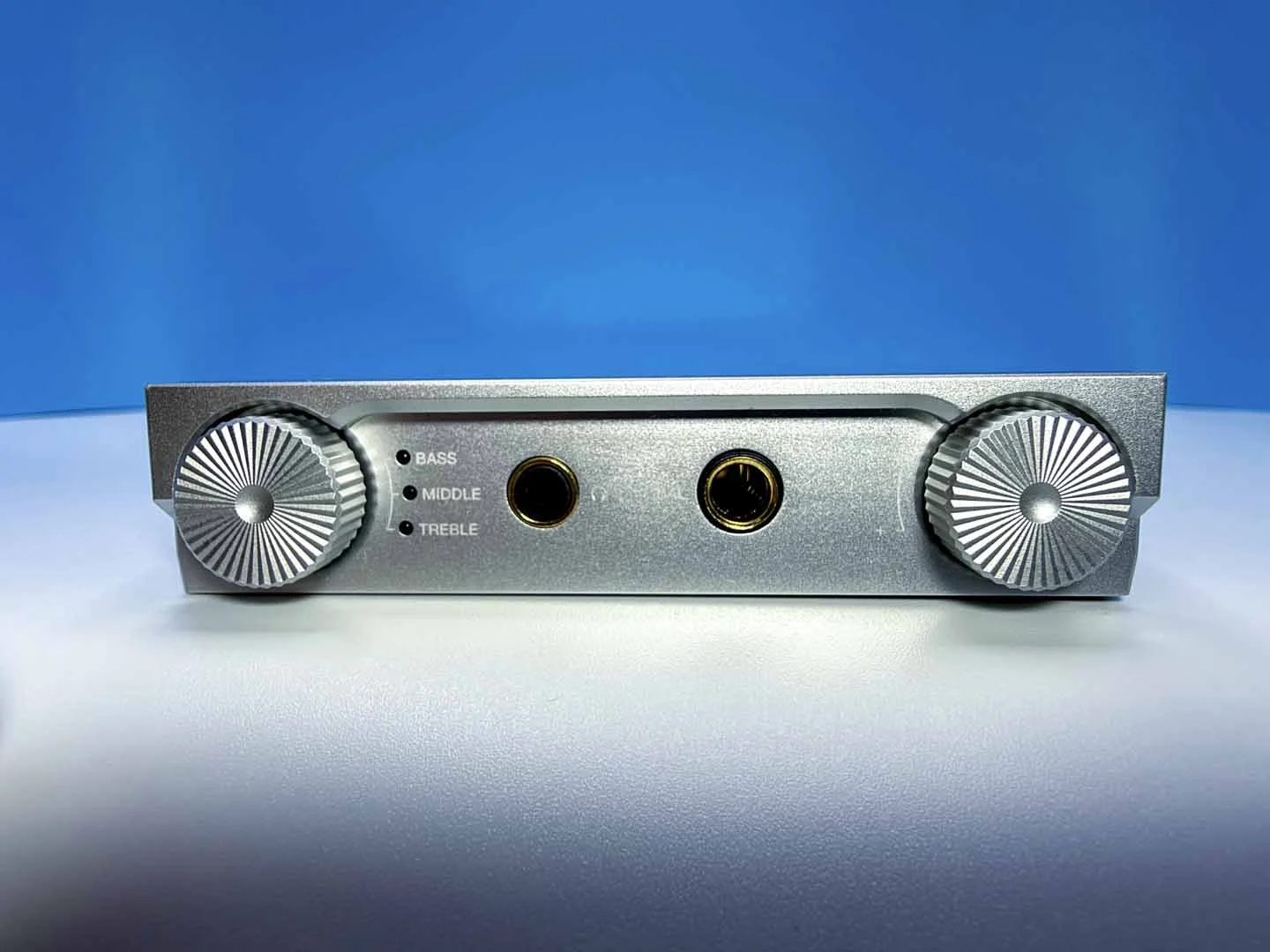
🎛️ Sound Lab Control: Every Wheel, Switch, and Button Has a Purpose
One of the aspects I appreciate most about the PD20 is that Astell&Kern hasn’t treated sound customization as something that belongs exclusively inside software menus.
The company’s Sound Lab Control philosophy is evident throughout the hardware, particularly in the relationship between the two upper wheels and the dedicated amplifier switches.
At first glance, the player can look intimidating because it has more physical controls than most people expect on a modern portable music device.
Once you understand their functions, however, the design makes considerable sense.
The Power and Volume Wheel
The upper-right wheel handles power and volume adjustment, with rotation accessing the PD20’s 150-step volume scale and a long press turning power on and off.
The wheel has a satisfying sense of purpose, and I appreciate having precise physical volume adjustment rather than relying entirely on a touchscreen.
Now, I have to confess that there’s something wonderfully excessive about seeing a volume scale that climbs all the way to 150. I encountered the same playful sense of abundance while reviewing Astell&Kern’s AK HC5 DAC, and the PD20 reinforces my impression that this company has a particular affection for giving enthusiasts plenty of adjustment range.
Of course, those numbers represent volume-control positions rather than actual amplifier power, and a larger number doesn’t automatically mean greater electrical output.
Nevertheless, the fine adjustment is welcome when moving between sensitive IEMs and full-size headphones with different requirements.
And in my experience, the PD20 had more than enough practical amplification for every headphone I connected.
The Sound Master Wheel
Positioned opposite the volume control, the Sound Master Wheel is one of the PD20’s most distinctive features.
A short press activates the Bass, Mid, and Treble adjustment menu, allowing the wheel to modify the selected tonal region. The temporary menu disappears after three seconds of inactivity, keeping the interface relatively uncluttered during normal playback.
A long press opens Sound Studio directly, which you can also access through an icon on the home screen.
What I particularly appreciate is that Astell&Kern has made sound adjustment feel like a natural part of listening, not a separate technical exercise.
You can make small tonal changes without completely interrupting your music, and the 160-step adjustment system offers fine control across a -8.0 to +8.0 dB range.
That level of precision is more than most casual listeners will ever need, but for enthusiasts who enjoy tailoring different headphones and recordings, it’s a wonderfully flexible tool.
The wheel invites experimentation, and that’s one reason the PD20 feels more like an audio laboratory than a conventional music player.
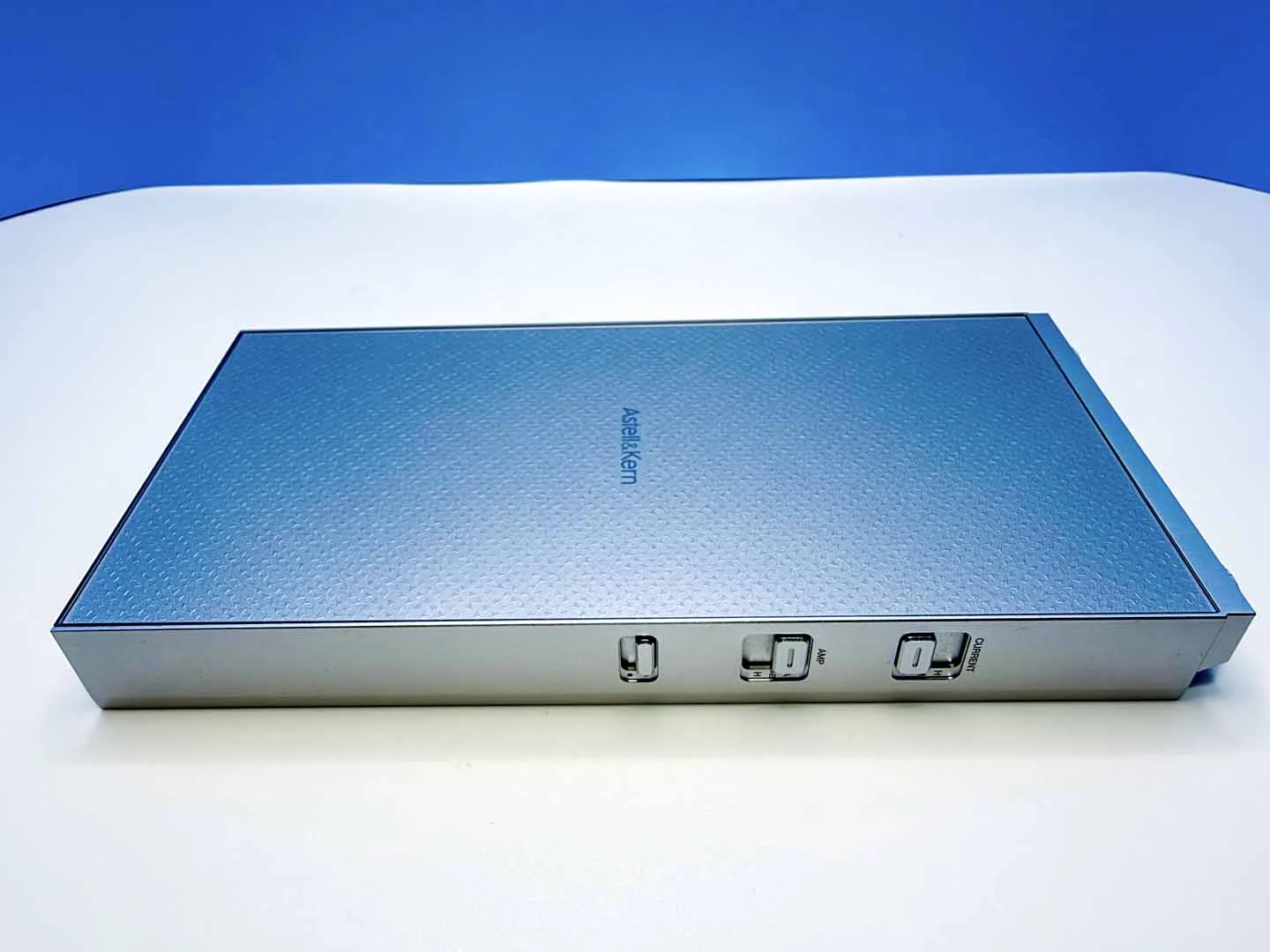
The Amplifier Class Switch
The dedicated amplifier-class switch lets listeners choose between Class A, Class AB, and Hybrid operation without navigating software menus.
These settings represent different amplifier operating approaches rather than ordinary EQ presets, which makes the control particularly interesting.
Class A emphasizes continuous device conduction and is traditionally associated with linear amplification, although it generally requires more power. Class AB uses a different strategy to balance performance and efficiency, while Astell&Kern’s Hybrid implementation combines selected characteristics of the two approaches.
The PD20 makes these configurations accessible through a simple physical adjustment, letting owners explore how different operating modes interact with their headphones.
The Amplifier Current Switch
The amplifier-current switch provides High, Mid, and Low options when Class A or Hybrid operation is selected.
This distinction matters because the current control isn’t simply another volume adjustment.
Astell&Kern describes it as a way to change the amplifier’s operating characteristics and energy delivery, helping owners better match different headphones and earphones.
High is intended to maximize dynamic authority, Mid emphasizes a balance of density and resolution, and Low is designed to support cleaner operation with sensitive IEMs.
The adjustment isn’t available in conventional Class AB mode, which is worth understanding before wondering why the switch doesn’t affect every configuration.
The Lock Switch
The physical lock control prevents unintended adjustments, a sensible addition when a player has so many exposed wheels and switches.
I appreciate that Astell&Kern has acknowledged the practical challenges of transporting a device with this much tactile functionality, though I wish the company’s approach to securing the body had received the same attention.
The lock switch can help prevent accidental control changes, but it certainly doesn’t prevent the player itself from sliding across a smooth desk.
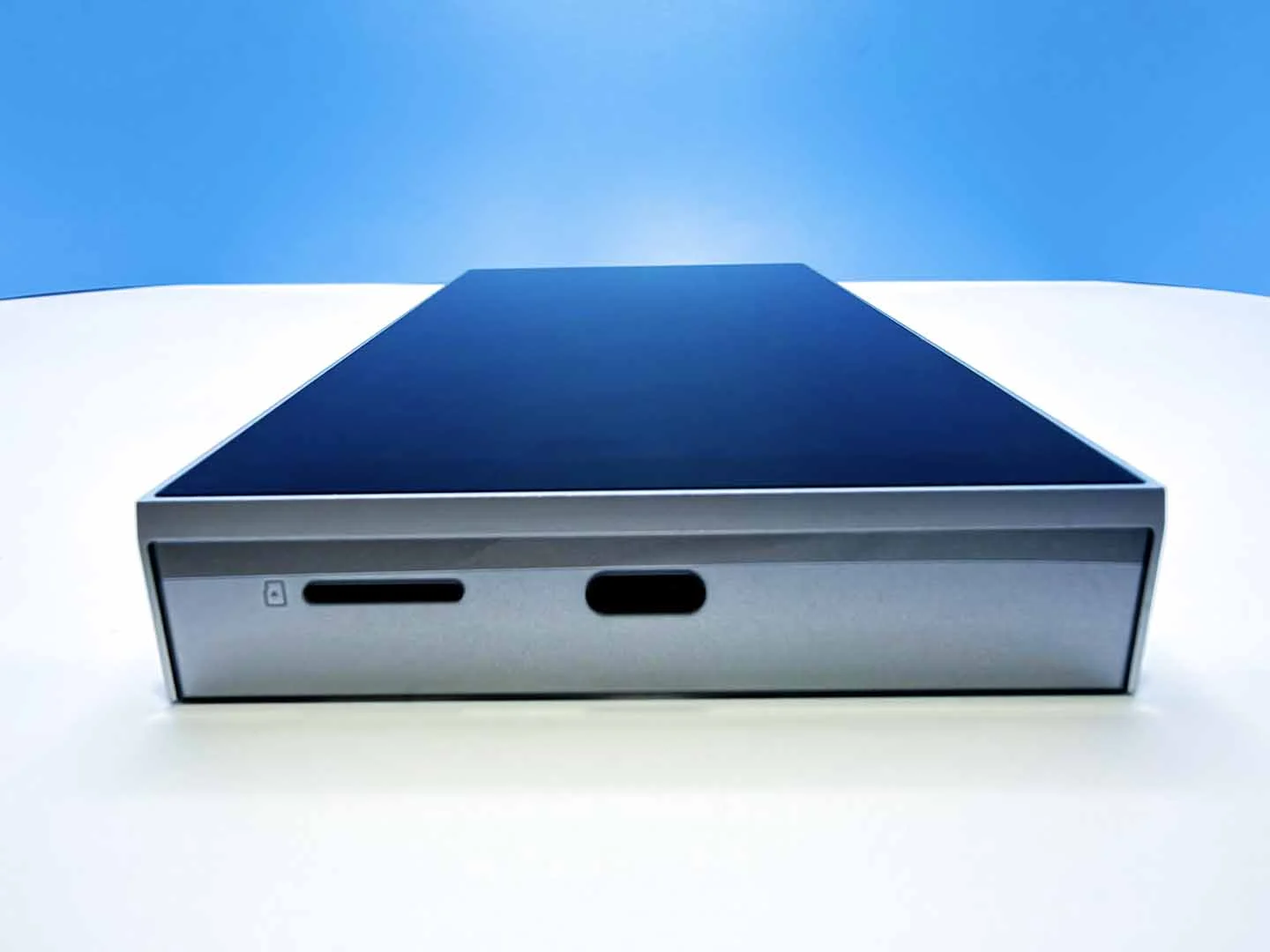
Playback Controls and Touchscreen
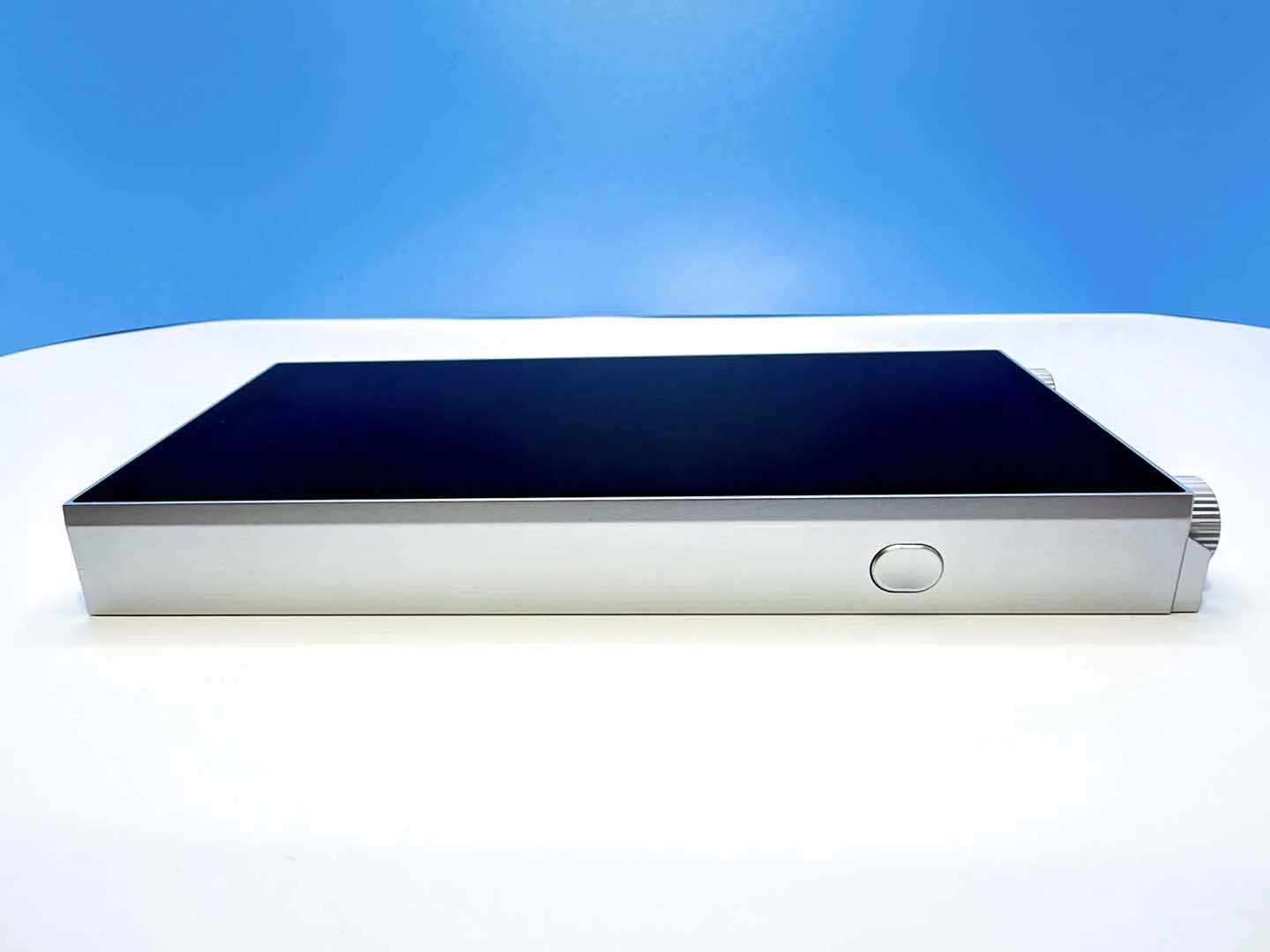
The side-mounted playback control provides convenient access to essential music functions without requiring constant interaction with the display.
Meanwhile, the six-inch touchscreen handles deeper navigation, including music libraries, playback information, settings, and the more sophisticated options inside Sound Studio.
The combination is well considered because the hardware provides immediate access to common adjustments, while the display handles more complex functions that benefit from visual feedback.
An illuminated ring around the power control also communicates the bit depth or format of the current audio signal through different colors.
It’s a relatively small detail, but it reinforces the PD20’s identity as a dedicated high-fidelity component.
And I appreciate equipment that makes its technology visible without constantly demanding my attention.
🧬 Quad-DAC Architecture: Four Converters and a Serious Engineering Philosophy
At the heart of the PD20’s digital audio system are four ESS ES9027PRO DAC chips arranged in a Quad-DAC configuration.
Astell&Kern designed the architecture to minimize interchannel interference and support precise signal separation, aiming to preserve fine detail while maintaining a natural, cohesive presentation.
That’s an impressive foundation, but I’ve never believed the number of DAC chips alone determines how good a source component will sound.
A DAC is only one part of a larger system that includes digital processing, clock management, power regulation, analog output circuitry, amplification, and the headphones connected to the device.
Two products using the same converter can behave differently because the surrounding engineering matters enormously.
That brings us to Astell&Kern’s TERATON ALPHA architecture, which represents the company’s integrated approach to audio signal management.
TERATON ALPHA incorporates technologies intended to reduce power-related noise, improve electrical stability, and support efficient, low-distortion amplification.
The objective is to create a controlled operating environment for digital-to-analog conversion rather than relying on prestigious components to accomplish everything independently.
The PD20 also introduces Enhanced Signal Alignment, or ESA, which Astell&Kern developed to address group delay.
Group delay describes timing differences across frequency components as they pass through a system. ESA is intended to reduce those differences and improve signal alignment before it reaches the listener.
It’s an intriguing concept, particularly for enthusiasts interested in transient behavior and the timing relationships within complex musical arrangements.
However, I wouldn’t claim that ESA independently creates a particular audible improvement without controlled measurements or listening comparisons.
What I appreciate is the broader engineering philosophy.
Astell&Kern isn’t simply selecting impressive converter chips and expecting the rest of the system to take care of itself. The company treats digital conversion, power management, signal alignment, and amplification as interconnected elements in a complete playback chain.
And that comprehensive approach helps explain why the PD20 feels like such a serious piece of audio equipment.
⚡ Triple AMP Architecture: Three Personalities and One Seriously Powerful Player
The PD20’s Triple AMP architecture is one of its most fascinating features because it gives listeners direct control over an element of audio reproduction that usually remains fixed.
Most digital audio players have a particular amplifier design, and owners simply accept the operating characteristics chosen by the manufacturer.
Astell&Kern takes a different approach, offering three selectable modes, each intended to emphasize different aspects of the listening experience.
Class A: Richness, Density, and Analog-Like Texture
Class A amplification keeps its active devices conducting throughout the signal cycle, a design approach associated with linear operation but also with increased power consumption and thermal demands.
Astell&Kern describes the PD20’s Class A presentation as dense, smooth, and rich, with an analog-like texture and substantial low-frequency body.
I can understand why that approach would appeal to listeners who value musical weight, expressive vocals, and a more organic presentation.
However, it’s important to distinguish the manufacturer’s intended sonic character from a guarantee that every listener will hear the same result through every headphone.
The actual differences depend on the implementation, connected equipment, listening level, and recording.
Class AB: Balance, Efficiency, and Dynamic Control
Class AB balances amplification performance and efficiency.
Astell&Kern describes this mode as articulate, dynamically stable, and able to preserve strong musical impact while maintaining controlled operation.
For listeners who prefer a clean, technically balanced foundation, Class AB is an attractive starting point.
It’s also a logical reference mode when exploring the PD20 because it provides a consistent baseline before introducing the additional variables available through the other amplifier configurations.
Hybrid: A Different Kind of Balance
Hybrid combines selected characteristics of the Class A and Class AB implementations, attempting to balance tonal richness with dynamic efficiency.
The interesting aspect isn’t whether Hybrid is universally superior, because I don’t believe such a conclusion would be meaningful across every headphone and recording.
What’s valuable is having another operating option available within the same device.
For enthusiasts who enjoy comparing subtle differences in presentation, that flexibility is a significant attraction.
High, Mid, and Low Current: Beyond Ordinary Volume Adjustment
The adjustable current system adds another layer of sophistication to Class A and Hybrid operation.
According to Astell&Kern, High is intended to provide maximum dynamic authority and a more expansive presentation, particularly when driving demanding headphones. Mid emphasizes a balance between resolution and tonal density, with particular attention to vocal texture and long-session comfort. Low prioritizes reduced background noise and controlled operation with highly sensitive IEMs.
These settings affect the amplifier’s operating conditions rather than simply raising or lowering playback volume.
That’s an important distinction because additional current isn’t automatically better for every headphone, and the most demanding setting doesn’t necessarily provide the most enjoyable result in every situation.
The value lies in matching the amplifier’s behavior to the connected equipment and the listener’s preferences.
The GearZilla Take on Amplification
Throughout my month with the PD20, I connected every headphone available in my review collection, and the player handled them all with impressive confidence.
I never encountered a situation that made me want a more powerful amplifier, and that’s a meaningful accomplishment for a device meant to serve as a versatile personal listening system.
Of course, I haven’t measured continuous output into different impedances or tested every difficult headphone on the market, so I wouldn’t suggest that the PD20 has unlimited amplification capability.
But within the equipment I evaluated, it never seemed remotely intimidated.
What makes that performance even more compelling is the flexibility around it.
Astell&Kern hasn’t simply built a powerful player and stopped there. It offers multiple amplifier operating modes and adjustable current settings, so enthusiasts can explore different electrical and sonic relationships without buying additional hardware.
For someone who enjoys experimenting with headphones and source equipment, that’s a huge part of the PD20’s appeal.
👂 Personal Sound: The Day I Discovered What My Ears Had Been Missing
Of all the technologies built into the PD20, Audiodo Personal Sound made the greatest impression on me.
In fact, I’d argue that it’s the feature most responsible for turning an otherwise excellent digital audio player into something genuinely memorable.
The underlying premise is deceptively simple. Rather than assuming every listener perceives sound the same way, the PD20 performs an individualized hearing assessment and generates a correction profile based on the listener’s responses.
Developed in collaboration with Audiodo, the technology evaluates the left and right ears independently, which matters because our hearing sensitivity isn’t necessarily identical on both sides.
That’s a distinction conventional equalization systems often overlook.
An ordinary EQ adjustment generally changes the audio signal’s tonal balance according to a selected frequency curve. Personal Sound takes a different approach by considering how the listener responds to specific frequencies and then applying individualized compensation.
It’s an ambitious idea, and I initially approached it with healthy skepticism.
How the Assessment Works
The PD20 includes dedicated earphones for conducting the Personal Sound assessment.
In a quiet environment, the system uses those earphones to play a series of tones and asks the listener to respond based on what they hear.
The software then uses those responses to construct a personalized hearing profile, accounting separately for the left and right ears.
The purpose isn’t to produce a medical diagnosis or replace a professional hearing examination. It’s to establish a practical listening profile that can adjust audio playback to the listener’s perceived sensitivity.
Astell&Kern designed the resulting profile to work across different music genres, listening levels, and connected headphones, so the correction becomes part of the broader listening experience rather than something tied exclusively to the measurement earphones.
The processing supports audio up to 32-bit/192kHz, which is worth recognizing when exploring higher-resolution recordings.
What Happened When I Tried It
I started by listening to familiar tracks before completing the assessment because I wanted a meaningful reference for any changes that might occur.
After generating my personalized profile, I returned to those same recordings.
And the difference genuinely surprised me.
The experience reminded me of putting on prescription glasses for the first time after years of thinking my vision was perfectly fine.
Suddenly, details that had seemed comparatively indistinct became easier to recognize, and the entire presentation felt more clearly organized.
It wasn’t simply a matter of turning up the volume or applying a dramatic treble boost.
The music felt as though it had been adjusted to how I actually hear, creating an unexpectedly personal connection to recordings I’d already enjoyed countless times.
What made the experience so remarkable was discovering that I hadn’t necessarily been aware of the limitations in my own perception before hearing the corrected presentation.
You become accustomed to how your ears interpret sound because it’s the only reference you’ve ever had.
The PD20 gave me an opportunity to explore that reality directly.
And I found it fascinating.
Personalized Sound Doesn’t Mean Artificially Better Sound
There’s an important distinction here because hearing correction changes the audio signal, raising reasonable questions about fidelity.
If the PD20 modifies the frequency balance to compensate for individual hearing characteristics, the electrical signal is no longer identical to the unprocessed recording.
However, the listener may perceive the corrected result as clearer, more balanced, or more faithful to the intended musical relationships.
Those observations aren’t necessarily contradictory because the listening experience depends on more than the electrical signal leaving the output jack.
It also depends on the headphones, their fit, the acoustic relationship with the ears, the listening level, and the individual’s hearing characteristics.
Personal Sound acknowledges that complete relationship.
It also reinforces why no single correction profile works for everyone.
Some listeners may experience substantial benefits, while others may prefer the unprocessed presentation or find the differences comparatively subtle.
In my case, the improvement was remarkable.
What I Learned About Reviewing Audio
Perhaps the most meaningful lesson Personal Sound taught me is that every review ultimately passes through the hearing characteristics of the person conducting it.
As enthusiasts, we spend enormous amounts of time discussing frequency-response graphs, driver technologies, amplifier architectures, and DAC specifications.
Those subjects matter, but they don’t eliminate the listener’s influence.
Two people can evaluate the same headphones through the same source and perceive different tonal relationships because their hearing responses aren’t identical.
That doesn’t make subjective reviewing meaningless.
It makes transparency, careful observation, and humility even more important.
The PD20 reminded me that describing what I hear is fundamentally different from declaring what everyone else should hear.
And that’s a valuable lesson for anyone who reviews audio equipment.
🎚️ Sound Studio: Correct Your Hearing First, Then Make the Music Your Own
If Personal Sound is the feature that gives the PD20 its emotional impact, Sound Studio is where Astell&Kern reveals just how much control it wants listeners to have over the complete experience.
The most important distinction is that Personal Sound and the Equalizer aren’t competing approaches.
They serve different purposes.
Personal Sound compensates for the listener’s individual hearing characteristics, while the Equalizer lets you make additional adjustments based on musical preferences.
Astell&Kern designed the two systems to work together, meaning you can apply your personalized hearing profile and then refine the tonal balance without abandoning that correction.
I find that concept particularly compelling.
It recognizes that correcting your hearing response and choosing how you want your music to sound aren’t necessarily the same thing.
You might appreciate the increased clarity Personal Sound provides while still preferring a warmer presentation, a little more bass weight, or slightly reduced upper-frequency energy.
The PD20 allows those preferences to coexist.
Bass, Mid, and Treble Adjustments
The Audiodo Equalizer focuses on broad tonal regions, allowing listeners to make practical changes without needing to understand every detail of parametric equalization.
The Sound Master Wheel offers 160-step adjustment precision across a -8.0 to +8.0 dB range, letting you refine the presentation in small increments.
For someone who frequently moves between headphones with different tonal personalities, this can be an exceptionally useful feature.
A warmer IEM may benefit from a little additional upper-frequency energy, while a brighter headphone might become more comfortable with a modest tonal adjustment in the opposite direction.
The important thing is that these changes remain optional.
I don’t believe every recording needs processing, and I wouldn’t suggest that applying more EQ automatically makes music better.
But having precise, convenient control is enormously appealing.
The Tilting Function
The Tilting Function lets listeners shift the overall tonal balance toward a heavier or brighter sound without independently adjusting every frequency region.
Think of it as changing the overall character of the presentation rather than rebuilding the entire frequency response from scratch.
It’s particularly useful when you like a headphone’s fundamental sound but want to shift its balance slightly in one direction.
For me, this illustrates Astell&Kern’s broader approach to accessibility.
The company has integrated sophisticated processing into an interface that encourages experimentation without requiring every owner to become an audio engineer.
Firmware and Expanded EQ
Astell&Kern’s firmware version 1.022 introduced a five-band EQ implementation within Sound Studio, along with the new Acura feature and additional interface improvements.
That’s worth mentioning because the PD20’s capabilities have evolved since its initial release, and the exact interface available to owners can depend on the installed firmware version.
I appreciate that the company continues refining the software because a device this sophisticated benefits from ongoing development.
For the review, however, I’m treating those firmware additions as documented functionality rather than claiming firsthand listening results for processing modes I haven’t separately characterized.
The bigger point is that Sound Studio gives enthusiasts plenty of room to explore.
Once you start combining personalized hearing correction, tonal adjustments, amplifier configurations, and digital-processing options, the PD20 starts to feel like a remarkably powerful platform for musical experimentation.
🌌 Audiosphere: Taking Stereo Beyond the Headphones
Anyone familiar with GearZilla Reviews knows that I have a particular weakness for immersive audio.
I love expansive width, convincing front-to-back depth, expressive vocals, and the sensation that a recording occupies a believable three-dimensional environment.
But I’ve also learned that a large soundstage isn’t automatically a good soundstage.
A convincing presentation depends on the relationship between the instruments, performers, and acoustic environment. Simply pushing everything farther apart can make music feel disconnected rather than more realistic.
That makes Astell&Kern’s Audiosphere technology particularly interesting.
Developed in collaboration with Audiodo, Audiosphere processes conventional two-channel audio to create a virtual three-dimensional listening environment.
The system offers four distinct presets, each designed to influence the spatial presentation in a different way.
Subtle: A Little More Breathing Room
Subtle gently widens the soundstage while preserving much of the original recording’s character.
This approach may appeal to listeners who enjoy a slightly more spacious presentation without wanting an obviously processed effect.
The objective isn’t to make the recording sound like it was captured in an entirely different venue, but to introduce a modest sense of openness.
Balanced: Clarity Meets Dimensionality
Balanced seeks a middle ground between spatial expansion and musical clarity.
The intention is to create a more dimensional presentation without allowing the effect to overwhelm the relationship between the instruments.
For listeners who enjoy immersion but remain sensitive to exaggerated spatial processing, this offers an appealing compromise.
Immersive: Moving the Music Outside Your Head
Immersive is designed to move the perceived sound center beyond the conventional headphone presentation, creating a more enveloping experience.
That concept naturally captures my attention because some of my favorite listening moments involve recordings that seem to extend beyond the physical boundaries of the headphones.
However, I’d be careful not to confuse additional spatial processing with guaranteed improvements in accuracy.
A more expansive presentation can be enjoyable without necessarily reproducing the original recording more faithfully.
Echoic: A Concert Hall in Your Headphones
Echoic introduces a more pronounced sense of reverberation, aiming to create the scale and ambiance of a larger acoustic environment.
This can be especially fascinating with orchestral music, ambient recordings, and other material where the sense of space strongly shapes the emotional experience.
But reverberation can also change a recording’s original character considerably.
A beautifully intimate vocal performance might not necessarily benefit from being transported into a virtual concert hall.
And that’s why I appreciate the ability to choose.
The GearZilla Perspective on Spatial Processing
Audiosphere isn’t universally praised by independent reviewers, and I think that disagreement is useful.
Some listeners enjoy the expanded presentation, while others find the processing less natural than the original stereo recording.
I wouldn’t declare one perspective correct for everyone because spatial perception is highly individual and depends on the music, headphones, and listener.
The PD20 allows owners to decide whether the additional processing contributes to their enjoyment.
Audiosphere supports audio up to 32-bit/96kHz, so enabling the feature may affect compatibility with higher-sample-rate material.
For me, the value is having another creative option within a system already designed around personal preferences.
✨ Advanced DAR: What Happens Before the DAC Matters, Too
Astell&Kern’s Advanced Digital Audio Remaster technology represents another layer of the PD20’s sophisticated signal-processing architecture.
The company’s second-generation DAR implementation introduces Virtual Sound Extender, or VSE, as an additional processing stage before digital remastering.
According to Astell&Kern, VSE is designed to virtually reconstruct harmonic information that certain forms of digital processing and compression may have reduced or lost.
After that stage, the signal passes through the DAR engine, which applies additional processing and upsampling.
The concept is intriguing because it approaches digital audio reproduction as something that can be modified before the signal reaches the converter.
However, I think it’s important to explain what this technology can and cannot accomplish.
Upsampling doesn’t magically introduce musical information that wasn’t present in the original recording.
Similarly, processing a lossy audio file can’t guarantee exact reconstruction of information discarded during compression.
A sophisticated DSP system can estimate or synthesize additional information, modify the reconstruction process, and produce a different audible presentation.
Whether that presentation is preferable depends on the implementation, recording, and listener.
I appreciate that Astell&Kern includes Advanced DAR as another option rather than treating every recording as if it requires mandatory enhancement.
Some music benefits from being left alone, while other recordings may offer interesting opportunities for experimentation.
The PD20 lets you explore those differences without needing additional external processing equipment.
For enthusiasts who enjoy exploring the relationship between digital technology and musical presentation, that’s a fascinating capability.
🔬 Seven DAC Filters: A Little Technical Fine-Tuning Goes a Long Way
The PD20 provides seven digital reconstruction filters, adding another level of control over how its ESS converters process supported audio.
These filters influence signal-reconstruction characteristics, including frequency response near the upper end of the audio band, phase behavior, latency, and transient response.
The available options include Minimum Phase, Linear Phase Apodizing, Linear Phase Fast Roll-Off, Linear Phase Slow Roll-Off, Minimum Phase Fast Roll-Off, Minimum Phase Slow Roll-Off, and Minimum Phase Slow Roll-Off Low Dispersion.
If that sounds like a collection of terms meant to make ordinary people reconsider their relationship with music, I understand completely.
But the basic idea is relatively straightforward.
Digital-to-analog conversion involves reconstructing a continuous analog waveform from digital samples, and different filter approaches make different tradeoffs in how that reconstruction occurs.
Linear-phase filters preserve a particular relationship between frequencies, while minimum-phase approaches modify the phase response and can reduce pre-ringing.
Fast-roll-off filters emphasize stronger attenuation above their transition region, while slow-roll-off alternatives use a more gradual response.
These differences can be technically meaningful without necessarily producing dramatic audible changes.
In fact, switching filters may be subtle enough that some listeners won’t consistently distinguish them under ordinary conditions.
That doesn’t make the options irrelevant.
It simply means they should be understood as fine-tuning tools rather than seven completely different sound signatures.
For listeners who enjoy exploring the smaller details of digital playback, the PD20 offers considerable flexibility.
For everyone else, the default filter provides a perfectly reasonable starting point.
And I appreciate that Astell&Kern leaves the decision in the listener’s hands.
🎼 Crossfeed: Making Headphones Behave a Little More Like Speakers
Crossfeed is another interesting feature because it addresses a fundamental difference between listening through headphones and listening through speakers in a room.
When you’re sitting between two stereo speakers, sound from each speaker reaches both ears at slightly different times and levels.
Conventional headphones behave differently because the left and right channels are delivered primarily to their corresponding ears.
This can create unusually strong channel separation, particularly on older stereo recordings where instruments were sometimes placed dramatically toward one side.
Crossfeed attempts to recreate some of the natural blending that occurs when listening to speakers.
The PD20 offers adjustable parameters, including Shelf Cutoff, Shelf Gain, and Mixer Level, letting users refine how much of the opposite channel is introduced and how the processing affects the presentation.
The objective is to create a more speaker-like experience and potentially reduce listening fatigue associated with extreme stereo separation.
As with Audiosphere, this isn’t automatically an improvement for every recording.
Some listeners prefer the wider separation of conventional headphone playback, while others appreciate the more cohesive presentation crossfeed can provide.
The important thing is that the PD20 lets you explore both approaches.
🎵 Listening Impressions: When the Technology Gets Out of the Way
One challenge in reviewing a player as customizable as the PD20 is describing its sonic personality without reducing the entire experience to a fixed collection of adjectives.
The device can operate through multiple amplifier configurations, apply different current settings, use individualized hearing correction, introduce tonal adjustments, and modify spatial presentation.
That means the final listening experience can vary considerably depending on how the player is configured.
For me, the two characteristics that remained most impressive throughout the evaluation were its amplification confidence and the transformative effect of personalized hearing correction.
Those observations most strongly inform my rating.
🥁 Bass: Authority Without Unnecessary Exaggeration
A powerful amplifier doesn’t automatically produce a bass-heavy presentation, and I think that’s an important distinction when discussing the PD20.
The player offers considerable output capability, but you can adjust its tonal balance independently through Sound Studio and its amplifier operating modes.
That flexibility allows enthusiasts to explore different relationships between low-frequency weight, articulation, and overall musical balance.
Personally, I enjoy bass with genuine authority, but I don’t want low frequencies to overwhelm the midrange or obscure the texture of the performance.
The PD20’s customization system offers several ways to explore those preferences without needing a different source component.
🎤 Midrange & Vocals: The Emotional Center
Vocals are one of the most important elements of my listening experience because they communicate so much of a performance’s emotional character.
I love expressive midrange reproduction that preserves texture, believable presence, and the relationship between the singer and the surrounding instruments.
The PD20’s personalized hearing correction became particularly meaningful here because it changed my perception of familiar material.
Rather than simply applying a generic EQ preset, I could listen through a profile created around my individual hearing responses.
That made revisiting familiar recordings unusually engaging.
🌟 Treble & Air: Clarity Doesn’t Have to Mean Brightness
I’ve never believed that revealing more detail requires exaggerated treble.
Some of the most satisfying listening experiences come from systems that preserve subtle information without introducing the aggressive upper-frequency energy that can make long sessions exhausting.
The PD20’s hearing correction and tonal adjustments provide several ways to explore that relationship.
My most meaningful observation was the improved perceived clarity after engaging Personal Sound, which reminded me that our own hearing characteristics can influence how much detail we recognize in the first place.
That’s a fascinating concept for anyone who spends time chasing resolution through increasingly expensive equipment.
🎯 Instrument Separation: Letting the Performance Breathe
Instrument separation is valuable, but I don’t believe the goal should be to pull every musical element as far away from its neighbors as possible.
A convincing performance depends on relationships.
The rhythm section needs to support the song, vocals need to occupy a believable position, and smaller details should contribute without making the entire arrangement feel disconnected.
The PD20’s sophisticated conversion and processing architecture provides a flexible foundation for exploring those qualities.
Its personalized hearing correction adds another important variable by shaping how the listener perceives the recording’s tonal relationships.
🌌 Width, Depth & Holographic Immersion
Anyone who’s followed GearZilla Reviews knows that I have a particular weakness for expansive, dimensional audio.
I love the sensation that a recording occupies a believable environment, with convincing relationships between the foreground, background, and everything in between.
The PD20 approaches spatial presentation through multiple technologies, including its underlying signal architecture, Audiosphere, and crossfeed.
These systems work differently, and I wouldn’t suggest that engaging every available processing option automatically creates a more realistic soundstage.
What I appreciate is that Astell&Kern allows listeners to explore different concepts of immersion rather than forcing everyone into one predetermined presentation.
🦴 Slam, Dynamics & Headroom: This Thing Has Muscle
This is where my experience with the PD20 leaves very little room for hesitation.
The PD20 is an absolute powerhouse.
Throughout my month of evaluation, it handled every headphone I connected without leaving me wishing for more amplification.
That doesn’t mean I’ve established its maximum output under every possible load, and the 150-step volume scale shouldn’t be mistaken for a power measurement.
But within the equipment I evaluated, the PD20 inspired tremendous confidence.
And I appreciate amplification that feels effortless rather than constantly demanding attention.
⚡ Speed, Transients & Resolution
Technical precision matters, but I’ve never believed it should become the entire point of listening.
A recording can reveal extraordinary detail while still failing to communicate the emotional relationships that make music compelling.
Astell&Kern’s engineering places considerable emphasis on signal integrity, low noise, precise conversion, and controlled amplification.
Those are meaningful objectives, but the most important question remains whether the complete system makes listening more enjoyable.
For me, the answer was overwhelmingly positive.
🎵 Tonality & Timbre: Beyond a Single House Sound
The PD20 reinforces an interesting idea about high-end digital audio.
A sophisticated player doesn’t necessarily need to impose one permanent sonic personality.
Astell&Kern has created a platform that lets listeners explore different tonal approaches while retaining a carefully engineered foundation.
That’s particularly appealing to enthusiasts who own multiple headphones because different transducers can benefit from different settings and adjustments.
The PD20 offers enough flexibility that understanding its full customization system is more useful than trying to describe it with one fixed adjective.
And that, to me, is a large part of its appeal.
❄️ Thermal Performance: All That Power, and Not a Hint of Trouble
Of all the surprises the PD20 delivered during my month of evaluation, its thermal behavior deserves special recognition.
This thing barely seemed to get warm.
I ran the player for hours almost every day, explored its extensive features, and used it with a wide variety of headphones, yet I never noticed meaningful heat buildup during my normal listening sessions.
That was particularly impressive because I’d recently evaluated Astell&Kern’s much smaller AK HC5 USB DAC/amp, which became noticeably hot during extended use.
The contrast between the two products was remarkable.
The HC5 delivered extraordinary capability for its compact dimensions, but its thermal behavior became a meaningful practical limitation.
The PD20, despite its far more elaborate hardware platform and substantial amplification capabilities, remained comfortable throughout my extended listening.
The two devices have understandable engineering differences.
The PD20 has a much larger enclosure, an internal battery, and a fundamentally different physical architecture, while the HC5 operates as a compact USB-powered accessory.
A larger enclosure can provide more opportunities to distribute heat, although actual thermal performance depends on component placement, power consumption, operating conditions, and the complete design.
I haven’t conducted controlled temperature measurements or evaluated every possible operating configuration, so I wouldn’t claim that the PD20 produces no heat or that every unit will behave identically.
What I can say is that throughout a month of extensive use, it never became noticeably uncomfortable or gave me any practical reason to worry about thermal buildup.
That’s an excellent result for a device with this degree of capability.
The irony, of course, is that while I never worried about the PD20 getting too hot, I spent an unreasonable amount of time worrying about it sliding off the furniture.
Apparently, every monster needs an Achilles’ heel.
🔌 Connectivity, Streaming & Everyday Features: More Than a Standalone Music Player
The PD20’s sound-processing features attract most of the attention, but its broader connectivity deserves recognition because Astell&Kern has built a remarkably versatile digital audio platform.
With 256GB of internal storage and support for microSD expansion up to 2TB, the player can accommodate a substantial offline music library.
That’s particularly valuable for enthusiasts who maintain collections of high-resolution recordings and don’t want every listening session to depend on an internet connection.
The PD20 also supports contemporary network playback features, including Roon Ready certification and Qobuz Connect.
Roon Ready integration lets you use the PD20 in a compatible Roon environment, while Qobuz Connect enables playback control through the Qobuz ecosystem.
Wi-Fi provides access to network features and software updates, while Bluetooth 5.3 supports wireless connectivity with compatible devices.
The BT Sink function is particularly interesting because it allows the PD20 to receive audio from an external Bluetooth source and play it through its own audio system.
USB DAC functionality expands its usefulness further by allowing a compatible computer to use the PD20 as an external digital audio component.
The player also includes ReplayGain, which helps manage loudness differences between recordings, reducing the need for constant volume adjustments when moving between tracks mastered at different levels.
For someone who regularly explores different genres, recording eras, and production styles, that’s a welcome convenience.
Astell&Kern has also included visual touches such as VU meters and format indicators, reinforcing the player’s identity as a dedicated high-fidelity component.
These features might not get the same attention as Personal Sound or the amplifier architecture, but they still contribute significantly to the overall ownership experience.
The PD20 isn’t simply a device for playing locally stored music.
It’s a sophisticated personal audio platform intended to accommodate several different listening habits.
🪑 Portability & Practicality: A Portable Player That Belongs on a Throne
The PD20 presents one of the more amusing contradictions I’ve encountered in recent audio equipment.
Technically, it’s portable.
Practically, I was reluctant to move it.
At approximately 313 grams, it’s not impossibly heavy, but its substantial dimensions and premium construction make it noticeably more cumbersome than the compact sources most people carry every day.
Combine that with the slippery exterior, fingerprint-prone finish, and high replacement cost, and the idea of casually slipping it into a bag becomes far less appealing.
I found myself treating the PD20 with the kind of caution I’d normally reserve for an expensive camera lens or another delicate piece of professional equipment.
After watching it repeatedly slide off my desk, I became convinced it deserved something approaching military-grade protection before I’d feel comfortable taking it outside.
That’s partly humor, but it also reflects my experience with the review unit.
The solution was to keep it secured inside a zippered case, which provided peace of mind at the expense of some convenience.
Eventually, I stopped thinking of the PD20 as an everyday pocket companion and began imagining it as the centerpiece of a dedicated personal listening space.
A comfortable couch, a favorite pair of headphones, a great album, and enough time to disappear into the music.
That sounds pretty wonderful to me.
There’s genuine value in equipment that encourages deliberate listening, particularly when so much modern music consumption happens in the background while we’re doing something else.
The PD20 has a sense of occasion that makes sitting down with music feel special.
I simply wouldn’t confuse that luxury with effortless portability.
💰 Value: There’s Expensive, and There’s Costly
I’ve often said there’s an important difference between expensive and costly audio equipment.
Expensive equipment commands a premium without necessarily delivering enough meaningful benefit to justify the investment.
Costly equipment requires a substantial financial commitment but rewards that commitment through exceptional engineering, craftsmanship, versatility, or long-term enjoyment.
The Astell&Kern PD20 is undeniably costly.
At $2,000, it sits in a category where buyers can build exceptionally capable listening systems for far less.
A good DAC/amp, a capable source, and a great pair of headphones can deliver extraordinary musical enjoyment without approaching the PD20’s asking price.
So why would anyone spend this much on a digital audio player?
For me, the answer isn’t simply that it has four DAC chips or a powerful amplifier.
Those are impressive engineering accomplishments, but specifications alone don’t explain the value.
What makes the PD20 compelling is how comprehensively Astell&Kern has integrated its technologies into a single, customizable listening platform.
The amplifier system provides flexibility, the processing architecture offers multiple approaches to digital playback, Sound Studio makes tonal adjustments intuitive, and Personal Sound introduces an extraordinary level of individualized correction.
Then there’s the physical experience.
The substantial controls, distinctive industrial design, large display, and overall sense of occasion make you feel like you’re interacting with a serious luxury audio component.
Prestige is part of the appeal, and I don’t think there’s anything wrong with acknowledging that.
But the PD20 also needs to deliver meaningful performance, and in my experience, it absolutely does.
Its amplification confidence impressed me throughout my evaluation, and the personalized hearing correction gave me one of the most memorable experiences I’ve had with a digital audio player.
That makes the premium easier to understand.
Would I purchase one today?
Probably not, because I have other financial priorities, and $2,000 is a considerable amount to spend on a personal listening device.
But would I love to own one someday?
Absolutely.
And that’s a meaningful distinction because I don’t confuse wanting something with being able to justify purchasing it.
The PD20 has earned a place on my personal wish list, and I suspect I’ll keep thinking about its personalization system long after I return the loaner.
For the right listener—especially someone who values sophisticated customization and spends considerable time enjoying music through premium headphones—the PD20 offers an extraordinary collection of capabilities.
It’s costly, not merely expensive.
Just remember to budget for a protective case.

👹 The GearZilla KAIJU DNA Scan: The Personalized Powerhouse
Every audio monster has its own personality, and the PD20’s DNA reveals a fascinating combination of sophisticated engineering, tremendous amplification, deeply personal customization, and one surprisingly inconvenient physical weakness.
🦴 K • Kill Shot: Personal Sound Revelation
The PD20’s defining strength is its ability to create a personalized listening profile based on the user’s hearing characteristics. For me, the before-and-after experience was extraordinary, revealing a level of perceived clarity that reminded me of putting on prescription glasses for the first time. Of everything the PD20 accomplished during my evaluation, this is what I’ll remember most clearly.
🧬 A • Anatomy: Four DACs and an Integrated Engineering Ecosystem
The four ESS ES9027PRO converters, proprietary TERATON ALPHA architecture, Enhanced Signal Alignment technology, and sophisticated amplifier system demonstrate Astell&Kern’s comprehensive approach to high-fidelity engineering. Rather than relying exclusively on individual components, the company has created a deeply integrated audio platform designed to support precision and flexibility throughout the playback chain.
🥁 I • Impact: Monstrous Amplification Confidence
The PD20 handled every headphone I connected during my month of evaluation without leaving me wishing for additional power. Its Triple AMP architecture and adjustable current settings add meaningful versatility, giving enthusiasts an opportunity to explore different operating characteristics within one highly capable source.
✨ J • Joy: A Sound Laboratory Built Around You
Sound Studio, the Sound Master Wheel, Advanced DAR, Audiosphere, crossfeed, and selectable digital filters create an extraordinary environment for musical experimentation. Not every adjustment will appeal to every listener, and additional processing doesn’t automatically guarantee greater fidelity, but the freedom to explore is one of the most compelling aspects of the complete experience.
🛡️ U • Unleashed: Too Slippery for Its Own Good
The PD20’s greatest weakness isn’t its audio performance but the physical experience of handling such an expensive, polished, substantial device without adequate protection. The fingerprint-prone surfaces require constant attention, and my review unit kept sliding off my desk until I secured it in a protective case. For a luxury player, that’s a frustrating practical compromise.
KAIJU DNA Verdict: An extraordinary personal sound laboratory with formidable amplification, exceptional customization, and a genuinely transformative hearing-correction system. Its engineering deserves admiration, but its luxurious exterior desperately needs a more secure grip.

🦖 GearZilla Scorecard: Nearly Perfect, With a Slippery Catch
The Astell&Kern PD20 stands among the most impressive digital audio players I’ve had the opportunity to evaluate, combining sophisticated conversion, tremendous amplification confidence, and an unusually personal approach to sound customization. Its most meaningful achievement isn’t simply revealing details in recordings, but giving listeners the tools to explore how they perceive those details.
Here’s how this extraordinary machine earns its 4.8/5 GearZilla rating.
🎵 Musicality & Listening Enjoyment: 4.9/5 ⭐
The PD20 made familiar recordings feel new again, and that’s a remarkable accomplishment for any audio component. Its sophisticated presentation, effortless amplification, and personalized hearing correction created an exceptionally engaging listening experience that kept me coming back for hours almost every day. After a month, I wasn’t remotely tired of exploring what this machine could do, and I’m genuinely sad to send it back.
🔬 DAC Architecture & Technical Performance: 4.9/5 ⭐
Four ESS ES9027PRO converters, TERATON ALPHA circuitry, and Enhanced Signal Alignment represent serious engineering ambition. Astell&Kern has built a sophisticated audio platform that emphasizes precise signal handling, low noise, and exceptional flexibility. While I haven’t independently measured the complete signal chain, the overall listening experience reinforced my appreciation for the engineering behind it.
⚡ Amplification & Headroom: 5.0/5 ⭐
This thing is an absolute powerhouse. Throughout my month of evaluation, I connected every headphone available in my review collection, and the PD20 never gave me a reason to question its capabilities. Its Class A, Class AB, and Hybrid modes, adjustable current settings, and substantial output capacity provide extraordinary versatility. Within the equipment I tested, I couldn’t ask for more.
👂 Personal Sound & Hearing Customization: 5.0/5 ⭐
This is the PD20’s crowning achievement and the feature that completely rewired my expectations. Listening to familiar tracks before and after creating my personalized hearing profile felt like putting on prescription glasses for the first time. Suddenly, details I’d never realized were missing became clearer, and music I’d heard countless times took on an entirely new dimension. It’s one of the most memorable experiences I’ve had reviewing audio equipment.
🎛️ Sound Studio & Customization: 5.0/5 ⭐
Between the Sound Master Wheel, adjustable EQ, amplifier modes, current settings, digital filters, Audiosphere, and Advanced DAR, the PD20 offers an astonishing degree of control over the listening experience. What impresses me most is how accessible Astell&Kern has made that complexity through dedicated physical controls and an intuitive interface. It’s practically a personal sound laboratory, and I loved exploring it.
🎨 Build Quality & Craftsmanship: 4.6/5 ⭐
The PD20 is undeniably gorgeous, with distinctive industrial design, substantial controls, and a luxurious finish that communicates prestige from the moment you pick it up. Unfortunately, that beauty comes with a frustrating practical compromise. The polished surfaces attract fingerprints almost immediately, and my review unit was slippery enough to slide off my desk repeatedly. Exceptional craftsmanship deserves equally thoughtful everyday handling.
🖥️ Controls & Everyday Usability: 4.8/5 ⭐
Astell&Kern has done an excellent job making extraordinarily sophisticated functionality approachable. The dedicated Sound Master Wheel, amplifier switches, 150-step volume control, and large touchscreen make exploring the PD20’s capabilities surprisingly intuitive. There’s certainly a learning curve, and casual listeners may find the options excessive, but enthusiasts who appreciate hands-on control will find plenty to love.
❄️ Thermal Performance: 5.0/5 ⭐
This was one of the most impressive surprises of my evaluation. I ran the PD20 for hours almost every day throughout an entire month, yet never noticed meaningful heat buildup. Considering the player’s sophisticated processing and substantial amplification capabilities, that’s an excellent result. It’s particularly impressive compared with my experience reviewing the compact AK HC5, which became noticeably hot during extended listening. For the conditions I tested, the PD20’s thermal performance was exceptional.
🧳 Portability & Practicality: 3.8/5 ⭐
Here’s where this magnificent machine encounters its biggest weakness. At approximately 313 grams, the PD20 is substantial, and its slick, fingerprint-prone exterior made me nervous about handling it without protection. After watching it repeatedly slide off my desk, I eventually secured it inside a zippered case. Frankly, I’d be terrified to take it outside without something approaching military-grade protection. This is a luxury listening machine I’d rather enjoy from my couch than carry around town.
💰 Value & Long-Term Appeal: 4.5/5 ⭐
At $2,000, the PD20 is undeniably a luxury purchase, and I recognize that far more affordable equipment can deliver tremendous musical enjoyment. But there’s a difference between expensive and costly, and Astell&Kern has packed extraordinary engineering, amplification, customization, and personalization into one sophisticated platform. I probably can’t justify purchasing one today, but after spending a month with it, I absolutely want one someday. That says a great deal about its long-term appeal.
🧡🦖 Overall GearZilla Score: 4.8/5 ⭐ | Luxury Sound That Rewired My Expectations
After spending an entire month with the Astell&Kern PD20, I’ve developed tremendous respect for what the company has accomplished. This remarkable machine combines extraordinary amplification, sophisticated engineering, and an almost overwhelming collection of sound-shaping technologies, all wrapped in a distinctive premium design that feels every bit as luxurious as its $2,000 price suggests. But what makes the PD20 special isn’t simply the impressive hardware or the sheer number of features available. It’s how Astell&Kern has brought everything together to give listeners an extraordinary degree of control over their own musical experience.
The Personal Sound hearing assessment was undoubtedly the highlight of my evaluation, delivering one of the most memorable revelations I’ve experienced while reviewing audio equipment. Listening to familiar recordings before and after calibration genuinely changed my perspective on how my individual hearing characteristics influence what I perceive. It felt like putting on prescription glasses for the first time and suddenly discovering an entirely new level of clarity in a world I thought I already knew. Combine that transformative experience with an amplifier that confidently drove every headphone I connected, intuitive physical controls that made exploring its extensive customization options surprisingly accessible, and remarkably cool operation throughout hours of daily listening, and you’ve got an exceptionally compelling piece of equipment.
Of course, luxury doesn’t automatically translate into practicality, and the PD20 reminded me of that rather enthusiastically. Its substantial weight and slick, fingerprint-prone exterior made it more stressful to handle than it should have been, especially after watching the beautiful thing repeatedly slide off my desk. Eventually, I secured it in a protective zippered case for peace of mind, which says something about a premium portable player I’d be genuinely nervous to take outside without serious protection. For me, the PD20 feels far more at home beside a comfortable chair or on a dedicated listening desk than bouncing around in a backpack, and that’s an important consideration for anyone expecting effortless portability.
Still, those shortcomings don’t come close to overshadowing the extraordinary experience Astell&Kern has created. My overall 4.8/5 GearZilla rating reflects the complete ownership and listening experience, not a mathematical average of the individual scorecard categories. Its exceptional amplification, deeply personal hearing customization, sophisticated processing, and remarkable thermal performance deserve enormous credit, while its physical compromises and premium price keep an otherwise magnificent machine from achieving perfection.
I probably can’t justify spending $2,000 on a digital audio player today, but after a month of discovering what the PD20 could do, I’m genuinely sad to send it back. There’s a difference between appreciating impressive equipment and discovering something you’d actually love to own, and the PD20 has firmly established itself in that second category. It’s earned a permanent place on my someday wish list, not because of the prestige associated with owning an Astell&Kern, but because of how much enjoyment and newfound perspective it brought to music I thought I already knew.
The Astell&Kern PD20 didn’t just exceed my expectations. It rewired them, and that’s about as strong an endorsement as I can give a piece of audio equipment at this price.
GearZilla Final Rating: 4.8/5 ⭐

🦖 Final Roar: The Music Was There All Along
There’s something wonderfully humbling about discovering that a recording you’ve enjoyed for years still has something new to teach you. As audio enthusiasts, we’re constantly searching for better headphones, more sophisticated amplifiers, higher-performance DACs, and increasingly elaborate signal-processing systems, often believing that the next improvement will finally reveal everything our music has been hiding. We spend countless hours comparing equipment and discussing subtle differences, sometimes forgetting that the most unpredictable part of the entire listening chain is the person wearing the headphones.
The Astell&Kern PD20 reminded me of that reality in a way I never expected.
When I first received the review unit, I was excited to explore its substantial amplification, sophisticated converter architecture, and extensive collection of sound-adjustment features. Those technologies naturally caught my attention, especially when integrated into something as beautifully engineered as this player. I expected excellent sound, impressive versatility, and perhaps a few opportunities to discover subtle differences between amplifier configurations and processing modes.
What I didn’t expect was to learn something meaningful about my own hearing.
The Personal Sound assessment transformed my experience with familiar recordings, giving me a newfound clarity that’s hard to describe without returning to that prescription-glasses analogy. For years, I’d listened to music through hearing characteristics I’d simply accepted as normal, never considering that a carefully tailored correction profile might change how I perceived those performances. Then the PD20 let me compare those experiences directly, and I found myself revisiting familiar tracks with renewed curiosity.
That’s a remarkable accomplishment for any audio product, regardless of its price.
But the PD20 also taught me something about luxury, because as much as I admired its premium construction and sophisticated physical controls, I became increasingly aware that ownership would require a certain amount of practical caution. This is a substantial, beautifully finished device that looks magnificent sitting beside a great pair of headphones, but its slick surfaces made me nervous every time I moved it around my desk. Watching an expensive loaner repeatedly slide toward the floor is a particularly effective reminder that impressive industrial design doesn’t always translate into effortless everyday usability.
Eventually, I found a solution by securing the player inside a protective zippered case, but that experience changed how I thought about its intended role. Instead of imagining the PD20 accompanying me everywhere, I began picturing it as the centerpiece of a dedicated personal listening space—something I’d settle down with when I wanted to give music my complete attention.
And the more I considered that possibility, the more appealing it became.
There’s genuine value in equipment that encourages us to slow down and listen deliberately, particularly when so much of modern music consumption happens in the background while we’re doing something else. The PD20 has a sense of occasion that invites you to sit comfortably, choose a favorite recording, adjust the presentation to your preferences, and become absorbed in the performance.
It’s a luxury experience, certainly, but one rooted in something more meaningful than prestige alone.
After approximately a month of listening, I’m genuinely sad to send this one back. I know buying a $2,000 digital audio player isn’t a realistic priority for me right now, and I wouldn’t pretend otherwise just because I’ve fallen in love with the technology. Excellent, considerably more affordable systems can deliver tremendous musical enjoyment, and nobody needs to spend this much money to appreciate great recordings.
But I can understand why someone would.
The PD20 offers a rare combination of sophisticated engineering, extensive creative control, and genuinely personal audio technology. Its amplification inspired confidence, its thermal behavior remained remarkably comfortable throughout my evaluation, and its hearing-personalization system gave me one of the most memorable experiences I’ve had while reviewing digital audio equipment.
That doesn’t mean every listener will experience the same transformation, and it certainly doesn’t mean the PD20 is appropriate for everyone. Its complexity, substantial dimensions, premium cost, and demanding physical finish make it a specialized purchase best suited to enthusiasts who genuinely want to explore what it can do.
For the right listener, however, there’s something extraordinary waiting inside.
And perhaps that’s the highest compliment I can offer Astell&Kern after spending so much time with this remarkable machine. The PD20 didn’t convince me that I needed another expensive piece of audio equipment.
It reminded me that even after years of listening, more music is still waiting to be discovered.
The recordings hadn’t changed, the artists hadn’t returned to the studio, and no one had secretly remastered my favorite albums overnight. What changed was the way the music reached me, and that was enough to make familiar performances feel exciting all over again.
I’ll miss the beautiful hardware, the extraordinary customization, and that wonderfully excessive sense of amplification confidence. I certainly won’t miss chasing fingerprints around its polished surfaces or worrying about another accidental trip from the desktop to the carpet.
But most of all, I’ll miss putting on my headphones, engaging my personalized sound profile, and hearing familiar music through a new perspective.
The Astell&Kern PD20 earns an exceptional 4.8/5 GearZilla rating, and a permanent place on my someday wish list.
Sometimes the best audio equipment doesn’t simply help you hear more.
It helps you understand what you’ve been missing.
And that’s when the music truly gets bigger.
✅ Buy If
- You want a premium digital audio player with exceptional amplification flexibility and sophisticated engineering.
- You want personalized hearing correction that adapts playback to your hearing.
- You enjoy exploring different amplifier modes, current settings, tonal adjustments, and digital-processing options.
- You own multiple headphones or IEMs and want one versatile source that can accommodate different listening requirements.
- You appreciate luxurious industrial design and dedicated physical controls.
- You primarily listen at a desk, on a couch, or in another comfortable stationary environment.
- You’re willing to invest $2,000 in a sophisticated personal listening system and actually intend to explore its capabilities.
⛔ Consider Another DAP If
- You primarily want a simple, affordable, plug-and-play music player.
- You have little interest in personalized hearing correction or extensive audio customization.
- You prioritize lightweight equipment that disappears into a pocket.
- You’re uncomfortable handling a substantial, expensive device with slippery polished surfaces.
- You don’t want to purchase a protective case separately.
- You prefer equipment that requires minimal cleaning and maintenance.
- Your existing audio source already provides the amplification and functionality you need.
- The PD20’s price would prevent you from investing in better headphones or other components that might provide a greater practical improvement.
🛒 Ready to Meet the Astell&Kern PD20?
The Astell&Kern PD20 isn’t simply another luxury digital audio player. It’s an exceptionally sophisticated personal listening system that combines substantial amplification, advanced digital processing, and individualized hearing correction in one remarkable package.
Its extensive customization options can feel overwhelming at first, but for listeners willing to explore them, the PD20 offers an extraordinary opportunity to discover new ways of experiencing familiar recordings.
The lack of an included protective case and its impractically slippery finish are genuine disappointments, especially given the premium price, but they don’t diminish the musical experience that made this player so memorable during my evaluation.
For the right enthusiast, the PD20 is an exceptional piece of equipment that deserves serious consideration.
Explore the Astell&Kern PD20 at their official website
Four DACs. Three amplifier modes. A universe of customization. And one unforgettable new perspective on sound.
Pick your monster and Listen Bigger! 🦖🎧
Share This Story, Choose Your Platform!