



✅ Pros: Excellent triple-driver sound, rich detail, impressive separation and soundstage for TWS, powerful but controlled bass, strong EQ response, LDAC and aptX Lossless support, gorgeous semi-transparent IEM-inspired design, secure fit, customizable controls, multipoint connectivity, fast charging, and enough sonic capability to make the H3 genuinely interesting to listeners coming from traditional IEMs.
⛔ Cons: The large and unusually shaped shells can become uncomfortable during longer listening sessions and may be difficult for smaller ears. There is no wear detection, no wireless charging, touch controls can be inconsistent, the PeatsAudio app still needs polish, ANC was merely acceptable in my testing, and callers occasionally described my voice as muffled. The deep fit and protruding shells also make the H3 a “questionable” choice for sleeping.
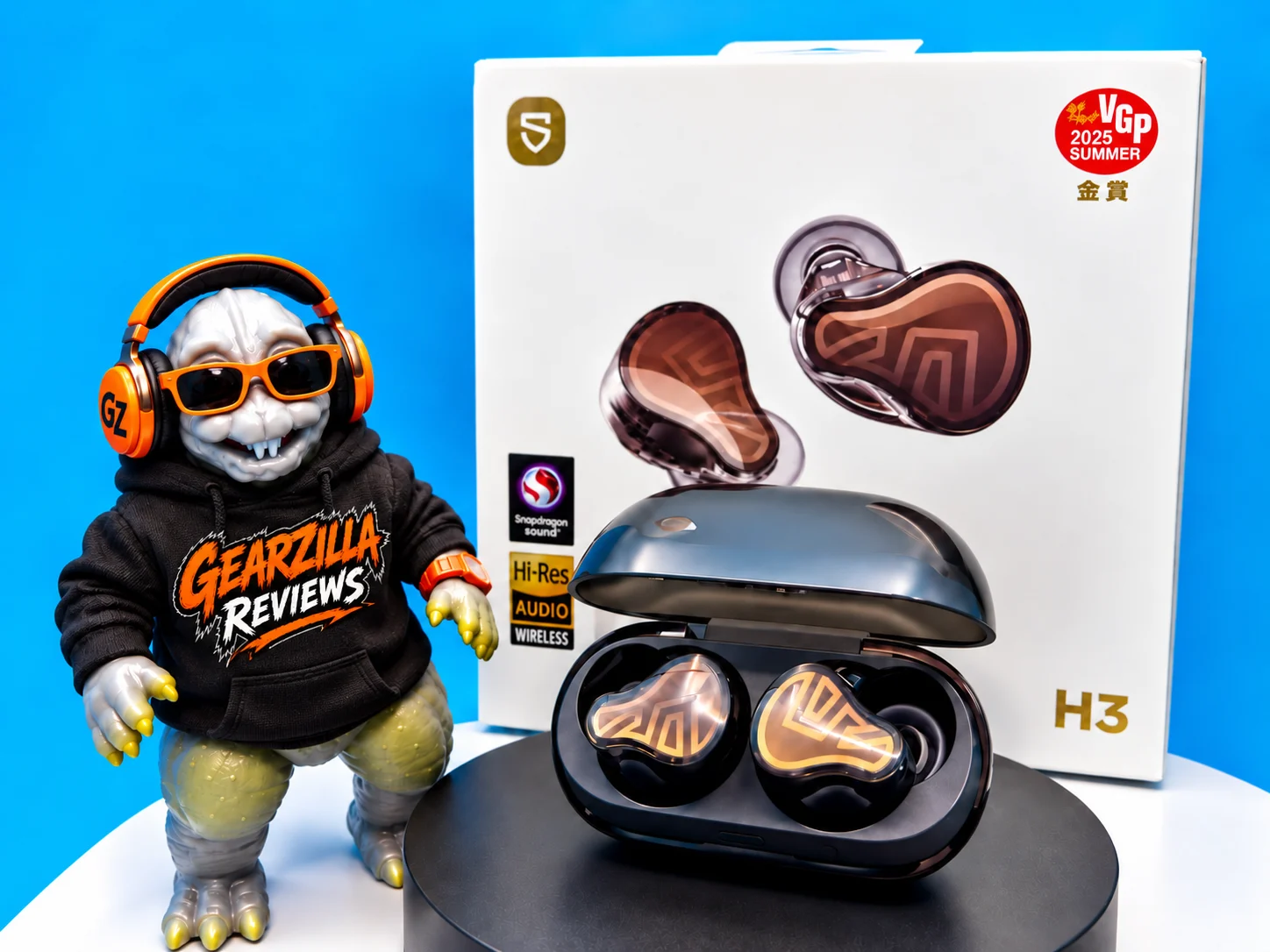
🦖 Disclosure
A huge thank you to SOUNDPEATS for providing the H3 for this review.
That support means a lot to me, but it doesn’t buy a positive review. Gear provided to GearZilla Reviews doesn’t guarantee favorable coverage, a particular score, protection from criticism, or any influence over my conclusions.
I want to understand what a product was designed to do, hear it before I start trying to change anything, and live with it long enough for the specification sheet to stop being the story. Eventually, I want to answer the same question I bring to every review:
Does this thing help me enjoy the music I already love in a new way?
The SOUNDPEATS H3 absolutely can.
The more difficult question is whether everything surrounding that sound works as well for me as the audio itself.
🤔 I Wanted to Love These So Bad
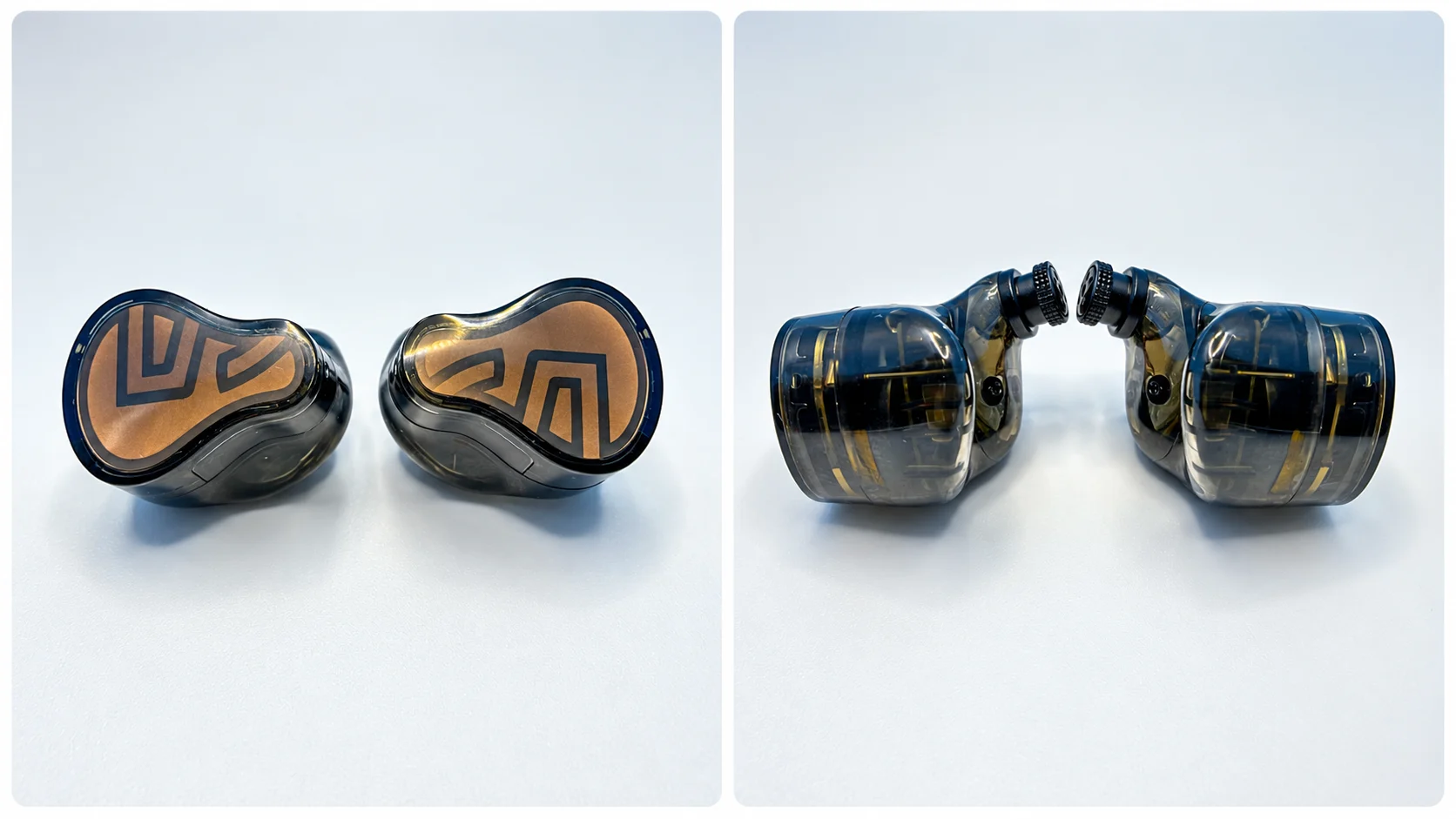
I knew the H3 was going to be interesting before I ever put it in my ears. SOUNDPEATS didn’t simply take another inexpensive stem-style TWS bud, add a premium codec, and call it a flagship. The H3 uses a legitimately ambitious hybrid architecture with a 12mm dynamic driver and two balanced armatures in each earbud, backed by Qualcomm’s QCC3091 platform, Snapdragon Sound, LDAC, aptX Adaptive, and aptX Lossless. SOUNDPEATS also includes adaptive ANC, six microphones, multipoint, app-based EQ, a low-latency mode, and IPX5 water resistance.
Then there is the design, and good grief, these things look cool.
The semi-transparent housing lets you see hints of what is happening inside, while the aluminum details give the H3 more of an enthusiast-IEM personality than the endless parade of lookalike TWS earbuds. These don’t look like fashion accessories with drivers buried inside. They look like audio gear.
More importantly, they sound like audio gear too.
Once I found the right tips and spent enough time tuning the H3 around my preferences, the sound became rich, detailed, spacious, and surprisingly mature. Bass has real physicality without smothering everything above it; the balanced armatures provide plenty of clarity, and the amount of separation available from something completely wireless repeatedly impressed me.
That should have made this review easy.
Instead, the longer I used the H3, the more I realized the sound was only part of the story. The shells are large and deep-fitting, so my ears became sore during extended sessions. The app occasionally needed another attempt before it recognized everything properly. Touch controls weren’t always as predictable as I wanted. There is no wireless charging, and somehow a product this ambitious still doesn’t have wear detection.
That’s what makes the H3 fascinating.
SOUNDPEATS got the difficult audio part remarkably right. The bigger questions are fit, features, and everyday usability.
🎧 Review Setup
Every GearZilla review starts in roughly the same place:
Listen first. Figure out the story later.
I started with the H3 completely stock. I didn’t immediately open the app and decide I knew better. I didn’t start swapping tips after thirty seconds, and I didn’t jump straight into EQ because I already had some predetermined target in my head.
I wanted to understand what SOUNDPEATS intended before I started changing it.
After that first round of listening, the experimenting began. I spent time with the stock tuning and SOUNDPEATS presets, worked extensively with the manual EQ, tried different tips, tested ANC and transparency modes, used the H3 for normal calls, played with multipoint and touch-control assignments, and wore the earbuds for increasingly longer sessions to see whether the unusual shell would eventually disappear in my ears.
I also handled them extensively outside my ears while shooting photos, which revealed something about the missing wear sensor that annoyed me more than I expected.
My testing covered different genres and recording styles, bass-heavy material, vocal-focused tracks, dense mixes, tracks I use for spatial information and imaging, casual listening, and extended sessions where comfort becomes just as important as sound.
The more time I spent with the H3, the clearer the story became.
This isn’t a mediocre wireless earbud being rescued by an impressive driver count.
The hardware is genuinely good. The bigger questions are fit, features, and how well everything works together day-to-day.
🧬 KAIJU DNA SCAN
Every monster leaves behind a genetic signature.
Here’s what this one looks like.
K • Kill Shot
The sound is the H3’s Kill Shot, and it isn’t particularly close.
There are plenty of specifications SOUNDPEATS can splash across the box, but none of them explain why I kept returning to the H3 as effectively as simply listening to it. Once properly fitted and tuned, this is an unusually satisfying TWS listen, with bass that has real authority, mids that remain clean and intelligible, enough treble information to expose fine details, and an overall presentation that feels substantially more open than I expect from many wireless earbuds.
What impressed me most wasn’t simply resolution. It was organization. The H3 gives different elements enough room that dense arrangements don’t immediately collapse into one compact blob between my ears. Instruments remain surprisingly easy to follow, vocals retain their own space, and low-frequency information doesn’t automatically swallow everything around it.
That sense of separation is one of the biggest reasons the H3 feels more like a serious wireless IEM than a conventional convenience-first TWS.
The H3 gives all that detail somewhere to live.
A • Anatomy
The H3’s architecture explains a lot about both what I love and what challenges me. Each side combines a 12mm dynamic driver with two balanced armatures, and SOUNDPEATS pairs that triple-driver setup with Qualcomm’s QCC3091 platform and support for SBC, AAC, LDAC, aptX, aptX Adaptive, and aptX Lossless over Bluetooth 5.4.
That’s serious hardware for a product SOUNDPEATS currently lists at $129.99.
The physical anatomy is equally distinctive. Instead of following the familiar shallow-bowl or stem formula, SOUNDPEATS created something much closer to a traditional IEM. The H3 inserts deeper, occupies more of the ear, and locks into place more aggressively than most consumer TWS buds I’ve used.
That deeper fit contributes to the excellent stability. I never felt as though the H3 was about to fall out, even when moving around.
Unfortunately, the same architecture that gives the H3 so much of its personality is also responsible for my biggest personal challenge with it.
These things are chonky.
I • Impact
The H3 doesn’t create impact simply by turning up the bass. What impressed me was the combination of physicality and control.
A kick drum can land with satisfying weight while the surrounding information remains intact. Electronic bass reaches low without muddying everything above it, and the dynamic driver supplies enough physical punch that tracks have energy without becoming exhausting.
That is where the triple-driver configuration earns its keep.
More drivers don’t automatically equal better sound, and I’ve heard multi-driver products where the technology calls far too much attention to itself. One driver sounds like it’s doing one thing while something else is clearly handling another part of the spectrum.
I don’t hear that here.
The H3 sounds cohesive. The dynamic driver and balanced armatures behave as parts of a single system rather than as separate technologies sharing the same shell.
That’s exactly what I want from a hybrid.
J • Joy
This is where the H3 becomes complicated.
There is a lot of joy in the sound, and there is plenty in the design. I love pulling these things out of the case. I love the transparent shell. I love knowing there are three drivers working inside each earbud, and once everything is tuned properly, I can settle into the music and enjoy a level of separation and richness that still catches me slightly off guard coming from TWS.
But portable audio doesn’t stop at frequency response.
A product that physically lives in my ears also needs to become comfortable enough that I stop thinking about it. The H3 never completely gets there for me.
I can get the seal right, ensure an extremely secure fit, and tune the sound until I’m completely happy with it. Eventually, though, my ears remind me that the H3 is still there.
That matters.
U • Unleashed
Two things finally unleashed the H3 for me: tip rolling and EQ.
Tip rolling wasn’t some tiny audiophile ritual where I convinced myself a different piece of silicone changed the universe. The H3 has a deeper, more IEM-like fit than many wireless earbuds, so finding the correct interface between the nozzle and my ear materially changed comfort, seal, bass response, and the overall presentation.
Then I started tuning.
That’s when the H3 really opened up.
🎼 Sound
My first stock listen was almost amusing considering how ambitious the hardware is.
The H3 sounded fairly neutral, flat, and restrained to me. Nothing immediately offended me, but nothing grabbed me by the collar either. There was clarity and obvious competence, yet the overall presentation lacked some of the richness and personality I wanted.
The analogy that kept coming to mind was dry white toast.
Perfectly edible. Nothing burned. Nothing soggy. Technically, somebody made toast.
But where’s the flavor?
Stock tuning is always going to hit different ears differently. Tips, seal, fit, firmware, and personal preference all play a role, but in my ears the H3 started from a fairly restrained place.
What changed everything was discovering how well the hardware responded once I began adjusting the EQ and experimenting with tips. The presentation gained considerably more body and energy without losing the clarity that had been there from the beginning.
Bass became more satisfying, vocals gained presence, the stage felt more alive, and the impressive spacing between individual elements became easier to appreciate.
I wasn’t fixing bad hardware. I was unlocking good hardware.
🥁 Bass
The H3 has genuinely enjoyable bass once I have it dialed in.
The 12mm dynamic driver provides enough low-end physical authority for kick drums to land properly, and electronic bass has satisfying depth. Sub-bass can reach low enough to give the presentation a proper foundation, while mid-bass provides punch without turning every track into a bass demonstration.
What I appreciate most is the balance.
I don’t want low frequencies politely standing in the corner waiting for permission to participate, but I also don’t want bass spreading upward and taking space away from everything else. The H3 can hit hard while remaining disciplined enough that the mids aren’t constantly fighting through the low end.
What impressed me was how well that authority held together when recordings became busier. The sub-bass could dig deep, the mid-bass could hit with satisfying force, and yet the H3 remained controlled enough that the rest of the arrangement didn’t get dragged along for the ride.
The H3 doesn’t need bass quantity to prove anything.
It has bass quality.
🎤 Midrange & Vocals
Vocals are where the H3’s separation starts paying real dividends.
I like voices to occupy their own space in a recording. They don’t need to be shoved several feet in front of everything else, but I want enough presence and air around a singer that I can focus on the performance without mentally digging through the instrumentation.
Once tuned, the H3 does that very well.
Male vocals retain body without becoming overly thick, while female vocals have sufficient clarity and upper-midrange detail to rise naturally through the arrangement. Piano, guitar, and other mid-focused instruments remain textured and distinct, and the well-behaved bass prevents the middle of the presentation from becoming congested.
This is one of those moments when the H3 starts behaving much more like a traditional enthusiast IEM than a convenience-first wireless earbud.
The midrange doesn’t feel like something SOUNDPEATS sacrificed to advertise huge bass and sparkling treble.
It becomes part of the music.
🎯 Instrument Separation
Separation might be the H3’s strongest technical characteristic.
Even when recordings become dense, I can usually follow individual elements without everything collapsing together. Percussion retains its edges, guitars don’t immediately smear into the vocals, bass stays anchored beneath the arrangement, and smaller details remain accessible without the H3 turning into an overly analytical microscope.
What makes that particularly impressive is how coherent the three-driver implementation remains. I never feel that different frequency ranges are coming from different pieces of hardware.
The H3 simply sounds like one earphone.
That strength becomes even more obvious on complex recordings. When multiple instrumental layers arrive at once, the H3 does an excellent job of keeping them organized, preventing the presentation from collapsing into congestion. I can move my attention through the mix and follow individual elements without feeling as though I’m fighting the earbud to do it.
That’s exactly what I want from a multi-driver design.
The engineering should disappear.
The music shouldn’t.
🏟️ Soundstage & Imaging
Soundstage was one of the biggest surprises.
True wireless earbuds can sometimes create a perfectly competent stereo image while still making everything feel compressed into a relatively small area around your head. The H3 gives me more breathing room than that.
There is convincing width and, more importantly, room between elements. Vocals don’t feel glued to the instruments behind them, percussion can occupy a separate part of the presentation, and well-recorded material can create enough depth that the music starts to feel layered rather than simply left, center, and right.
I’m keeping this in perspective. The H3 isn’t suddenly impersonating a giant open-back headphone, and I’m not getting the massive holographic presentation that some dedicated audiophile setups can produce.
But for TWS?
This is impressive.
The distinction I’d make is that the H3 is better at creating space around performers than at pinpointing each of them with surgical precision. I can hear width, layering, and breathing room clearly, but I’m not going to pretend every instrument is mapped onto some perfectly defined three-dimensional grid.
For music, I’m perfectly happy with that balance.
I want immersion before I want coordinates.
✨ Treble & Air
Treble remains crisp and detailed without making me feel as though SOUNDPEATS is faking resolution by simply turning everything up.
That is always appreciated.
The balanced armatures give the H3 enough upper-frequency information to keep cymbals defined, strings textured, and smaller details easy to follow. There is also enough energy up top to contribute to that broader sense of space without making the entire presentation thin or aggressively bright.
What I like most is how well the H3 holds onto those qualities after EQ.
I can add body, adjust the overall balance, and give the low end more of the personality I want without sacrificing the clarity and air that make the triple-driver arrangement worth having.
Once properly tuned, the H3 sounds detailed without becoming exhausting.
That’s a very good place to land.
🎚️ EQ: This Is Where the H3 Wakes Up
It took me some time to get the H3 where I wanted it, but that time paid off.
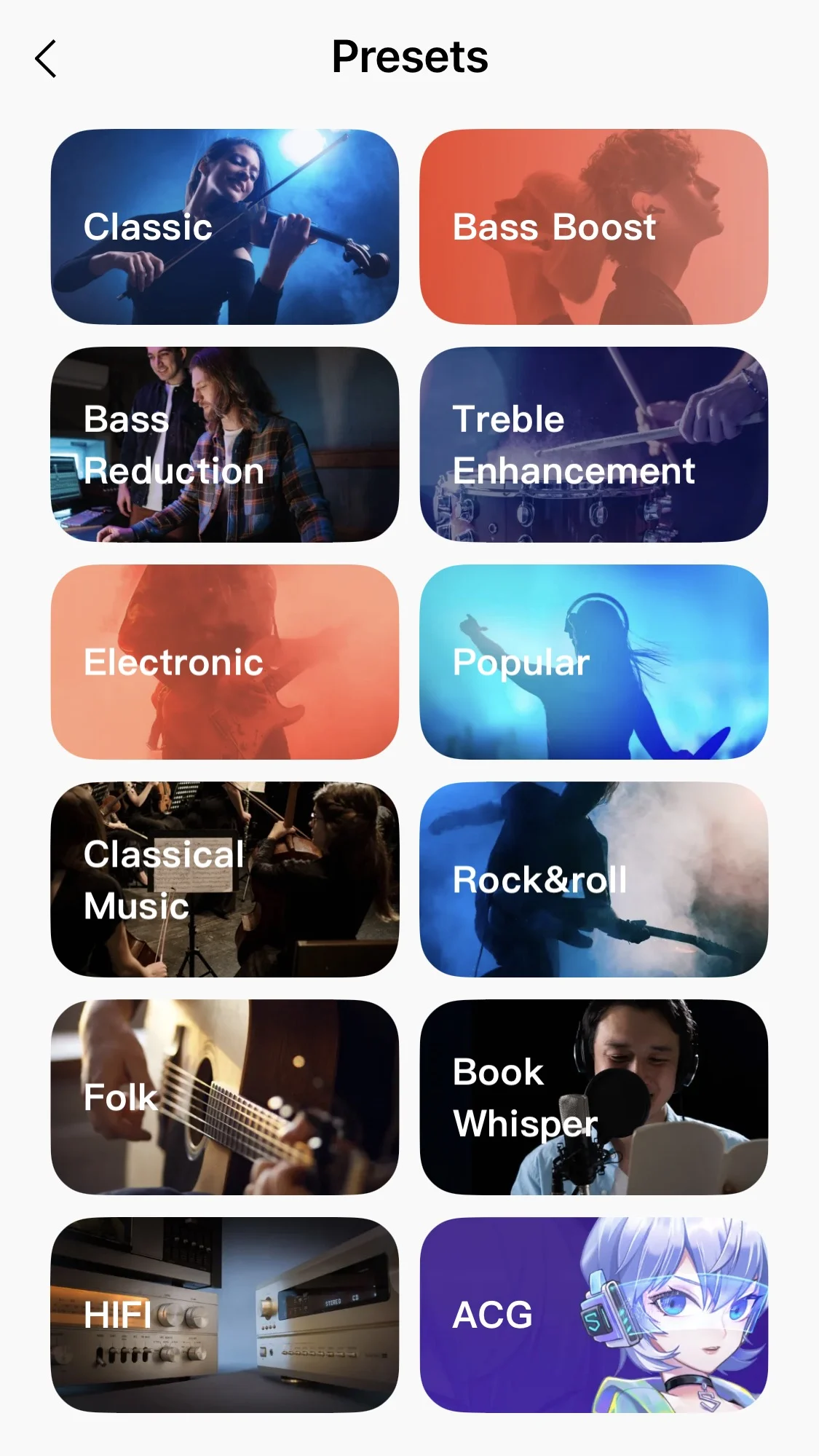
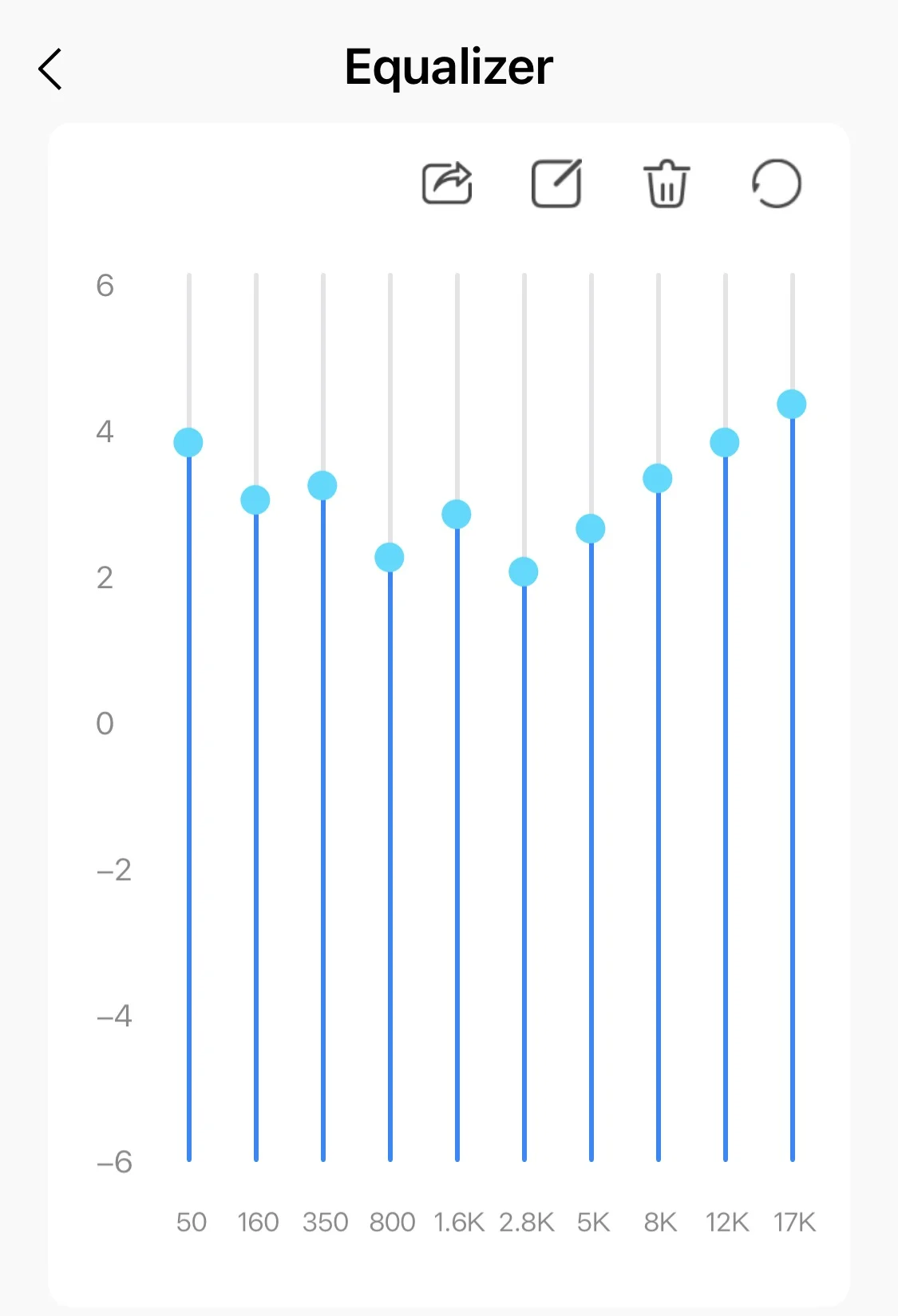
PeatsAudio includes several preset tuning options along with manual EQ control, and the hardware responds beautifully when you start experimenting. SOUNDPEATS currently describes the H3 as having a 9-band EQ on its official product page. My current version of the app showed 10 adjustable bands, so there appears to be some variation between the published specification and the software implementation I tested.
Whatever number ends up living on the marketing page, the important part is that the EQ is useful.
I spent time moving through the stock profiles, making smaller adjustments, listening again, swapping tips, returning to EQ, and gradually getting the H3 closer to the sound I wanted.
The transformation wasn’t subtle.
The relatively restrained stock presentation gained considerable richness and energy while the underlying strengths remained intact. Bass gained impact without spilling into the mids, vocals had better presence, treble retained its clarity, and the overall sense of space became easier to appreciate.
The H3 takes EQ extremely well.
That’s one of the most important things I can say about it.
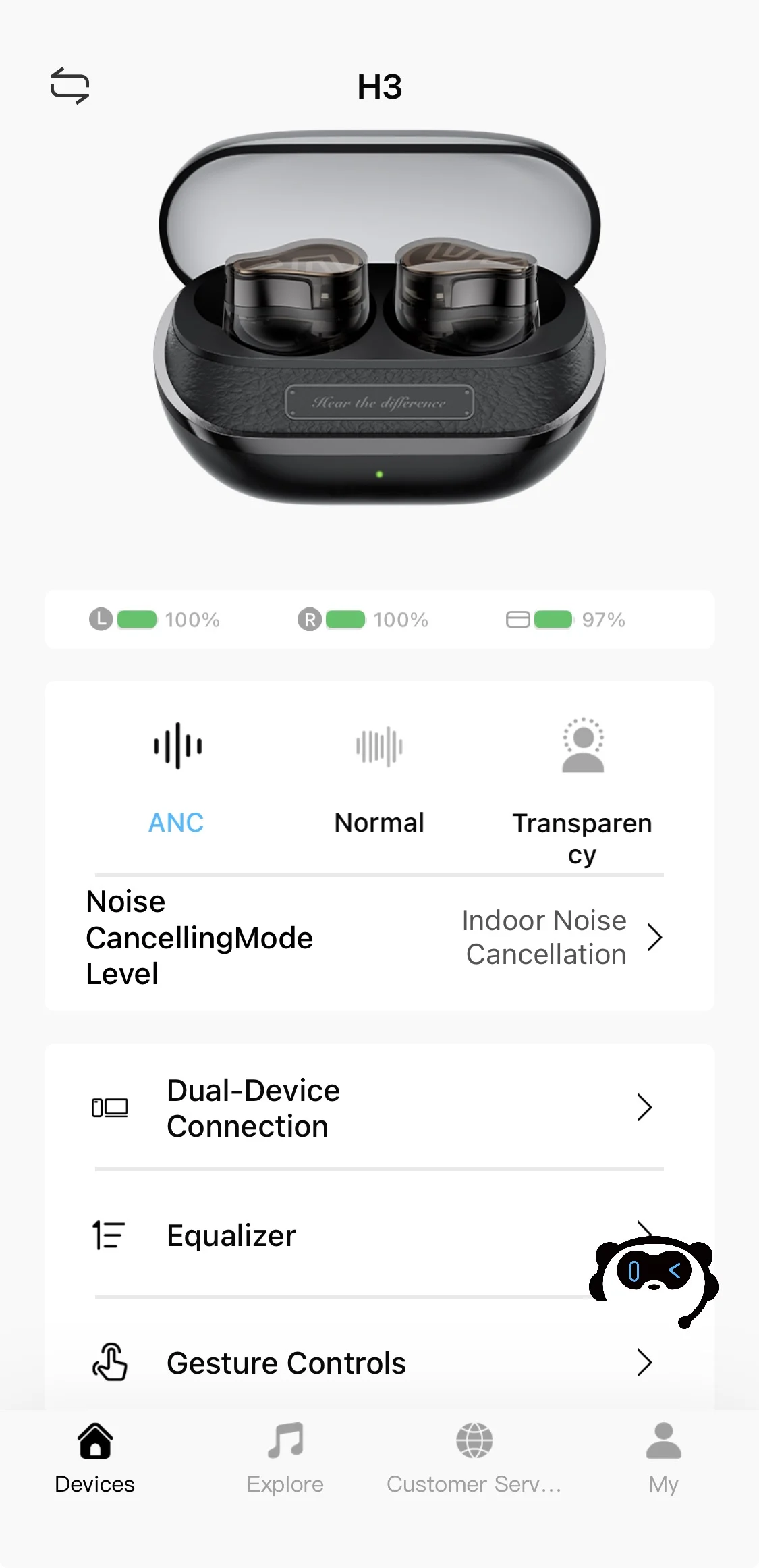
📱 PeatsAudio App: A Lot Going On
SOUNDPEATS gives you quite a bit inside PeatsAudio. EQ, presets, multiple ANC modes, multipoint management, battery information, game mode, firmware functions, customizable touch controls, and an Earbud Finder with a live map to help locate a misplaced bud are all available, so this isn’t one of those companion apps you download solely because a QR code told you to.
There is real functionality here, and I genuinely want to use it because the EQ is valuable and the customization matters.
I did run into situations where the app didn’t immediately recognize the earbuds or connect cleanly the first time. Sometimes reopening the app solved it. Other times, putting the H3 back into the case and starting again became the easiest solution.
That’s something I’d like SOUNDPEATS to keep refining, because when everything connects the way it should, PeatsAudio adds meaningful value to the H3.
My issue isn’t the feature set.
Quite the opposite.
There is a lot here worth using. I just want accessing it to become completely effortless.
🔇 ANC: Useful, But Sound Is the Star
SOUNDPEATS advertises adaptive hybrid ANC with up to 55dB of noise reduction across Adaptive, Indoor, Outdoor, and Traffic modes. The H3 uses its six-microphone system as part of that noise-control architecture.
Those are serious specifications.
My actual experience was more moderate.
The ANC works. It reduces steady environmental noise and takes enough energy out of the outside world that listening becomes easier. Low-frequency hum drops, general environmental noise recedes, and I would absolutely rather have ANC than not.
But if maximum noise cancellation is your primary reason for shopping, that isn’t where I think the H3 makes its strongest argument.
Fit and seal can obviously have a major impact on ANC performance, especially with an earbud that depends so heavily on getting the deeper IEM-style fit right. I experimented with different tips and found combinations that improved isolation, but ANC never became the defining feature for me.
That’s okay.
Because the H3 already has one.
The sound is the reason I’d buy it.
🌎 Transparency Mode: It Does What I Need
Transparency mode is functional without being remarkable.
It brings voices and environmental information back into the presentation well enough that I can interact with someone without completely removing the earbuds. That’s exactly what I need from the feature, and I didn’t experience anything that made it unusable.
I also wouldn’t describe it as exceptionally natural or transparent enough that I forget microphones are feeding the outside world back into my ears.
It does the job.
Normally I’d move on from there without much discussion.
Unfortunately, removing the H3 leads directly into one of the features I miss the most.
⏸️ Wear Detection: How Is This Missing?
There isn’t any.
Take an H3 out of your ear and playback keeps going. Put it back in and nothing automatically resumes because nothing ever automatically stopped.
A few years ago, I might have treated that as a premium convenience.
Today, it feels increasingly like part of the basic TWS experience.
The moment that really got me happened while I was photographing the earbuds. I wasn’t listening to them at all. I was simply moving them around for pictures when the audio suddenly kicked on.
That’s when the missing sensor went from mildly disappointing to genuinely irritating.
SOUNDPEATS has built earbuds that support LDAC, aptX Lossless, adaptive ANC, multipoint connectivity, custom EQ, and low-latency gaming.
But they don’t know whether they’re in my ears.
That’s a big miss for me at this level.
🔘 Touch Controls: Flexible, With Room to Improve
I appreciate that SOUNDPEATS allows the touch assignments to be changed through the app.
That’s exactly the kind of flexibility I want.
The touch interface itself took me a little more time.
There were occasions when I wasn’t completely sure whether an input had registered, which could lead me to tap again or pause briefly to see what happened. I experimented with tap speed, placement, and the customizable assignments, and the controls became easier to use with time.
Even so, they never reached the point where I stopped thinking about them completely.
That’s really what I want from good controls.
Set them up the way I like them, build the muscle memory, and forget about them.
🎤 Calls: Perfectly Usable, But Not the H3’s Superpower
On paper, the H3 has an impressive call system. SOUNDPEATS uses six microphones, AI noise reduction, and Qualcomm cVc 8.0, along with an acoustic design intended to reduce environmental and wind noise.
My actual calls have been perfectly usable.
Connections were generally fine, people could understand me, and I didn’t experience any microphone issue severe enough to prevent me from taking a call.
But I did have people describe my voice as muffled.
That matters.
Speech remained understandable, and I never had anyone tell me they simply couldn’t hear me, but the occasional “you sound muffled” comment was enough to tell me that call quality isn’t the H3’s main attraction.
I would happily take an occasional call on these.
If I were buying earbuds primarily for half a day of meetings?
I’d prioritize something different.
☁️ Fit & Comfort: Secure Isn’t the Same as Comfortable
This might be the most important section in the entire review if you’re considering buying the H3.
These shells are big.
The H3 fits considerably more like a traditional IEM than the average consumer TWS earbud. It inserts deeply, fills a substantial portion of my ear, and creates one of the most secure fits I’ve experienced with a wireless product.
I had zero concern about these falling out.
That’s worth emphasizing because large earbuds are sometimes automatically treated as unstable.
That isn’t the H3’s problem.
For me, the issue is long-term pressure.
The shells actually hurt my ears at first. Tip rolling helped significantly, and after enough experimentation, I found a combination that improved comfort and gave me the seal I wanted. But the physical size and unusual shape never completely disappear.
Eventually, I get sore.
That makes me cautious about recommending the H3 to people with smaller ears or anyone who knows that large IEM shells already give them trouble.
But I also don’t want to call the H3 universally uncomfortable.
Fit is intensely personal.
My ears are my ears.
Your ears may love this shape.
What I can tell you is that the H3 remained extremely secure in mine, but longer sessions eventually created enough pressure that I wanted a break.
And side sleepers? Forget it. The shells protrude too far for me to comfortably lie on them.
These are not sleep buds.
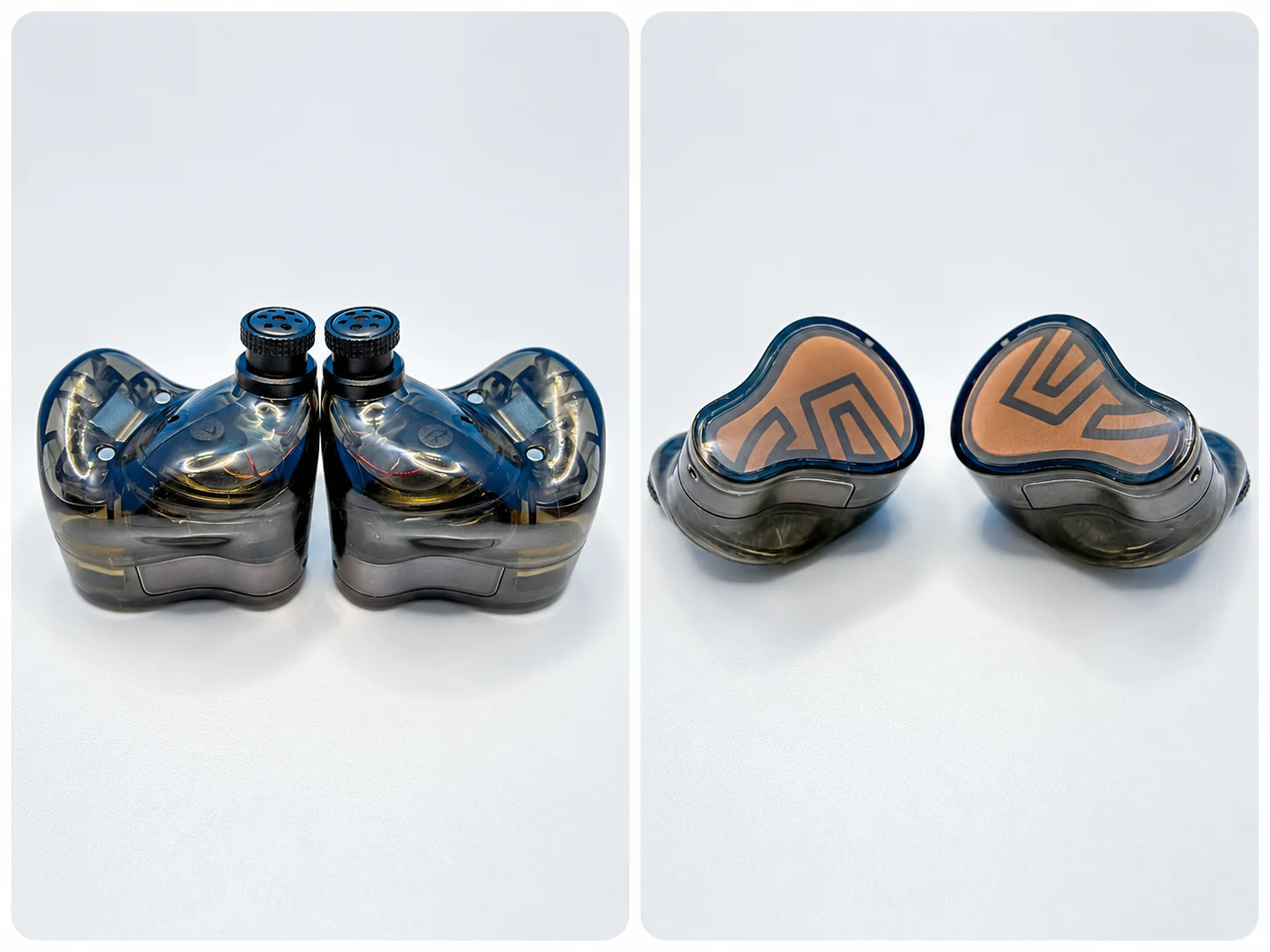
🎨 Design: Damn, They Look Good
The fit issue is especially frustrating because, visually, I think SOUNDPEATS nailed it.
The H3 looks fantastic.
The semi-transparent housing exposes enough of the internal architecture to make the earbud feel genuinely different without becoming a gimmick. The aluminum details add a premium touch, and the entire design reinforces the idea that this is a wireless IEM rather than just another piece of consumer electronics.
SOUNDPEATS lists each earbud at 6 grams, so despite the physical size, the challenge for me isn’t really weight.
It’s geometry.
I love that the H3 doesn’t hide what it is trying to be. The design says enthusiast audio, the drivers say enthusiast audio, and the codec support says enthusiast audio.
And when I listen to it properly tuned?
The sound absolutely backs that up.
I simply wish SOUNDPEATS had found a way to preserve all that personality in a slightly less demanding shell for my ears.
🔌 Connectivity: Serious Wireless Hardware
Connectivity is another area where the H3’s flagship ambitions make sense.
SOUNDPEATS offers Bluetooth 5.4, Qualcomm QCC3091, SBC, AAC, LDAC, aptX, aptX Adaptive, and aptX Lossless, along with multipoint connectivity and a 60ms low-latency game mode.
That is an excellent wireless package.
My basic Bluetooth connection was generally dependable during testing. Most of my connection-related issues stemmed from the app not immediately recognizing or properly interacting with the H3, rather than from the earbuds themselves constantly dropping the Bluetooth connection.
Multipoint is especially welcome because true wireless audio increasingly has to move with us between devices. Phone, tablet, laptop, work system, whatever combination makes up your day, being able to maintain multiple active connections quickly becomes one of those conveniences you miss when it’s gone.
The H3 understands that part of modern TWS very well.
🔋 Battery & Charging: Solid, With One Feature I’d Like Added
SOUNDPEATS rates the H3 for up to seven hours of playback from the earbuds and 37 hours total with the charging case, while a 10-minute fast charge can provide another two hours of listening.
As always, those maximum figures depend heavily on how you’re using the earbuds. ANC, higher-resolution codecs, volume, multipoint, and other features all place additional demands on the battery, so I treat the seven-hour figure as a best-case specification rather than something every listener should expect under every condition.
Battery life never became a major concern during my normal testing.
The case is where I’d like one more feature.
There is no wireless charging.
USB-C works perfectly well, and fast charging is useful, but wireless charging is increasingly convenient when you already have charging pads scattered around the house or office.
It’s not a dealbreaker.
It is something I’d love to see added to the next generation.
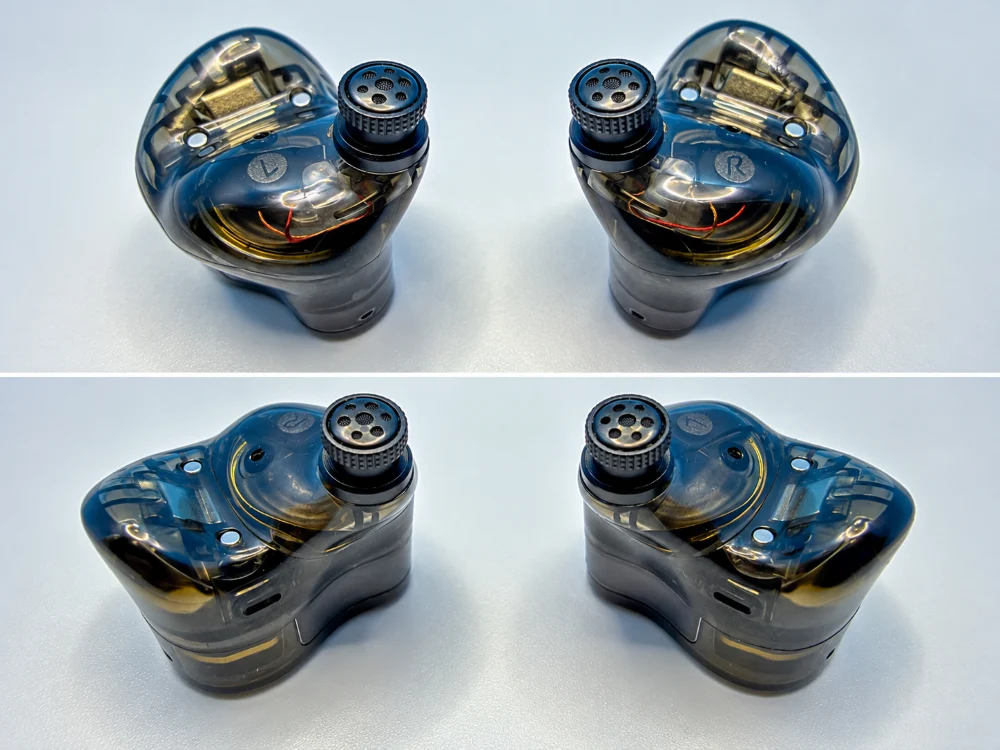
🎧 A Wireless IEM Wearing TWS Clothes
This is the framework that finally made the H3 make complete sense to me.
I don’t think SOUNDPEATS approached this primarily as a mainstream TWS product and then started bolting enthusiast features onto it.
It feels as though the company started with an IEM mentality and then made it wireless.
Suddenly the design decisions line up.
The deeper fit makes sense. The large transparent housing makes sense. The hybrid driver architecture makes sense. The emphasis on high-resolution codecs makes sense. The importance of tip rolling makes sense. The way EQ can unlock so much more from the hardware makes sense.
Viewed purely as a wireless IEM, the H3 is extremely compelling.
But the second you cut the cable, the expectations change.
Now I’m also thinking about software, microphones, charging, sensors, controls, ANC, multipoint, and whether I can comfortably leave the earbuds in while moving through the rest of my day.
That’s the opportunity I see for SOUNDPEATS.
The H3 already proves it can compete on sound. Now I want everything surrounding that sound to become just as compelling.
🌉 Bridge-Fi: Where Consumer Audio Meets Hi-Fi
The H3 also lands squarely in a category I’ve started calling Bridge-Fi.
There has traditionally been a pretty obvious divide between consumer wireless audio and enthusiast Hi-Fi. On one side, you get convenience: Bluetooth, ANC, calls, apps, multipoint, charging cases, and something you can throw in your pocket without thinking twice.
On the other side, you get the stuff audio nerds obsess over: driver architecture, tuning, resolution, separation, staging, tip selection, codec support, and squeezing more performance out of the hardware.
The H3 sits right between those worlds.
It gives me the everyday convenience of TWS while delivering a listening experience much closer to an IEM. The hybrid triple-driver architecture isn’t merely decoration; EQ materially changes what the H3 can become, and tip rolling matters enough that I found myself treating these more like one of my wired sets than a disposable pair of wireless buds.
That doesn’t mean the H3 replaces a serious wired IEM setup.
It doesn’t need to.
What makes Bridge-Fi interesting is that the distance between the two worlds is shrinking.
I can grab the H3, connect wirelessly, use ANC and multipoint, take a call, make adjustments in an app, and still get enough detail, separation, bass control, and soundstage that the audiophile part of my brain doesn’t immediately start asking what I’m giving up.
That’s progress.
The H3 doesn’t erase the line between consumer audio and Hi-Fi. It makes that line a whole lot easier to cross.
💰 Value: You’re Paying for Serious Audio Hardware
SOUNDPEATS currently lists the H3 at $129.99, and from a pure audio-hardware perspective, there is a lot here for the money.
A 12mm dynamic driver. Two balanced armatures. Snapdragon Sound. LDAC. aptX Lossless. Multipoint. ANC. App-based tuning. Fast charging. A distinctive semi-transparent shell.
That’s a substantial specification sheet.
More importantly, the sound actually justifies the hardware.
That’s the piece that matters most to me.
I don’t care how many drivers a company manages to squeeze into an earbud if they don’t work together. The H3 does. I don’t care how many codec logos appear on the packaging if the end result still sounds flat and congested. Properly tuned, the H3 doesn’t.
The overall value question comes down to priorities.
If sound quality, tuning flexibility, codec support, separation, and a more IEM-like listening experience are near the top of your list, the H3 packs a tremendous amount of value for $129.99.
If smaller shells, wear detection, wireless charging, stronger call performance, or best-in-class ANC matter more, you’ll weigh the package differently.
That’s exactly why the H3 is such an interesting Bridge-Fi product.
👹 Who Is This For?
The H3 makes the most sense for the listener who approaches true wireless audio by asking one question before everything else:
How does it sound?
If you already enjoy traditional IEMs and want to go wireless without completely abandoning that enthusiast experience, the H3 is worth a look. If you understand that ear tips matter, enjoy tuning, care about codec support, and want bass, detail, separation, and space to remain priorities even after the cable disappears, there is a lot to like here.
It’s also a fascinating example of how far affordable wireless audio continues to move. We are well beyond the point where buying TWS automatically means accepting generic sound in exchange for convenience.
But the H3 won’t be for everyone.
If you have smaller ears, regularly struggle with larger IEM shells, wear your earbuds continuously through the workday, sleep in your TWS, depend heavily on call quality, or consider class-leading ANC one of your highest priorities, those factors may matter far more to you than the driver configuration.
The question isn’t whether the H3 sounds good.
It does.
The question is whether its particular combination of sound, fit, and features aligns with what you need in your earbuds.
🦖 GearZilla Scorecard
🎚️ EQ & Tuning Flexibility: 4.8/5. The H3 responds extremely well to adjustment, and tuning transformed a fairly restrained stock presentation into something much richer and more engaging. This is capable hardware that rewards anyone willing to spend some time shaping it around their preferences.
☁️ Comfort & Fit: 3.5/5. Extremely secure, but the deep IEM-style fit, unusual shape, and large shells caused real soreness during longer listening sessions in my ears. Tip rolling helped substantially, but I’d still be cautious about recommending the H3 to someone with smaller ears or anyone who struggles with larger IEM shells.
📱 App & Customization: 3.8/5. PeatsAudio offers EQ, presets, ANC options, multipoint control, touch customization, the Earbud Finder, and plenty of genuinely useful features. I’d simply like the connection experience to become more consistent so all of those tools are as easy to access as they are useful.
🔌 Connectivity: 4.7/5. Bluetooth 5.4, LDAC, aptX, aptX Adaptive, aptX Lossless, Snapdragon Sound, and multipoint make this an excellent wireless package. My core Bluetooth experience was solid throughout testing.
🔋 Battery Life & Charging: 4.0/5. Up to seven hours from the earbuds and 37 total with the case is respectable, and the 10-minute fast charge is genuinely handy. Battery life wasn’t a concern during my normal use, although I’d love to see wireless charging added.
🎤 Call Quality: 3.7/5. Calls are usable, and I didn’t have meaningful connection problems, but people on the other end occasionally described my voice as muffled. Six microphones and cVc 8.0 make for an impressive spec, but calls aren’t where the H3 makes its strongest case.
🥁 Bass: 4.7/5. Excellent extension, satisfying physical impact, and enough control to avoid smothering the rest of the presentation. Once tuned, the 12mm dynamic driver gives the H3 exactly the kind of low-end authority I want without turning everything into a bass showcase.
🎤 Midrange & Vocals: 4.5/5. Clean, detailed, and nicely separated once the overall tuning is dialed in. Vocals have enough space to remain distinct from the instrumentation, and the disciplined low end prevents the middle of the presentation from becoming congested.
🎯 Separation: 4.8/5. One of the H3’s defining strengths. Dense recordings stay impressively organized, individual performers remain easy to follow, and the triple-driver architecture behaves like a coherent system rather than three technologies fighting for attention.
🏟️ Soundstage & Imaging: 4.6/5. Impressively spacious for true wireless earbuds, with excellent breathing room and a convincing sense of width and layering. Imaging is good, though not surgically precise, but the overall presentation feels considerably larger than I expect from most TWS.
✨ Treble & Air: 4.5/5. Crisp, detailed, and energetic enough to preserve sparkle without becoming relentlessly sharp. The balanced armatures provide plenty of upper-frequency information, and the H3 lets me retain the air I want even after adjusting the rest of the tuning.
🔇 ANC: 3.8/5. Functional and adjustable, but merely acceptable in my ears. Fit and seal can make a substantial difference, but even after experimenting with tips, noise cancellation never became a reason I’d specifically choose the H3.
🔘 Everyday Controls: 3.7/5. I appreciate being able to customize touch assignments, and the controls became easier to use as I spent more time with them. I’d still like more consistent feedback so they become completely automatic in daily use.
🎨 Design & Build: 4.8/5. Gorgeous. The semi-transparent shell, visible architecture, and metallic details give the H3 a distinctive enthusiast personality. I love the way these look even if I wish SOUNDPEATS could preserve that design in a slightly smaller physical package.
⏸️ Wear Detection: 3.0/5. Because there isn’t any. Automatic pause and resume has become such a normal part of premium TWS that its absence is immediately noticeable, and having music start while I was simply handling the earbuds for photography drove the point home.
💰 Value: 4.5/5. The triple-driver architecture, codec support, tuning potential, separation, soundstage, and overall sonic performance make the H3 genuinely compelling at $129.99. What determines the value for you will largely depend on how well the shell fits your ears and which TWS convenience features matter most.
🦖 Overall GearZilla Score: 4.0/5.
🦖 Final Roar
The SOUNDPEATS H3 is one of those products that reminds me just how quickly true wireless audio is changing.
I wanted to love this one.
And there are parts of it that I absolutely do.
I love the way it looks. The transparent housing immediately sets the H3 apart from a category filled with increasingly similar designs, and the triple-driver architecture isn’t just an impressive number printed on the box. Once properly fitted and tuned, the H3 delivers satisfying bass, clean mids, crisp treble, excellent separation, and a surprisingly spacious presentation.
Tip rolling helped.
EQ helped even more.
Once everything clicked, I stopped mentally attaching the phrase “for a TWS” to every compliment. I wasn’t thinking that the H3 had good separation for wireless earbuds or a surprisingly wide presentation for Bluetooth.
I was simply enjoying the music.
That’s a significant accomplishment.
At the same time, the H3 reminded me that true wireless audio asks a product to do more than simply sound good. Fit matters. Controls matter. Calls matter. Apps matter. Charging matters. ANC matters. Sensors matter.
The H3 gets some of those things very right, some work perfectly well, and a few are things I’d love to see SOUNDPEATS improve in the next generation.
Most importantly, though, none of that changes what I hear when the music starts.
The driver integration works. Bass has authority. The balanced armatures contribute genuine detail. Separation is excellent. The stage has room to breathe. And the hardware responds beautifully when you start tuning it around your own ears and preferences.
That’s the hard stuff.
And SOUNDPEATS has already shown it can do that.
Now imagine this same sonic foundation with a shell that fits more ears comfortably, wear detection, wireless charging, even more polished controls and software, and all the other small conveniences that make great TWS disappear into your day.
That could be something special.
For now, the H3 lands at 4 out of 5.
Not because the sound disappointed me.
Quite the opposite.
The sound is what keeps pulling me back.
The fit simply reminds me that ears are personal, and mine don’t love the H3’s larger shell nearly as much as they love what comes out of it.
And maybe that’s the cleanest way to explain the SOUNDPEATS H3.
Big sound. Big shells.
If the fit works for you, there is a seriously capable wireless IEM hiding inside this TWS package.
🏆 GearZilla Bridge-Fi Sound-First Pick
Triple drivers. Big detail. Big stage. Big shells.
✅ Buy If
- 🎶 Sound quality is your highest TWS priority.
- 🧬 You like hybrid and multi-driver IEM architecture.
- 🎚️ You enjoy EQ and want hardware that responds well to tuning.
- 🥁 You want substantial bass without completely overwhelming the mids.
- 🎤 Vocal clarity and separation matter to you.
- 🎯 You value layering and instrument separation.
- 🏟️ You want a more spacious presentation than many conventional TWS buds provide.
- 🎨 You love transparent shells and enthusiast-inspired design.
- 📡 LDAC, aptX Adaptive, and aptX Lossless matter to you.
- 🔄 You regularly use multiple devices and want multipoint.
- 👂 You’re already comfortable with deeper IEM-style fits.
- 🧪 You don’t mind experimenting with ear tips.
- 🌉 You like the idea of Bridge-Fi bringing enthusiast sound into a more convenient wireless package.
- 💰 You want impressive audio hardware around the $129 price point.
⛔ Skip If
- 👂 You have smaller ears or struggle with larger IEM shells.
- ☁️ Long-session comfort is your highest priority.
- 🛏️ You regularly sleep while wearing earbuds.
- ⏸️ Automatic pause and resume is mandatory.
- ⚡ Wireless charging matters to you.
- 🔇 Class-leading ANC is your primary reason for buying.
- 🎤 You spend much of your workday on calls.
- 📱 App reliability and polish are non-negotiable.
- 🔘 You want touch controls that become completely invisible immediately.
- 🎧 You prefer an extremely shallow, barely-there TWS fit.
- 🎶 You have no interest in EQ and want maximum personality immediately out of the box.
🧡🦖 The SOUNDPEATS H3 Is Available Now
The SOUNDPEATS H3 is currently listed at $129.99, bringing a 12mm dynamic driver and two balanced armatures together with Bluetooth 5.4, Snapdragon Sound, LDAC, aptX Lossless, adaptive ANC, multipoint, 60ms game mode, IPX5 water resistance, and up to 37 hours of total battery life with the charging case.
SOUNDPEATS H3 product page:
https://soundpeats.com/products/soundpeats-h3
The sound is already there. Now I want to see how far SOUNDPEATS can take the complete experience.
Hear the GearZilla Roar.
Listen Bigger!